🇹🇷 Türkçe | Yaprak Sarmanın Etrafında Kurulan Sofra Hafızası
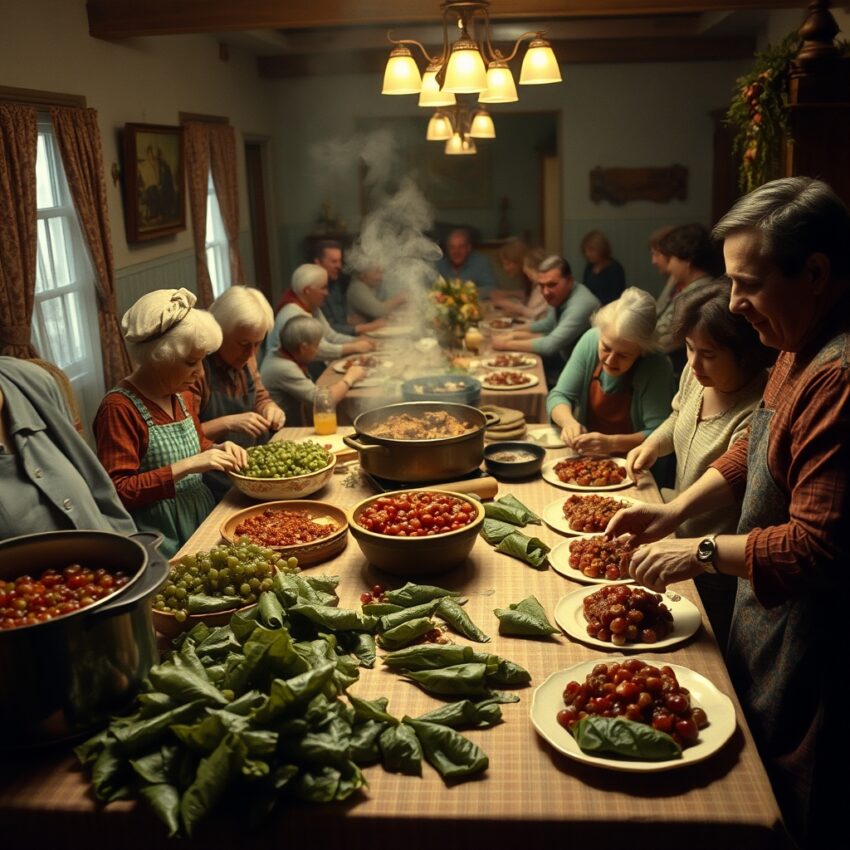
Bayram yaklaşırken bazı evlerde telaş, dışarıdan bakana karmaşa gibi görünse de içeriden bakıldığında kusursuz bir uyum taşırdı. Mutfak masasına serilen asma yaprakları, iç harcın kokusuna karışan yenibahar ve limon, büyük tencerelerin ocakta hazır bekleyişi, bir evin yalnız yemek değil hafıza hazırladığını gösterirdi. Bayramlık yaprak sarma bu yüzden sıradan bir yemek sayılmazdı. O, kalabalık aile sofralarının unutulmayan tadını önceden haber veren bir emek işiydi. Kadınlar bazen öğleden sonra toplanır, biri yaprak seçer, biri içi karıştırır, biri sarılanları sıra sıra tencereye dizerdi. Arada çaylar tazelenir, bir yandan geçmiş bayramlardan söz açılır, bir yandan çocuklara dokunmamaları söylenirdi. Daha pişmeden bile evin içine yayılan bu hazırlık duygusu, bayramın esas lezzetini oluştururdu. Çünkü tat yalnız damakta değil, ortak emeğin ritminde birikirdi.
Damak Hafızası açısından yaprak sarma, mutfak alışkanlıklarının nasıl kültürel mirasa dönüştüğünü gösteren en güçlü örneklerden biridir. Her evin iç harcı biraz farklı olurdu; kimi kuş üzümü ekler, kimi daha ekşili sever, kimi zeytinyağlı yapar, kimi etli. Ama yöntem değişse bile bazı kurallar kuşaktan kuşağa korunurdu. Yaprakların damarının nasıl alınacağı, ne kadar sıkı sarılacağı, tencereye hangi sırayla dizileceği, üstüne tabak kapatılıp kapatılmayacağı bile tecrübeyle öğrenilen bilgi sayılırdı. Bu bilgi yazılı bir tariften çok, mutfakta bakarak ve yaparak devralınırdı. Kalabalık aile sofralarının unutulmayan tadı biraz da bundan gelir; masaya gelen yemek yalnız lezzet değil, aktarılmış bir mutfak terbiyesi taşırdı. Bayram sofraları, aile içindeki görünmez öğretinin en görünür hale geldiği anlardı.
Yaprak sarmanın bugün hâlâ güçlü bir çağrışım uyandırmasının nedeni, onun tek başına yenilen bir yemek olmamasıdır. O daha çok, bir araya gelmenin, paylaşmanın ve sofra etrafında zamanı uzatmanın bahanesidir. Büyük tepsiler hazırlanır, yoğurt kâsesi ortaya konur, ekmek sepeti dolaşır, sofraya sonradan gelen biri için mutlaka yer açılırdı. Çocuklar tabak saymayı öğrenir, gençler servis taşır, büyükler ise hangi bayramda kimin ne söylediğini yeniden anlatırdı. Böylece yemek, aile tarihinin sözlü arşivine dönüşürdü. Bugün hızlanan hayat içinde unutulan mutfak alışkanlıklarını geri çağıran da tam olarak budur. Yaprak sarmayı düşününce yalnız tadı değil, sarma masasında kurulan sohbeti, tencereden yükselen buharı, sofrada artan sesi ve yemeğin sonunda kalan huzuru hatırlarız.
Belki de bu yüzden bayramlık yaprak sarma, geçmişe açılan en güçlü damak kapılarından biri olarak kalır. O bize eski mutfakların ölçüsünü, sabrını ve paylaşma ahlakını hatırlatır. Kalabalık aile sofralarının unutulmayan tadı sadece baharat oranında ya da yaprağın inceliğinde gizli değildir; onu belirleyen asıl şey, birlikte hazırlanmış ve birlikte yenmiş olmasıdır. Unutulan mutfak alışkanlıklarını geri çağıran da budur: yemek yapmanın yalnız sonuç odaklı değil, ilişki kurucu bir eylem olduğu gerçeği. Bir sarmanın düzgün sarılması kadar, onun hangi elde sarıldığı, hangi hikâyeler arasında piştiği ve kimlerle yenildiği de önemlidir. Bayram sofraları bu yüzden yalnız doyurmaz, aileyi yeniden birbirine tanıtır. Yaprak sarma da bu tanışmanın en zarif, en sabırlı ve en kalıcı lezzetlerinden biri olarak hafızada yaşamayı sürdürür.
🇬🇧 English | Table Memory Built Around Stuffed Grape Leaves
As a holiday approached, the bustle in certain homes might have looked like confusion from outside, yet from within it carried perfect harmony. Grape leaves spread across the kitchen table, allspice and lemon mingling in the scent of the filling, large pots waiting on the stove, all showed that a household was preparing not only food, but memory. Festive stuffed grape leaves were therefore never an ordinary dish. They were a labor of care announcing in advance the unforgettable taste of crowded family tables. Women might gather in the afternoon; one would sort the leaves, another mix the filling, another place the rolled pieces in careful rows inside the pot. Tea would be refreshed in between, stories from earlier holidays would return, and children would be told not to touch. Even before cooking, the atmosphere of preparation spreading through the house formed the true flavor of the feast. Taste accumulated not only on the tongue, but in the rhythm of shared work.
From the perspective of culinary memory, stuffed grape leaves are one of the strongest examples of how kitchen habits become cultural heritage. Every home had a slightly different filling: some added currants, some preferred more sourness, some made them with olive oil, others with meat. Yet even when the ingredients changed, certain rules passed intact from one generation to the next. How the central vein of the leaf should be trimmed, how tightly it should be rolled, in what order it should be arranged in the pot, and whether a plate should be set over it were all forms of knowledge learned through experience. This knowledge was inherited less through a written recipe than by watching and doing in the kitchen. The unforgettable taste of crowded family tables comes partly from this. What arrived at the table carried not only flavor, but an inherited kitchen discipline. Holiday meals were the moments when that invisible teaching inside the family became most visible.
The reason stuffed grape leaves still trigger such strong associations is that they were never a meal eaten in isolation. They were, rather, an excuse for gathering, sharing, and stretching time around the table. Large trays would be prepared, a bowl of yogurt placed in the center, the bread basket passed around, and space always made for someone arriving late. Children learned to count plates, young people carried serving dishes, and elders retold who had said what during which holiday long ago. In that way, food became an oral archive of family history. What calls forgotten kitchen habits back to us in today’s hurried life is precisely this. When we think of stuffed grape leaves, we remember not only the taste, but the conversation around the rolling table, the steam rising from the pot, the growing volume at the meal, and the peace that remained afterward.
That may be why festive stuffed grape leaves remain one of the strongest culinary doors opening onto the past. They remind us of the measure, patience, and ethics of sharing that belonged to older kitchens. The unforgettable taste of crowded family tables is not hidden only in spice levels or the thinness of the leaf; what truly shapes it is that the dish was prepared together and eaten together. That is what recalls forgotten kitchen habits: the truth that cooking is not merely result-oriented, but relational. It matters not only that a roll is wrapped neatly, but in whose hands it was wrapped, among which stories it simmered, and with whom it was eaten. Holiday tables therefore do more than satisfy hunger; they introduce a family to itself again. Stuffed grape leaves remain in memory as one of the most graceful, patient, and lasting tastes of that rediscovery.
🇧🇷 Português (Brasil) | A Memória da Mesa Construída ao Redor da Dolma de Folha de Uva
Quando a festa se aproximava, a movimentação em certas casas podia parecer confusão para quem via de fora, mas por dentro carregava uma harmonia perfeita. As folhas de uva espalhadas sobre a mesa da cozinha, o perfume do recheio misturado com pimenta-da-jamaica e limão, as panelas grandes já à espera no fogão, tudo mostrava que a casa preparava não apenas comida, mas também memória. A dolma de folha de uva de festa, por isso, nunca era um prato comum. Era um trabalho de cuidado que anunciava de antemão o sabor inesquecível das mesas familiares cheias. As mulheres muitas vezes se reuniam à tarde; uma separava as folhas, outra mexia o recheio, outra organizava os rolinhos em filas dentro da panela. O chá era renovado de tempos em tempos, lembranças de festas antigas voltavam à conversa, e as crianças eram avisadas para não mexer. Antes mesmo de cozinhar, esse clima de preparação espalhado pela casa já formava o verdadeiro sabor da celebração. O gosto se acumulava não só na boca, mas no ritmo do trabalho compartilhado.
Do ponto de vista da memória gustativa, a dolma de folha de uva é um dos exemplos mais fortes de como hábitos de cozinha se transformam em patrimônio cultural. Cada casa tinha um recheio um pouco diferente: algumas acrescentavam uva-passa, outras preferiam mais acidez, algumas faziam com azeite, outras com carne. Mesmo assim, certas regras passavam de geração em geração. A forma de retirar a nervura da folha, o grau de firmeza para enrolar, a ordem em que os rolinhos eram dispostos na panela e até o uso ou não de um prato por cima eram conhecimentos adquiridos pela prática. Esse saber era herdado menos por receitas escritas e mais por observar e fazer dentro da cozinha. O sabor inesquecível das grandes mesas familiares vem, em parte, daí. O prato que chegava à mesa carregava não só sabor, mas uma disciplina culinária transmitida. As refeições de festa eram o momento em que esse ensinamento invisível se tornava mais visível.
A razão de a dolma de folha de uva ainda despertar associações tão fortes é que ela nunca foi um prato comido de maneira isolada. Ela era, acima de tudo, um pretexto para reunir, partilhar e prolongar o tempo ao redor da mesa. Travessas grandes eram preparadas, uma tigela de iogurte era colocada no centro, a cesta de pão circulava, e sempre se abria lugar para quem chegava depois. As crianças aprendiam a contar pratos, os jovens carregavam as travessas, e os mais velhos retomavam quem tinha dito o quê em qual festa antiga. Assim, a comida se transformava num arquivo oral da história familiar. O que faz voltar os hábitos de cozinha esquecidos em meio à pressa de hoje é justamente isso. Ao pensar na dolma, lembramos não só do sabor, mas da conversa em volta da mesa de enrolar, do vapor saindo da panela, do aumento das vozes durante a refeição e da paz deixada no fim.
Talvez por isso a dolma de folha de uva de festa continue sendo uma das portas mais fortes da memória gustativa para o passado. Ela nos recorda a medida, a paciência e a ética de partilha das cozinhas antigas. O sabor inesquecível das mesas familiares cheias não está escondido apenas no tempero ou na finura da folha; o que realmente o define é o fato de ter sido preparado junto e comido junto. É isso que faz voltar hábitos culinários esquecidos: a verdade de que cozinhar não é apenas produzir um resultado, mas criar relação. Importa não só que o rolinho seja bem feito, mas em quais mãos foi enrolado, entre quais histórias cozinhou e com quem foi comido. As mesas de festa, por isso, fazem mais do que alimentar; apresentam novamente a família a si mesma. A dolma de folha de uva permanece na memória como um dos sabores mais delicados, pacientes e duradouros desse reencontro.