🇹🇷 Türkçe | Ihlamur Kokan Bahçelerde Uzayan Akşamların Parlak Hafızası
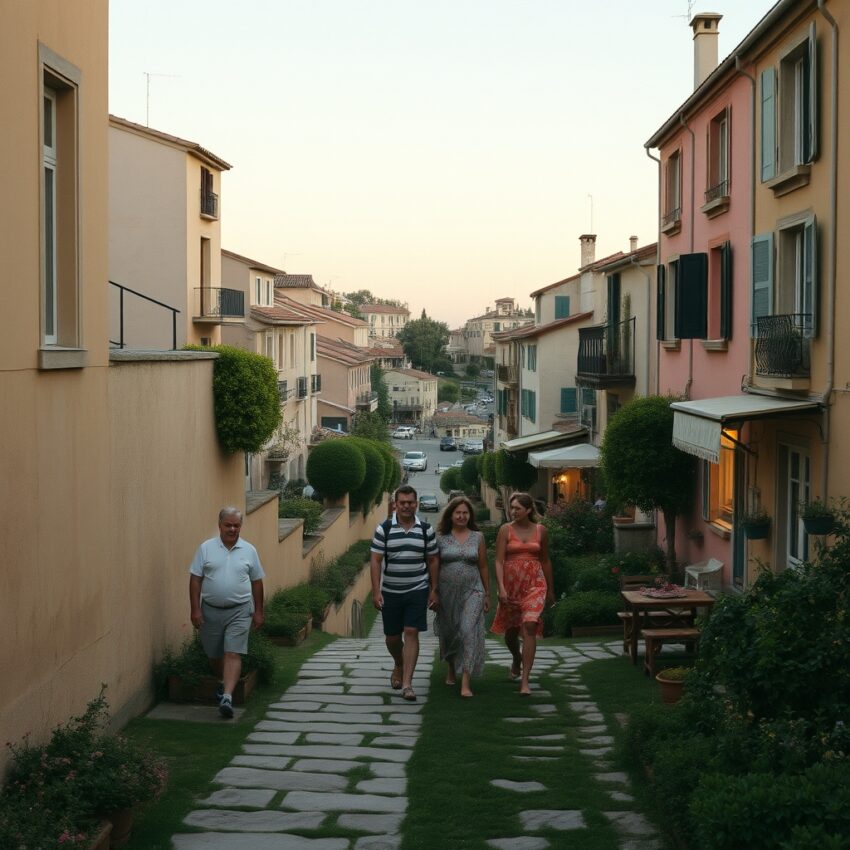
Bir zamanlar yaz akşamı, saatle değil ışığın yumuşamasıyla başlardı. Kıyı kasabalarında güneş denizin üstünden çekilirken evlerin önündeki taş yollar birden serinlemez, günün sıcaklığını ince ince saklamaya devam ederdi. İnsanlar o saatlerde acele etmezdi; pencereler açılır, perdeler usulca kabarır, mutfaktan tabak toplanma sesi gelirken bahçelerde ıhlamurla karışık nemli toprak kokusu yükselirdi. Akşam gezmesi denilen şey yalnız yürümek değildi. O, yaz mevsiminin her gün tekrarlanan terbiyesi, kasabanın kendi kendini yoklayışı gibiydi. Sahile doğru inen aileler, beyaz gömleklerinin içinde daha yavaş konuşan babalar, örgülü saçlarına kurdele bağlanmış çocuklar ve elinde küçük bir çanta taşıyan anneler, sanki aynı görünmez çağrıya uyarak sokağa çıkardı. Geçmişe bakınca daha parlak görünen o yazlar biraz da bu ortak ritim yüzünden ışıldar.
Zamanın İzinde düşününce akşam gezmeleri eski kıyı kasabalarının toplumsal takvimi gibiydi. Gün boyu işine, evine, dükkânına çekilmiş insanlar, akşam serinliğiyle birlikte yeniden görünür olurdu. Sahil boyundaki banklar, çay bahçesinin önünden geçen kaldırım, belediye hoparlöründen uzaktan gelen hafif musiki, bir kasabanın kamusal hayatını gürültüsüz biçimde kurardı. Bahçelerde açan ıhlamur ya da o kokuyu taşıyan ağaçların gölgesi, bu yürüyüşlere neredeyse törensel bir yumuşaklık katardı. Biri selam verir, diğeri başıyla karşılık verir, çocuklar bir süre önden koşup sonra ailelerinin adımlarına geri dönerdi. Eski saatler dediğimiz şeyin ruhu tam da burada saklıdır: zaman, tüketilmesi gereken bir şey değil, birlikte hissedilen bir akşamın kabıydı.
Bu ritüelin hafızada böylesine parlak kalmasının nedeni yalnız deniz manzarası değildir. Asıl etkileyen, gündelik hayatın küçük ayrıntılarının birbirini tamamlamasıdır. Denizden gelen hafif iyot kokusuna bahçe duvarlarının üstünden sarkan hanımeli, ıhlamur ve ıslatılmış avlu taşlarının kokusu karışırdı. Terzinin vitrinini kapatmadan önce yaptığı son düzeltme, dondurmacının metal kepçesinin sesi, kahvenin önündeki sandalyelerin sokağa biraz daha yaklaşması, bütün kasabayı aynı akşam duygusunda birleştirirdi. Çocuk için bu gezme dondurma ya da gazoz umudu taşırdı; gençler için uzaktan bakışmanın, büyükler için günün yorgunluğunu sessizce çözmenin yoluydu. Bahçeler bu yüzden yalnız süs değil, akşamın duygusunu sokakla paylaşan canlı alanlardı. Ihlamur kokusuna dönen o bahçeler, evle kamusal hayat arasındaki geçişi yumuşatır, insana yazın gerçekten yaşandığını hissettirirdi.
Bugün geçmişe dönüp bakıldığında o yazların neden daha parlak göründüğü sorusunun cevabı biraz da bu ölçülü zenginlikte saklıdır. Hayat daha kolay değildi; ama akşamın kıymeti daha belirgindi. İnsanlar günü bir ekranın karşısında değil, sokağın ve birbirinin yüzünde kapatırdı. Akşam gezmesi, kasabanın hafızasını her gün yeniden yazan sessiz bir metindi. Bahçelerden taşan ıhlamur kokusu, deniz kıyısında uzayan gölgeler, aynı saatte aynı yoldan geçen tanıdık yüzler, bugün özlenen şeyin yalnız estetik değil, ait olma hissi olduğunu anlatır. Belki de bu yüzden geçmişteki o yazlar gözümüze daha aydınlık gelir. Parlak olan yalnız günbatımı değil, insanların birbirine görünür olduğu o saatlerdir; ıhlamur kokusuna dönen bahçeler de bu ortak görünürlüğün en zarif hatırası olarak kalır.
🇬🇧 English | The Bright Memory of Evenings Lengthening in Linden-Scented Gardens
There was a time when a summer evening began not by the clock, but by the softening of the light. In coastal towns, as the sun withdrew from the sea, the stone paths in front of houses did not cool at once, but kept the day’s warmth in a fine and patient way. People did not hurry at that hour. Windows were opened, curtains swelled gently, the sound of plates being cleared came from kitchens, and in the gardens a scent rose that mixed damp earth with linden. What people called the evening walk was never just a walk. It was the daily discipline of summer itself, the town quietly taking its own pulse. Families moving toward the shore, fathers speaking more slowly inside white shirts, children with ribbons tied into braided hair, and mothers carrying a small bag all stepped into the street as if answering the same invisible call. Those summers seem brighter in memory partly because they moved according to a shared rhythm.
Seen through the trace of time, evening walks were almost the social calendar of old coastal towns. People who had withdrawn all day into work, home, or shop became visible again with the evening coolness. Benches along the waterfront, the pavement passing in front of the tea garden, and faint music coming from a municipal loudspeaker built the public life of the town without noise. Linden blossoms in the gardens, or the shade of trees carrying that scent, gave those walks an almost ceremonial softness. One person greeted another, a nod answered in return, children ran a little ahead and then returned to the pace of their families. The spirit of those old hours lies exactly there: time was not something to be consumed, but the vessel of an evening felt together.
The reason this ritual remains so bright in memory is not only the view of the sea. What moves us more deeply is the way small details of ordinary life completed one another. The mild iodine scent coming from the water mingled with honeysuckle falling over garden walls, with linden, and with the smell of courtyard stones newly splashed with water. The tailor making a final adjustment before closing the window display, the sound of an ice-cream seller’s metal scoop, and the chairs outside the coffeehouse inching closer to the street all gathered the town into the same evening feeling. For children the walk carried the hope of ice cream or soda; for the young it offered the possibility of glances exchanged from afar; for adults it was a way of quietly loosening the fatigue of the day. The gardens were therefore not mere decoration, but living spaces that shared the feeling of evening with the street. Turning to the scent of linden, they softened the passage between home and public life and made people feel that summer was truly being lived.
Looking back now, the reason those summers appear brighter is hidden in that measured richness. Life was not easier, yet the value of evening was more clearly felt. People did not end the day before a screen, but in the street and on one another’s faces. The evening walk was a silent text through which the town rewrote its memory every day. The linden scent drifting out of gardens, the shadows lengthening by the shore, and the familiar faces passing along the same road at the same hour tell us that what is longed for is not only beauty, but belonging. Perhaps that is why those summers seem more luminous from a distance. What shone was not only the sunset, but those hours in which people were visible to one another, and the gardens turning to the scent of linden remain the most graceful memory of that shared visibility.
🇧🇷 Português (Brasil) | A Memória Brilhante das Noites Alongadas em Jardins com Cheiro de Tília
Houve um tempo em que a noite de verão começava não pelo relógio, mas pelo modo como a luz perdia força. Nas cidades litorâneas, quando o sol se retirava do mar, os caminhos de pedra diante das casas não esfriavam de uma vez; continuavam guardando, de maneira delicada, o calor do dia. Nessa hora ninguém tinha pressa. As janelas eram abertas, as cortinas inchavam devagar, ouvia-se da cozinha o som dos pratos sendo recolhidos, e dos jardins subia um perfume de terra úmida misturado à tília. O passeio da noite não era apenas caminhar. Era a disciplina cotidiana do verão, a maneira silenciosa com que a cidade verificava a si mesma. Famílias descendo em direção à beira-mar, pais falando mais devagar dentro de suas camisas claras, crianças de tranças com fitas e mães levando uma pequena bolsa saíam para a rua como se respondessem ao mesmo chamado invisível. Esses verões parecem mais brilhantes quando lembrados justamente porque obedeciam a um ritmo comum.
Vistos pelo rastro do tempo, os passeios da noite eram quase o calendário social das antigas cidades costeiras. As pessoas que passavam o dia recolhidas no trabalho, em casa ou na loja voltavam a aparecer com a brisa do entardecer. Os bancos à beira-mar, a calçada diante do jardim de chá e a música suave vinda de um alto-falante municipal construíam a vida pública da cidade sem alarde. As flores de tília nos jardins, ou a sombra das árvores que levavam aquele aroma, davam ao passeio uma delicadeza quase cerimonial. Um cumprimentava, o outro respondia com a cabeça, as crianças corriam um pouco à frente e depois voltavam ao passo da família. O espírito daquelas velhas horas estava exatamente aí: o tempo não era algo a ser gasto, mas o recipiente de uma noite sentida em conjunto.
O motivo de esse ritual permanecer tão luminoso na memória não está apenas na paisagem do mar. O que mais toca é a maneira como os pequenos detalhes da vida cotidiana se completavam. Ao leve cheiro de maresia se juntavam o jasmim que caía por cima dos muros, a tília e o aroma das pedras do quintal recém-molhadas. O alfaiate dando o último ajuste antes de fechar a vitrine, o som metálico da concha do sorveteiro e as cadeiras do café avançando um pouco mais para a rua reuniam toda a cidade na mesma sensação de entardecer. Para a criança, o passeio trazia a esperança de um sorvete ou de um refrigerante; para os jovens, a chance de trocar olhares à distância; para os adultos, a possibilidade de desfazer em silêncio o cansaço do dia. Por isso, os jardins não eram apenas adorno, mas espaços vivos que compartilhavam com a rua a emoção da noite. Quando tomavam cheiro de tília, tornavam mais suave a passagem entre a casa e a vida pública e faziam sentir que o verão estava de fato sendo vivido.
Hoje, olhando para trás, entende-se que a razão de aqueles verões parecerem mais brilhantes está nessa riqueza medida. A vida não era mais fácil, mas o valor do entardecer era mais nítido. As pessoas não encerravam o dia diante de uma tela, e sim na rua e no rosto umas das outras. O passeio da noite era um texto silencioso por meio do qual a cidade reescrevia diariamente a própria memória. O perfume de tília saindo dos jardins, as sombras se alongando à beira-mar e os rostos conhecidos passando pelo mesmo caminho no mesmo horário mostram que o que faz falta não é só a beleza, mas o sentimento de pertencimento. Talvez por isso aqueles verões pareçam mais claros na lembrança. O que brilhava não era apenas o pôr do sol, mas as horas em que as pessoas eram visíveis umas para as outras, e os jardins tomados pelo cheiro de tília permanecem como a memória mais delicada dessa visibilidade compartilhada.