🇹🇷 Türkçe | Taş Kaldırımlı Akşamlara Yayılan Pilav Kokusu
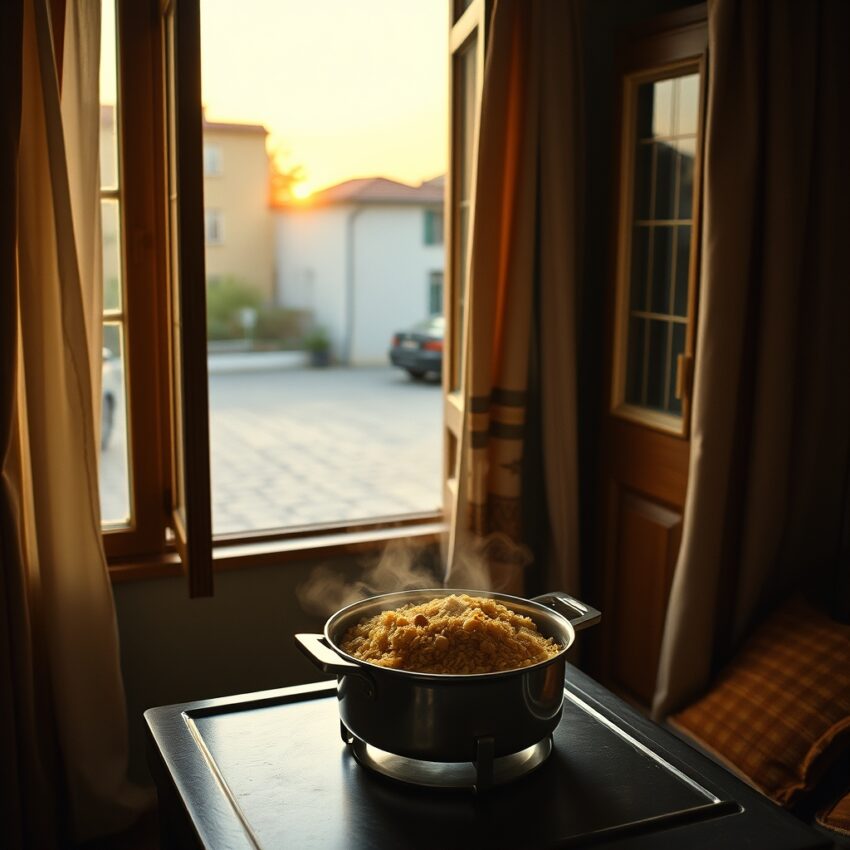
Bir zamanlar akşam yemeğinin haberi mutfakta değil sokakta duyulurdu. Özellikle yaz günlerinde, taş kaldırımlar günün sıcaklığını korurken ve pencereler sonuna kadar açık dururken, sokak arasından gelen nohutlu pilav kokusu eve yaklaşan sofranın ilk işareti olurdu. Elinde alüminyum tencereyle dönen biri daha apartmana girmeden koku merdiven boşluğuna yayılır, kapı aralığından salona, salondan perdeye, perdeden çocukların iştahına ulaşırdı. Sokakta satılan ya da küçük dükkândan alınan nohutlu pilavın bütün evi aynı kokuyla doldurması, yalnız yemeğin güçlü buharından değil, o dönemin daha geçirgen ev hayatından kaynaklanıyordu. Ev ile sokak arasında bugünkü kadar kalın sınırlar yoktu; yemek kokusu da bu yakınlığın en canlı tanıklarından biriydi.
Damak Hafızası açısından nohutlu pilav, yalnız doyurucu bir yemek değil, şehir hayatının sade ama güven veren lezzetlerinden biridir. Pirincin tane tane oluşu, nohutun yumuşaklığı, üstüne serpiştirilen karabiber ya da kimi evlerde eklenen tavuk suyu kokusu, sofraya gelir gelmez herkesi aynı duyguda buluştururdu. Bu yemek çoğu zaman büyük hazırlık istemezdi; ama tam da bu yüzden şehir hayatının ritmine çok iyi uyum sağlardı. İşten geç dönen baba, oyundan yeni giren çocuk, mutfakta yoğurt çıkaran anne, hepsi pilavın buharında ortak bir akşama bağlanırdı. Sokak arasından gelen pilav, eve yalnız yemek değil, dışarıdaki hayatın sıcak nabzını da getirirdi. Satıcının sesi, metal kepçenin tencereye çarpışı ve taş kaldırımda yankılanan ayak sesleri sofraya görünmeden önce ulaşırdı.
Bu kokunun bütün evi doldurması biraz da eski yapıların ve yaşam alışkanlıklarının sonucuydu. Pencereler açık, kapılar yarı aralık, balkonlar birbirine yakın, apartman boşlukları ses ve koku taşıyacak kadar geçirgendi. Böylece bir yemekten yükselen buhar yalnız mutfakta kalmaz, evin her köşesine ince ince sinerdi. Çocuk odasında defterini açık bırakan biri de, balkon demirine dirseklerini dayamış biri de aynı kokuyu duyar ve aşağıdan gelen pilavın eve ulaştığını anlardı. Koku, yemeğin fiziksel varlığından önce gelen bir davet gibiydi. Sessiz bir yaz akşamında taş kaldırımlar boyunca yayılan bu davet, mahallenin ortak iştahını da hatırlatırdı; çünkü aynı saatlerde başka evlerde de benzer tencereler açılıyor, yoğurt kapları sofraya konuyor, kaşık sesleri duyulmaya hazırlanıyordu.
Bugün nohutlu pilavın hatırlattığı şey yalnız bir lezzet değil, birlikte yenen sade yemeklerin kurduğu ev içi yakınlıktır. O pilav bazen tek başına, bazen turşuyla, bazen ayranla, bazen de üstüne serpilmiş karabiberle yenirdi; ama hangi biçimde olursa olsun sıcak ve tanıdık bir akşam hissi taşırdı. Bütün evin aynı kokuyla dolması, sofranın henüz kurulmadan önce bile aileyi bir araya getirmesi demekti. Bu yüzden sokak arası nohutlu pilav hafızada yalnız damakta değil, evin duvarlarında da kalmıştır. Taş kaldırımlar boyunca sessiz bir yaz akşamına karışarak gelen o koku, geçmişte yemeğin yalnız karın doyurmadığını; aynı zamanda ev ile mahalleyi aynı nefeste buluşturduğunu anlatır.
🇬🇧 English | The Smell of Rice Spreading Through Evenings of Stone Pavements
There was a time when the news of dinner was heard not in the kitchen, but in the street. Especially in summer, while the stone pavements retained the warmth of the day and windows stayed wide open, the smell of chickpea rice drifting from a side street became the first sign of a meal approaching home. Someone returning with an aluminum pot in hand spread that smell through the stairwell before even reaching the apartment, and from the doorframe it traveled into the sitting room, into the curtains, and into the appetite of children. The fact that street-bought chickpea rice could fill the whole house with one scent came not only from its strong steam, but from the more permeable domestic life of that era. The boundaries between home and street were not as thick as they are today, and the smell of food was one of the liveliest witnesses to that closeness.
From the perspective of taste memory, chickpea rice was more than a filling dish; it was one of the plain yet reassuring flavors of urban life. The loose grains of rice, the softness of the chickpeas, and the scent of black pepper or, in some homes, a little broth brought everyone at the table into the same mood the moment it arrived. It rarely required elaborate preparation, and precisely for that reason it fit easily into the rhythm of city living. The father returning late from work, the child just coming in from play, the mother taking yogurt from the kitchen, all were tied into the same evening by the steam of the rice. What arrived from the side street brought not only food, but the warm pulse of life outside. The cry of the vendor, the sound of a metal ladle striking the pot, and footsteps echoing on stone all reached the meal before it could be seen.
The reason this scent filled an entire house also had to do with old buildings and old habits of living. Windows remained open, doors half ajar, balconies stood close to one another, and stairwells were porous enough to carry sound and smell. As a result, steam rising from a dish did not stay in the kitchen, but spread lightly into every corner of the home. Someone leaving a notebook open in the children’s room or leaning on the balcony railing would both understand from the same smell that the rice from downstairs had arrived. The aroma functioned like an invitation that preceded the physical presence of the meal. On a silent summer evening stretching along the stone pavements, that invitation also recalled the neighborhood’s shared appetite. At the same hour, similar pots were being opened in other homes, bowls of yogurt were being set on tables, and the sound of spoons was preparing to begin.
What chickpea rice recalls today is not merely a taste, but the domestic closeness built by simple meals eaten together. Sometimes it was eaten by itself, sometimes with pickles, sometimes with ayran, sometimes with black pepper scattered over the top, but in any form it carried the feeling of a warm and familiar evening. For the entire house to fill with the same scent meant that the table had already begun to gather the family even before it was fully laid. That is why street-corner chickpea rice remains not only on the tongue, but in the walls of memory. Blending into a silent summer evening along the stone pavements, that smell reminds us that food once did more than satisfy hunger; it brought home and neighborhood together in a single breath.
🇧🇷 Português (Brasil) | O Cheiro do Arroz se Espalhando pelas Noites de Calçadas de Pedra
Houve um tempo em que o aviso do jantar vinha não da cozinha, mas da rua. Principalmente no verão, quando as calçadas de pedra ainda guardavam o calor do dia e as janelas ficavam abertas até tarde, o cheiro de arroz com grão-de-bico vindo da rua estreita era o primeiro sinal de que a mesa estava a caminho. Alguém subindo com a panela de alumínio nas mãos espalhava esse aroma pelo vão da escada antes mesmo de entrar em casa, e do batente ele seguia para a sala, para as cortinas e para o apetite das crianças. O fato de um arroz comprado na rua conseguir encher a casa inteira com o mesmo cheiro não vinha apenas do vapor forte do prato, mas também da vida doméstica mais permeável daquela época. As fronteiras entre casa e rua não eram tão espessas como hoje, e o cheiro da comida era uma das provas mais vivas dessa proximidade.
Do ponto de vista da memória do paladar, o arroz com grão-de-bico era mais do que um prato farto; era um dos sabores mais simples e mais confiáveis da vida urbana. O arroz soltinho, a maciez do grão-de-bico e o cheiro de pimenta-do-reino ou, em algumas casas, de caldo de galinha reuniam todos na mesma disposição assim que o prato chegava à mesa. Quase nunca exigia uma preparação longa, e justamente por isso se encaixava tão bem no ritmo da cidade. O pai que voltava tarde do trabalho, a criança que acabava de entrar da brincadeira e a mãe que tirava o iogurte da cozinha se encontravam na mesma noite graças ao vapor do arroz. O que vinha da rua trazia não só comida, mas também o pulso caloroso da vida lá fora. O chamado do vendedor, o som da concha de metal tocando a panela e os passos ecoando na pedra chegavam antes mesmo de o prato aparecer.
O motivo de esse cheiro tomar a casa inteira também tinha relação com os prédios antigos e com os hábitos de viver. As janelas ficavam abertas, as portas entreabertas, as varandas próximas umas das outras, e os vãos das escadas eram suficientemente permeáveis para conduzir som e aroma. Assim, o vapor que subia da comida não se limitava à cozinha, mas se espalhava com delicadeza por todos os cantos. Quem deixava o caderno aberto no quarto ou apoiava os cotovelos na grade da varanda percebia pelo mesmo cheiro que o arroz já tinha chegado. O aroma funcionava como um convite que antecedia a presença concreta da refeição. Numa noite silenciosa de verão ao longo das calçadas de pedra, esse convite também lembrava o apetite compartilhado do bairro. Naquela mesma hora, panelas parecidas eram abertas em outras casas, tigelas de iogurte iam para a mesa, e o som das colheres se preparava para começar.
Hoje, o que o arroz com grão-de-bico traz de volta não é apenas um sabor, mas a intimidade doméstica criada por refeições simples feitas em conjunto. Às vezes ele era servido sozinho, às vezes com picles, às vezes com ayran, às vezes com bastante pimenta por cima, mas, em qualquer forma, carregava a sensação de uma noite quente e conhecida. A casa inteira se encher do mesmo cheiro significava que a mesa já começava a reunir a família antes mesmo de estar pronta. É por isso que o arroz com grão-de-bico da rua ficou não apenas no paladar, mas também nas paredes da memória. Misturado a uma noite silenciosa de verão sobre as calçadas de pedra, esse cheiro lembra que a comida fazia mais do que matar a fome; ela unia casa e bairro no mesmo fôlego.