🇹🇷 Türkçe | Kömür Tozu İçindeki Çocuk Adımlarının Şehirde Bıraktığı İz
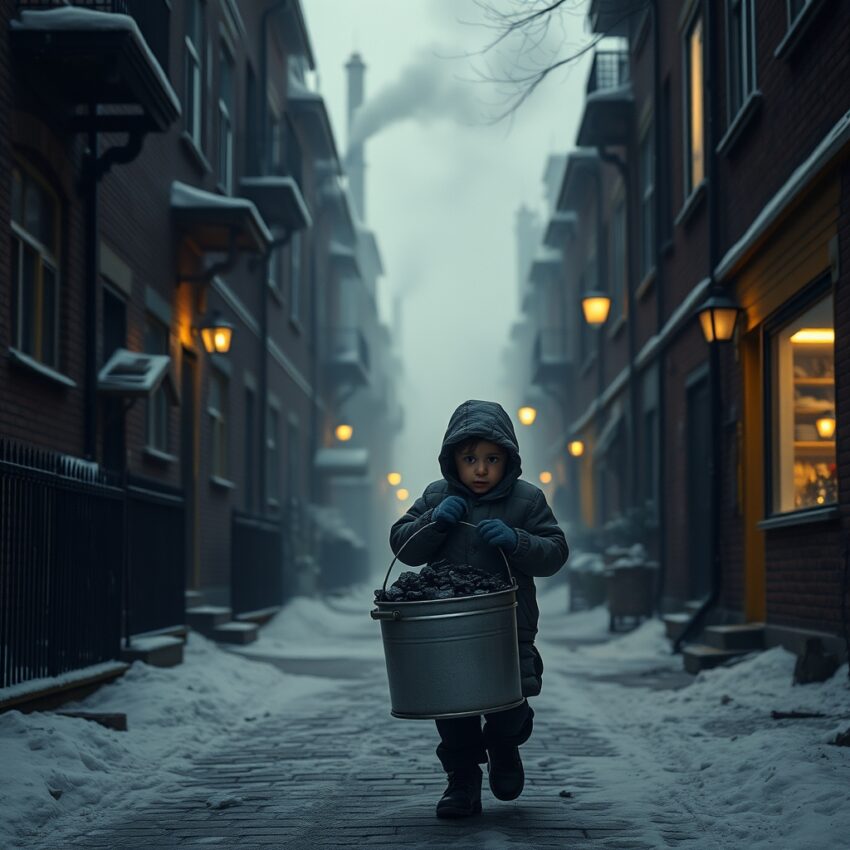
Bir zamanlar kış yalnız soğukla değil, hazırlıkla da gelirdi. Mahalle sokaklarında hava erkenden kararır, pencereler buğulanır, bacalardan yükselen duman ağır bir akşamın habercisi olurdu. Böyle günlerde soba kömürü taşıyan çocuklar, eski şehir hayatının en tanıdık ama en az konuşulan figürlerinden biriydi. Ellerinde teneke kova, omuzlarında çuval ya da kucaklarında birkaç parça kömürle bakkaldan, depodan, avludan eve doğru yürürlerdi. Ayakkabılarının kenarı tozlanır, elleri kararır, nefesleri soğukta görünür olurdu. Ama bu manzara yoksulluktan ibaret bir görüntü olarak değil, kışın ortak yükünü paylaşan mahalle hayatının doğal parçası olarak hatırlanır. Çocukların taşıdığı şey yalnız kömür değil; evin ısınmasına katılmanın sessiz sorumluluğuydu.
Mahalle Kültürü açısından bu çocuklar, aile ile sokak arasındaki görünmez işbirliğinin canlı işaretleridir. Eski şehir hayatında soba yalnız bir eşya değil, ev düzeninin merkezidir. Isınmak, çayın kaynaması, yemeğin ağır ağır pişmesi, akşamın aileyi aynı odada toplaması hep ona bağlıdır. Bu yüzden kömür taşımak da küçük ama ciddi bir iştir. Mahallenin kömürcüsü, apartmanın bodrumu, avluda biriken kül kovası ve sobanın yakılma saati arasında çocuklar da kendi rollerini alır. Bir eve yardım etmek, komşunun işini görmek, anneden gelen “iki kova daha getir” sesine cevap vermek, onları yalnız aile içinde değil mahalle düzeni içinde de görünür kılar. Çocukluk, o yıllarda biraz da evin ihtiyacına omuz vermeyi öğrenerek büyürdü.
Cam buğusunun ardından sokakların hafızasına sinen bu görüntü, kış şehirlerinin kendine özgü görsel dilini de kurar. Dışarıda elleri kömür tozuyla kararmış çocuk, içeride soba başında ısınacak ailenin bir parçasıdır. Yani sokakla ev arasında gerçek bir dolaşım vardır. Çocuk kapıdan içeri girer, sobanın yanındaki demir maşaya, odadaki sıcak ekmek kokusuna ve radyodan gelen akşam sesine yaklaşır. Sonra belki yeniden dışarı çıkar, komşuya yardım eder, başka bir apartmana birkaç parça daha taşır. Bu hareketlilik, mahallenin kış dayanışmasını görünür kılar. Eski şehir hayatının kalbinde yer etmelerinin sebebi de budur: onlar yoksunluğun değil, ortak hayatın çalışkan ritminin parçasıdır.
Bugünden bakınca bu sahne, çocuk emeği tartışmalarının ötesinde, dönemin gündelik sorumluluk anlayışını da gösterir. O yılların mahallelerinde çocuk, yalnız oynayan değil; su getiren, ekmek alan, sobaya kömür taşıyan, alışverişe koşan küçük bir aile üyesidir. Bu durumun yorgunluğu kadar aidiyeti de vardır. Çünkü yapılan iş, çoğu zaman ceza gibi değil, evin ve mahallenin içinde yer alma biçimi olarak hissedilirdi. Bir çocuğun soba kömürü taşıması, yetişkin dünyasına erken karışmanın küçük bir provasıydı. Aynı zamanda komşuların birbirini gördüğü, kolladığı ve gerektiğinde yükü paylaştığı bir toplumsal yapıyı anlatır.
Bugün eski şehir hayatını hatırlarken kömür taşıyan çocukların görüntüsü hâlâ güçlüdür; çünkü o sahne, kışın sertliğini ve mahallenin sıcaklığını aynı karede toplar. Bu çocuklar kalpte yer eder, çünkü şehir onların adımlarıyla kışa hazırlanırdı. Ayakkabı ucunda kalan kömür tozu, soğuk havada çıkan buhar ve eve taşınan sıcaklık arasındaki bağ, geçmiş şehir yaşamının en sade ama en dokunaklı hikâyelerinden biridir. Sokakların hafızası biraz da bu küçük adımları unutmadığı için canlı kalır.
🇬🇧 English | The Mark Left on the City by Children’s Coal-Dusted Steps
There was a time when winter arrived not only with cold, but with preparation. In neighborhood streets the light faded early, windows fogged over, and smoke rising from chimneys announced the weight of evening. On such days, children carrying stove coal were among the most familiar yet least spoken-about figures of old urban life. With a tin bucket in hand, a sack over the shoulder, or a few pieces of coal gathered in the arms, they walked from grocer, yard, or coal depot back toward home. Their shoes collected dust, their hands darkened, and their breath became visible in the air. Yet the image is remembered not simply as a sign of hardship, but as a natural part of neighborhood life sharing winter’s common burden. What those children carried was not only coal, but a quiet share in the work of warming the home.
From the perspective of neighborhood culture, these children are living signs of the invisible cooperation between household and street. In older urban life, the stove was not merely an object, but the center of domestic order. Warmth, tea brewing, food simmering slowly, and the gathering of the family in a single room all depended on it. For that reason, carrying coal was a small but serious task. Between the neighborhood coal seller, the basement storage, the ash bucket in the courtyard, and the hour when the stove would be lit, children held their own role. Helping the family, running a small errand for a neighbor, answering a mother’s call for two more buckets made them visible not only within the household but within the order of the neighborhood itself. Childhood in those years partly meant growing by learning how to shoulder the needs of home.
This image, settling into the memory of the street behind fogged windows, also helped create the visual language of winter cities. The child standing outside with hands darkened by coal dust belonged at the same time to the family that would soon warm itself indoors beside the stove. There was a real circulation between street and house. The child came through the door toward the iron poker near the stove, the smell of warm bread in the room, and the evening sounds from the radio, then perhaps went out once more to help a neighbor or carry a few more pieces into another building. That movement made the neighborhood’s winter solidarity visible. The reason these children held a place at the heart of old urban life is precisely this: they were part not of deprivation alone, but of the industrious rhythm of shared life.
From today’s perspective, the scene reveals not only the conditions of the period, but also its everyday understanding of responsibility. In those neighborhoods, a child was not only someone who played, but also someone who fetched water, bought bread, carried coal, and ran errands. There was fatigue in this, but also belonging. The work was often felt not as punishment, but as a way of taking one’s place within the household and the neighborhood. A child carrying stove coal was rehearsing, in a small way, entry into the adult world. At the same time, the scene spoke of a social structure in which neighbors saw one another, kept an eye out, and shared the burden when needed.
The image of children carrying coal remains powerful in memory because it gathers winter’s severity and the neighborhood’s warmth into the same frame. These children stay in the heart because the city prepared itself for winter through their steps. The dust on the edge of a shoe, the cloud of breath in the cold, and the warmth carried back into the home together form one of the plainest yet most moving stories of past urban life. The memory of the streets remains alive partly because it has not forgotten those small steps.
🇧🇷 Português (Brasil) | A Marca que os Passos Cobertos de Poeira de Carvão Deixaram na Cidade
Houve um tempo em que o inverno chegava não apenas com o frio, mas também com preparação. Nas ruas do bairro a luz desaparecia cedo, os vidros das janelas embaçavam e a fumaça que subia das chaminés anunciava o peso da noite. Em dias assim, as crianças que carregavam carvão para o fogão eram uma das figuras mais conhecidas e ao mesmo tempo menos comentadas da antiga vida urbana. Com um balde de lata na mão, um saco no ombro ou alguns pedaços de carvão apertados nos braços, elas voltavam do armazém, do depósito ou do quintal em direção à casa. Os sapatos ficavam empoeirados, as mãos escureciam e a respiração aparecia no ar gelado. Ainda assim, essa imagem não ficou apenas como sinal de dificuldade, mas como parte natural de uma vida de bairro que dividia o peso comum do inverno. O que essas crianças carregavam não era somente carvão, mas uma parcela silenciosa da tarefa de aquecer a casa.
Do ponto de vista da cultura de bairro, essas crianças são sinais vivos da cooperação invisível entre casa e rua. Na antiga vida urbana, o fogão não era apenas um objeto, mas o centro da ordem doméstica. O calor, o chá no bule, a comida cozinhando devagar e a reunião da família num mesmo cômodo dependiam dele. Por isso, carregar carvão era uma tarefa pequena, porém séria. Entre o vendedor do bairro, o depósito do prédio, o balde de cinzas no pátio e a hora de acender o fogão, as crianças ocupavam o seu próprio papel. Ajudar a família, fazer um favor ao vizinho, responder ao pedido da mãe para trazer mais dois baldes fazia com que elas se tornassem visíveis não apenas dentro de casa, mas na própria ordem do bairro. Naqueles anos, crescer também significava aprender a sustentar um pouco das necessidades do lar.
Essa cena, depositada na memória das ruas por trás dos vidros embaçados, ajudava ainda a formar a linguagem visual das cidades de inverno. A criança do lado de fora, com as mãos escurecidas pela poeira do carvão, já fazia parte da família que em breve se aqueceria junto ao fogão. Havia uma circulação real entre a rua e a casa. A criança entrava pela porta em direção ao atiçador de ferro, ao cheiro de pão quente e aos sons do rádio ao entardecer e talvez saísse de novo para ajudar um vizinho ou levar mais alguns pedaços a outro prédio. Esse movimento tornava visível a solidariedade de inverno do bairro. É por isso que essas crianças ocupavam o coração da antiga vida urbana: eram parte não apenas da carência, mas do ritmo trabalhador da vida compartilhada.
Vista de hoje, a cena mostra também a maneira como aquela época compreendia a responsabilidade cotidiana. Nessas vizinhanças, criança não era apenas quem brincava, mas também quem trazia água, comprava pão, carregava carvão e fazia pequenos recados. Havia cansaço nisso, mas também pertencimento. Na maioria das vezes, o trabalho não era sentido como castigo, mas como forma de ocupar um lugar na casa e no bairro. Carregar carvão para o fogão era uma pequena preparação para a entrada no mundo dos adultos. Ao mesmo tempo, a cena falava de uma estrutura social em que os vizinhos se viam, se observavam e dividiam a carga quando necessário.
Ainda hoje a imagem dessas crianças continua forte porque reúne, num mesmo quadro, a dureza do inverno e o calor do bairro. Elas permanecem no coração porque a cidade se preparava para o frio com os seus passos. A poeira de carvão na ponta do sapato, o vapor da respiração e o calor levado de volta para casa formam uma das histórias mais simples e mais comoventes da vida urbana do passado. A memória das ruas continua viva também porque não esqueceu esses passos pequenos.