🇹🇷 Türkçe | Salça Kazanında Biriken Ev Huyları
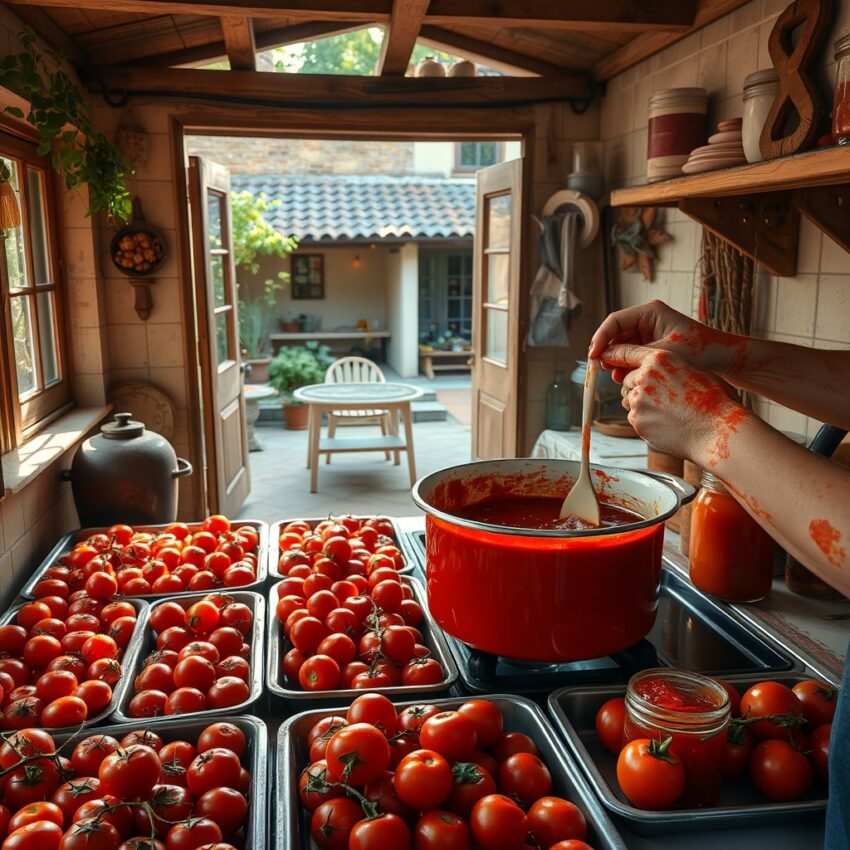
Bir zamanlar domates salçası yapmak, mutfakta olup biten tek bir iş değil; bütün evin ritmini değiştiren mevsimlik bir seferberlikti. Yazın sonu yaklaşırken avluya, balkona ya da geniş mutfak tezgâhına yayılan kırmızı domatesler, daha başlamadan evin havasını değiştirirdi. Kasalar açılır, bıçaklar bilenir, bezler hazırlanır, büyük tencereler yerinden indirilirdi. Domatesin kabuğu, çekirdeği, ezilen eti ve tuzla karışan o yoğun kokusu yalnız damağa değil, duvara, önlüğe, ele ve hafızaya da sinerdi. İz bırakmış domates salçası günleri bu yüzden yalnız bir yiyecek hazırlığı olarak hatırlanmaz; ev mutfağının karakterini açık eden, sabrını, düzenini ve ortak emeğini gösteren bir zaman dilimi olarak kalır.
Damak Hafızası açısından salça günlerinin belirleyici yanı, mutfağın karakterini bütün açıklığıyla ortaya koymasıdır. Çünkü salça, hızlıca hazırlanıp unutulan bir şey değildir. Yıkama, ayıklama, doğrama, kaynatma, süzme, yeniden pişirme ve kavanoza alma gibi aşamalar, evin mutfak düzenini ve iş paylaşımını görünür kılar. Hangi tencerenin kullanılacağı, tuzun ne zaman ekleneceği, güneşte bekletilip bekletilmeyeceği, karıştırma kaşığının tahta mı metal mi olacağı her evin kendi usulünü anlatır. Bazı evler salçayı koyu sever, bazıları daha parlak kırmızı bırakır, kimi aile çekirdeği tamamen ayıklar, kimi biraz pütürlü dokuyu doğal bulur. İşte ev mutfağının karakteri biraz da bu küçük tercihlerin toplamında yaşar.
Salça günleri aynı zamanda aile içi işbirliğinin en canlı sahnelerinden biridir. Birinin domates yıkadığı, bir başkasının kabuk ayıkladığı, yaşça büyük olanın tencerenin başında koyulaşmayı kontrol ettiği, çocuğun kavanoz kapaklarını taşıdığı bu günlerde mutfak tek kişilik bir alan olmaktan çıkar. Evde konuşulan konular, yazın ne çabuk geçtiği, kışa nelerin hazırlanacağı, geçen yılın salçasının nasıl dayandığı gibi ayrıntılarla birlikte akar. Domatesin rengi elleri boyarken, mutfak da yalnız yemek üreten değil, aile hafızası biriktiren bir mekâna dönüşür. Bu yüzden bugün bir kavanoz ev salçasına bakıldığında çoğu kişi yalnız tadı değil, o günlerin telaşını, kırmızı lekeleri ve tencere başındaki konuşmaları da hatırlar.
Ev mutfağının karakterini anlatması biraz da salçanın saklama fikriyle ilgilidir. Çünkü salça, bugünün emeğini yarının yemeğine taşıyan bir hazırlıktır. Yaz güneşi altında kaynatılan domates, kışın çorbaya, türlüye, pilava ya da sulu yemeğe karışarak mevsimler arasında görünmez bir köprü kurar. Böylece mutfak yalnız o anı doyuran değil, geleceği düşünen bir yer hâline gelir. Düzenli raflar, etiketlenmiş kavanozlar, üstüne zeytinyağı gezdirilerek korunan yüzeyler, evin tedbirli ve sabırlı yanını gösterir. Salça yapmak biraz da “ilerisi için hazırlanmak” terbiyesidir. Bu terbiye, mutfağın karakterine cömertlik kadar öngörü de ekler.
Bugün iz bırakmış domates salçası günleri yeniden anıldığında insanların aklına yalnız lezzet gelmez; bir evin çalışma biçimi, sabrı ve kendine özgü ruhu da gelir. Salça tenceresinde koyulaşan şey yalnız domates değildir; aile düzeni, mevsim bilgisi ve mutfak hafızası da orada yoğunlaşır. Ev mutfağının karakterini anlatmasının nedeni tam budur. Kırmızı lekeler kolay silinse bile o günlerin kokusu ve usulü hafızadan çıkmaz. Çünkü bazı yiyecekler sofraya gelmeden çok önce bir evin kim olduğunu anlatmaya başlar; domates salçası da bunların en başında gelir.
🇬🇧 English | The Domestic Habits Gathered in the Tomato-Paste Pot
There was a time when making tomato paste was not a single kitchen task, but a seasonal mobilization that changed the rhythm of the whole house. As the end of summer approached, the tomatoes spread across the courtyard, balcony, or wide kitchen counter altered the atmosphere before the work even began. Crates were opened, knives were sharpened, cloths were prepared, and large pots were brought down from their shelves. The dense smell of tomato skin, seed, crushed flesh, and salt sank not only into the palate, but into walls, aprons, hands, and memory. For that reason, the days marked by tomato paste are remembered not merely as food preparation, but as a stretch of time that revealed the patience, order, and shared labor shaping the character of the home kitchen.
From the perspective of taste memory, what made tomato-paste days so defining was the way they displayed the kitchen’s character in full view. Tomato paste is not something made quickly and forgotten. Washing, sorting, chopping, boiling, straining, cooking again, and filling jars all made the household’s culinary order and division of labor visible. Which pot would be used, when the salt would be added, whether the mixture would rest in the sun, whether the stirring spoon would be wood or metal, each detail spoke of a household’s own method. Some kitchens preferred a denser paste, some left it brighter red, some removed every seed, while others accepted a rougher texture as natural. The character of the home kitchen lived precisely in the sum of such small choices.
Tomato-paste days were also among the clearest scenes of cooperation within the family. One person washed tomatoes, another removed skins, an elder stood over the pot judging thickness, and a child carried jar lids from one side of the room to the other. On such days the kitchen ceased to be a solitary space. Conversations moved alongside the work: how quickly the summer had passed, what should be prepared for winter, how well last year’s paste had lasted. While the red color stained hands, the kitchen became not only a place producing food, but a place storing family memory. That is why, when people look at a jar of homemade tomato paste today, they remember not only the taste, but also the hurry of those days, the red stains, and the talk surrounding the pot.
Its power to describe the character of the home kitchen also lies in the idea of preservation. Tomato paste is a preparation that carries the labor of today into tomorrow’s meal. Tomatoes boiled under the summer sun cross into winter through soups, stews, rice dishes, and sauces, building an invisible bridge between seasons. In this way, the kitchen becomes not merely a place that feeds the present, but one that thinks ahead. Orderly shelves, labeled jars, and surfaces protected with a layer of olive oil reveal the prudent and patient side of the household. Making tomato paste is partly an education in preparing for what lies ahead. That discipline adds foresight to the kitchen’s generosity.
Today, when people remember the days marked by tomato paste, they think not only of flavor, but also of a household’s working style, patience, and distinctive spirit. What thickened in the pot was not only tomato, but also family order, seasonal knowledge, and kitchen memory. That is exactly why those days tell the character of the home kitchen so clearly. The red stains may wash away, yet the scent and method of those days remain. Some foods begin telling the story of a house long before they reach the table, and tomato paste stands among the clearest of them.
🇧🇷 Português (Brasil) | Os Hábitos da Casa Reunidos na Panela de Pasta de Tomate
Houve um tempo em que fazer pasta de tomate não era apenas uma tarefa da cozinha, mas uma mobilização de estação que mudava o ritmo da casa inteira. Quando o fim do verão se aproximava, os tomates espalhados pelo quintal, pela varanda ou pela bancada larga já mudavam o ar da casa antes mesmo do começo do trabalho. As caixas eram abertas, as facas afiadas, os panos preparados e as panelas grandes desciam do alto do armário. O cheiro intenso da casca, das sementes, da polpa esmagada e do sal se fixava não apenas no paladar, mas também nas paredes, nos aventais, nas mãos e na memória. Por isso, os dias marcados pela pasta de tomate não são lembrados apenas como preparo de comida, mas como um período que revelava a paciência, a ordem e o esforço compartilhado que compunham o caráter da cozinha da casa.
Do ponto de vista da memória do paladar, o que tornava esses dias tão marcantes era a forma como expunham por inteiro o caráter da cozinha. Pasta de tomate não é algo feito depressa e esquecido. Lavar, separar, cortar, ferver, coar, cozinhar de novo e encher os potes tornava visível a ordem culinária da casa e a divisão do trabalho. Que panela seria usada, em que momento o sal entraria, se a mistura descansaria ao sol, se a colher seria de madeira ou metal, tudo falava do método próprio de cada família. Algumas cozinhas preferiam uma pasta mais espessa, outras deixavam um vermelho mais vivo, algumas retiravam todas as sementes, enquanto outras consideravam natural uma textura mais rústica. O caráter da cozinha doméstica vivia justamente nesse conjunto de pequenas escolhas.
Os dias de pasta de tomate também eram cenas muito claras de cooperação familiar. Uma pessoa lavava os tomates, outra retirava as cascas, alguém mais velho observava a consistência na panela, e uma criança carregava tampas de vidro de um lado para outro. Nesses dias a cozinha deixava de ser um espaço de uma só pessoa. As conversas corriam junto com o trabalho: como o verão tinha passado depressa, o que ainda precisava ser preparado para o inverno, como a pasta do ano anterior tinha durado. Enquanto o vermelho manchava as mãos, a cozinha se tornava não só um lugar que produz comida, mas um lugar que guarda memória familiar. Por isso, quando hoje alguém olha um pote de pasta de tomate caseira, lembra não apenas do sabor, mas também da correria, das manchas vermelhas e das conversas ao redor da panela.
Seu poder de contar o caráter da cozinha da casa também está ligado à ideia de conservar. A pasta de tomate transporta o esforço de hoje para a refeição de amanhã. Os tomates cozidos sob o sol do verão atravessam para o inverno em sopas, ensopados, arroz e molhos, criando uma ponte invisível entre as estações. Dessa forma, a cozinha deixa de ser apenas um lugar que alimenta o presente e passa a ser um lugar que pensa no futuro. Prateleiras organizadas, potes etiquetados e a superfície protegida com azeite mostram o lado prudente e paciente da casa. Fazer pasta de tomate é, em parte, uma educação para se preparar para o que virá. Essa disciplina acrescenta previsão à generosidade da cozinha.
Hoje, quando se recordam os dias marcados pela pasta de tomate, não vem à mente apenas o sabor, mas também a forma de trabalhar da casa, sua paciência e seu espírito particular. O que engrossava na panela não era só tomate, mas também a ordem familiar, o conhecimento das estações e a memória da cozinha. É exatamente por isso que esses dias contam tão bem o caráter da cozinha doméstica. As manchas vermelhas podem desaparecer, mas o cheiro e o modo de fazer permanecem. Alguns alimentos começam a contar quem é uma casa muito antes de chegarem à mesa, e a pasta de tomate está entre os exemplos mais claros.