🇹🇷 Türkçe | Vitrindeki Ekrandan Eve Taşan Analog Merak
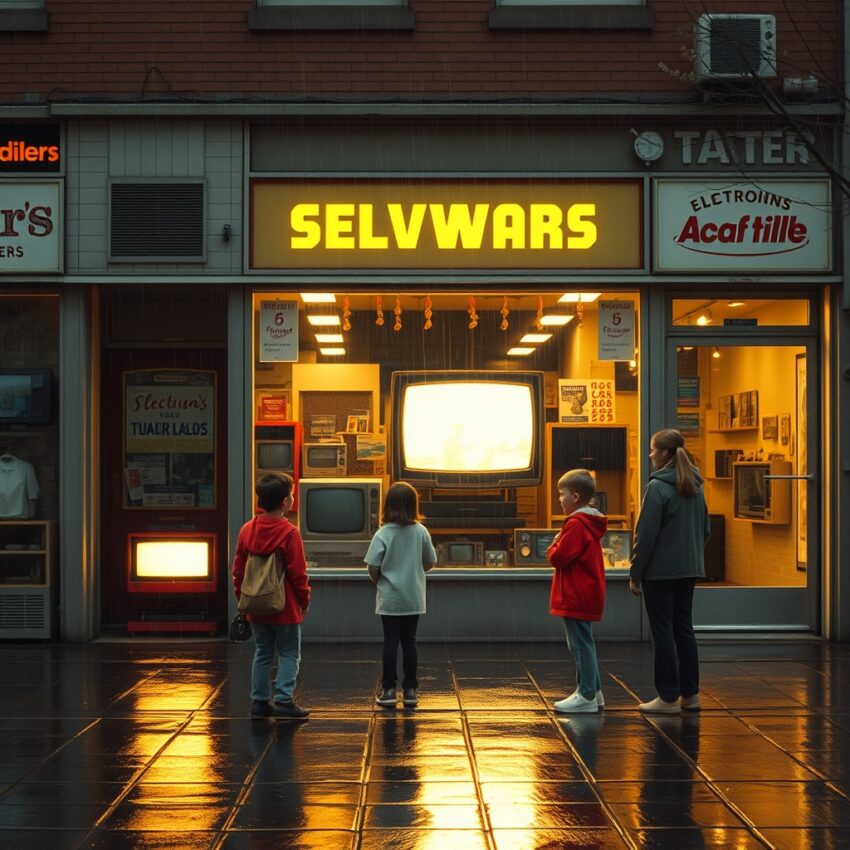
Bir zamanlar ilkbahar yağmuru dinince şehirde başka bir parlaklık başlardı. Islanan kaldırımlar cam vitrinleri daha da belirgin gösterir, elektrik dükkânlarının önünde duran tüplü televizyonlar gri havanın ardından birer küçük sahne gibi ışıldardı. İnsanlar çoğu zaman yalnız alışveriş için değil, bakmak için dururdu. Ekranda akan görüntü bazen bir maçın tekrarından, bazen bir siyah beyaz filmden, bazen de spikerin ciddi yüzünden ibaretti; ama vitrinin önünde toplanan merak için bunlar fazlasıyla yeterliydi. Tüplü televizyon başında geçen saatler yalnız ev içinin değil, sokağın da hafızasına karışmıştı. Çocuklar cama yaklaşır, büyükler görüntünün netliğine yorum yapar, kimileri antenin iyi ayarlanıp ayarlanmadığını uzaktan bile anlamaya çalışırdı. İlkbahar yağmurunun ardından vitrinin içinden bize bakan o ekran, analog çağın heyecanını hem vaat eder hem de gösterirdi.
Teknoloji Mirası açısından tüplü televizyonun unutulmayan gücü, yalnız teknik yeniliğinde değil, etrafında kurduğu toplu izleme ritüelinde saklıdır. O yıllarda ekran bir ev eşyası olmadan önce bir hayal nesnesiydi. Mağaza vitrinindeki televizyona bakmak, geleceğe kısa bir pencere açmak gibiydi. Ahşap kaplamalı kasası, bombeli camı, kanal düğmeleri ve bazen üstüne iliştirilen dantel örtüyle tüplü televizyon, teknolojinin soğuk değil, neredeyse aileden bir parçası olan yüzünü temsil ederdi. Eve alındığında salonun düzeni ona göre kurulurdu. Misafirliklerde akşam haberleri sessizleşen bir odada izlenir, çocuk programı başlayınca minderler ekrana yaklaşır, görüntü bozulduğunda biri kalkıp antenle uğraşırdı. Televizyonun çalışması kadar nazlanması da deneyimin parçasıydı. Bu yüzden heyecan, yalnız gördüğümüzde değil, onu netleştirmeye uğraştığımız anlarda da büyürdü.
İlkbahar yağmurundan sonra vitrine düşen bakışla ev içindeki izleme arasında görünmez bir bağ vardı. Sokağın serinliği üstündeyken vitrindeki ekranı izleyen kişi, akşam benzer bir görüntünün evdeki salona taşınabileceğini düşünürdü. Televizyon satın almak çoğu aile için yalnız ekonomik bir karar değil, günlük hayatın ritmini değiştiren kültürel bir adımdı. Sofranın saati yayın akışına yaklaşır, sevilen program günleri önceden konuşulur, komşuya “bu akşam bizde izleyelim” denirdi. Analog çağın heyecanı tam da buradan doğuyordu: teknoloji kişisel değil kolektif bir deneyimdi. Tek bir ekran, bir odadaki herkesin dikkatini aynı noktada topluyor; aynı gülüşü, aynı şaşkınlığı, aynı sessizliği üretiyordu.
Tüplü televizyonun vitrinden bize bakıyor gibi hatırlanması da tesadüf değildir. Çünkü o ekran çoğu zaman insanı seyreden bir nesne gibi algılanırdı. Parlak cam yüzeyinde hem yayın görünür hem de ona yaklaşanların silueti belirdiği için ekran, izleyenle izlenen arasında çift yönlü bir ilişki kurardı. Bir mağazanın önünde duran çocuk kendi yansımasını haber bülteninin köşesinde seçer, yağmur sonrası camın üstündeki damlalar görüntüyü daha da masalsı kılardı. Teknoloji böyle anlarda yalnız cihaz değil, hayal kurma makinesi olurdu. Televizyonun hafızada yer etmesi biraz da bundandır: o, içeriği kadar bekleyişiyle de iz bırakmıştır.
Bugün tüplü televizyon başında geçen saatler anıldığında çoğu insanın aklına çözünürlükten çok duygu gelir. Kanal düğmesinin çevrilmesi, ekranın açılırken önce tek bir ışık noktasından büyümesi, yayın biterken çizgiye dönüşmesi, hepsi analog çağın sabırlı ritmine aittir. İlkbahar yağmurunun ardından bir vitrinin içinden bize bakan televizyon, artık yalnız geçmiş bir teknoloji değil; ortak heyecanın, ev içi toplanmanın ve görüntünün kolay bulunmadığı zamanların sembolüdür. Bu yüzden hafızada canlı kalır: çünkü o ekran bir kuşağa yalnız program değil, beklemenin de sevinç olabileceğini öğretmiştir.
🇬🇧 English | Analog Curiosity Carried from the Shop Window into the Home
There was a time when, after a spring rain had ended, a different brightness began in the city. Wet pavements made the glass shop windows stand out more clearly, and the tube televisions displayed in electronics stores glowed like small stages after the gray air had passed. People often stopped not only to shop, but simply to look. The image on the screen might be a sports replay, a black-and-white film, or the serious face of a newsreader, yet for the curiosity gathering at the window it was more than enough. The hours spent in front of the tube television belonged not only to domestic life but also to the memory of the street. Children drew close to the glass, adults commented on the sharpness of the picture, and some could judge from a distance whether the antenna had been adjusted properly. That screen looking out at us from a display window after the spring rain both promised and embodied the excitement of the analog age.
From the perspective of technological heritage, the unforgettable power of the tube television lies not only in technical novelty but in the ritual of collective viewing it created. In those years, the screen was a dream object before it was a household object. Standing before a shop-window television felt like opening a brief window toward the future. With its wood-toned casing, curved glass, channel knobs, and sometimes a lace cloth placed on top, the tube television represented a face of technology that was not cold but almost familial. Once it entered the home, the arrangement of the living room began to revolve around it. Evening news was watched in rooms that fell suddenly quiet, children pulled their cushions closer when their program began, and when the image distorted someone would rise to wrestle with the antenna. The television’s stubbornness was as much part of the experience as its operation. For that reason, excitement grew not only while watching, but while trying to make the picture clear.
There was an invisible bond between the glance cast at the shop window after a spring shower and the act of watching inside the home. While still carrying the coolness of the street, the person looking at the display screen imagined that a similar image might someday be brought into the family living room. Buying a television was, for many families, not merely an economic decision but a cultural step that altered the rhythm of daily life. Dinner times adjusted themselves to the broadcast schedule, favorite programs were discussed in advance, and neighbors said let us watch it together tonight at our place. The excitement of the analog era came precisely from this: technology was not a solitary but a collective experience. A single screen gathered everyone in the room around the same point of attention and produced the same laughter, the same surprise, the same silence.
The reason the tube television is remembered as if it were looking back at us from the window is no accident. The screen often felt like an object that watched the viewer in return. Because its glossy surface reflected both the broadcast and the silhouettes approaching it, it created a two-way relation between the one watching and the one being watched. A child standing before a shop display could catch a glimpse of his own reflection beside the evening bulletin, and the raindrops on the glass made the image even more dreamlike. In such moments technology became not merely a device, but a machine for imagination. The television has remained in memory partly for this reason: it left its mark not only through what it showed, but through the waiting that surrounded it.
Today, when people remember the hours spent before a tube television, they think less of resolution than of feeling. The turning of the channel knob, the way the screen opened from a single point of light, and the way it collapsed into a line when the broadcast ended all belong to the patient rhythm of the analog age. The television looking at us from a shop window after a spring rain is no longer only an outdated technology; it is a symbol of shared excitement, domestic gathering, and a time when images were not instantly available. That is why it remains vivid in memory. It taught a generation that anticipation itself could be a form of joy.
🇧🇷 Português (Brasil) | A Curiosidade Analógica que Saía da Vitrine e Entrava em Casa
Houve um tempo em que, quando a chuva de primavera passava, outro brilho começava na cidade. As calçadas molhadas faziam as vitrines aparecerem com mais nitidez, e as televisões de tubo nas lojas de eletrodomésticos brilhavam como pequenos palcos depois do céu cinza. As pessoas muitas vezes paravam não apenas para comprar, mas para olhar. A imagem na tela podia ser uma reprise de futebol, um filme em preto e branco ou o rosto sério do apresentador, e ainda assim isso bastava para a curiosidade reunida diante do vidro. As horas passadas diante da televisão de tubo pertenciam não só à vida dentro de casa, mas também à memória da rua. As crianças se aproximavam do vidro, os adultos comentavam a nitidez da imagem, e alguns até tentavam adivinhar de longe se a antena estava bem ajustada. A tela que nos olhava de dentro da vitrine depois da chuva trazia e ao mesmo tempo prometia a emoção inesquecível da era analógica.
Do ponto de vista do legado tecnológico, a força inesquecível da televisão de tubo não está apenas na novidade técnica, mas no ritual coletivo de assistir que ela criava. Naqueles anos, a tela era primeiro um objeto de sonho, depois um objeto da casa. Ficar diante de uma televisão na vitrine era como abrir por alguns segundos uma janela para o futuro. Com a caixa de acabamento amadeirado, o vidro abaulado, os botões de canal e às vezes uma renda sobre o aparelho, a televisão de tubo representava um rosto da tecnologia que não era frio, mas quase doméstico. Quando entrava em casa, a sala passava a se organizar ao redor dela. O jornal da noite era visto em silêncio, as crianças puxavam almofadas para perto quando começava seu programa, e quando a imagem falhava alguém se levantava para mexer na antena. O jeito temperamental do aparelho fazia parte da experiência tanto quanto seu funcionamento. Por isso a emoção crescia não apenas ao assistir, mas também ao tentar deixar a imagem nítida.
Havia um vínculo invisível entre o olhar lançado à vitrine depois da chuva e o ato de assistir em casa. Ainda com o frescor da rua no corpo, a pessoa que observava a tela imaginava que, um dia, uma imagem parecida poderia entrar na sala da família. Comprar uma televisão era, para muitas casas, não só uma decisão econômica, mas um passo cultural que mudava o ritmo da vida cotidiana. A hora do jantar se aproximava da grade de programação, os programas preferidos eram comentados com antecedência, e os vizinhos combinavam assistir juntos. A emoção da era analógica vinha justamente daí: a tecnologia não era individual, e sim coletiva. Uma única tela reunia toda a atenção de um cômodo e produzia o mesmo riso, a mesma surpresa e o mesmo silêncio.
Também não é por acaso que a televisão de tubo é lembrada como se estivesse olhando de volta para nós da vitrine. Muitas vezes a tela parecia observar quem a observava. Como o vidro brilhante mostrava ao mesmo tempo a transmissão e o reflexo de quem se aproximava, criava-se uma relação de mão dupla entre quem via e quem era visto. Uma criança parada diante da loja podia notar a própria silhueta ao lado do noticiário, e as gotas de chuva sobre o vidro deixavam tudo ainda mais sonhador. Nesses momentos, a tecnologia deixava de ser apenas aparelho e se tornava uma máquina de imaginar. A televisão permaneceu na memória também por isso: ela deixou marca não só pelo que mostrava, mas pela espera que construía ao redor.
Hoje, quando se lembram as horas diante da televisão de tubo, a maioria das pessoas pensa menos em definição de imagem e mais em sentimento. O giro do botão de canais, a tela acendendo primeiro como um ponto de luz, o risco que surgia quando a transmissão terminava, tudo pertence ao ritmo paciente da era analógica. A televisão que nos olhava da vitrine depois da chuva de primavera já não é apenas uma tecnologia do passado; ela é símbolo de emoção compartilhada, de reunião em família e de um tempo em que a imagem não aparecia com facilidade imediata. Por isso continua tão viva na lembrança: porque ensinou uma geração a sentir que a espera também podia ser alegria.