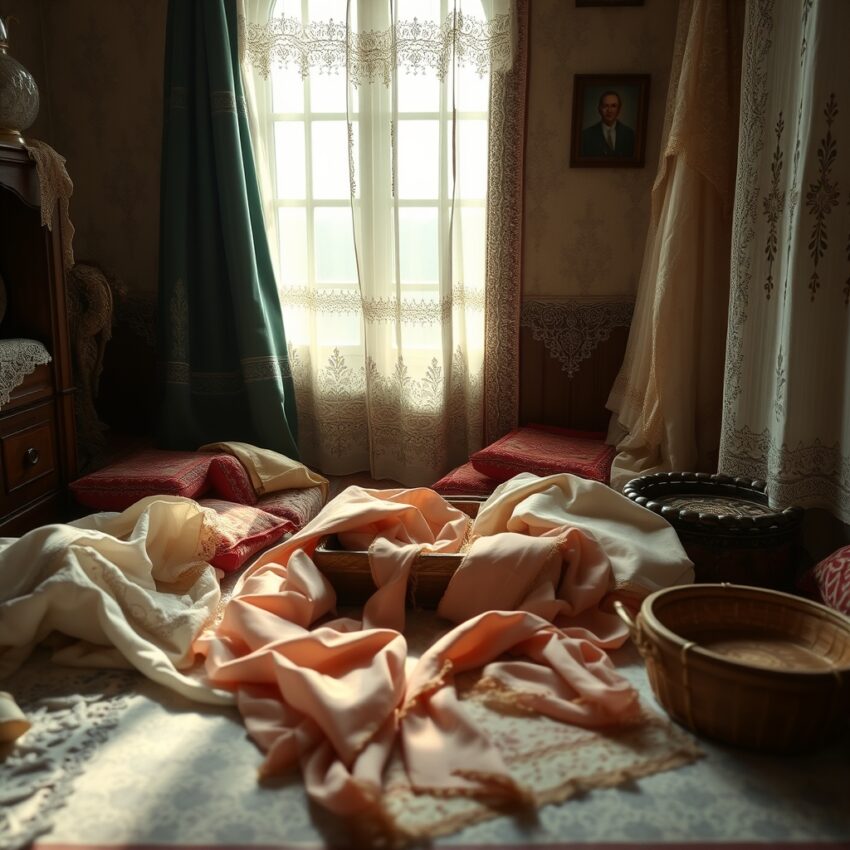
🇹🇷 Türkçe | Çeyiz Odasında Sessizce Derinleşen Zarafet
Bir zamanlar çeyiz odaları evin en sessiz ama en anlam yüklü köşelerinden biriydi. Gündelik hayatın telaşı mutfakta, avluda ya da sokakta akarken, bu oda çoğu zaman kapısı dikkatle açılan, eşyalarına yavaşça dokunulan, gelecek zaman duygusuyla örülmüş bir bekleyiş alanı olarak yaşardı. İpek eşarp kutusu da o odanın içinde sıradan bir saklama nesnesi olmaktan çok daha fazlasını taşırdı. Kartonunun sertliği, kapağının açılırken çıkardığı hafif ses, içine yerleştirilen ince kâğıtların kokusu ve eşarbın parlak dokusu, evdeki genç kızın hayatında henüz gelmemiş ama konuşulmaya başlanmış bir dönemi işaret ederdi. Kutunun kendisi, bir eşyanın korunmasından çok, zarafetin düzenli biçimde saklanmasına hizmet ederdi. Bu yüzden ona dokunmak bile aceleye gelmezdi.
Obje Hikâyeleri açısından ipek eşarp kutusu, yalnız bir aksesuarın muhafazası değil, ev içi emeğin ve estetik terbiyenin görünür hâlidir. Eski kuşaklar için çeyiz bir yığma koleksiyondan ibaret değildi; sabrın, özenin ve aile içi aktarımın maddi kaydıydı. Oyalı yazmalar, işlenmiş bohçalar, dantelli örtüler ve özenle katlanmış kumaşlar arasında duran bir ipek eşarp kutusu, modernlikle gelen inceliğin geleneksel düzenle kurduğu buluşmayı temsil ederdi. Kutunun içindeki eşarbın ne zaman takılacağı, hangi özel günde kullanılacağı ya da hiç kullanılmayıp yalnızca saklanacağı bile bazen uzun uzun konuşulurdu. Çünkü burada esas olan nesnenin fiyatı değil, ona yüklenen anlamdı. Ustalık biraz kumaşın kalitesinde, biraz da onu saklama biçiminde görünürdü.
Çeyiz odasında büyüyen bekleyiş, genç bir kadının geleceğine dair toplumsal beklentilerle kişisel hayallerin iç içe geçtiği yerdir. Bir yandan dikiş bilen teyzeler, kumaş tanıyan anneler, sandık düzenini bilen büyükanneler devreye girer; bir yandan da odanın sahibi olacak genç kız kutuların kapağını kaldırıp kendi geleceğine sessizce bakardı. İpek eşarp kutusu bu yüzden yalnız bir nesne değil, zamanın yavaş aktığı bir eşik gibiydi. Gün ışığı odaya hafifçe vurduğunda parlak kumaşın üzerinde oluşan yumuşak yansıma, sabırla kurulan bir hayat fikrini güçlendirirdi. Eşarbın kenarındaki desenler, kutunun üzerindeki ince yazı ya da iç kaplamadaki zarif renk bile bir çeşit terbiyeyi, düzen duygusunu ve beklemeyi bilen bir kültürü işaret ederdi.
Bu nesnenin hâlâ ustalık ve sabrın izini taşımasının nedeni, el emeği ile duygusal disiplinin aynı yerde birleşmesidir. Eski evlerde pek çok şey hızlı tüketilmez, hemen açılmaz, her gün kullanılmazdı. Bazı eşyalar zamanı gelince çıkarılmak üzere saklanır, böylece değerlerini yalnız maddelerinde değil, bekleyişlerinde de biriktirirdi. İpek eşarp kutusu da böyle bir nesneydi. Belki yalnız birkaç kez açılır, belki misafire gösterilir, belki bohça hazırlanırken yeniden yerine yerleştirilirdi. Fakat her açılışta içinde geçmişin terbiyesi hissedilirdi. Kutunun bozulmaması için gösterilen dikkat, kumaşın kat izlerinin korunması için yapılan küçük hareketler, nesneye yönelen sessiz saygının parçasıydı. Ustalık burada yalnız üretimde değil, muhafazada da görünürdü.
Bugün çeyiz odalarının eski anlamı birçok evde değişmiş olabilir; yine de ipek eşarp kutusu hâlâ geçmişten gelen o sabırlı estetiği hatırlatıyor. Çünkü bazı nesneler kendi biçimlerinden daha büyük bir kültürü taşır. Bu kutu, bekleyişin yavaşlığını, düzenin dinginliğini ve aile içinde aktarılan zarafet bilgisini bir arada tutar. O yüzden ona bakınca yalnız bir eşarp ya da kutu değil, çeyiz odasında büyüyen sessiz bir zaman görülür. Geçmişin izleri de tam burada belirginleşir: emek, sabır ve geleceğe hazırlanma hissi, ipek kadar narin ama kutu kadar kalıcı bir hatıraya dönüşür.
🇬🇧 English | The Quiet Elegance Deepening in the Dowry Room
There was a time when dowry rooms were among the quietest yet most meaningful corners of the house. While the rush of daily life moved through the kitchen, the courtyard, or the street, this room lived as a place whose door was opened carefully, whose objects were touched slowly, and whose entire atmosphere was woven from a sense of future waiting. The silk scarf box inside it carried far more than the function of ordinary storage. The firmness of its cardboard, the slight sound of its lid opening, the smell of the fine tissue placed inside, and the sheen of the scarf itself all pointed to a period in a young woman’s life that had not yet arrived but had already begun to be spoken of. The box served not simply to protect an object, but to preserve elegance in an orderly form. For that reason, even touching it was never done in haste.
From the standpoint of object stories, the silk scarf box is not merely the safekeeping of an accessory, but the visible form of domestic labor and cultivated taste. For older generations, a dowry was never only a pile of collected goods; it was the material record of patience, care, and transmission within the family. Among embroidered scarves, lace covers, decorated bundles, and neatly folded fabrics, a silk scarf box represented the meeting point between the refinement of modern life and the order of tradition. Sometimes there were long conversations about when the scarf inside would be worn, on which special day it would appear, or whether it might never be worn at all and remain preserved. What mattered here was not the object’s price, but the meaning placed upon it. Craftsmanship showed itself partly in the quality of the fabric and partly in the way that fabric was stored.
The waiting that grew in the dowry room was the place where social expectations about a young woman’s future mingled with her personal dreams. Seamstresses among the aunts, mothers who understood cloth, and grandmothers who knew how a chest should be arranged all entered the picture, while the young girl who would one day own the room lifted the lids of boxes and silently looked into her own future. For that reason the silk scarf box was not merely an object but a threshold where time moved slowly. When daylight touched the room softly, the mild reflection on the shining fabric strengthened the idea of a life being built with patience. The patterns along the edge of the scarf, the delicate lettering on the box, even the subtle color of the inner lining all pointed toward a culture that valued discipline, order, and the ability to wait.
The reason this object still carries traces of craftsmanship and patience is that handwork and emotional discipline meet within it. In older homes many things were not consumed quickly, not opened at once, not used every day. Some objects were kept until the proper time, and in that way they accumulated value not only in their material but also in their waiting. The silk scarf box was one such object. Perhaps it was opened only a few times, perhaps shown to a guest, perhaps returned to its place after dowry pieces were arranged. Yet every opening carried with it the manners of the past. The care taken to keep the box from bending, the small gestures made to preserve the folds of the silk, all belonged to a quiet respect directed toward the object. Craftsmanship appeared here not only in production, but also in preservation.
Today the old meaning of dowry rooms may have changed in many homes, yet the silk scarf box still recalls that patient aesthetic from the past. Some objects carry a culture larger than their own physical shape. This box holds together the slowness of waiting, the calm of order, and the knowledge of elegance passed within families. Looking at it, one sees not only a scarf or a box, but a silent time maturing inside the dowry room. That is where the traces of the past become visible: labor, patience, and the feeling of preparing for the future turning into a memory as delicate as silk and as lasting as the box that protected it.
🇧🇷 Português (Brasil) | A Elegância Silenciosa que se Aprofundava no Quarto do Enxoval
Houve um tempo em que os quartos de enxoval eram um dos cantos mais silenciosos e mais carregados de sentido da casa. Enquanto a correria do cotidiano passava pela cozinha, pelo quintal ou pela rua, esse quarto vivia como um espaço cuja porta era aberta com cuidado, cujos objetos eram tocados devagar e cuja atmosfera inteira era tecida por uma espera voltada para o futuro. A caixa do lenço de seda guardada ali trazia muito mais do que a função de armazenar um acessório. A firmeza do papelão, o leve som da tampa ao ser aberta, o cheiro do papel fino por dentro e o brilho do tecido indicavam uma fase da vida de uma jovem que ainda não havia chegado, mas já começava a ser mencionada. A caixa servia não apenas para proteger um objeto, mas para conservar a elegância em ordem. Por isso, até tocá-la era algo que não se fazia com pressa.
Do ponto de vista das histórias dos objetos, a caixa do lenço de seda não é apenas a guarda de um acessório, mas a forma visível do trabalho doméstico e do gosto apurado. Para as gerações mais antigas, o enxoval nunca foi somente um amontoado de peças; era o registro material da paciência, do cuidado e da transmissão dentro da família. Entre lenços bordados, rendas, tecidos dobrados com capricho e embrulhos decorados, uma caixa de lenço de seda representava o encontro entre a delicadeza moderna e a ordem tradicional. Muitas vezes se conversava longamente sobre quando o lenço seria usado, em qual ocasião especial apareceria ou se talvez jamais sairia da caixa e permaneceria guardado. O essencial ali não era o preço do objeto, mas o sentido que se colocava nele. O ofício aparecia um pouco na qualidade do tecido e um pouco na maneira de preservá-lo.
A espera que crescia no quarto do enxoval era o ponto em que as expectativas sociais sobre o futuro de uma jovem se misturavam aos seus sonhos pessoais. Tias que sabiam costurar, mães que conheciam tecidos e avós que dominavam a arrumação dos baús participavam desse cenário, enquanto a moça que um dia ocuparia aquele universo erguia as tampas das caixas e olhava em silêncio para o próprio futuro. Por isso a caixa do lenço de seda não era apenas um objeto, mas um limiar onde o tempo corria devagar. Quando a luz do dia batia suavemente no quarto, o reflexo macio sobre o tecido brilhante reforçava a ideia de uma vida construída com paciência. Os desenhos na borda do lenço, a escrita delicada sobre a caixa e até a cor discreta do forro apontavam para uma cultura que valorizava a disciplina, a ordem e a capacidade de esperar.
O motivo de esse objeto ainda carregar marcas de ofício e paciência é o encontro entre trabalho manual e disciplina afetiva. Nas casas antigas, muitas coisas não eram consumidas depressa, nem abertas de imediato, nem usadas todos os dias. Alguns objetos eram guardados para o momento certo e, assim, acumulavam valor não apenas na matéria, mas também na espera. A caixa do lenço de seda era um desses objetos. Talvez fosse aberta poucas vezes, talvez exibida a uma visita, talvez devolvida ao lugar depois da arrumação do enxoval. Ainda assim, cada abertura trazia consigo uma forma antiga de delicadeza. O cuidado para que a caixa não amassasse, os pequenos gestos para preservar as dobras do tecido, tudo isso fazia parte de um respeito silencioso dirigido ao objeto. O ofício aparecia ali não só na produção, mas também na conservação.
Hoje o antigo sentido do quarto do enxoval pode ter mudado em muitas casas, mas a caixa do lenço de seda ainda lembra aquela estética paciente do passado. Há objetos que carregam uma cultura maior do que a própria forma. Essa caixa reúne a lentidão da espera, a serenidade da ordem e o conhecimento de elegância transmitido dentro da família. Ao olhar para ela, vê-se não apenas um lenço ou uma caixa, mas um tempo silencioso amadurecendo dentro do quarto do enxoval. É aí que os vestígios do passado se tornam visíveis: trabalho, paciência e a sensação de preparar o futuro transformados numa lembrança delicada como seda e duradoura como a própria caixa.