🇹🇷 Türkçe | Kulübeye Sığan Bekleyiş, Bahçeye Taşan Yaz
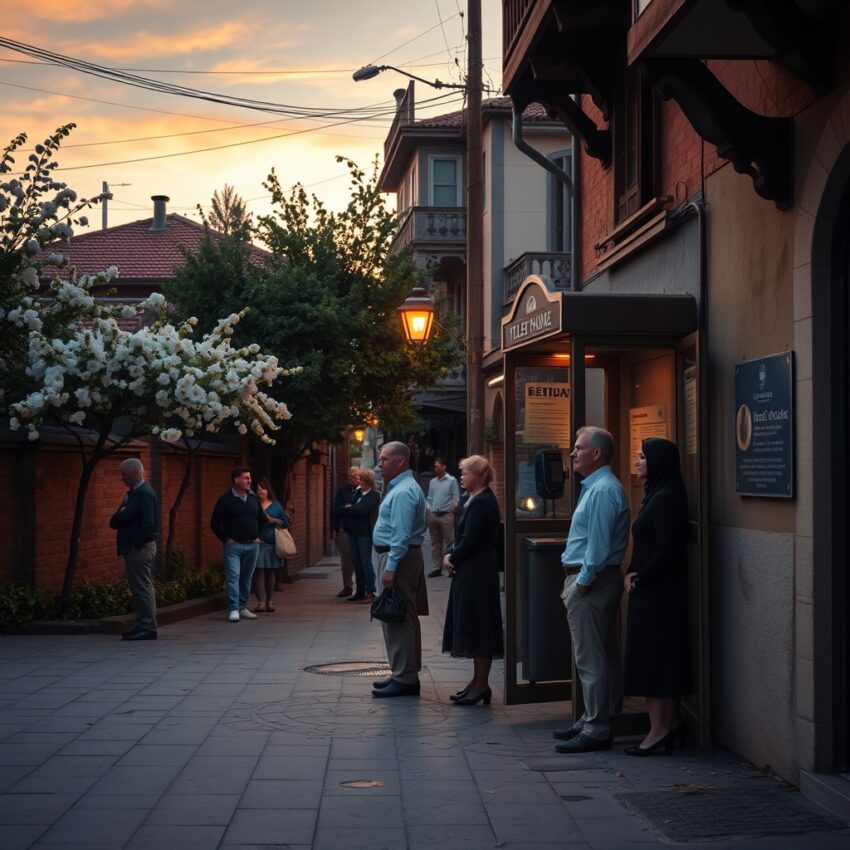
Bir zamanlar telefon kulübesi yalnızca bir iletişim aracı değildi; mahallenin en görünür sabırsızlığını üzerinde taşıyan küçük bir duraktı. Sokağın köşesinde, bakkal ile eczane arasına yerleşmiş bu camlı kabinler, günün belli saatlerinde kentin nabzını tutardı. Özellikle yaz akşamlarına doğru, ıhlamur ağaçlarının kokusu bahçe duvarlarından taşarken kulübenin önünde biriken sessizlik başka türlü duyulurdu. Bozuk para avuçta terler, bir haber bekleyen gözler camın içinden dışarıya, dışarıdakiler de içerideki yüz ifadesine bakardı. O dakikalar uzadıkça mahallenin gündelik hayatı da o küçük kabinin etrafında şekillenirdi. Telefon çaldığında ya da ahizeden gelen sesin tonu değiştiğinde, bekleyen herkes görünmez biçimde aynı hikâyeye biraz daha yaklaşmış olurdu.
Zamanın İzinde bakıldığında telefon kulübeleri, yalnız teknik bir eksikliğin giderildiği yerler değil, haberin kamusal biçimde paylaşıldığı geçiş mekânlarıydı. Evlerde telefon bulunmayan yıllarda ya da tek telefonun sıkça meşgul olduğu zamanlarda, kulübe kişisel olanla toplumsal olan arasında ince bir köprü kurardı. Uzakta askerde olan bir oğuldan, şehir dışında çalışan bir babadan, yatılı okulda okuyan bir kardeşten gelecek haber, çoğu zaman önce kulübeye uğrardı. Bu yüzden telefon kulübesi soğuk ve metalik bir şehir nesnesi olmaktan çıkıp mahalle hafızasına yerleşmiş duygusal bir işaret hâline gelmişti. İnsanlar yalnız konuşmayı değil, konuşmaya hazırlanmayı, sıranın gelmesini, konuşma biter bitmez dışarı çıkan yüzü okumayı da öğrenirdi. Haber kulübede alınır, ama etkisi ev avlularına, balkonlara, çay bardaklarına kadar yayılırdı.
Bu sahnenin hafızada parlak kalmasının bir nedeni de telefon kulübesi ile bahçe arasındaki yakınlıktır. Eski mahallelerde kulübe çoğu zaman apartman boşluklarının, dut ya da ıhlamur ağaçlarının, alçak duvarlı bahçelerin yakınında dururdu. Yazın akşam üzeri güneş çekilip serinlik başladığında, yaşlılar kapı önüne sandalye atar, çocuklar lastik ya da seksek oynar, bir yandan da kulübeye girip çıkanları izlerdi. İçeride konuşan kişinin sesi tam seçilmezdi belki, ama cümlelerin taşıdığı heyecan mimiklerden anlaşılırdı. Bir “tamam”, bir “yarın geliyorum”, bir “merak etmeyin” sözü bazen bir evin bütün akşamını değiştirirdi. Kulübeden çıkan biri önce derin bir nefes alır, sonra çoğu kez bahçe kapısına yönelir, içeride bekleyenlere haberi ulaştırırdı. O anda ıhlamur kokusu, akşam ışığı ve haberin ağırlığı birbirine karışırdı.
Telefon kulübelerinin taşıdığı sabırsız dakikalar, bugünün anında ulaşılabilir dünyasına kıyasla daha yoğun hatırlanıyor çünkü bekleyişin kendisi hayatın görünür bir parçasıydı. İnsanlar bir mesajın gelmesini yalnız ekrana bakarak değil, bedenen yaşayarak beklerdi. Kulübeye yürünür, sırada durulur, bozuk para hazırlanır, gerekirse komşudan bir jeton istenir, konuşma süresi hesaba katılırdı. Bu ritüelin içinde hem mahremiyet hem topluluk vardı. Kimse tam olarak ne konuşulduğunu bilmezdi ama herkes bir haberin gelmesinin ne kadar kıymetli olduğunu anlardı. Belki de bu yüzden geçmişe bakınca o dakikalar daha parlak görünür. Çünkü yalnız haber değil, o habere eşlik eden hava, koku, ışık ve mahalle görgüsü de hatırlanır.
Ihlamur kokusuna dönen bahçeler bugün hâlâ o eski sabırsızlığı çağırır. Bir yaz akşamında hafif rüzgârla karışan çiçek kokusu, bazen insana hiç ummadığı kadar eski bir bekleyişi hatırlatır. Telefon kulübeleri büyük ölçüde şehirden çekildi; ama onların temsil ettiği duygu, yani bir haberi hep birlikte bekleme ve o haberin gelişiyle akşamın renginin değişmesi, kültürel miras olarak yaşamaya devam ediyor. Dönemin ruhunu ele veren şey biraz da buydu: küçük bir kulübenin içinde konuşan bir sesin, dışarıdaki bir bahçeyi ve bir mahallenin bütün havasını değiştirebilmesi. Geçmişin daha parlak görünmesi belki de tam olarak bundan kaynaklanıyor; çünkü o günlerde haber yalnız kulağa değil, sokağa ve hafızaya da düşüyordu.
🇬🇧 English | Waiting Inside the Booth, Summer Spilling Into the Garden
There was a time when the telephone booth was not merely a tool of communication, but a small station that carried the neighborhood’s most visible impatience. Standing on the corner between the grocer and the pharmacy, those glass cabins held the pulse of the city at certain hours of the day. Especially toward summer evenings, when the scent of linden drifted over garden walls, the silence gathering in front of the booth felt different from any other silence. Coins sweated in people’s palms, the eyes of those waiting looked through the glass toward the caller, and those outside tried to read the face inside. As those minutes stretched, the ordinary life of the neighborhood began to shape itself around that tiny cabin. When the telephone rang or the tone of the voice on the receiver shifted, everyone waiting seemed to move a little closer to the same invisible story.
Seen through the trail of time, telephone booths were not only places where a technical lack was resolved, but transition spaces where news was received in public. In years when many homes had no telephone, or when the single household line was often occupied, the booth created a thin bridge between the personal and the communal. News from a son serving in the army, a father working in another city, or a sibling studying away from home often arrived first at the booth. That is why the telephone booth ceased to be a cold metallic object of the city and became an emotional sign fixed in neighborhood memory. People learned not only how to speak, but how to prepare to speak, how to wait for their turn, and how to read the face of the person stepping out once the call had ended. The news was received in the booth, yet its effect spread all the way into courtyards, balconies, and tea glasses at home.
Part of why this scene remains so bright in memory lies in the closeness between the telephone booth and the garden. In old neighborhoods, the booth often stood near apartment gaps, low garden walls, and trees of mulberry or linden. In the late afternoon of summer, when the sun softened and coolness began to arrive, older people brought chairs outside, children played hopscotch or street games, and all the while they watched who entered and exited the booth. Perhaps the exact words spoken inside could not be heard, but the emotion carried by the sentences was visible in gestures. A single “all right,” an “I’m coming tomorrow,” or a “don’t worry” could change the tone of an entire household’s evening. The person stepping out of the booth would often inhale deeply before turning toward the garden gate and bringing the news to those waiting inside. In that moment, the scent of linden, the evening light, and the weight of the message became one.
Those impatient minutes carried by telephone booths are remembered more intensely than today’s instantly reachable world because waiting itself was once a visible part of life. People did not wait for a message by glancing at a screen, but by inhabiting the wait with their bodies. They walked to the booth, stood in line, prepared coins, sometimes borrowed a token from a neighbor, and calculated the length of the conversation. Inside that ritual there was both privacy and community. No one knew exactly what had been said, yet everyone understood how precious it was for news to arrive. That may be why those minutes look brighter in hindsight. What is remembered is not only the news, but the air, the smell, the light, and the manners of the neighborhood that accompanied it.
Gardens turning into the scent of linden still call back that old impatience. On a summer evening, the fragrance of blossoms carried by a light wind can unexpectedly remind someone of an old wait they thought had vanished. Telephone booths have largely disappeared from the city, yet the feeling they represented, the shared waiting for news and the way an evening changed color when it finally arrived, continues to live as cultural inheritance. That was part of what revealed the spirit of the era: a single voice speaking inside a small booth could alter the atmosphere of a garden and of an entire neighborhood. Perhaps the past appears brighter for exactly this reason, because in those days news did not fall only into the ear, but into the street and into memory.
🇧🇷 Português (Brasil) | A Espera que Cabia na Cabine, o Verão que se Espalhava pelo Jardim
Houve um tempo em que o telefone público não era apenas um meio de comunicação, mas uma pequena parada onde se concentrava a impaciência mais visível do bairro. Instaladas na esquina, entre a mercearia e a farmácia, aquelas cabines de vidro guardavam o pulso da cidade em certas horas do dia. Principalmente no começo da noite de verão, quando o cheiro de tília passava por cima dos muros dos jardins, o silêncio que se reunia diante da cabine soava de outro modo. As moedas suavam na palma da mão, os olhos de quem esperava atravessavam o vidro, e quem estava do lado de fora tentava adivinhar no rosto de quem falava o peso da notícia. À medida que os minutos se esticavam, a vida cotidiana do bairro também passava a girar em torno daquela pequena cabine. Quando o telefone tocava ou o tom da voz no fone mudava, todos os que esperavam pareciam se aproximar um pouco mais da mesma história invisível.
No rastro do tempo, os telefones públicos não eram apenas lugares onde se resolvia uma falta técnica, mas espaços de passagem em que a notícia chegava de forma pública. Nos anos em que muitas casas ainda não tinham telefone, ou quando a única linha doméstica vivia ocupada, a cabine construía uma ponte delicada entre o pessoal e o coletivo. Notícias de um filho no serviço militar, de um pai trabalhando em outra cidade ou de um irmão estudando longe muitas vezes passavam primeiro por ela. Por isso a cabine deixava de ser um objeto frio e metálico da cidade para se tornar um sinal afetivo gravado na memória do bairro. As pessoas aprendiam não só a falar, mas a se preparar para falar, a esperar a vez e a ler o rosto de quem saía logo depois da ligação. A notícia era recebida na cabine, mas o efeito dela se espalhava até os quintais, as varandas e os copos de chá dentro de casa.
Uma parte da razão de essa cena permanecer tão luminosa está na proximidade entre a cabine e o jardim. Nos bairros antigos, o telefone público muitas vezes ficava perto de vãos entre prédios, muros baixos e árvores de amora ou tília. No fim da tarde de verão, quando o sol perdia força e o frescor começava, os mais velhos puxavam a cadeira para a porta, as crianças brincavam na rua, e ao mesmo tempo observavam quem entrava e saía da cabine. Talvez as palavras ditas lá dentro não fossem ouvidas com clareza, mas a emoção delas aparecia nos gestos. Um simples “está bem”, um “chego amanhã” ou um “não se preocupem” bastava para mudar a noite inteira de uma casa. Quem saía da cabine respirava fundo e quase sempre seguia até o portão do jardim para levar a notícia a quem esperava. Naquele instante, o cheiro de tília, a luz do começo da noite e o peso da mensagem se misturavam.
Os minutos impacientes carregados pelos telefones públicos são lembrados com mais intensidade do que o mundo de acesso imediato de hoje porque a própria espera era uma parte visível da vida. As pessoas não aguardavam uma mensagem olhando para uma tela, mas vivendo a espera com o corpo inteiro. Caminhavam até a cabine, ficavam na fila, separavam as moedas, às vezes pediam uma ficha ao vizinho e calculavam o tempo da conversa. Havia, nesse ritual, privacidade e também comunidade. Ninguém sabia exatamente o que tinha sido dito, mas todos entendiam o valor de uma notícia chegando. Talvez por isso aqueles minutos pareçam mais brilhantes quando olhamos para trás. O que se recorda não é só a notícia, mas também o ar, o cheiro, a luz e a delicadeza do bairro que a acompanhavam.
Os jardins que se tornam cheiro de tília ainda hoje chamam de volta aquela velha impaciência. Numa noite de verão, o perfume das flores levado por uma brisa leve pode trazer de repente uma espera antiga, guardada há anos. Os telefones públicos quase desapareceram da cidade, mas o sentimento que representavam, a espera compartilhada por uma notícia e a maneira como a noite mudava de cor quando ela chegava, continua vivo como herança cultural. Isso era parte do espírito da época: uma voz falando dentro de uma pequena cabine podia alterar o ar de um jardim e de todo um bairro. Talvez o passado pareça mais luminoso exatamente por isso, porque naquela época a notícia não caía apenas no ouvido, mas também na rua e na memória.