🇹🇷 Türkçe | Karanlık Odada Ağaran Hatıra
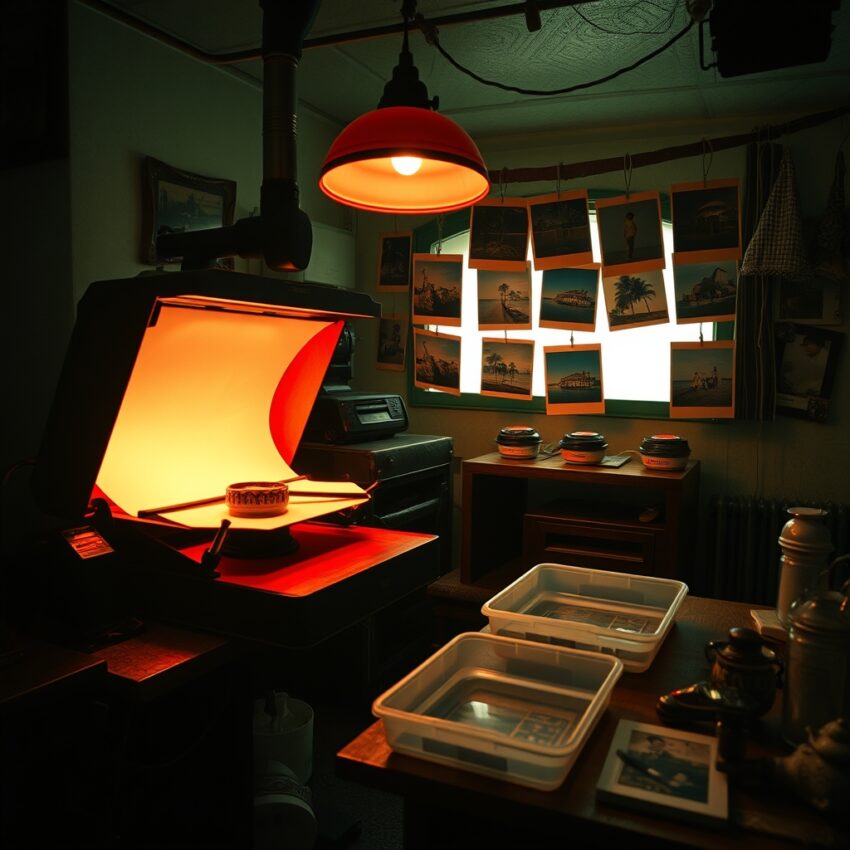
Bir zamanlar fotoğraf yalnız çekilen bir şey değil, beklenen ve yavaşça ortaya çıkan bir mucizeydi. Tatil günlerinde çekilmiş bir film rulosu eve ya da yazlıktaki geçici düzene döndüğünde, onun içindeki görüntüler henüz kimseye ait değildi; yalnızca tahmin ediliyordu. O yüzden karanlık oda büyütücüsü etrafında toplanan sessizlik, bir makinenin çalışmasından çok bir törenin başlamasına benzerdi. Kırmızıya çalan loş ışık altında, kimyasal kaplarının yanına özenle dizilmiş maşa ve kâğıtlar, duvara asılmış ıslak baskılar, içeride konuşanların istemsizce kısılmış sesi, hepsi aynı sabrın parçasıydı. Dışarıda televizyon anteni çevrilirken görüntünün birden netleşmesine benzeyen o duygu, burada da vardı: yavaş yavaş belirginleşen bir umut. Kâğıdın üstünde önce silik bir gölge gibi duran yüz, birkaç saniye içinde bir yaz akşamını, bir deniz kıyısını, bir aile kahkahasını geri getirirdi.
Teknoloji Mirası açısından karanlık oda büyütücüsü, analog fotoğrafçılığın en şiirsel araçlarından biridir. Objektifin gördüğünü yalnız saklamakla kalmaz, onu görünür kılmak için ikinci bir emeği de zorunlu kılar. Film banyosu, ışık ayarı, zaman hesaplama, kâğıdın solüsyondan geçişi; her aşama insan elinin ve dikkatinin işidir. Bu yüzden büyütücü kullanmak teknik kadar duygusal bir deneyimdi. Hele tatil rehavetinin ortasında, herkesin acele etmeden günün uzamasına izin verdiği dönemlerde, karanlık oda gündelik hayatın içinde özel bir ada gibi dururdu. Dışarıda balkonlarda çay içilir, radyodan hafif bir melodi gelir, çocuklar denizden döndükten sonra havlularını kurumaya asar; içeride ise bir yazın bütün görüntüleri yavaş yavaş görünür olurdu. Fotoğrafın ortaya çıkışı, tatilin kendisi kadar anlatılmaya değer bir hikâyeye dönüşürdü.
Bu sürecin tören gibi hatırlanmasının sebebi yalnız teknik zahmet değildir. Karanlık oda, görünmeyeni görmeye hazırlanılan bir sabır mekânıydı. İnsanlar büyütücünün ışığı altında yalnız fotoğrafa değil, kendi yaşadıkları ana bir kez daha bakardı. Geçen gün sahilde yenilen karpuz, verandada kuruyan mayo, teyzelerin çay tepsisinin etrafında yaptığı sohbet, çocukların kumdan ayaklarla eve girişi; bütün bu sıradan görünen sahneler karanlık oda kâğıdında yeniden doğduğunda daha kıymetli görünürdü. Çünkü o görüntülerin her biri, yaşandığı anda henüz gündelikti; baskı hâline geldiğinde ise aile arşivinin parçasına dönüşürdü. Bu dönüşüm, neredeyse bir dua sessizliği içinde izlenirdi. Kimse acele etmez, kimse “hemen göster” demezdi; çünkü herkes görüntünün ortaya çıkmasının ritmine saygı duyardı.
Anteni çevirdikçe netleşen umut benzetmesi tam da buradan güç alır. Eski televizyonlarda görüntüyü berraklaştırmak için çatıdaki ya da balkondaki antenle uğraşmak nasıl gündelik bir maharet ise, karanlık odada doğru baskıyı almak da benzer bir dikkat isterdi. Birkaç derece fazla ışık, bir saniye eksik bekleme, tüm görüntünün dengesini değiştirirdi. Fakat tam ayar bulunduğunda insanın içini dolduran rahatlama büyüktü. Tatil rehavetinde dilden dile taşınan hatıralar biraz da bu yüzden fotoğraf kâğıdına güvenle yerleşti. Her baskı, “şu gün ne güzeldi” cümlesinden daha somut, daha kalıcı bir tanıktı. Sonradan albüm sayfaları arasında yıllarca dolaşacak o görüntü, ilk kez karanlık odada nefes alıyordu.
Bugün dijital hız çağında fotoğrafın görünür hâle gelmesi neredeyse düşünce kadar kısa sürüyor. Ama karanlık oda büyütücüsünün başlı başına bir tören gibi hatırlanması, geçmişte görüntünün emek ve sabırla kazanılmasından kaynaklanıyor. O ritüel yalnız makinelerin değil, ailelerin de hafızasını şekillendirdi. Bir yaz tatilinin konuşulması, yeniden gösterilmesi ve gelecek kış akşamlarında yeniden hatırlanması çoğu zaman o baskıların başarısına bağlıydı. Karanlık odada ağaran fotoğraf, yalnız bir yüzü değil, bir dönemin hayatla kurduğu ilişkiyi de görünür kıldı: yavaş, dikkatli, özenli ve paylaşmaya açık. Bu yüzden büyütücü, analog çağın teknik bir aracı olmanın ötesinde, hatıranın törenle kabul edildiği bir eşiğe dönüştü.
🇬🇧 English | Memory Whitening in the Darkroom
There was a time when photography was not simply something taken, but something awaited, something that appeared slowly like a miracle. When a roll of film shot during a holiday returned home or to the temporary order of a summer house, the images inside it did not yet belong to anyone in full; they were only guessed at. That is why the silence gathering around a darkroom enlarger resembled not the operation of a machine, but the beginning of a ceremony. Under dim reddish light, the tongs and papers placed carefully beside the trays of chemicals, the wet prints hanging to dry, the instinctively lowered voices of those inside, all belonged to the same patience. The feeling was similar to turning a television antenna until the image suddenly came clear: hope slowly sharpening. A face that first appeared as a faint shadow on photographic paper could, within seconds, bring back a summer evening, a stretch of seashore, a burst of family laughter.
From the standpoint of technological heritage, the darkroom enlarger is one of the most poetic devices of analog photography. It does not simply preserve what the lens has seen; it requires a second labor in order to make that vision visible. Developing the film, adjusting the light, calculating the time, moving the paper through solutions, every stage depends on human hands and human attention. That is why using the enlarger was as emotional as it was technical. In the ease of vacation days, when everyone allowed the day to lengthen without hurry, the darkroom stood like a special island inside ordinary life. Outside, tea was being poured on balconies, a gentle melody came from the radio, children hung wet towels after returning from the sea; inside, the images of the whole summer were slowly becoming visible. The appearance of a photograph became a story as worth telling as the holiday itself.
What makes this process remembered as a ritual is not only technical effort. The darkroom was a place of patience where one prepared to see what had not yet been seen. Under the light of the enlarger, people looked not only at the photograph, but once more at the moment they had lived. The watermelon eaten by the seaside the day before, swimsuits drying on the veranda, the talk of aunts around a tea tray, children entering the house with sandy feet, all of these scenes, ordinary while they were happening, appeared more valuable when reborn on darkroom paper. While they were being lived, they were still everyday life; once printed, they became part of the family archive. That transformation was watched in something close to the silence of prayer. No one rushed, no one demanded to see the result immediately, because everyone respected the rhythm by which the image emerged.
The comparison to hope becoming clear as an antenna was turned draws its strength from exactly this. In old televisions, clarifying the picture by adjusting the rooftop or balcony antenna was a familiar domestic skill; finding the right print in the darkroom required a similar attentiveness. A little too much exposure, one second too little in waiting, and the balance of the whole image shifted. But once the correct setting was found, the sense of relief was immense. That is one reason why memories carried from mouth to mouth through languid vacation days settled so securely onto photographic paper. Every print was a witness more concrete and more lasting than simply saying, “that day was beautiful.” The image that would later travel for years through album pages first took its breath in the darkroom.
Today, in the age of digital speed, the becoming-visible of a photograph happens almost as quickly as thought. Yet the enlarger is remembered as a ceremony in itself because images once had to be earned through labor and patience. That ritual shaped not only machines, but family memory. The retelling of a summer holiday, its showing again, its return on winter evenings, often depended on those prints. The photograph whitening in the darkroom revealed not only a face, but a whole era’s relationship to life: slow, attentive, careful, and open to sharing. That is why the enlarger became more than a technical device of the analog age. It became a threshold where memory was welcomed with ceremony.
🇧🇷 Português (Brasil) | A Lembrança Clareando no Laboratório Escuro
Houve um tempo em que a fotografia não era apenas algo tirado, mas algo esperado, algo que surgia devagar como um pequeno milagre. Quando um rolo de filme feito nas férias voltava para casa ou para a rotina provisória da casa de veraneio, as imagens guardadas ali ainda não pertenciam completamente a ninguém; eram apenas imaginadas. Por isso o silêncio em torno do ampliador de laboratório parecia menos o funcionamento de uma máquina e mais o início de uma cerimônia. Sob a luz avermelhada e fraca, as pinças e os papéis arrumados com cuidado ao lado dos recipientes com química, as cópias molhadas penduradas, as vozes naturalmente abaixadas de quem estava ali, tudo fazia parte da mesma paciência. A sensação lembrava a de girar a antena da televisão até a imagem finalmente ficar nítida: uma esperança que se tornava clara aos poucos. Um rosto que aparecia primeiro como sombra leve no papel podia, em segundos, trazer de volta uma noite de verão, uma praia, uma risada de família.
Do ponto de vista do patrimônio tecnológico, o ampliador de laboratório está entre os objetos mais poéticos da fotografia analógica. Ele não apenas guarda o que a lente viu, mas exige um segundo trabalho para tornar essa visão realmente visível. Revelar o filme, ajustar a luz, calcular o tempo, passar o papel pelas soluções, cada etapa depende da mão humana e da atenção humana. Por isso usar o ampliador era uma experiência tão emocional quanto técnica. No sossego das férias, quando todos deixavam o dia se alongar sem pressa, o laboratório escuro se tornava uma ilha especial dentro da vida comum. Do lado de fora, tomava-se chá na varanda, uma melodia leve saía do rádio, as crianças penduravam toalhas depois de voltar do mar; do lado de dentro, as imagens de todo um verão iam aparecendo devagar. O surgimento da fotografia se transformava numa história tão digna de ser contada quanto as próprias férias.
O que faz esse processo ser lembrado como ritual não é apenas o esforço técnico. O laboratório era um espaço de paciência, onde se preparava o olhar para ver o que ainda não tinha sido visto. Sob a luz do ampliador, as pessoas olhavam não só para a fotografia, mas também para o instante que haviam vivido. A melancia comida na praia, os maiôs secando na varanda, a conversa das tias ao redor da bandeja de chá, as crianças entrando em casa com os pés cheios de areia; todas essas cenas, comuns enquanto aconteciam, pareciam mais valiosas quando renasciam no papel. No momento vivido eram apenas cotidiano; impressas, tornavam-se parte do arquivo da família. Essa transformação era acompanhada num silêncio quase de oração. Ninguém apressava, ninguém dizia “mostra logo”, porque todos respeitavam o ritmo com que a imagem surgia.
A comparação com a esperança que se torna nítida ao girar a antena ganha força exatamente daí. Nas televisões antigas, ajustar a antena do telhado ou da varanda para clarear a imagem era uma habilidade doméstica familiar; obter a cópia certa no laboratório exigia a mesma atenção. Um pouco mais de luz, um segundo a menos de espera, e o equilíbrio da imagem inteira mudava. Mas, quando o ponto certo era encontrado, a sensação de alívio era grande. É por isso que as lembranças levadas de boca em boca durante as férias se assentavam com tanta firmeza no papel fotográfico. Cada cópia era um testemunho mais concreto e mais duradouro do que apenas dizer “aquele dia foi lindo”. A imagem que anos depois percorreria as páginas do álbum respirava pela primeira vez no laboratório.
Hoje, na era da velocidade digital, a fotografia se torna visível quase no mesmo tempo de um pensamento. Ainda assim, o ampliador é lembrado como uma cerimônia em si porque, no passado, as imagens eram conquistadas com trabalho e paciência. Esse ritual moldou não apenas máquinas, mas também a memória das famílias. Contar de novo um verão, mostrar as férias outra vez, reencontrá-las nas noites frias, muitas vezes dependia da qualidade dessas cópias. A fotografia que clareava no laboratório revelava não apenas um rosto, mas a relação de toda uma época com a vida: lenta, atenta, cuidadosa e aberta à partilha. Por isso o ampliador se tornou mais do que um objeto técnico da era analógica. Tornou-se um limiar em que a lembrança era recebida com cerimônia.