🇹🇷 Türkçe | kömür ateşinde kestane ve kalabalık aile sofralarının unutulmayan tadı: bir dönemin paylaşma kültürünü nasıl taşıyor
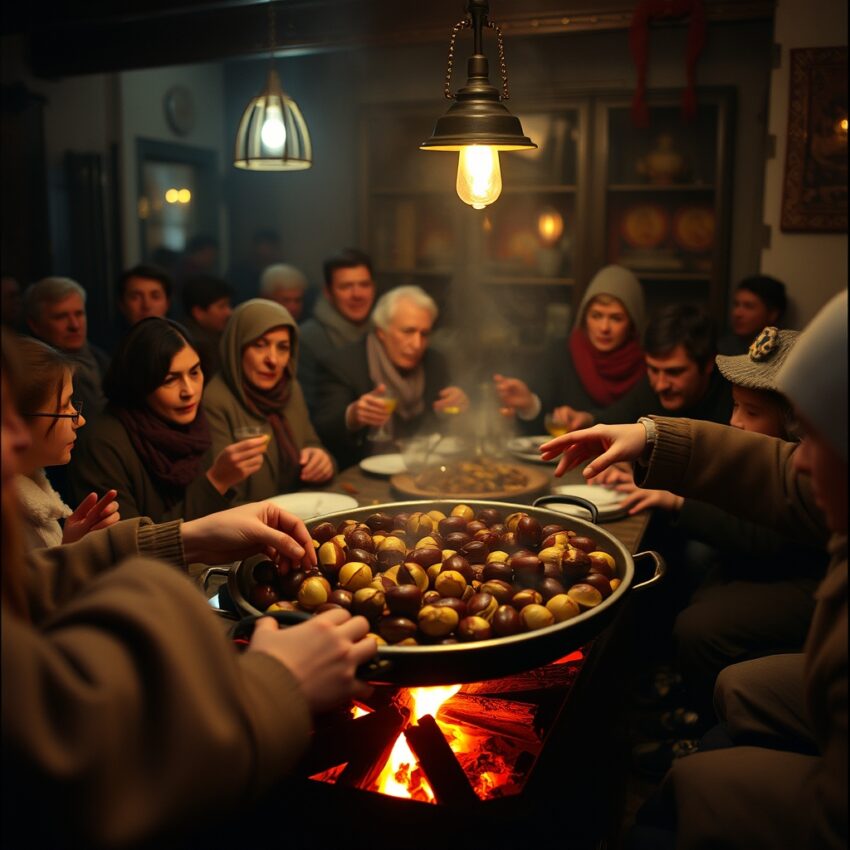
Bir zamanlar kış akşamlarının en tanıdık kokularından biri, sokak aralarından ya da evlerin avlularından yükselen kestane kokusuydu. Kömür ateşinde ağır ağır pişen kestaneler yalnız bir mevsim yiyeceği değil; aileyi aynı sıcaklık çevresinde toplayan küçük bir davet gibiydi. Sobanın üstünde ya da mangal telinde patlayarak açılan kabuklar, çocuklar için sabırsızlık, büyükler içinse sohbetin usulca koyulaşması anlamına gelirdi. Bir tepsinin ortasına dökülen kestaneler, sofraya konduğunda etrafında hemen bir yakınlık halkası oluşurdu. Kalabalık aile sofralarının unutulmayan tadı da tam burada saklıydı: yenilen şey kadar, onu paylaşma biçiminde.
Damak Hafızası içinde kestanenin özel yeri, onun hem sokak hem ev yiyeceği olmasından gelir. Eski şehir hayatında kestane kimi zaman meydan köşesindeki satıcının dumanlı tezgâhında, kimi zaman da ev içinde ailece kurulan akşam düzeninde karşımıza çıkardı. Kömür ateşi, bu tadı sıradan bir atıştırmalığın ötesine taşırdı. Çünkü ateşin hazırlanması, kestanenin çizilmesi, pişerken çevrilmesi ve en sonunda sıcak sıcak soyulması başlı başına bir ritüeldi. Eski gazetelerde kış mevsimiyle ilgili yazılarda, sokak satıcılarıyla birlikte ev içindeki soba kültürünün de anlatılması boşuna değildir. Kestane, yalnız damakta iz bırakan bir lezzet değil; soğuk havada birlikte oturmanın, beklemenin ve paylaşmanın tadını taşıyan bir yiyecekti.
Kalabalık aile sofraları bu hafızayı daha da derinleştirirdi. Büyüklerin sohbeti sürerken çocukların ellerini yakmadan kestane soymaya çalışması, birinin “şu daha iyi pişmiş” diyerek öbürüne uzatması, annenin boşalan tabağı yeniden doldurması ya da dedeninin en sıcak kestaneyi torununa ayırması gibi küçük hareketler, paylaşma kültürünü görünür kılardı. Sofra yalnız karın doyurulan yer değil; ilişkilerin terbiye edildiği, sıra beklemenin öğrenildiği ve ikramın doğal bir dil hâline geldiği alandı. Kestane burada, karmaşık bir yemeğin parçası olmadan da insanları bir arada tutmayı başarırdı. Çünkü tadı kadar hazırlık ve paylaşım süreci de anlamlıydı. Herkesin elini uzattığı ortak tabak, aile olmanın en sade ama en etkili simgelerinden birine dönüşürdü.
Bugün kömür ateşinde kestane kokusunu duyduğumuzda yalnız bir yiyeceği değil, bir dönemin paylaşma kültürünü hatırlamamız bundandır. O tat, hızlı tüketilen bireysel atıştırmalıklardan farklı olarak beklemeyi, sırayla almayı, sıcak olanı önce küçüğe vermeyi ve sohbet eşliğinde aynı tabağın etrafında toplanmayı öğretirdi. Kalabalık aile sofralarının unutulmayan tadı, aslında yalnızca kestanenin aromasında değil; insanların birbirine davranışında saklıydı. Bu yüzden o sofralar bugün hâlâ sıcak, cömert ve içli sahneler olarak hatırlanır. Kömür ateşinde pişen kestane, bir dönemin yemek kültürünü olduğu kadar, birlikte yaşama ahlakını da taşır. Onun hafızada kalıcı olması, damakta bıraktığı lezzetten çok, aynı anda birçok kalbi ısıtabilme gücündendir.
🇬🇧 English | Chestnuts on Charcoal Fire and the Unforgotten Taste of Crowded Family Tables: How Does It Carry a Period’s Culture of Sharing?
There was once, on winter evenings, a scent familiar enough to define the season itself: the smell of chestnuts rising from narrow streets or house courtyards. Chestnuts roasting slowly over charcoal fire were never only a seasonal food; they were a small invitation gathering the family around the same warmth. Shells cracking open on the stove or over the grill meant impatience for children and a soft deepening of conversation for adults. When the roasted chestnuts were poured into the middle of a tray and set on the table, a circle of closeness formed around them almost at once. The unforgotten taste of crowded family tables lived precisely there, not only in what was eaten, but in the way it was shared.
Within the memory of taste, the special place of chestnuts comes from their being both a street food and a home food. In older urban life, chestnuts appeared either at the smoky stand of a vendor on a square corner or in the evening order of a household gathered indoors. The charcoal fire lifted that taste beyond the level of an ordinary snack. Preparing the fire, scoring the chestnuts, turning them as they roasted, and finally peeling them while still hot formed a ritual of its own. Old newspapers writing about winter often described not only street vendors, but also the stove culture inside the home, and that was no accident. Chestnuts were not simply a flavor remembered on the tongue, but a food carrying the taste of sitting together, waiting together, and sharing together in cold weather.
Crowded family tables deepened this memory even more. While the elders continued their talk, children tried to peel hot chestnuts without burning their fingers; one person would pass another the piece that had roasted best, a mother would refill the empty tray, and a grandfather might save the warmest chestnut for a grandchild. Small gestures like these made a culture of sharing visible. The table was not only where hunger was answered, but where relationships were disciplined, where waiting one’s turn was learned, and where offering food became a natural language. Chestnuts managed to hold people together without needing to be part of any elaborate meal. That was because not only their taste, but also the preparation and the act of sharing carried meaning. The common plate toward which every hand reached became one of the simplest and strongest symbols of being a family.
This is why, when we smell chestnuts over charcoal today, we remember not just a food, but an entire culture of sharing. That taste, unlike quickly consumed individual snacks, taught people to wait, to take in turn, to give the hottest piece first to the youngest, and to gather around the same tray in conversation. The unforgotten flavor of crowded family tables was hidden not only in the aroma of chestnuts, but in the way people behaved toward one another. For this reason, those tables remain in memory as warm, generous, and inwardly tender scenes. Chestnuts roasting over charcoal carried not only the food culture of a period, but also its ethic of living together. Their lasting place in memory comes less from the flavor left on the tongue than from their power to warm many hearts at once.
🇧🇷 Português (Brasil) | Castanhas no Fogo de Carvão e o Sabor Inesquecível das Mesas de Família Lotadas: Como Carrega a Cultura de Partilha de uma Época?
Houve um tempo em que, nas noites de inverno, um dos cheiros mais conhecidos da estação era o das castanhas subindo das ruas estreitas ou dos pátios das casas. As castanhas assando lentamente no fogo de carvão nunca foram apenas um alimento de época; eram um pequeno convite que reunia a família em torno do mesmo calor. As cascas se abrindo sobre o fogão ou sobre a grelha significavam ansiedade para as crianças e um aprofundamento tranquilo da conversa para os mais velhos. Quando as castanhas eram despejadas no centro de uma bandeja e levadas à mesa, formava-se quase de imediato um círculo de proximidade. O sabor inesquecível das mesas de família lotadas estava justamente ali, não apenas no que se comia, mas na maneira como aquilo era partilhado.
Na memória do paladar, o lugar especial da castanha vem do fato de ela ser ao mesmo tempo comida de rua e comida de casa. Na antiga vida urbana, ela aparecia tanto na banca esfumaçada do vendedor na esquina da praça quanto no arranjo da noite dentro da casa. O fogo de carvão elevava esse sabor para além de um simples lanche. Preparar o fogo, fazer cortes nas castanhas, virá-las enquanto assavam e enfim descascá-las ainda quentes formava um ritual próprio. Não é por acaso que jornais antigos, ao falar do inverno, descreviam tanto os vendedores de rua quanto a cultura do fogão e da salamandra dentro de casa. A castanha não era apenas um sabor gravado na boca, mas um alimento que carregava o gosto de sentar junto, esperar junto e dividir junto nos dias frios.
As mesas de família cheias aprofundavam ainda mais essa lembrança. Enquanto os mais velhos continuavam a conversa, as crianças tentavam descascar as castanhas sem queimar os dedos; alguém passava a outra pessoa a que havia assado melhor, a mãe voltava a encher a travessa vazia, e o avô guardava a mais quente para o neto. Pequenos gestos como esses tornavam visível uma cultura de partilha. A mesa não era apenas o lugar de saciar a fome, mas o espaço onde se educavam as relações, onde se aprendia a esperar a vez e onde oferecer comida se tornava uma linguagem natural. A castanha conseguia manter as pessoas unidas sem precisar fazer parte de uma refeição elaborada. Isso acontecia porque não apenas o sabor, mas também a preparação e o ato de dividir tinham significado. O prato comum para o qual todas as mãos se estendiam virava um dos símbolos mais simples e fortes de ser família.
É por isso que, quando sentimos hoje o cheiro de castanhas no fogo de carvão, lembramos não apenas de um alimento, mas de toda uma cultura de partilha. Esse sabor, ao contrário dos lanches individuais consumidos depressa, ensinava a esperar, a pegar na vez certa, a oferecer a parte mais quente primeiro aos menores e a se reunir em volta da mesma travessa com conversa. O sabor inesquecível das mesas de família lotadas não estava apenas no aroma da castanha, mas na forma como as pessoas se tratavam. Por isso essas mesas permanecem na memória como cenas quentes, generosas e profundamente afetivas. A castanha assada no carvão carregava não só a cultura alimentar de uma época, mas também sua ética de convivência. Se ela continua tão viva na lembrança, é menos pelo gosto na boca do que pela sua capacidade de aquecer muitos corações ao mesmo tempo.