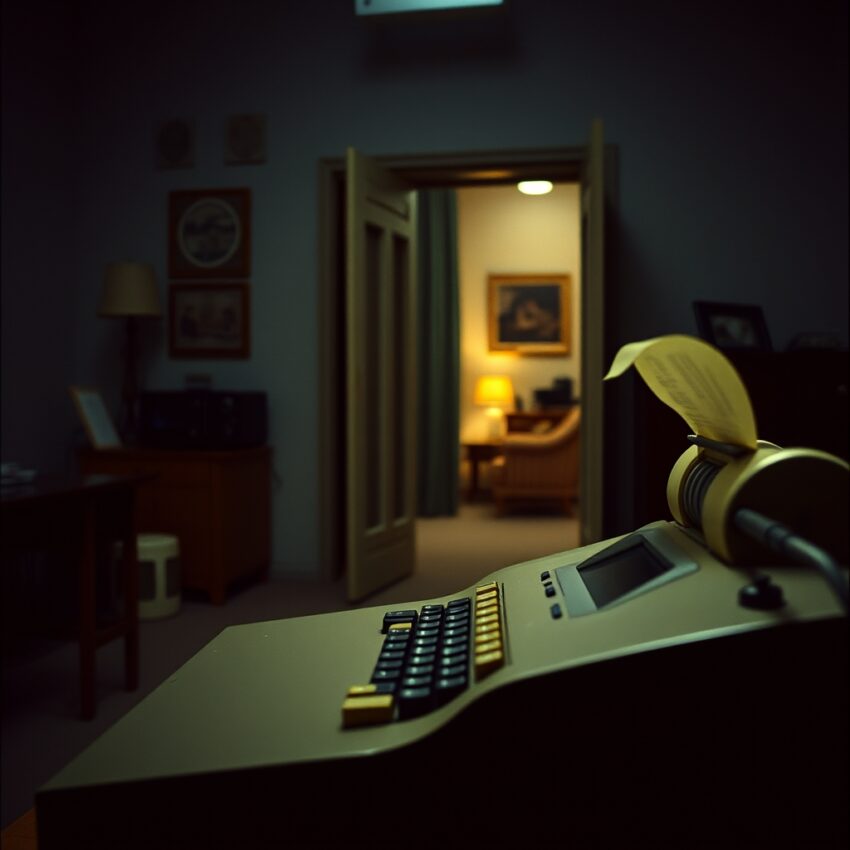
🇹🇷 Türkçe | teleks makinesi: salonda toplanan ailelerin sessiz heyecanı içinde analog çağın unutulmayan heyecanını anlatıyor okul yolu telaşıyla bir çınar gölgesine sığınarak
Bir zamanlar haberin eve girişi bugünkü kadar sessiz ve görünmez değildi. Kimi resmi dairelerde, kimi istasyon binalarında, kimi de gazetelerin arka odalarında duran teleks makinesi, yazının mekanik ritmini dünyaya bağlayan tuhaf bir kalp gibi çalışırdı. Onun varlığı doğrudan her eve girmese de, analog çağın heyecanı günlük hayatı çevreleyen bir söylenti gibi herkesin kulağına değmişti. Salonda toplanan ailelerin akşam haberini beklediği saatlerde, bir yerlerde bir kâğıda metal seslerle düşen satırlar olduğuna dair düşünce, modern hayatın görünmeyen damarlarını hissettirirdi. Okul yolu telaşıyla koşan çocukların bir çınarın gölgesine sığınıp soluklandığı o şehirlerde, teknoloji çoğu kez uzağın haberiyle yakın hayatı birbirine bağlayan bir araç olarak tahayyül edilirdi.
Teknoloji Mirası açısından teleks, yalnız bir iletişim cihazı değil; hızın ilk kez resmileştiği bir eşikti. Telefon ses taşırken, teleks kelimeleri kayıt altına alıyor, daktilo tuşlarının disiplinini uzak mesafelere ulaştırıyordu. Eski gazetelerde borsa bilgileri, dış haber akışları, resmi duyurular ve ticari yazışmalar teleks üzerinden gelir; matbaa kokusuna karışan bu mekanik yazı trafiği yeni bir zaman duygusu yaratırdı. Çünkü teleksin en dikkat çekici yanı, mesajın elle yazılmış mektup kadar somut, ama ondan çok daha hızlı oluşuydu. İnsanlar cihazın başında bekleyen memurları belki görmezdi; ama “haber geldi” denildiğinde bunun ardında bir makine, bir kâğıt şeridi ve titreşen metal vuruşları bulunduğunu bilirdi. Analog çağın heyecanı biraz da buradan doğuyordu: haber bir anda düşerdi, ama o anın arkasında hâlâ emek, mekanik düzen ve insan dikkati vardı.
Bu duygunun unutulmamasında ev içi hayatla dış dünya arasındaki bağ önemlidir. Salonda toplanan aileler akşam haberlerini izlerken ya da radyodan son gelişmeleri dinlerken, dünyanın kendilerine ulaştırılma biçimi de merak konusu olurdu. Çocuklar için teleks çoğu zaman görülmeyen ama adı duyulan bir cihazdı; daktiloya benzeyen, ama daha uzak yerlere konuşan bir makine. Okuldan dönerken gazete bayiinin önünde duran manşetlere bakan bir çocuk, o satırların bir kısmının belki de teleksle gelmiş olduğunu bilmeden, modern çağın ritmine dokunurdu. Bir çınarın gölgesine sığınarak su içen, çantasını yere koyup nefeslenen o çocuk için dünya önce mahalleydi; ama teleksin taşıdığı haberler sayesinde mahalleye başka şehirler, başka ülkeler, başka sesler eklenirdi. Böylece teknoloji, yalnız cihaz kullananların değil; haberin etrafında yaşayan herkesin hayatına dolaylı bir biçimde girerdi.
Teleks makinesinin analog çağda unutulmayan heyecanı anlatmasının sebebi biraz da onun sesinde saklıydı. O düzenli vuruşlar, kâğıdın ilerleyişi, yazının satır satır belirişi, modernliğin elle tutulur bir hâli gibiydi. Bugün dijital ekranlarda bir bildirim sessizce belirip kaybolurken, o yıllarda iletilen sözün fiziksel bir izi vardı. Teleks, bir dönemin haber alma terbiyesini, resmiyet duygusunu ve teknolojiye duyduğu hayranlığı aynı anda taşıyordu. Salonda toplanmış ailelerin sessiz heyecanı, okul yolu telaşı ve çınar gölgesinde duran çocukluk anlarıyla birleştiğinde, bu makine yalnız bir büro nesnesi olmaktan çıkar. O, analog çağın insanlara uzakla yakın arasında görünmez bir köprü kurduğunu hatırlatan sembollerden biri hâline gelir. Bu yüzden teleks makinesi bugün bile doğrudan kullanılmamış evlerin hafızasında yer eder; çünkü onun anlattığı şey sadece haberleşme değil, modern zamana duyulan ilk hayrettir.
🇬🇧 English | The Telex Machine: It Tells the Unforgotten Excitement of the Analog Age Within the Quiet Thrill of Families Gathering in the Living Room, Taking Shelter in the Rush of the School Road Under a Plane Tree’s Shade
There was a time when the arrival of news into daily life was not as silent and invisible as it is today. The telex machine, standing in government offices, station buildings, or the back rooms of newspapers, worked like a strange mechanical heart connecting the rhythm of writing to the wider world. Even when it did not enter every home directly, the excitement of the analog age touched ordinary people like a rumor traveling through daily life. While families gathered quietly in the living room waiting for the evening bulletin, there was comfort and wonder in knowing that somewhere lines were falling onto paper with metallic sounds. In those towns where children hurried along the road to school and paused for breath under the shade of a plane tree, technology was often imagined as the thing that linked the news of faraway places with the intimacy of nearby life.
As a part of technological heritage, the telex was not merely a communication device, but a threshold where speed first became official. The telephone carried voices, but the telex fixed words onto paper and sent the discipline of typewriter keys across distance. In old newspapers, stock data, foreign dispatches, official notices, and commercial correspondence arrived through telex, and this traffic of mechanical writing mixed with the smell of print created a new sense of time. What made telex striking was that it was as tangible as a handwritten letter, yet far quicker. People did not necessarily see the clerks waiting beside the machine, but when someone said “the news has arrived,” everyone understood that behind that sentence stood a machine, a paper strip, and the trembling impact of metal strikes. Part of the excitement of the analog age came from exactly this: the message appeared suddenly, yet behind that suddenness remained labor, mechanical order, and human attention.
The reason this feeling was never forgotten also lies in the bond between domestic life and the outside world. While families sat together in the living room listening to the radio or watching the evening news, the very way the world reached them became part of the imagination. For children, the telex was often a machine never seen but frequently heard about, something like a typewriter that could speak to places far away. A child returning from school and staring at the headlines in front of the newspaper stand touched, without knowing it, the rhythm of modern life, because some of those lines may have arrived by telex. That child setting down a satchel under a plane tree, taking a breath in the rush of the school road, knew the world first as the neighborhood. Yet through the messages carried by telex, other cities, other countries, and other voices entered that neighborhood. Technology therefore touched not only those who operated it, but everyone who lived around the news it delivered.
The telex machine speaks of the unforgotten excitement of the analog age partly because that excitement lived in its sound. Its steady strikes, the advance of the paper, the appearance of words line by line felt like modernity made tangible. Where a digital notification now appears and disappears in silence, words once left a physical trace. The telex carried at once a discipline of receiving news, a sense of official seriousness, and a fascination with technology. When joined to the quiet thrill of families gathered in the living room, the rush of the school road, and the memory of pausing beneath a plane tree, the machine becomes more than an office object. It turns into one of the symbols that remind us how the analog age built invisible bridges between far and near. That is why the telex machine still occupies a place even in the memory of homes that never used one directly: what it tells is not only a story of communication, but of the first astonishment felt toward modern time itself.
🇧🇷 Português (Brasil) | A Máquina de Telex: Ela Conta a Emoção Inesquecida da Era Analógica no Silencioso Entusiasmo das Famílias Reunidas na Sala, Abrigando-se da Pressa do Caminho da Escola sob a Sombra de um Plátano
Houve um tempo em que a chegada das notícias à vida cotidiana não era tão silenciosa e invisível quanto hoje. A máquina de telex, presente em repartições públicas, prédios de estações ou salas dos fundos dos jornais, funcionava como um estranho coração mecânico ligando o ritmo da escrita ao mundo. Mesmo sem entrar diretamente em todas as casas, a emoção da era analógica tocava as pessoas comuns como um rumor espalhado pela rotina. Enquanto as famílias se reuniam em silêncio na sala esperando o noticiário da noite, havia algo de reconfortante e fascinante em imaginar que, em algum lugar, linhas estavam sendo impressas em papel com sons metálicos. Naquelas cidades em que crianças corriam pelo caminho da escola e paravam para respirar sob a sombra de um plátano, a tecnologia era muitas vezes imaginada como aquilo que unia as notícias de lugares distantes à intimidade da vida próxima.
Como herança tecnológica, o telex não era apenas um aparelho de comunicação, mas um limiar em que a velocidade se tornava oficial. O telefone transportava vozes, mas o telex fixava palavras no papel e levava a disciplina das teclas da máquina de escrever a grandes distâncias. Em jornais antigos, cotações, notícias internacionais, avisos oficiais e correspondências comerciais chegavam pelo telex, e esse tráfego de escrita mecânica, misturado ao cheiro da gráfica, criava uma nova sensação de tempo. O que tornava o telex marcante era ser tão concreto quanto uma carta escrita à mão, mas muito mais rápido do que ela. As pessoas nem sempre viam os funcionários ao lado do aparelho, mas quando alguém dizia “a notícia chegou”, todos entendiam que por trás daquela frase havia uma máquina, uma fita de papel e o impacto vibrante das batidas metálicas. Parte da emoção da era analógica vinha exatamente daí: a mensagem surgia de repente, mas por trás dessa rapidez permaneciam o trabalho, a ordem mecânica e a atenção humana.
O motivo de esse sentimento não ter sido esquecido também está na ligação entre a vida doméstica e o mundo exterior. Enquanto as famílias ficavam reunidas na sala ouvindo rádio ou assistindo ao noticiário, a própria maneira como o mundo chegava até elas virava assunto da imaginação. Para as crianças, o telex era muitas vezes um aparelho nunca visto, mas frequentemente mencionado, algo como uma máquina de escrever que falava com lugares distantes. Uma criança que voltava da escola e olhava as manchetes diante da banca de jornal tocava, sem perceber, o ritmo da modernidade, porque algumas daquelas linhas talvez tivessem chegado pelo telex. Essa criança, ao pôr a mochila no chão e recuperar o fôlego sob um plátano no meio da pressa do caminho da escola, conhecia o mundo primeiro como bairro. No entanto, pelas mensagens levadas pelo telex, outras cidades, outros países e outras vozes entravam nesse mesmo bairro. Assim, a tecnologia tocava não apenas quem operava o aparelho, mas todos os que viviam ao redor das notícias que ele transportava.
A máquina de telex fala da emoção inesquecida da era analógica também porque essa emoção estava guardada em seu som. As batidas regulares, o avanço do papel, o aparecimento das palavras linha por linha davam a sensação de uma modernidade palpável. Enquanto hoje uma notificação digital aparece e desaparece em silêncio, naquela época a palavra deixava um vestígio físico. O telex reunia ao mesmo tempo uma disciplina de receber notícias, um senso de formalidade e um encantamento com a tecnologia. Quando isso se junta ao silencioso entusiasmo das famílias reunidas na sala, à pressa do caminho da escola e à memória de parar sob a sombra de um plátano, a máquina deixa de ser apenas um objeto de escritório. Ela se torna um dos símbolos que lembram como a era analógica construiu pontes invisíveis entre o distante e o próximo. Por isso o telex ainda ocupa lugar até na memória de casas que nunca o usaram diretamente: aquilo que ele conta não é apenas uma história de comunicação, mas do primeiro assombro diante do tempo moderno.