🇹🇷 Türkçe | Bandırma’dan yayılan gençlik ümidi: 19 Mayıs’ın memlekete verdiği cesaret
Bir zamanlar mayıs ayının ortası geldiğinde, rüzgarın bile başka türlü estiğine inanılırdı. Bandırma Vapuru’nun adı yalnızca tarih kitaplarında kalmaz; okul bahçelerinde, evlerde, kahvehanelerde ve eski gazete manşetlerinde yeniden canlanırdı. Sabahın erken saatlerinde ütülenmiş beyaz gömlekler hazırlanır, gençlerin yakalarına iliştirilecek küçük rozetler masanın kenarına dizilir, anneler sanki bayrama gidiliyormuş gibi çocukların saçlarını özenle düzeltirdi. Sokağa çıkan herkes, mevsimin ilk gerçek sıcaklığıyla birlikte, 19 Mayıs’ın yalnız bir tören günü değil; memleketin yeniden doğrulma iradesini hatırlatan canlı bir hatıra olduğunu hissederdi. Bandırma’dan çıkan o yolculuk, aradan geçen yıllara rağmen hâlâ evlerin içine kadar uzanan bir cesaret duygusu taşırdı.
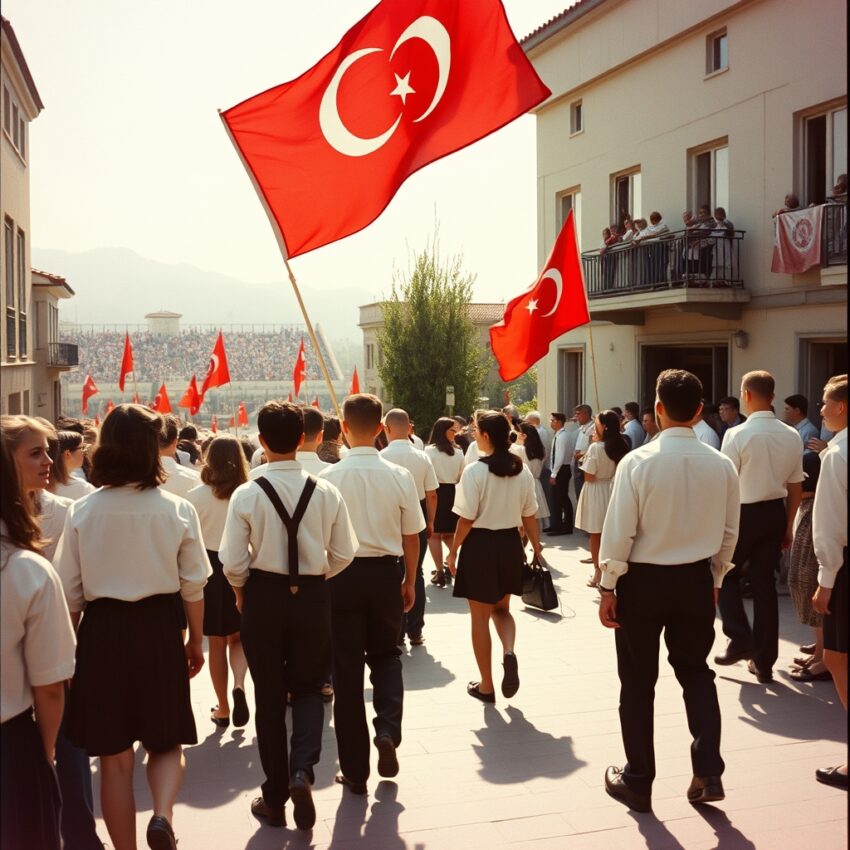
Zamanın İzinde bakıldığında 19 Mayıs’ın toplumsal hafızadaki gücü, yalnız büyük bir tarihsel başlangıcı temsil etmesinden gelmez. Aynı zamanda gençlik fikrini, yani geleceğe bakma cesaretini gündelik hayatın içine taşımasından doğar. Eski gazetelerde bayram hazırlıklarına ayrılan sütunlar, stadyum gösterileri, okul kortejleri, şiirler, marşlar ve gençlerin katıldığı spor etkinlikleri sık sık geniş yer bulurdu. Çünkü 19 Mayıs, hatırlamanın pasif bir biçimi değil; bedenen, sesle, yürüyüşle ve topluca görünerek yeniden kurulan bir ortak hafıza biçimiydi. Bir şehirde öğrencilerin aynı anda aynı ritimle adım atması, genç kızların ve delikanlıların ellerinde bayraklarla meydanları doldurması, memleketin geleceğinin yüzlerde arandığı bir anda anlam kazanırdı. Bu yüzden Bandırma adı, yalnız bir vapurla değil; o vapurdan yayılan iradeyle birlikte anılırdı.
Bu cesaretin gündelik hayatta bıraktığı izler çoğu zaman tören alanından önce başlardı. Okul sıralarında ezberlenen şiirler, öğretmenlerin ciddiyetle yaptığı prova uyarıları, mahalle aralarında marş söyleyerek yürüyen çocuk grupları ve pencere önlerinden bakan yaşlıların sessiz onayı, 19 Mayıs’ın halk arasında nasıl kök saldığını gösterirdi. Kimi evde baba, kendi gençliğinde katıldığı bir stadyum gösterisini anlatır; kimi evde anne, ütülediği yakalığın ne kadar beyaz olması gerektiğini dert ederdi. Çocuklar için bu gün biraz gösteri, biraz heyecan, biraz da büyüklere yakışır bir ciddiyet anlamına gelirdi. Ama yıllar sonra geriye bakıldığında hatırlanan şey çoğu zaman yalnızca resmi törenler değil; evden meydana uzanan o hazırlık duygusu, sokakların sabah erken saatlerde bayram düzenine girmesi ve herkesin memleketi bir süreliğine ortak bir umut cümlesi gibi kurmasıdır.
Bandırma’dan yayılan gençlik ümidi denen şey, tam da bu yüzden tek bir tarih anına sıkışmaz. O, gençliği yalnız yaşa bağlı bir dönem değil, toplumu ayağa kaldıran bir enerji olarak tarif eder. 19 Mayıs’ta memlekete verilen cesaret, “yeniden başlanabilir” duygusunun en görünür hâlidir. Geçmişte zor zamanlardan çıkmış kuşaklar için bu tarih, sadece anma değil; toparlanma terbiyesi anlamına gelirdi. Meydanlarda açılan bayraklar, okul duvarlarına asılan yazılar, stadyumda aynı anda yükselen alkışlar, bir milletin kendi gençliğine güvenini tazelediği anlardı. Bugün o günleri düşündüğümüzde, Bandırma’nın yalnızca bir hareket noktası değil; toplumsal hafızada umudun adı hâline gelmiş bir eşik olduğunu anlarız. 19 Mayıs’ın bıraktığı iz, tören bittikten sonra da kolay silinmez; çünkü o iz, memleketin en zor zamanlarda bile kendini genç bir cesaretle yeniden kurabileceğine dair derin inancında yaşar.
🇬🇧 English | The Hope of Youth Spreading From Bandirma: The Courage 19 May Gave to the Nation
There was a time when, as mid-May approached, even the wind seemed to carry a different feeling. The name of the Bandirma Ferry did not remain only in history books; it came alive again in schoolyards, homes, coffeehouses, and the columns of old newspapers. Early in the morning, freshly ironed white shirts were laid out, small badges to be pinned on the collars of young people were lined up at the edge of the table, and mothers straightened their children’s hair with the care of a holiday preparation. Everyone who stepped into the street felt, together with the first real warmth of the season, that 19 May was not merely a ceremonial date, but a living memory reminding the nation of its will to stand upright again. That voyage departing from Bandirma carried, even years later, a sense of courage that reached all the way inside ordinary homes.
Seen in the trail of time, the power of 19 May in collective memory comes not only from representing a great historical beginning. It also comes from carrying the idea of youth, the courage to look toward the future, into the texture of everyday life. Old newspapers often devoted wide columns to holiday preparations, stadium performances, school parades, poems, marches, and sporting events joined by the young. That was because 19 May was not a passive act of remembrance, but a form of shared memory rebuilt through bodies, voices, marching steps, and public presence. In any city, students stepping in rhythm together, young women and men filling the squares with flags in hand, took on meaning in a moment when the future of the country seemed to be searched for in their faces. For that reason, the name Bandirma came to signify not only a ship, but the resolve that spread from it.
The traces left by that courage in daily life often began even before the ceremony grounds. Poems memorized at school desks, the serious rehearsal instructions of teachers, groups of children walking through the neighborhood singing marches, and the quiet approval of elderly people watching from the windows all showed how deeply 19 May had taken root among the public. In some homes, a father spoke of the stadium display he had joined in his own youth; in others, a mother worried over how white the ironed collar ought to be. For children, the day meant something between performance, excitement, and a seriousness borrowed from adults. Yet when one looks back years later, what is remembered is often not only the formal ceremonies, but the feeling of preparation stretching from the house to the square, the streets entering a festive order at first light, and the way everyone briefly built the nation as a shared sentence of hope.
That hope of youth spreading from Bandirma is therefore never confined to a single historical instant. It defines youth not merely as an age, but as an energy capable of lifting a society back to its feet. The courage given to the nation on 19 May is the clearest form of the feeling that a new beginning is possible. For generations that had emerged from hardship, this date meant not only commemoration, but a discipline of gathering strength. The flags opened in the squares, the words hung on school walls, and the applause rising at once in the stadium were all moments in which a people renewed its trust in its youth. When we think of those days today, we understand that Bandirma was not simply a point of departure, but a threshold whose name became synonymous with hope in social memory. The mark left by 19 May does not fade when the ceremony ends, because it lives in the deep belief that the nation, even in its hardest hours, can rebuild itself with youthful courage.
🇧🇷 Português (Brasil) | A Esperança da Juventude que se Espalhou de Bandırma: A Coragem que 19 de Maio Deu ao País
Houve um tempo em que, quando chegava a metade de maio, até o vento parecia soprar de outra forma. O nome do Vapor Bandırma não ficava apenas nos livros de história; ele voltava à vida nos pátios das escolas, nas casas, nos cafés de bairro e nas manchetes dos jornais antigos. Logo cedo, camisas brancas recém-passadas eram separadas, pequenos broches para a gola dos jovens eram alinhados sobre a mesa, e as mães arrumavam o cabelo dos filhos com o mesmo cuidado de quem se prepara para um dia de festa. Quem saía à rua sentia, junto com o primeiro calor real da estação, que 19 de maio não era apenas uma data de cerimônia, mas uma lembrança viva da vontade do país de se reerguer. A viagem iniciada em Bandırma continuava levando, mesmo depois de muitos anos, um sentimento de coragem até o interior da vida doméstica.
No rastro do tempo, a força de 19 de maio na memória coletiva não vem apenas do fato de representar um grande começo histórico. Ela também nasce de levar a ideia de juventude, isto é, a coragem de olhar para o futuro, para dentro da vida cotidiana. Jornais antigos reservavam longas colunas aos preparativos da festa, às apresentações nos estádios, aos cortejos escolares, aos poemas, às marchas e às atividades esportivas das quais os jovens participavam. Isso acontecia porque 19 de maio não era uma lembrança passiva, mas uma forma de memória compartilhada reconstruída com corpos, vozes, passos e presença pública. Em qualquer cidade, ver estudantes marchando no mesmo ritmo, moças e rapazes enchendo as praças com bandeiras nas mãos, ganhava sentido como um momento em que o futuro do país parecia ser procurado em seus rostos. Por isso Bandırma passou a significar não apenas um navio, mas a determinação que se espalhou a partir dele.
Os vestígios deixados por essa coragem na vida diária muitas vezes começavam antes mesmo do local oficial da cerimônia. Poemas decorados na sala de aula, os avisos sérios dos professores durante os ensaios, grupos de crianças cantando marchas nas ruas do bairro e a aprovação silenciosa dos idosos observando da janela mostravam como 19 de maio havia criado raízes entre as pessoas. Em algumas casas, o pai contava sobre a apresentação de estádio de que participara na juventude; em outras, a mãe se preocupava com o quanto a gola passada precisava ficar branca. Para as crianças, o dia era um pouco espetáculo, um pouco entusiasmo e um pouco da seriedade emprestada dos adultos. Mas, anos depois, o que permanece na lembrança não são apenas as cerimônias formais, e sim o sentimento de preparação que ia da casa à praça, as ruas entrando em ordem festiva logo pela manhã e a maneira como todos, por algumas horas, construíam o país como uma frase comum de esperança.
A esperança da juventude que se espalhou de Bandırma, por isso, nunca cabe em um único instante histórico. Ela define a juventude não apenas como uma fase da idade, mas como uma energia capaz de levantar uma sociedade. A coragem dada ao país em 19 de maio é a forma mais visível da sensação de que sempre se pode recomeçar. Para gerações que atravessaram tempos difíceis, essa data significava não só lembrança, mas uma disciplina de recompor forças. As bandeiras abertas nas praças, os dizeres afixados nas paredes da escola e os aplausos que subiam ao mesmo tempo no estádio eram momentos em que um povo renovava sua confiança na juventude. Quando pensamos hoje nesses dias, entendemos que Bandırma não foi apenas um ponto de partida, mas um limiar cujo nome se tornou sinônimo de esperança na memória social. A marca deixada por 19 de maio não se apaga quando a cerimônia termina, porque continua viva na crença profunda de que o país, mesmo nas horas mais duras, pode se reconstruir com coragem jovem.