🇹🇷 Türkçe | plak kutusu ve mutfak raflarında saklı kalan sessiz ihtişamı: ev hayatının ritüellerini nasıl şekillendirdi
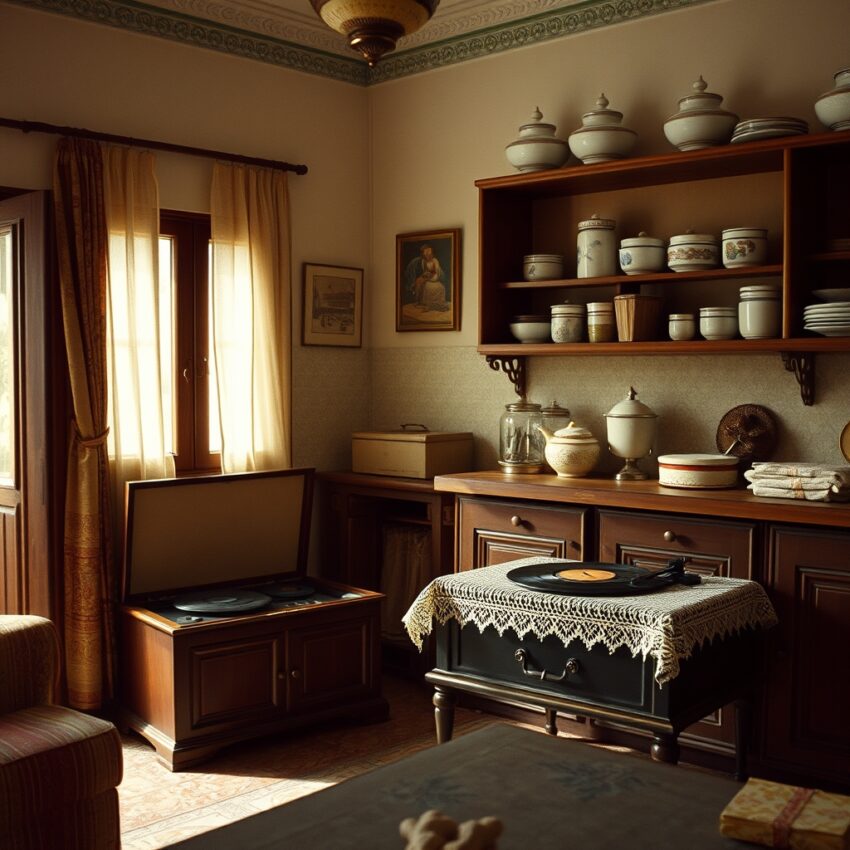
Bir zamanlar evlerin en gösterişsiz köşelerinde bile sessiz bir özen saklıydı. Salonun kenarında duran plak kutusu, üstünde dantel örtüyle bekleyen pikabın tamamlayıcısı gibi görünür; mutfak raflarında dizilen cam kavanozlar, emaye tabaklar ve dikkatle katlanmış örtüler gündelik düzenin görünmeyen estetiğini kurardı. Bu nesneler yalnız eşyadan ibaret değildi. Ev halkının zamanı nasıl kullandığını, misafir nasıl ağırladığını, hangi saatte çay koyduğunu ve akşam sessizliğine hangi müziğin karıştığını belirleyen küçük işaretlerdi. Sessiz ihtişam denilen şey tam da buydu: yüksek sesle gösterilmeyen ama her ayrıntıda hissedilen bir düzen, bir zevk ve bir hayat terbiyesi.
Obje Hikayeleri açısından plak kutusu ile mutfak rafı arasında görünenden daha güçlü bir akrabalık vardır. Birinde ses saklanır, diğerinde gündelik hayatın ritmi. Plak kutusunun kapağı açıldığında içinden yalnız müzik değil; belirli akşamların ruhu, belirli ziyaretlerin havası ve evin kendine özgü sesi de çıkar. Mutfak raflarında duran tabaklar, bardaklar, reçel kavanozları ya da bakır bir cezve ise benzer biçimde, ev içi yaşamın tekrar eden hareketlerini taşır. Eski dergilerde ve gazete eklerinde sık sık “düzenli ev” vurgusuna rastlanması boşuna değildir. Çünkü güzel bir ev, yalnız büyük mobilyalarla değil; rafa dizilen fincanların hizasıyla, plakların özenle korunmasıyla ve gündelik kullanım nesnelerinin taşıdığı zarafetle tamamlanırdı. Tasarımın gündelik hayatla temas ettiği yer tam da bu sıradan görünen ayrıntılardı.
Bu sessiz ihtişamın ev ritüellerini şekillendirmesi, nesnelerin kullanım anlarında daha iyi anlaşılır. Misafir geleceği zaman mutfak rafından en uygun fincan takımı seçilir, çayın yanına konacak tabaklar belirlenir, salonda ise hangi plağın çevrileceği düşünülürdü. Ev sahibi için bu seçimler yalnız pratik meseleler değil; incelik göstergesiydi. Bir pazar sabahı mutfaktan gelen tabak sesleriyle birlikte salonda hafif bir müzik yükselirse, evin bütün odaları ortak bir ritme kavuşurdu. Çocuklar plak kutusunun kapağını merakla açmak ister, büyükler “dikkat et” diyerek hem nesneyi hem de ona bağlı hatırayı korurdu. Mutfak rafları da benzer biçimde, yalnız saklama alanı değil; ev içi disiplinin ve estetik duygunun sahnesiydi. Kavanozların aynı hizada durması, tabakların temiz parlaması, örtülerin düzgün katlanması; bunların hepsi ev hayatına sessiz ama kararlı bir düzen verirdi.
Bugün geriye dönüp bakınca bu nesnelerin neden bu kadar hatırlandığı daha iyi anlaşılıyor. Çünkü plak kutusu ile mutfak rafı, bir dönemin ev anlayışını özetleyen iki güçlü simgedir. Biri duyguyu, diğeri düzeni taşır; biri akşamı güzelleştirir, diğeri günü ayakta tutar. Sessiz ihtişam denilen şey, tam olarak bu iki alanın birlikte kurduğu atmosferdir. İnsanlar o evlerde yalnız yaşamaz; dinler, ikram eder, toparlar, bekler ve birlikte olmanın biçimini nesneler aracılığıyla da öğrenirdi. Bu yüzden bugün bir eski plak kutusu ya da raf kenarında dizilmiş emaye tabaklar görüldüğünde, sadece objeler değil, onlarla kurulmuş ritüeller de hatırlanır. Ev hayatının biçimi biraz da bu nesnelerin sabırlı varlığıyla şekillenmişti; gösterişten uzak, ama hafızada derin bir iz bırakan bir zarafetle.
🇬🇧 English | The Quiet Splendor Hidden in the Record Box and on Kitchen Shelves: How Did It Shape the Rituals of Home Life?
There was once a quiet care hidden even in the most modest corners of the home. The record box standing by the side of the living room seemed like the companion of the turntable waiting beneath its lace cover, while the jars lined up on kitchen shelves, enamel plates, and neatly folded cloths created the unseen aesthetic of daily order. These objects were never just things. They were small signs that determined how a household used its time, how guests were welcomed, at what hour tea was brewed, and what music entered the evening silence. This was the very meaning of quiet splendor: a sense of order, taste, and domestic discipline never loudly displayed, yet felt in every detail.
Seen as object stories, the record box and the kitchen shelf are more closely related than they appear. In one, sound is stored; in the other, the rhythm of everyday life. When the lid of the record box is opened, it releases not only music, but the spirit of certain evenings, the atmosphere of certain visits, and the distinctive voice of the home itself. The plates, glasses, jam jars, and copper coffee pot standing on kitchen shelves similarly hold the repeated gestures of domestic living. It is no accident that old magazines and newspaper supplements so often emphasized the idea of a “well-ordered home.” A beautiful house was completed not only by large furniture, but by the alignment of cups on a shelf, the careful preservation of records, and the grace carried by daily-use objects. The place where design touched ordinary life was precisely within those details that appeared so ordinary.
The way this quiet splendor shaped household rituals becomes clearest in the moments when these objects were used. When guests were expected, the most suitable cup set was chosen from the kitchen shelf, plates were selected for what would accompany the tea, and in the living room someone considered which record ought to be played. For the host, these choices were not merely practical matters, but signs of refinement. If, on a Sunday morning, the sound of plates from the kitchen was joined by soft music rising in the living room, all the rooms of the house fell into a shared rhythm. Children wanted to lift the lid of the record box in curiosity, and adults warned them gently to be careful, protecting both the object and the memory bound to it. Kitchen shelves in the same way were not only storage spaces, but stages for domestic discipline and aesthetic feeling. Jars aligned evenly, plates shining clean, cloths folded properly: all of these gave household life a quiet but firm sense of order.
Looking back today, it becomes easier to understand why these objects are remembered so strongly. The record box and the kitchen shelf are two powerful symbols summarizing a whole idea of home. One carried feeling, the other order; one beautified the evening, the other sustained the day. Quiet splendor is exactly the atmosphere formed by their companionship. People did not merely live in those homes; they listened, served, tidied, waited, and learned ways of being together through objects as well. That is why, when an old record box or enamel plates lined along a shelf are seen today, it is not only the objects that return, but also the rituals created around them. The shape of home life was formed partly by the patient presence of such things, with a grace far from ostentation, yet capable of leaving a deep mark on memory.
🇧🇷 Português (Brasil) | O Esplendor Silencioso Escondido na Caixa de Discos e nas Prateleiras da Cozinha: Como Moldou os Rituais da Vida Doméstica?
Houve um tempo em que até os cantos mais discretos da casa guardavam um cuidado silencioso. A caixa de discos ao lado da sala parecia o complemento natural do toca-discos coberto por uma renda, enquanto os potes de vidro alinhados nas prateleiras da cozinha, os pratos esmaltados e os panos dobrados com capricho construíam a estética invisível da ordem cotidiana. Esses objetos nunca eram apenas coisas. Eram pequenos sinais que determinavam como a família usava o tempo, como recebia visitas, em que hora o chá era preparado e qual música se misturava ao silêncio da noite. Era isso o que se podia chamar de esplendor silencioso: um senso de ordem, gosto e disciplina doméstica que não era exibido em voz alta, mas se fazia sentir em cada detalhe.
Nas histórias dos objetos, a caixa de discos e a prateleira da cozinha têm um parentesco mais forte do que parece. Em uma se guarda o som; na outra, o ritmo da vida diária. Quando a tampa da caixa de discos era aberta, dela não saía apenas música, mas o espírito de certas noites, a atmosfera de determinadas visitas e a própria voz da casa. Os pratos, copos, potes de geleia e a cafeteira de cobre sobre as prateleiras da cozinha carregavam, da mesma forma, os gestos repetidos da vida doméstica. Não é por acaso que revistas antigas e suplementos de jornal insistiam tanto na ideia de uma “casa em ordem”. Uma casa bonita não se completava apenas com móveis grandes, mas também com o alinhamento das xícaras na prateleira, com o cuidado dado aos discos e com a elegância dos objetos de uso diário. Era exatamente nesses detalhes aparentemente comuns que o design tocava a vida.
O modo como esse esplendor silencioso moldava os rituais da casa aparece com mais nitidez nos momentos de uso. Quando iam chegar visitas, escolhia-se na prateleira o conjunto de xícaras mais apropriado, definiam-se os pratos para acompanhar o chá e, na sala, pensava-se em qual disco colocar. Para quem recebia, essas escolhas não eram apenas práticas, mas sinais de delicadeza. Se numa manhã de domingo o som dos pratos na cozinha se unia a uma música suave que vinha da sala, todos os cômodos da casa passavam a pulsar num mesmo ritmo. As crianças queriam abrir a caixa de discos por curiosidade, e os adultos diziam “com cuidado”, protegendo ao mesmo tempo o objeto e a lembrança presa a ele. As prateleiras da cozinha, de forma semelhante, não eram apenas lugares de guardar coisas, mas palcos da disciplina doméstica e do senso estético. Potes alinhados, pratos brilhando limpos e panos dobrados direito davam à vida da casa uma ordem silenciosa, porém firme.
Quando olhamos para trás hoje, fica mais fácil entender por que esses objetos são tão lembrados. A caixa de discos e a prateleira da cozinha são dois símbolos fortes de uma certa ideia de lar. Uma carregava emoção, a outra organização; uma embelezava a noite, a outra sustentava o dia. O esplendor silencioso é justamente a atmosfera criada por essa convivência. As pessoas não apenas moravam nessas casas; elas ouviam, serviam, organizavam, esperavam e aprendiam formas de estar juntas também por meio dos objetos. Por isso, quando hoje aparece uma antiga caixa de discos ou pratos esmaltados alinhados numa prateleira, não voltam apenas os objetos, mas os rituais construídos ao redor deles. A forma da vida doméstica foi moldada, em parte, pela presença paciente dessas coisas, com uma elegância sem ostentação, mas capaz de deixar uma marca profunda na memória.