🇹🇷 Türkçe | zeytinyağlı enginar: unutulan mutfak alışkanlıklarını nasıl geri çağırıyor ve eski mutfak kültürünü nasıl yaşatıyor
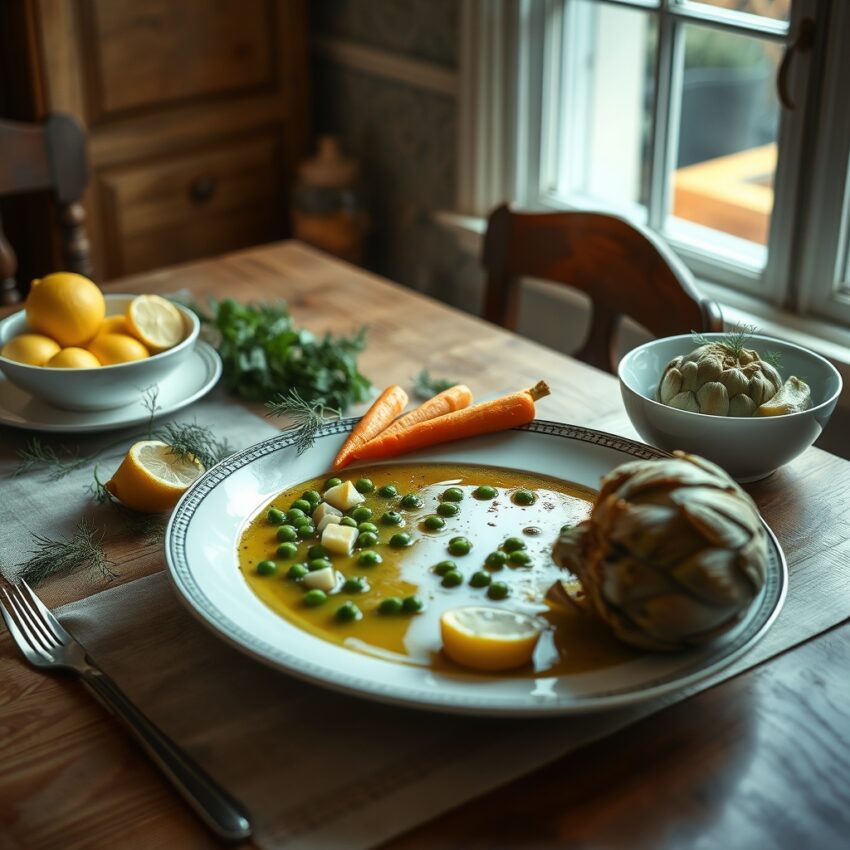
Bazı yemekler sofraya geldiği anda yalnız bir lezzeti değil, bir mutfak düzenini de geri çağırır. Zeytinyağlı enginar böyle yemeklerden biridir. Tencerenin kapağı açıldığında yükselen hafif limon kokusu, iç bezelyenin ve havucun yumuşak rengi, tabakta soğuk servis edilen düzenli görüntüsü insana sadece iştah değil, eski bir ev terbiyesini de hatırlatır. Bu yemek aceleyle ortaya çıkan değil, sebzesi dikkatle ayıklanan, zeytinyağı ölçülerek gezdirilen ve piştikten sonra dinlenmesi beklenen bir mutfak anlayışına aittir. O yüzden zeytinyağlı enginar yenildiğinde geçmişten gelen yalnız tat değil; hazırlık, mevsim bilgisi ve sofra adabı da yeniden canlanır.
Damak Hafızası bakımından zeytinyağlı enginar, eski mutfak kültürünün incelikli taraflarını taşıyan bir yemektir. Çünkü bu tarif, malzemenin tazeliğine ve mevsimin ritmine saygı ister. Pazardan alınan enginarın kararmadan temizlenmesi, limonlu suyun hazır bekletilmesi, iç bakla ya da bezelyenin ayıklanması, havucun ölçülü doğranması ve pişme süresinin dikkatle izlenmesi gerekir. Üstelik sonuç hemen tüketilmez; çoğu zaman soğuması, hatta ertesi güne kalması istenir. Bu bekleyiş bile mutfakta başka bir sabır biçimidir. Bugün hız çağında unutulan alışkanlıkların başında belki de tam bu gelir: her lezzetin anında değil, özenli bir süreç sonunda tamamlanması.
Zeytinyağlı enginarın unutulan mutfak alışkanlıklarını geri çağırması biraz da mutfağı kolektif bir alan olarak hatırlatmasından kaynaklanır. Eski evlerde enginar temizlemek çoğu zaman tek kişinin değil, birkaç elin işiydi. Biri limonlu suyu hazırlar, biri dış yaprakları ayırır, biri garnitürü ayıklar, öteki tencereyi kontrol ederdi. Mutfak böylece sessiz bir işbirliği mekânına dönüşürdü. Aynı zamanda ölçü duygusu da burada devreye girerdi; ne yağ fazla olacak ne şeker baskın çıkacak, ne de sebzenin kendine has tadı kaybolacaktı. Bu denge, eski mutfak kültürünün en belirgin özelliklerinden biriydi. Yemek, gösteriş için değil, zarif bir sadelik içinde kendini ortaya koymalıydı.
Bu yemeğin yaşattığı kültür sadece pişirme tekniğinde değil, sofradaki yerinde de saklıdır. Zeytinyağlılar çoğu evde meze gibi önceden hazırlanır, konuk gelirse mahcup etmeyen, aile sofrasında ise mevsimi ciddiye alan bir incelik sayılırdı. Enginarın tabakta ortasına yerleştirilen garnitürle sunulması, üzerine dereotu serpilmesi ya da yanında limon dilimi verilmesi, yemeğin görgü tarafını tamamlar. Böylece mutfak yalnız karın doyurma alanı olmaktan çıkar; mevsim bilgisi, estetik ve ölçü duygusunun buluştuğu bir kültürel hafızaya dönüşür. Zeytinyağlı enginar da tam bu nedenle eski sofra terbiyesinin bugüne kalan sessiz temsilcilerinden biridir.
Bugün hâlâ bir tabak zeytinyağlı enginar karşısında pek çok insanın içinin hafifçe yumuşaması boşuna değildir. Çünkü bu yemek, unutulmuş alışkanlıkları yalnız sözle değil tatla geri çağırır. Mevsim sebzesine saygı, acele etmeden hazırlık yapma, mutfakta paylaşılmış emek, yemeği dinlendirme sabrı ve sofrada sadeliğe değer verme gibi pek çok eski alışkanlık onun içinde yaşamayı sürdürür. Eski mutfak kültürü bazen büyük bayram sofralarında değil, böyle sade ama özenli tabaklarda devam eder. Nostaljinin damakta bıraktığı iz de tam burada belirir: insan yalnız eski bir yemeği değil, onun etrafında kurulmuş hayat ritmini de hatırlar. Zeytinyağlı enginar bu yüzden bugün hâlâ geçmişi sofraya usulca geri getirebilen ender lezzetlerden biridir.
🇬🇧 English | Olive Oil Artichokes: How Does It Call Back Forgotten Kitchen Habits and Keep Old Culinary Culture Alive
Some dishes bring back not only a flavor when they arrive at the table, but an entire kitchen order. Olive oil artichokes are one of those dishes. When the lid of the pot is lifted, the gentle scent of lemon, the soft colors of peas and carrots, and the calm arrangement in which the dish is served cold awaken not only appetite, but also the memory of an older domestic discipline. This is not a food produced in haste. It belongs to a kitchen understanding in which vegetables are carefully cleaned, olive oil is poured with measure, and the dish is allowed to rest after cooking. That is why, when olive oil artichokes are eaten, what returns from the past is not taste alone, but also preparation, seasonal knowledge, and table manners.
From the perspective of taste memory, olive oil artichokes carry some of the most refined qualities of old culinary culture. The recipe asks for respect toward freshness and the rhythm of the season. Artichokes bought at the market must be cleaned before they darken, lemon water should be waiting in a bowl, peas or broad beans must be prepared, carrots sliced with care, and the cooking time observed attentively. The result is not always eaten immediately. Quite often it is expected to cool, even to wait until the next day. That waiting itself is another form of patience in the kitchen. Perhaps one of the forgotten habits of the age of speed is exactly this: understanding that not every flavor is completed instantly, but through a careful process.
The reason olive oil artichokes call forgotten kitchen habits back is also that they remind us of the kitchen as a collective space. In older homes, cleaning artichokes was often not the work of one person alone, but of several hands. One prepared the lemon water, another removed the outer leaves, another sorted the garnish, while someone else watched the pot. The kitchen thus became a quiet place of collaboration. At the same time, a sense of measure was essential. The oil should not be excessive, the sugar should not dominate, and the vegetable’s own taste should never disappear. This balance was one of the clearest marks of old culinary culture. Food was meant to reveal itself not through showiness, but through a graceful simplicity.
The culture kept alive by this dish is hidden not only in the cooking technique, but in its place on the table. Olive oil dishes in many homes were prepared in advance, serving as something that would not embarrass the host if a guest arrived and as a sign of taking the season seriously at the family table. The garnish placed in the center of the artichoke, a little dill scattered over the top, or a lemon wedge on the side completed the etiquette of the dish. In this way the kitchen ceased to be only a site of feeding the body and became instead a cultural memory where seasonal knowledge, aesthetic sense, and moderation met. Olive oil artichokes remain one of the quiet representatives of that old table culture.
It is no coincidence that many people still feel a certain softness inside when faced with a plate of olive oil artichokes. This dish calls back forgotten habits not only through words, but through taste itself. Respect for seasonal vegetables, preparation without haste, shared labor in the kitchen, the patience of letting food rest, and the value given to simplicity at the table all continue to live inside it. Old culinary culture sometimes survives not at grand feast tables, but on such simple yet carefully prepared plates. The trace nostalgia leaves on the palate appears exactly here: one remembers not merely an old dish, but the rhythm of life built around it. That is why olive oil artichokes remain one of the rare flavors still capable of gently bringing the past back to the table.
🇧🇷 Português (Brasil) | Alcachofra com Azeite: Como Ela Faz Voltar Hábitos Esquecidos da Cozinha e Mantém Viva a Antiga Cultura Culinária
Alguns pratos, quando chegam à mesa, trazem de volta não apenas um sabor, mas toda uma ordem da cozinha. A alcachofra com azeite é um desses pratos. Quando a tampa da panela se abre, o perfume leve de limão, as cores suaves da ervilha e da cenoura e a apresentação tranquila com que ela é servida fria despertam não só o apetite, mas também a lembrança de uma antiga disciplina doméstica. Não se trata de uma comida feita às pressas. Ela pertence a uma ideia de cozinha em que os legumes são limpos com cuidado, o azeite é colocado na medida certa e o prato descansa depois de pronto. Por isso, quando se come alcachofra com azeite, o que retorna do passado não é apenas o gosto, mas também o preparo, o conhecimento da estação e as maneiras da mesa.
Pelo ponto de vista da memória gustativa, a alcachofra com azeite carrega alguns dos traços mais refinados da antiga cultura culinária. A receita pede respeito à frescura dos ingredientes e ao ritmo da estação. As alcachofras compradas na feira precisam ser limpas antes de escurecer, a água com limão deve estar pronta, as ervilhas ou favas precisam ser preparadas, a cenoura cortada com medida e o tempo de cozimento acompanhado com atenção. O resultado nem sempre é comido na mesma hora. Muitas vezes espera-se que esfrie, às vezes até que fique para o dia seguinte. Essa espera já é, por si só, uma outra forma de paciência na cozinha. Talvez um dos hábitos esquecidos na era da velocidade seja exatamente este: compreender que nem todo sabor se completa de imediato, mas ao fim de um processo cuidadoso.
O motivo pelo qual a alcachofra com azeite faz voltar hábitos esquecidos está também no fato de ela lembrar a cozinha como espaço coletivo. Nas casas antigas, limpar alcachofras muitas vezes não era trabalho de uma só pessoa, mas de várias mãos. Uma preparava a água com limão, outra retirava as folhas externas, outra organizava o recheio, enquanto alguém vigiava a panela. A cozinha se tornava assim um lugar silencioso de colaboração. Ao mesmo tempo, o senso de medida era indispensável. O azeite não devia sobrar, o açúcar não podia dominar e o sabor próprio do vegetal não deveria desaparecer. Esse equilíbrio era uma das marcas mais claras da antiga cultura culinária. A comida não deveria se mostrar pela ostentação, mas por uma simplicidade elegante.
A cultura que esse prato mantém viva não está escondida apenas na técnica de preparo, mas também em seu lugar à mesa. Os pratos de azeite, em muitas casas, eram preparados com antecedência, funcionando como algo que não deixava o anfitrião em situação delicada se chegasse visita e como um sinal de respeito à estação na mesa da família. O recheio colocado no centro da alcachofra, um pouco de endro por cima ou uma fatia de limão ao lado completavam a etiqueta do prato. Assim, a cozinha deixava de ser apenas um lugar para matar a fome e se tornava uma memória cultural onde se encontravam conhecimento da estação, senso estético e moderação. A alcachofra com azeite continua sendo uma das representantes silenciosas dessa antiga cultura da mesa.
Não é por acaso que muitas pessoas ainda sentem uma leve suavidade por dentro diante de um prato de alcachofra com azeite. Esse prato faz voltar hábitos esquecidos não apenas por meio das palavras, mas pelo próprio sabor. O respeito ao legume da estação, o preparo sem pressa, o trabalho compartilhado na cozinha, a paciência de deixar a comida descansar e o valor dado à simplicidade na mesa continuam vivos dentro dele. A antiga cultura culinária às vezes não sobrevive nas grandes mesas festivas, mas em pratos simples e cuidadosos como este. O traço que a nostalgia deixa no paladar aparece exatamente aí: a pessoa não se lembra só de uma comida antiga, mas do ritmo de vida construído ao redor dela. É por isso que a alcachofra com azeite segue sendo um dos raros sabores capazes de trazer o passado de volta à mesa com delicadeza.