 Eski Pano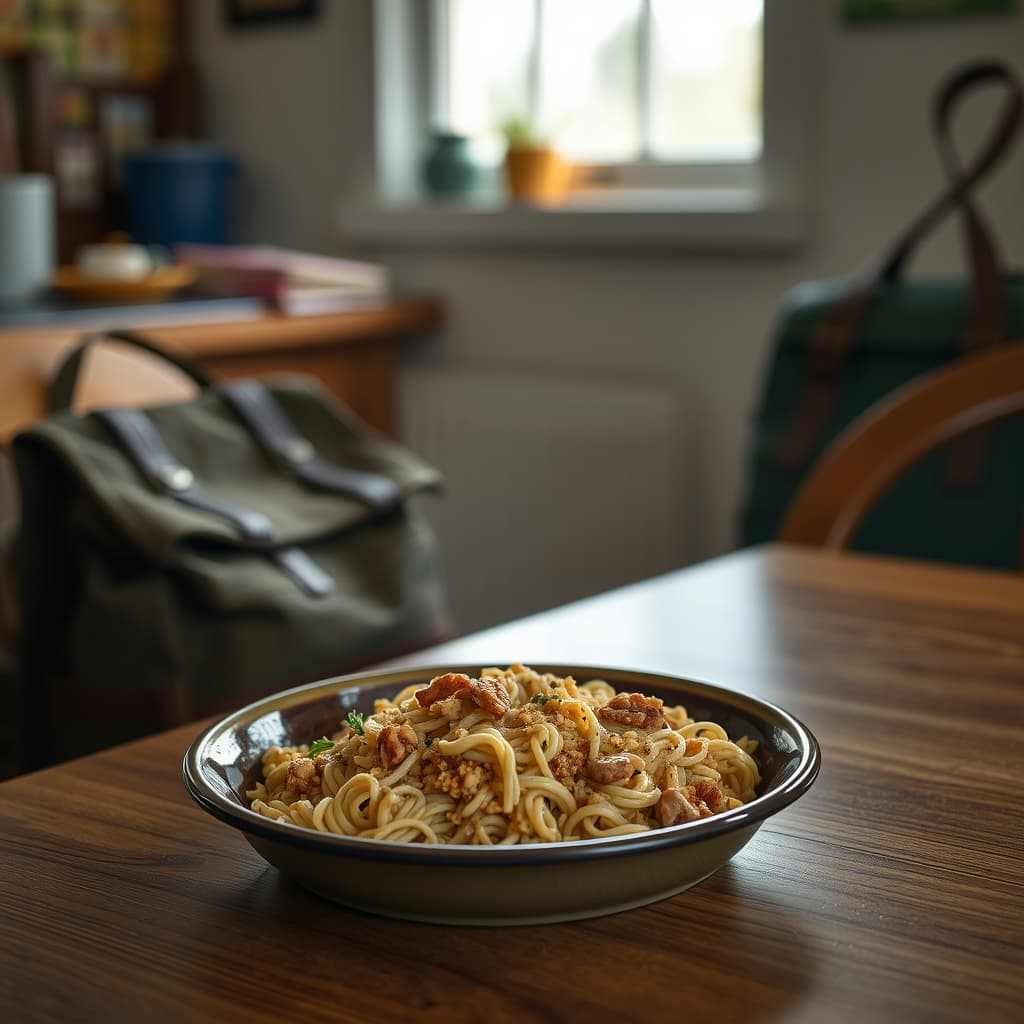
Walnut Noodle Pilaf And The First Spoon After School begins with a scene that many people once considered too ordinary to preserve: a school bag sliding from one shoulder, a late afternoon street filling with footsteps, and the warm plate waiting like a small permission slip to linger. In memories of walnut noodle pilaf after school, nothing is grand at first. The importance arrives quietly, through repeated gestures and the way a place or object becomes part of the body before anyone thinks to call it culture.
The old city trained young eyes through details. There was school dust, kitchen steam, a spoon reaching first, and walnuts scattered like small rewards; there were doors that opened with tired bells, windows that reflected another window, and adults who seemed to know that children needed a little time between obligation and home. That interval mattered. It allowed friendships to loosen, worries to become stories, and a shy confidence to form without a speech about confidence. The day was not finished, but it had softened.
The Small Ritual That Stayed
What makes walnut noodle pilaf after school so durable is not nostalgia alone. Nostalgia can polish things until they lose their edges, yet this memory keeps its scratches. It remembers impatience, cold hands, coins counted twice, the wish to stay five minutes longer, and the private art of pretending not to care. Around the warm plate, young people learned the comfort of a meal that did not need ceremony to feel generous. They learned how to read a room, how to wait for a friend, how to measure time by light rather than by alarms.
Eski Pano is interested in exactly this kind of modest evidence. A culture is often described through monuments, official ceremonies, and loud turning points, but daily life leaves finer traces. The path home, the counter of a small shop, the kitchen table, the corner under a lamp, and the article held in the hand can explain a period with more tenderness than a date in a textbook. They show how people actually inhabited time.
Why It Speaks To The Present
Today, the same memory returns because modern life is efficient in ways that sometimes flatten the pause. Messages arrive instantly, errands compress into screens, and waiting is treated as a defect to be removed. Yet the old rhythm of walnut noodle pilaf after school reminds us that waiting also carried meaning. It created room for observation. It gave ordinary companions a stage. It made small decisions feel personal rather than automatic.
This is why the warm plate can still feel alive when it appears in a photograph, a drawer, a family story, or a city walk. It does not merely say that the past was better. It says that attention was once distributed differently, and that some of that distribution may still be worth recovering. The memory asks for less speed, more texture, and a renewed respect for objects and places that helped people become themselves.
In the end, walnut noodle pilaf after school matters because it is humble enough to be trusted. It carries no grand slogan. It keeps the uneven floor, the imperfect light, the half-finished conversation, and the warm fatigue of a day that had been lived with others. That is the quiet inheritance it leaves: not a command to return, but an invitation to notice what ordinary rituals are teaching us now.