 Eski Pano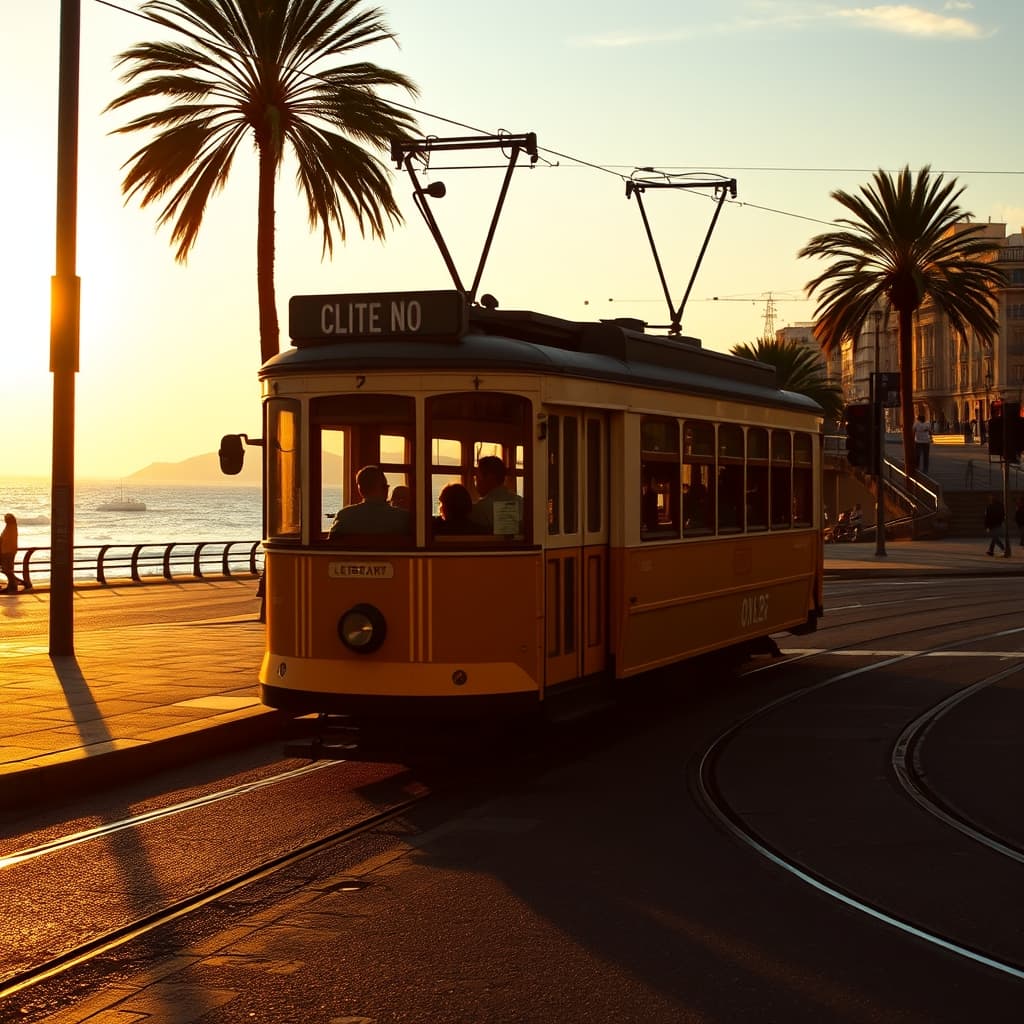
Trams And The Rhythm They Gave The Old City begins in a place where ordinary life has already learned its own rhythm. There is the tram bell and worn rail, not presented as a museum treasure, but as something people used, heard, touched, waited beside, or gathered around. In memories of trams giving rhythm to the old city, the past remains vivid because it is full of repeated human gestures. The scene lives through movement, sound, smell, and the modest discipline of people making space for one another.
The most durable texture is coastal returns, ticket punches, open windows, metal wheels, and passengers who knew the stops by sound. These details prevent the memory from becoming vague. They keep it local, practical, and emotionally exact. A city tram, a salon radio, a kitchen pot, a doorstep chair, or a soup bowl may seem humble, yet each one helped people organise time. Each created a reason to pause, listen, arrive, wait, talk, cook, or share the same narrow patch of evening.
The Shared Rhythm Of Daily Life
Around trams giving rhythm to the old city, people learned the comfort of moving through a city at a human pace. This lesson was not announced, and that is part of its strength. It arrived through habit. A bell sounded and bodies adjusted. A radio crackled and voices lowered. A pot came from the shelf and dinner began to feel possible. A chair moved to the doorway and neighbours became visible. A bowl was filled and the table grew quiet for a second.
Eski Pano follows these scenes because they show culture where it is most persuasive: inside the ordinary. Public history may remember official openings, speeches, and plans, but daily memory remembers pace. It remembers whether people had time to greet one another, whether a household listened together, whether a tool lasted long enough to become familiar, and whether a meal could gather people without needing ceremony.
Why The Memory Feels Alive
The vividness of this past does not mean every part of it was easier or kinder. Memory is honest only when it keeps some friction. There were delays, shortages, tired hands, crowded rooms, impatient children, and city noises that did not always sound romantic. Yet even those imperfections gave the scene texture. They made the warmth believable, because the warmth had to be practised rather than simply assumed.
Today many rhythms are faster and more private. Transport is measured by apps, sound by headphones, kitchens by convenience, neighbourhoods by controlled entrances, and meals by individual schedules. The older memory of trams giving rhythm to the old city offers a counterweight. It reminds us that being near one another was once a skill, and that objects helped teach it. They slowed people down just enough to notice the presence of others.
Looking back at the tram bell and worn rail, the useful inheritance is attention. It asks us to see that memory forms while a day is being lived, not only when a photograph is found years later. If we recover some patience for shared rhythms, the present can also become memorable in small, sturdy ways. That is why this scene still feels close, even after so much has changed.