 Eski Pano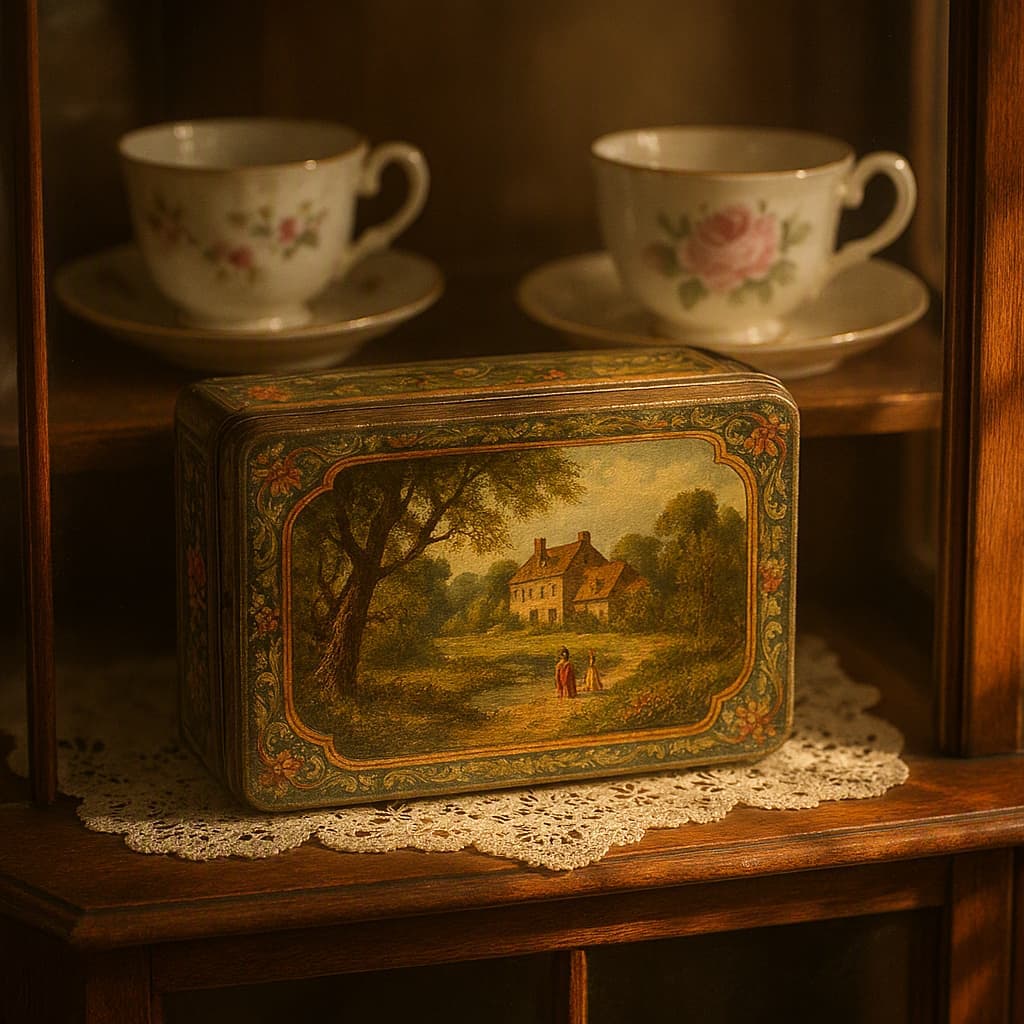
Tin Biscuit Boxes In The Visible Corner Of The Salon begins with a scene that feels warm because it was never entirely private. There is the decorative tin biscuit box, set among streets, rooms, counters, tables, sounds, and gestures that many people could recognise at once. In memories of tin biscuit boxes in salon display cabinets, the past is not only a date behind us. It is a rhythm of shared attention, a way of letting ordinary things gather emotion before anyone thought to call them heritage.
The clearest trace is shiny lids, guest sweets, saved buttons, cabinet glass, and the visible corner every child checked first. These details give the memory its weight. They keep it from becoming a smooth picture and return it to the practical world of waiting, touching, carrying, listening, tasting, and looking again. A tea garden, projector, tin box, parcel, or plate may be small, but each one gave people a reason to pause in the same social weather.
The Shared Habit
Around tin biscuit boxes in salon display cabinets, people learned how household taste could turn packaging into memory. They learned it through repetition rather than explanation. A glass was refilled, a lens adjusted, a cabinet opened, a parcel carried, or a plate placed on the table. Such actions were modest, yet they announced that the day had a form. They told people where to gather, what to expect, and how to be present with one another.
Eski Pano is drawn to these small scenes because they show culture in the place where it becomes believable: daily life. Official records can name institutions, inventions, and holidays, but daily memory keeps the longer conversation, the repaired machine, the saved container, the crowded errand, and the food that made a recipe feel like family. That smaller record is often the one people carry most faithfully.
Why It Still Feels Close
Part of the closeness comes from recognition. We recognise the patience built into the scene. People accepted that friendship needed time, machines needed care, objects could have second uses, celebrations required collective effort, and food became meaningful through repeated hands. These ideas may sound simple, but they shaped social life with a quiet force. They made memory feel less like a possession and more like a place to meet.
Modern routines still create warmth, but they often separate attention into smaller private channels. Conversation moves to screens, images appear instantly, packaging disappears quickly, errands are optimised, and family recipes can be reduced to instructions. The older memory of tin biscuit boxes in salon display cabinets reminds us that some meaning came from the visible act itself. People saw care happening, and that visibility made the care communal.
Looking back at the decorative tin biscuit box, the useful inheritance is not a perfect return. It is a renewed patience for shared rituals. If we can notice the social life inside small objects and repeated acts, the present becomes richer without needing to pretend it is the past. That is why this memory still holds, bright and human, in the corner of the mind.
There is also a gentle discipline in the scene. Around tin biscuit boxes in salon display cabinets, people trusted that repeated care was not dull. It was how things became familiar enough to hold emotion. The same place, sound, container, errand, or flavour could return often and still feel alive because different faces gathered around it each time.