Eski Pano
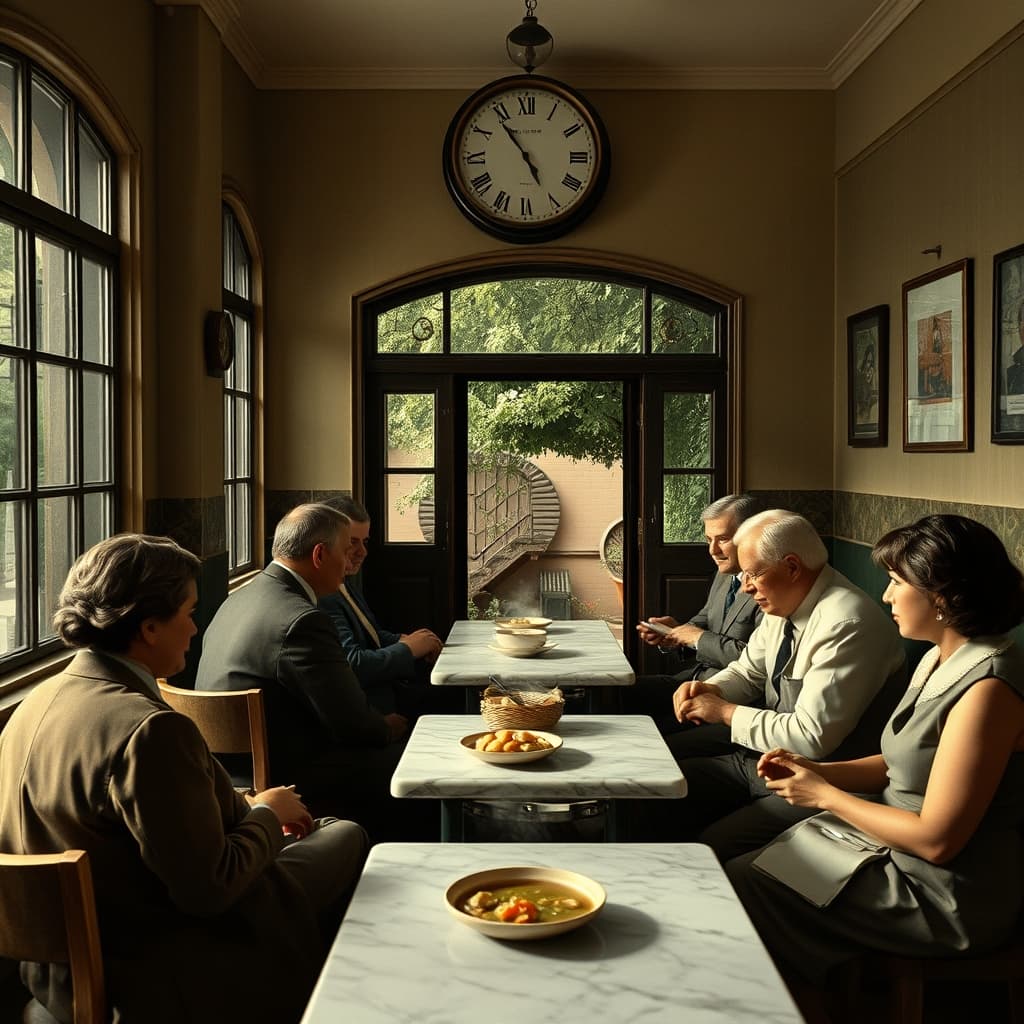
There was a time when noon was not merely the middle of the day. It was a special threshold when the sound of the city softened for a short while, the streets set aside some of their urgency, and the steps of civil servants turned in the same rhythm toward city eateries. Large round clocks hanging on the walls, even when they lagged a little behind, created the same feeling in everyone: the tables must be set, the soup must be boiling, the bread basket must already be on the counter. People leaving the heavy corridors of public offices reached the restaurant doors before fully fastening their jackets; inside, the sound of plates, the steam of ladles, and brief greetings blended together. Outside, the scent of linden spreading toward the gardens surrounded this hurried lunch hour with an unexpected grace, making the city memorable not in hard lines, but in softer ones.
Seen through the lens of time, city eateries were not only places where people filled their stomachs. They were small public scenes that made the daily order of a modernizing city visible. Lunchtimes for civil servants in particular created a shared tempo for the working classes of the city. Those old clocks reminding everyone of the minute were, in a sense, symbols of work discipline as well. Yet this discipline did not harden people completely in the way today’s logic of speed often does. Inside the restaurant there was a small closeness repeated every day. The waiter knew who would sit at which table, the cook sensed at what hour the lentil soup would run out, and the man at the register remembered from memory how to note each person in the credit ledger. Because of this delicate bridge between official life and ordinary life, the lunch break took on a more human color.
When one wonders why that era appears brighter today, the answer is not hidden only in emotional longing for the past. In old city eateries, time was both measured and lived. While the hour and minute hands of the wall clock watched over the tables, everyone in a hurry also shared the slowness of a spoon moving through soup. Menus were rarely elaborate: a pot dish, rice, compote, yogurt, perhaps a bowl of stewed fruit. Yet those meals were like modest rituals establishing the everyday fairness of the city. A manager and a clerk entered through the same door, a postman and an accountant reached for similar plates, and the same basket of bread traveled from table to table. That shared quality remained behind as one of the forms of warmth memory now searches for.
The image of gardens turning into the scent of linden is powerful for exactly that reason. In old city centers, the surroundings of eateries had not yet been fully surrendered to concrete. Between public buildings there were small gardens, shade-giving trees, and branches whose scent fell into the street as summer approached. One person smoked outside during lunch, another stepped into the shade and wiped his forehead with a handkerchief, while someone else finished tea standing up and waved at an acquaintance passing on the opposite pavement. This scene recalls not only the meal itself, but also the place around the meal. What looks bright in memory is, in part, those noon hours when a person felt more visible and more settled within the whole fabric of the city.
Today many lunch breaks pass while looking at a screen, snacking on one’s feet, or consuming food in haste. That is why the era when city eateries shaped the lunchtimes of civil servants remains in memory as more orderly, warmer, and brighter. The time shown by those old clocks did not merely interrupt work; it allowed the city to breathe in common. The steam rising from plates mixed with the scent of linden, the brief conversations moving from table to table, and the gentle appearance of the gardens outside make that era seem not necessarily better than today, but perhaps more tangible. That is where the power of nostalgia lies: one seeks in the past not a perfect order, but a rhythm that was truly lived and felt. The noon hour of city eateries continues to live in memory as one of the most unforgettable stations of that rhythm.
The Era When Those Old Clocks That Revealed the Spirit of the Time Guided Civil Servants' Lunchtimes in City Eateries: Why Do the Gardens Turning into the Scent of Linden Look Brighter in Memory