 Eski Pano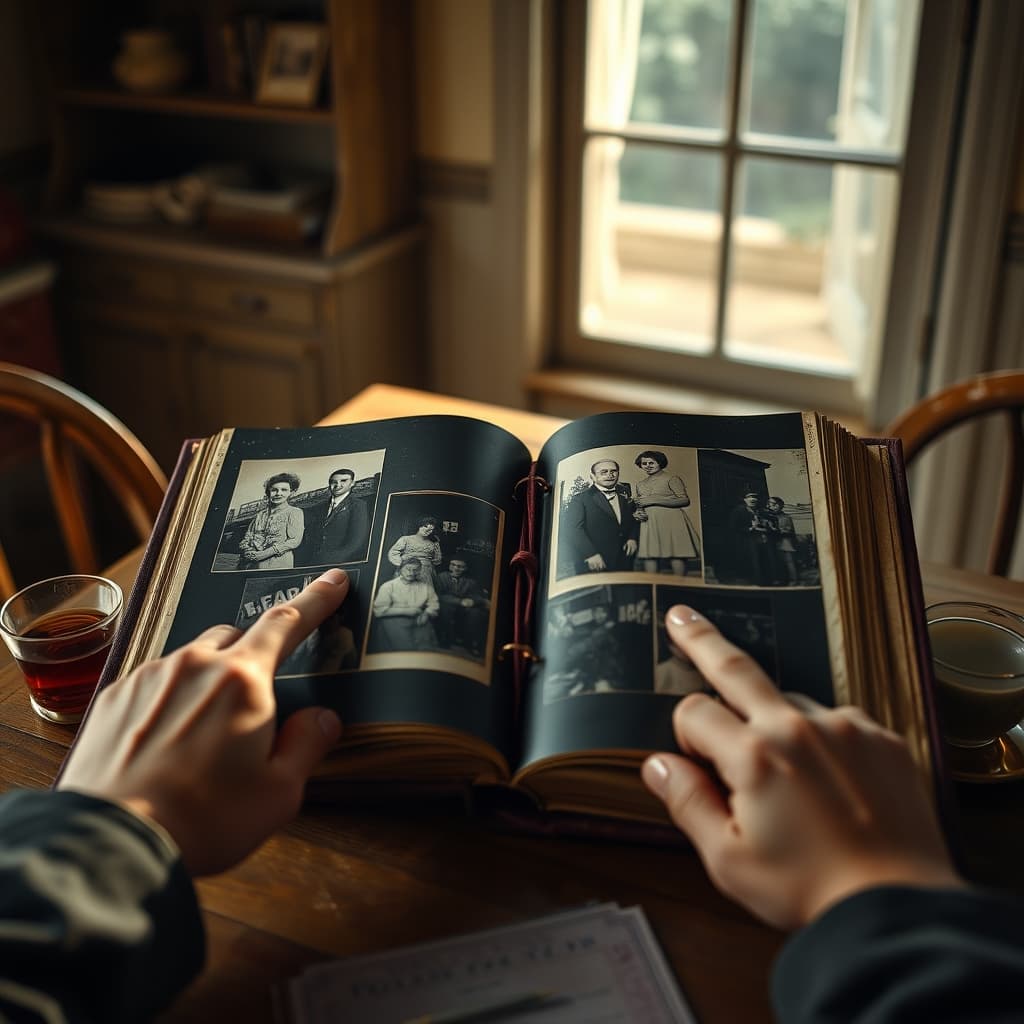
A ribboned photo album kept on a kitchen shelf was never simply a stack of pictures with a decorative fastening. In some homes, it occupied an upper corner within reach but away from the busiest work surface, its covers protected from daily handling until a visit or conversation gave someone a reason to bring it down. The ribbon held swollen pages together as photographs, notes, and small paper keepsakes accumulated. Placed on the table beside tea glasses and plates, the album shifted from stored object to shared family record.
Its physical construction shaped the way it was used. Older albums might have heavy card pages, paper corners, tissue interleaves, or adhesive surfaces added in later designs. Photographs could loosen as corners wore, while covers bowed under the pressure of extra prints. A ribbon was practical because it kept the book closed despite those changes, but it also made opening the album feel deliberate. Hands had to untie it, clear a place on the table, and turn pages slowly enough to protect photographs that were already curling at the edges.
The Kitchen Shelf Kept Memory Close to Conversation
The kitchen was not necessarily the safest archival environment; heat, moisture, grease, and direct sunlight can all damage photographs. Yet its social role helps explain why an album might remain there. In many households, the kitchen table was where visitors were received informally, news was exchanged, and several generations could sit close together. An album stored nearby could enter conversation without the formality of a display cabinet. It belonged to ordinary domestic life rather than to a room opened only on special occasions.
Location also affected the stories told around it. A photograph of a wedding did not stand alone as a formal portrait once someone remembered the crowded journey to the ceremony. A school picture prompted names, nicknames, and corrections. A seaside snapshot might revive discussion about who owned the camera, why one person was missing, or how rarely photographs were taken on that holiday. These recollections were not printed on the page, but repeated viewing allowed them to circulate. The album worked as a prompt, while the family supplied context, disagreement, and detail.
Wear Became Part of the Object’s Evidence
The condition of a family album can reveal how it travelled through a household. Finger marks along the lower corners show where pages were commonly turned. Empty mounts suggest that a photograph was removed, borrowed, or transferred. Handwritten dates may conflict with later recollections, and names added in different inks can show that identification continued over time. None of these traces proves a complete family history, but together they document use. The album’s value lies partly in the relationship between the images and the material signs left by those who handled them.
That evidence deserves careful treatment. Writing names and approximate dates on a separate archival sheet is safer than pressing a pen into an old photograph. Loose prints can be placed in suitable acid-free enclosures, and an album should ideally be kept in a cool, dry, stable location away from food preparation and sunlight. Clean, dry hands are usually preferable to household cleaning products, which can stain covers or damage photographic surfaces. Digitising selected pages provides an additional copy, but it should not require dismantling a sound album or discarding the original arrangement.
A Family Legacy Needed More Than Photographs
An album became an inheritance when responsibility for it passed with the knowledge needed to read it. Without names, relationships, places, and approximate occasions, even carefully preserved photographs can become anonymous within a few generations. A short recording of an older relative describing a page, or a written index made during a family viewing, can preserve context without pretending that every recollection is exact. Differences should be recorded rather than forced into a single polished account; uncertainty is also part of honest family history.
The ribboned album on the kitchen shelf therefore represents two kinds of care. One is material: fastening the covers, protecting loose prints, and finding a safe place for a fragile object. The other is social: making time to open it, listening as people identify faces, and passing those identifications onward. Digital galleries make images easier to copy and share, but the original album preserves sequence, scale, handwriting, wear, and the decisions of the person who assembled it. Its quiet importance comes from that combination. It is not valuable because every old object must be romanticised, but because this particular object shows how a family turned photographs into a record they could hold, discuss, correct, and eventually entrust to someone else.