 Eski Pano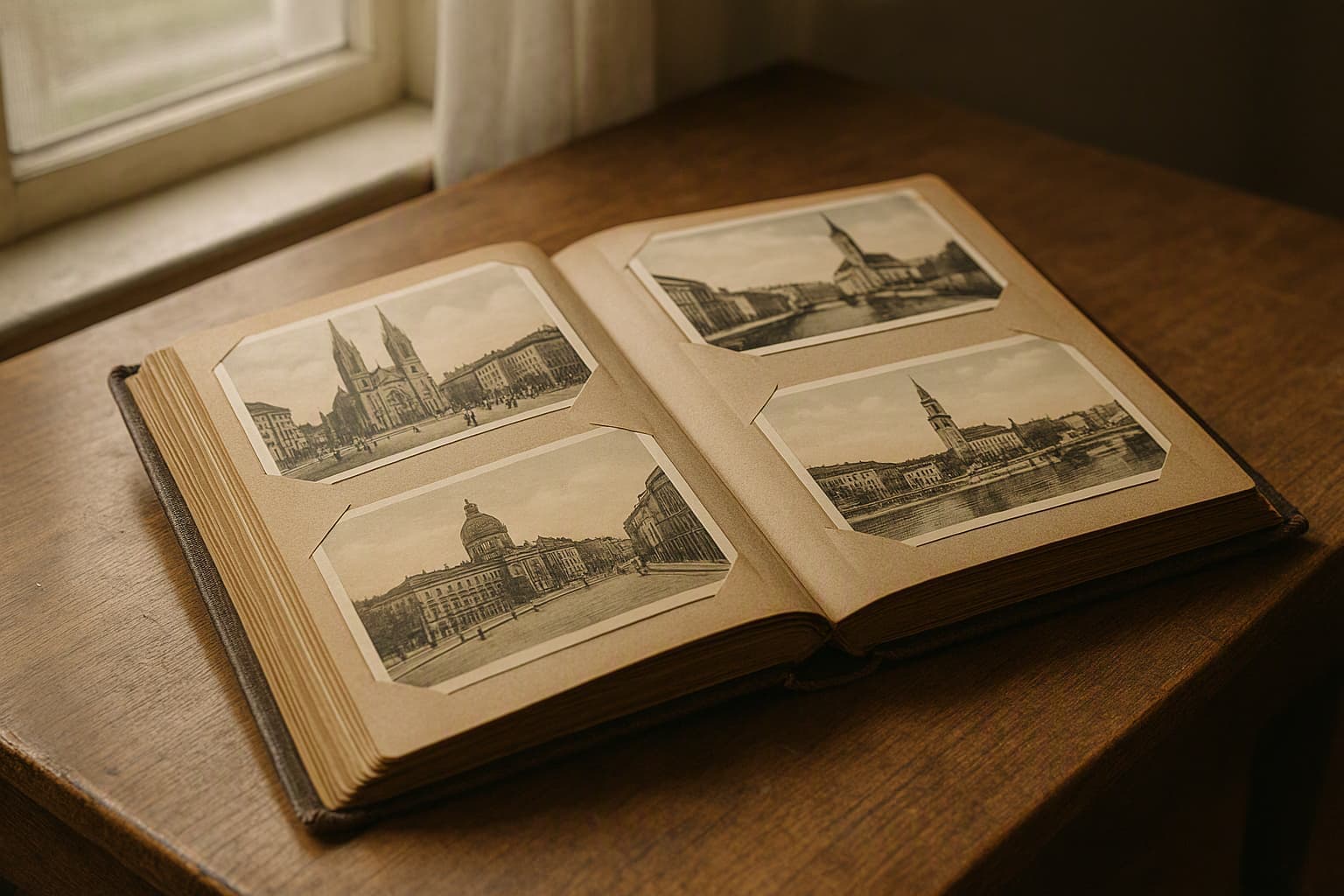
Postcard Albums And The Taste Collectors Still Trace begins with a scene where public life and private feeling meet without effort. There is the open postcard album, placed among streets, tables, windows, albums, kitchens, and summer evenings that made ordinary days glow. In memories of postcard albums followed by collectors, the past remains vivid because small sights and smells helped people recognise that they belonged to the same city, house, or afternoon.
The strongest texture is city views, transparent sleeves, careful handwriting, travel dreams, and fingers turning places one by one. These details keep the memory close to the hand and the eye. They prevent nostalgia from becoming only a polished distance and return it to light bulbs, film cartridges, album sleeves, clothespins, bakery bags, and the patient gestures of people who knew how to make a modest thing feel important.
The Visible Shape Of Memory
Around postcard albums followed by collectors, people learned how collecting images could become a way of learning the world. The lesson came through repetition. A ride glowed again, a camera was lifted carefully, an album page turned, laundry moved in the wind, or warm poğaça arrived on the table. These acts gave memory a visible shape. They made the ordinary moment available to others before it disappeared.
Eski Pano follows these scenes because they explain culture through recognisable details. A fairground is more than entertainment, a Super 8 camera more than a device, a postcard album more than paper, laundry lines more than chores, and bakery poğaça more than food. Each one organised attention. Each one gave people a reason to pause, look, smell, reach, or tell a small story.
Why It Still Feels Warm
The warmth of this memory comes from shared visibility. Children saw the lights, relatives saw the film being prepared, collectors saw distant places, neighbours saw the washing move between windows, and the whole house smelled the pastry before anyone sat down. Nothing had to be announced loudly. The world simply placed signs where people could meet them together.
Modern life has not lost wonder, but it often separates it. Entertainment moves indoors, filming becomes private and instant, images are stored unseen, laundry disappears into machines, and bakery smells are replaced by speed. Yet the open postcard album still speaks because it remembers a rhythm in which ordinary pleasures were public enough to gather feeling. That rhythm is worth noticing.
Looking back at postcard albums followed by collectors, the useful inheritance is not a demand to recreate the past. It is an invitation to make today’s small rituals visible enough to be shared. When daily life can be seen, smelled, heard, and waited for together, it becomes memory before anyone tries to preserve it.
There is also a gentle lesson about scale. Around postcard albums followed by collectors, large feelings did not always need large events. A light, a frame, a page, a line of washing, or a warm pastry could be enough to gather people into the same moment.
There is also a gentle lesson about scale. Around postcard albums followed by collectors, large feelings did not always need large events. A light, a frame, a page, a line of washing, or a warm pastry could be enough to gather people into the same moment.