🇹🇷 Türkçe | polaroid fotoğraf makinesi: anteni çevirdikçe netleşen umut içinde tamircilerin elinde neden ikinci bir ömür bulduğunu açıklıyor eski şehir hayatının kıyısında sanki dün yaşanmış gibi
Eski şehirlerin bazı dükkânları yalnız eşya tamir etmez, zamanın kendisini de onarırdı. Dar sokakların köşesinde kalan saatçi, radyocu, küçük elektrikçi ve fotoğraf makinesi tamircileri bu yüzden hâlâ hafızada ayrı bir yerde durur. Polaroid fotoğraf makinesi de tam bu hatıranın içindedir. Onu eline alan kişi, yalnızca fotoğraf çeken bir alet tutmaz; beklemenin heyecanını, görüntünün yavaş yavaş ortaya çıkışını, aile albümüne eklenecek yeni bir anın tedirgin sevincini de tutardı. “Anteni çevirdikçe netleşen umut” gibi tuhaf ama tanıdık bir ifade, belki de o dönemin bütün analog alışkanlıklarını aynı duyguda toplar. Çünkü o yıllarda gerçekten de birçok şey elle ayarlanır, göz kararıyla düzeltilir, sabırla netleştirilirdi. Polaroid de bu sabrın, merakın ve küçük mucizenin makinesiydi.
Teknoloji Mirası açısından bakıldığında Polaroid’in asıl değeri, sonucu hemen veren bir cihaz olmasında değil, anı fiziksel bir nesne olarak avuç içine bırakmasında yatıyordu. Fotoğraf çekilir, birkaç saniye boyunca herkes aynı kâğıda bakar, görüntünün yüzeye nasıl yerleşeceğini sessizce izlerdi. Bu an, dijital çağın hızından çok farklı bir görsel ritüeldi. Makine bazen ışığı yanlış alır, bazen film sıkışır, bazen pil zayıflar, bazen netlik kayar; ama bütün bu kusurlar cihazı değersizleştirmezdi. Aksine, onu insan eliyle birlikte çalışan bir teknolojiye dönüştürürdü. Eski şehir hayatının kıyısındaki tamirciler de tam burada devreye girerdi. Kasanın menteşesini düzeltir, merceği temizler, mekanizmayı sabırla açar, sahibine “bir süre daha idare eder” duygusu verirdi. Böylece eşya çöpe gitmez, tamirle uzatılan ömrüyle yeni hatıralara karışırdı.
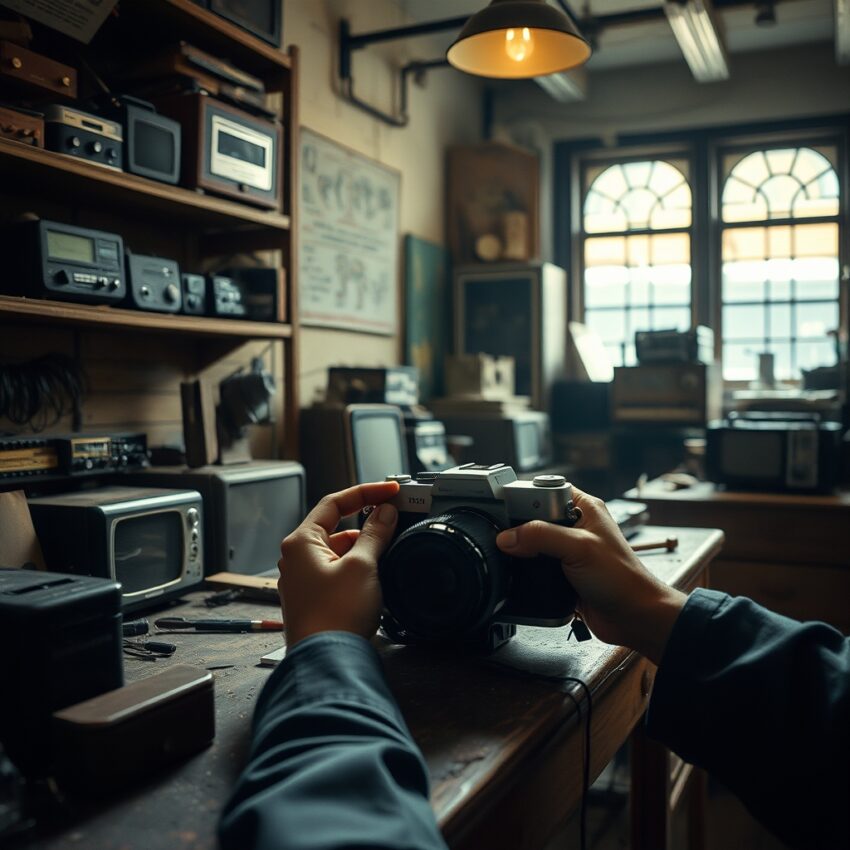
Polaroid’in tamircilerin elinde ikinci bir ömür bulmasının nedeni biraz da ona yüklenen duygusal değerdir. Bir aile düğününde çekilen fotoğraf, bayram sabahı yapılan toplu poz, askere gidecek oğulla kapı önünde alınan son kare ya da mahalle arkadaşlarının bir yaz akşamı omuz omuza verdiği görüntü, makineyi sıradan bir cihaz olmaktan çıkarırdı. Bozulduğunda atmak kolay değildi; çünkü arızalanan yalnız mekanik bir parça değil, anıları üretme alışkanlığıydı. Tamir dükkânına götürülen Polaroid, tezgahta beklerken etrafında başka eski eşyalar da olurdu: kapağı kırık teypler, lambası sönmüş projektörler, sesi çatallanan radyolar. Bu topluluk içinde Polaroid, dün çekilmiş bir fotoğrafın hâlâ kurumakta olduğu duygusunu taşırdı. O yüzden tamircinin elindeki onarım, teknik olduğu kadar duygusaldı.
Eski şehir hayatının kıyısında yaşanan bu sahne bugün bu kadar canlı kalıyorsa, bunun nedeni tamirin bir kültür olmasıdır. Usta, müşterinin yüzüne bakıp eşyanın hikâyesini de dinlerdi. “Babamdan kaldı”, “çocukluğumuzun makinesi”, “kızımın ilk fotoğrafları bunda” gibi cümleler, vida ve yaylardan daha önemli hâle gelirdi. Usta da ona göre davranır, bazen uzun uzun açıklama yapar, bazen elindeki bezi merceğe sürerken sesini alçaltır, bazen de “yenisi gibi olmaz ama yaşar” derdi. Bu cümle, eski tamir kültürünün en özlü cümlelerinden biridir. Çünkü mesele kusursuzluk değil, devamlılıktı. Polaroid’in ikinci ömrü, işte bu devam etme iradesinin ürünüdür.
Bugün fotoğraflar hızla çekilip aynı hızla unutuluyor olabilir. Ama Polaroid’i ve onu dirilten tamircileri hatırlatan şey, görüntünün kendisinden çok ona eşlik eden emektir. Makinenin yeniden çalışması, yalnız teknik bir başarı değil; eski şehirde sabrın, ustalığın ve hatıralara bağlılığın hâlâ yer bulduğunu gösteren küçük bir zaferdi. Bu yüzden Polaroid sanki dün yaşanmış gibi hatırlanır. Çünkü onun hikâyesi geçmişte kalmış bir nesnenin değil, bozulduğunda vazgeçilmeyen bir duygunun hikâyesidir.
🇬🇧 English | Polaroid Camera: As Hope Growing Clearer with Every Turn of the Antenna Explains Why It Found a Second Life in the Hands of Repairmen at the Edge of Old City Life as if It Happened Yesterday
Some shops in old cities repaired more than objects; they repaired time itself. The watchmaker, the radio repairman, the small electrician, and the camera technician at the corner of narrow streets remain in memory for that reason. The Polaroid camera belongs exactly to that layer of remembrance. Whoever held it was not simply holding a device that took pictures, but also the thrill of waiting, the slow emergence of an image, and the nervous joy of adding one more moment to a family album. The unusual phrase “hope growing clearer with every turn of the antenna” seems to gather the whole spirit of analog life into a single feeling. In those years, many things really were adjusted by hand, corrected by instinct, and brought into focus through patience. The Polaroid was the machine of that patience, that curiosity, and that small miracle.
As technological heritage, the Polaroid mattered not only because it delivered an immediate result, but because it placed a memory into the palm as a physical object. A photograph was taken, and then everyone watched the same sheet of paper in silence, waiting to see how the image would settle onto its surface. This was a visual ritual utterly different from the speed of digital life. Sometimes the light was wrong, sometimes the film jammed, sometimes the battery weakened, sometimes the focus drifted, yet none of these flaws made the device worthless. On the contrary, they turned it into a technology that worked together with human hands. That is where the repairmen at the edge of old city life entered the story. They straightened hinges, cleaned lenses, opened the mechanism with care, and returned to the owner the feeling that the camera could keep going a little longer. In that way the object avoided the trash heap and continued to produce new memories through a repaired and extended life.
Part of the reason the Polaroid found a second life in repair shops was the emotional value attached to it. A family wedding portrait, a holiday morning group pose, the final frame taken with a son about to leave for military service, or a summer evening picture of neighborhood friends with their arms over each other’s shoulders turned the camera into more than an ordinary device. When it broke, throwing it away was not easy, because what seemed damaged was not only a mechanical part, but a habit of making memory visible. A Polaroid left on the repairman’s counter waited among other old things: tape decks with cracked lids, projectors with dead lamps, radios with fractured voices. Among them, the Polaroid carried the feeling that yesterday’s photograph might still be drying. The repair performed on it was therefore emotional as much as technical.
If this scene at the edge of old urban life remains so vivid now, it is because repair itself was once a culture. The master listened not only to the object, but to its story on the customer’s face. “It belonged to my father,” “this was our childhood camera,” “my daughter’s first pictures were taken with this” became more important than screws and springs. The repairman responded accordingly. Sometimes he explained things at length, sometimes he lowered his voice while polishing the lens with a cloth, and sometimes he said, “it will not be like new, but it will live.” That sentence may be one of the clearest summaries of the old repair culture. The aim was not perfection, but continuity. The second life of the Polaroid was born from exactly that insistence on continuation.
Today photographs may be taken quickly and forgotten just as quickly. Yet what keeps the Polaroid and the repairmen who revived it alive in memory is not only the image itself, but the labor surrounding it. Bringing the camera back to life was not just a technical success. It was a small victory proving that patience, craftsmanship, and loyalty to memory still had a place in the old city. That is why the Polaroid still feels as though it belonged to yesterday. Its story is not merely about an outdated object. It is about a feeling people refused to abandon when the mechanism failed.
🇧🇷 Português (Brasil) | Câmera Fotográfica Polaroid: Explicando, com a Esperança que Ficava Mais Nítida a Cada Giro da Antena, por que Encontrou uma Segunda Vida nas Mãos dos Consertadores na Margem da Vida da Cidade Antiga Como se Tivesse Acontecido Ontem
Algumas lojas das cidades antigas consertavam mais do que objetos; consertavam o próprio tempo. O relojoeiro, o técnico de rádio, o pequeno eletricista e o consertador de câmeras na esquina das ruas estreitas continuam na memória por isso. A câmera Polaroid pertence exatamente a essa camada de lembrança. Quem a segurava não tinha nas mãos apenas um aparelho de fazer fotos, mas também a emoção da espera, o aparecimento lento da imagem e a alegria inquieta de acrescentar mais um instante ao álbum da família. A frase estranha e familiar “a esperança que ficava mais nítida a cada giro da antena” parece reunir todo o espírito da vida analógica em um só sentimento. Naqueles anos, muita coisa era mesmo ajustada à mão, corrigida no olho e colocada em foco com paciência. A Polaroid era a máquina dessa paciência, dessa curiosidade e desse pequeno milagre.
Como herança tecnológica, a Polaroid era valiosa não apenas por entregar um resultado imediato, mas por colocar a lembrança na palma da mão como um objeto físico. Tirava-se a foto e, em seguida, todos olhavam para o mesmo papel em silêncio, esperando ver a imagem se assentar na superfície. Era um ritual visual muito diferente da velocidade digital. Às vezes a luz saía errada, às vezes o filme travava, às vezes a bateria enfraquecia, às vezes o foco fugia, mas nenhum desses defeitos tornava o aparelho sem valor. Ao contrário, eles o transformavam numa tecnologia que funcionava junto com a mão humana. É aí que entram os consertadores na margem da velha vida urbana. Eles endireitavam dobradiças, limpavam lentes, abriam o mecanismo com cuidado e devolviam ao dono a sensação de que a câmera ainda podia durar mais um pouco. Assim, o objeto escapava do descarte e seguia produzindo novas lembranças com uma vida prolongada pelo conserto.
Parte da razão pela qual a Polaroid encontrava uma segunda vida nas oficinas estava no valor afetivo atribuído a ela. Uma foto de casamento em família, uma pose coletiva na manhã de um feriado, o último retrato na porta com o filho que iria para o serviço militar ou uma imagem de amigos do bairro num fim de tarde de verão faziam da câmera algo maior do que um simples aparelho. Quando quebrava, não era fácil jogá-la fora, porque o que parecia avariado não era apenas uma peça mecânica, mas um hábito de produzir memória. Deixada no balcão do consertador, a Polaroid esperava ao lado de outras velharias: gravadores com tampa rachada, projetores sem lâmpada, rádios de voz falhada. No meio deles, ela carregava a sensação de que a fotografia de ontem ainda podia estar secando. Por isso, o conserto era tão emocional quanto técnico.
Se essa cena na margem da antiga vida da cidade continua tão viva hoje, é porque consertar também era uma cultura. O mestre olhava não só para o objeto, mas para a história que aparecia no rosto do cliente. “Era do meu pai”, “foi a câmera da nossa infância”, “as primeiras fotos da minha filha foram tiradas nela” se tornavam mais importantes do que parafusos e molas. O consertador reagia de acordo. Às vezes explicava tudo com calma, às vezes baixava a voz enquanto passava o pano na lente e, às vezes, dizia: “nova ela não fica, mas continua viva”. Essa frase talvez seja um dos resumos mais fortes da antiga cultura do reparo. O objetivo não era a perfeição, mas a continuidade. A segunda vida da Polaroid nascia justamente dessa vontade de continuar.
Hoje as fotografias talvez sejam feitas rápido e esquecidas com a mesma rapidez. Ainda assim, o que mantém viva na memória a Polaroid e os consertadores que a faziam funcionar de novo não é apenas a imagem, mas o trabalho que a cercava. Fazer a câmera voltar a operar não era só um êxito técnico. Era uma pequena vitória que mostrava que paciência, ofício e fidelidade à lembrança ainda tinham lugar na cidade antiga. É por isso que a Polaroid parece pertencer a ontem. Sua história não é apenas a de um objeto fora de época. É a de um sentimento do qual ninguém queria abrir mão quando o mecanismo falhava.