🇹🇷 Türkçe | çeyiz sandığı ve sandıkların dibinden çıkan ince hikâyesi: bir dönemin zevk anlayışını nasıl yansıttı
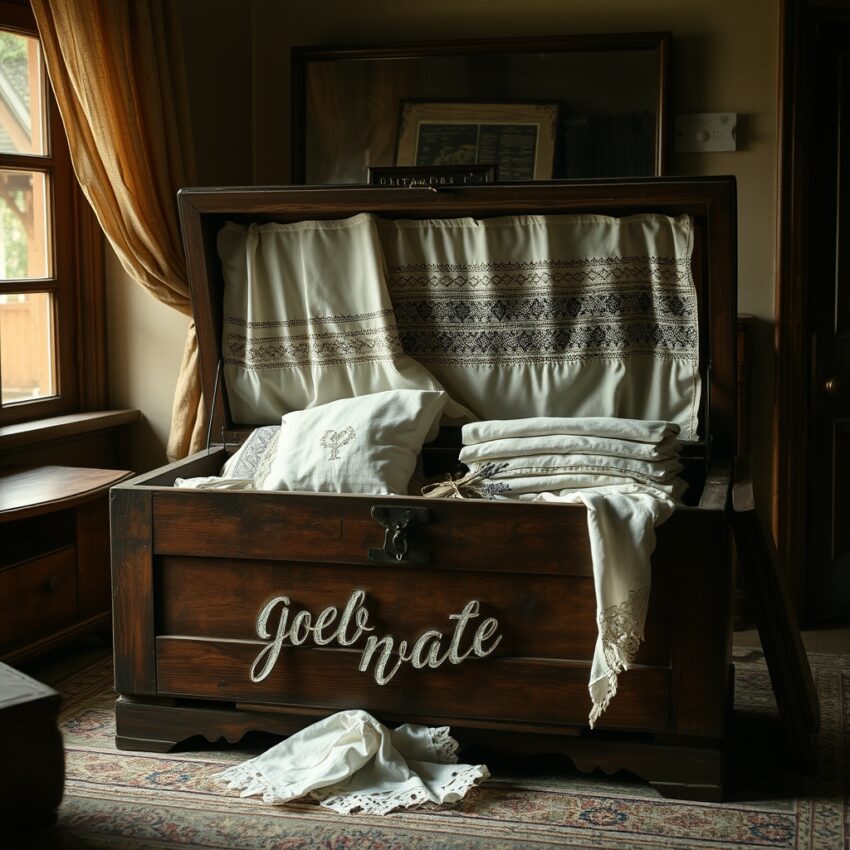
Bazı eşyalar evin en sessiz köşesinde durur ama en uzun hikâyeyi onlar taşır. Çeyiz sandığı da böyledir. Oda köşesinde üstü dantel örtüyle kapatılmış, bazen üzerine yastık dizilmiş, bazen misafire gösterilmeden ama hep saygıyla saklanmış bu sandıklar, yalnız eşya depolayan kutular değildi. Kapağı açıldığında içinden yükselen sabun, lavanta, naftalin ve kumaş kokusu, geçmişin saklandığı katmanları birden görünür kılardı. En üstte işlemeli havlular, biraz altında özenle katlanmış çarşaflar, daha derinde kenarı oyalı mendiller, dikiş örnekleri, küçük kutular ve en dipte sessizce bekleyen ince hikâyeler bulunurdu. İşte bir dönemin zevk anlayışı da çoğu zaman tam burada okunurdu: gösterişten çok incelikte, yeni olandan çok saklanmış olanda.
Obje Hikâyeleri açısından çeyiz sandığı, gündelik eşyanın estetik ve toplumsal anlamla birleştiği güçlü bir nesnedir. Sandığın ahşabındaki oyma, metal kulbundaki desen, iç yüzeye serilen kumaş, kapağın açılış sesi bile ev içi zevkin parçası sayılırdı. Çeyiz yalnız kullanım için hazırlanmaz, aynı zamanda aile terbiyesinin, el emeğinin ve geleceğe dair beklentinin maddi biçimi olarak görülürdü. Bu nedenle sandığın içindeki her parça, sahibinin kişisel zevkinden daha fazlasını anlatırdı. Renk seçimleri dönemin moda anlayışını, dantel sıklığı sabrın ve emeğin kıymetini, kumaşın cinsi ise ev ekonomisinin imkânlarını gösterirdi. Bir sandığın dibinden çıkan küçük bir işleme parçası bile, o yıllarda güzel sayılanın ne olduğuna dair çok şey söylerdi.
Sandıkların dibinden çıkan ince hikâye çoğu zaman sesli anlatılmaz, bakışla anlaşılırdı. Anne ya da büyükanne bir parçayı eline alır, “bunu nişan zamanı işlemiştik” ya da “şunu komşu kızlarıyla birlikte dikmiştik” derdi. Böylece nesne, yalnız biçimiyle değil, etrafında toplanmış emek ve dayanışma hikâyesiyle değer kazanırdı. Bir kenar oyasında hangi rengin yan yana geldiği, bir bohçanın içine hangi kumaşın konduğu, dantel deseninde çiçek mi yaprak mı seçildiği, aslında dönemin zarafet ölçüsünü de gösterirdi. Zevk anlayışı burada pahalı olanla değil, uyumlu olanla kurulurdu. Göze bağırmayan ama yakından bakıldığında inceliği fark edilen işler makbuldü. Bu yüzden çeyiz sandığı, estetiğin gündelik hayat içinde nasıl taşındığını gösteren sessiz bir arşiv gibiydi.
Bu sandıklar aynı zamanda kadınların görünmeyen emeğini ve kuşaklar arası aktarımı da taşırdı. Bir genç kızın hazırladığı parçalara annenin, teyzenin, komşunun eli değebilir; böylece sandık, yalnız kişisel değil kolektif bir esere dönüşürdü. İçinden çıkan her parça, ev kurmanın yalnız maddi bir hazırlık olmadığını, aynı zamanda bir zevk terbiyesi ve yaşam biçimi tasarımı olduğunu hatırlatırdı. Masa örtüsünün deseni, yastık kılıfının dikişi, bohçanın bağlanma biçimi, bir evde nasıl bir düzen ve nasıl bir güzellik arandığını anlatırdı. Bugün bu parçaların pek çoğu aktif kullanılmasa bile hatırlanmalarının nedeni budur. Onlar, işlevlerini kaybettikten sonra bile estetik hafıza üretmeye devam eder.
Geçmişe dönüp bakıldığında çeyiz sandığının bir dönemin zevk anlayışını nasıl yansıttığı daha açık görülür. Çünkü o sandık, modanın gelip geçici parıltısından çok, ev içi güzelliğin ağır ağır kurulmuş ölçüsünü saklar. İnce hikâye sandığın dibinde kaldığı için değersiz değildir; tam tersine, en dayanıklı olan çoğu zaman en dipte saklanandır. Lavanta kokusuna karışmış dantel parçaları, sararmış bohçalar ve sabırla katlanmış kumaşlar bugün hâlâ aynı şeyi söyler: bir dönemin zarafeti, gürültüde değil ayrıntıda yaşardı.
🇬🇧 English | The Dowry Chest and the Delicate Story Rising from the Bottom of Chests: How Did It Reflect the Taste of an Era?
Some objects stand in the quietest corner of the house and yet carry the longest story. The dowry chest is one of them. Placed in a room corner, covered with lace, sometimes topped with cushions, sometimes kept from casual display yet always treated with respect, these chests were never merely storage boxes. When the lid was opened, the smells of soap, lavender, mothballs, and fabric made hidden layers of the past visible all at once. Embroidered towels lay on top, carefully folded sheets beneath them, then handkerchiefs edged with lace, sewing samples, small boxes, and at the bottom the delicate stories waiting in silence. The taste of an era often became readable precisely there: less in display than in refinement, less in what was newest than in what had been patiently preserved.
As an object story, the dowry chest is a powerful example of daily life meeting aesthetics and social meaning. The carved wood, the pattern on the metal handle, the cloth lining the interior, even the sound of the lid opening all belonged to domestic taste. A dowry was prepared not only for practical use, but as a material form of family upbringing, hand labor, and expectation for the future. For that reason every piece inside the chest spoke of more than its owner’s personal preferences. Color choices revealed the fashions of the period, density of lace showed the value placed on patience and labor, and the quality of cloth reflected the limits and possibilities of household economy. Even a small embroidered fragment found at the bottom of a chest could reveal much about what a generation considered beautiful.
The delicate story rising from the bottom of the chest was often not told aloud, but understood through gesture. A mother or grandmother would lift a piece and say, “this was stitched during the engagement days” or “we sewed this together with the neighbor girls.” In that way the object gained value not only from its form, but from the shared labor and companionship gathered around it. Which colors were placed side by side in lace edging, which fabric was tucked into a bundle, whether flowers or leaves were chosen in a crochet pattern all revealed the era’s measure of elegance. Taste here was built not from expense, but from harmony. The admired work was not loud to the eye, but quietly intricate when seen up close. That is why the dowry chest functioned like a silent archive showing how beauty moved through ordinary life.
These chests also carried women’s often invisible labor and the transfer between generations. Pieces prepared by a young woman might also bear the touch of a mother, an aunt, or a neighbor, turning the chest into a collective creation rather than a purely personal one. Each item inside reminded people that building a home was not only material preparation, but also the shaping of taste and of a way of living. The pattern of a tablecloth, the seam on a pillowcase, the way a cloth bundle was tied all expressed what kind of order and beauty a household desired. Even if many of these pieces are no longer used actively, this is why they remain memorable. Long after their function fades, they continue to produce aesthetic memory.
Looking back, it becomes easier to see how the dowry chest reflected the taste of an era. The chest preserved not the passing glitter of fashion, but the slowly formed measure of domestic beauty. The delicate story hidden at the bottom was not minor because it stayed out of sight. On the contrary, what lasts longest is often what is kept deepest. Lace scented with lavender, yellowing bundles, and fabrics folded with patience still seem to say the same thing today: the elegance of an era lived not in noise, but in detail.
🇧🇷 Português (Brasil) | O Baú de Enxoval e a História Delicada que Saía do Fundo dos Baús: Como Refletiu o Gosto de uma Época?
Alguns objetos ficam no canto mais silencioso da casa e, ainda assim, carregam a história mais longa. O baú de enxoval é um deles. No canto do quarto, coberto com renda, às vezes com almofadas por cima, às vezes guardado sem ser mostrado a qualquer visita, mas sempre tratado com respeito, esse baú nunca foi apenas uma caixa para guardar coisas. Quando a tampa se abria, o cheiro de sabonete, lavanda, naftalina e tecido fazia aparecer de uma vez as camadas escondidas do passado. Em cima ficavam toalhas bordadas, abaixo lençóis dobrados com cuidado, depois lenços com renda, amostras de costura, caixinhas e, no fundo, histórias delicadas esperando em silêncio. O gosto de uma época quase sempre podia ser lido justamente ali: menos na ostentação do que na delicadeza, menos no que era novo do que no que tinha sido preservado com paciência.
Como história de objeto, o baú de enxoval é um exemplo forte do encontro entre a vida cotidiana, a estética e o sentido social. O entalhe da madeira, o desenho da alça de metal, o tecido que forrava o interior e até o som da tampa se abrindo pertenciam ao gosto doméstico. O enxoval não era preparado só para uso prático, mas como forma material da educação familiar, do trabalho manual e da expectativa em relação ao futuro. Por isso, cada peça dentro do baú dizia mais do que a preferência individual de sua dona. As escolhas de cor revelavam a moda do período, a densidade da renda mostrava o valor dado à paciência e ao esforço, e o tipo de tecido refletia os limites e as possibilidades da economia da casa. Até um pequeno bordado encontrado no fundo do baú podia revelar muito sobre o que aquela geração considerava belo.
A história delicada que saía do fundo do baú muitas vezes não era contada em voz alta, mas entendida pelo gesto. A mãe ou a avó pegava uma peça na mão e dizia: “isso foi bordado na época do noivado” ou “isso costuramos junto com as meninas da vizinhança”. Assim, o objeto ganhava valor não só pela forma, mas pelo trabalho compartilhado e pela convivência reunida ao redor dele. Que cores apareciam juntas numa renda, que tecido era colocado dentro de uma trouxa, se o desenho tinha flores ou folhas, tudo isso mostrava a medida de elegância daquele tempo. O gosto ali não era construído pelo caro, mas pelo harmonioso. O que se admirava não gritava aos olhos; revelava delicadeza quando visto de perto. Por isso, o baú de enxoval funcionava como um arquivo silencioso mostrando como a beleza circulava dentro da vida comum.
Esses baús também carregavam o trabalho muitas vezes invisível das mulheres e a transmissão entre gerações. As peças preparadas por uma jovem podiam receber também o toque da mãe, da tia ou da vizinha, transformando o baú numa criação coletiva. Cada item lembrava que montar uma casa não era só uma preparação material, mas também a formação de um gosto e de um modo de viver. O desenho da toalha, a costura da fronha, a forma de amarrar a trouxa diziam que tipo de ordem e de beleza se buscava dentro de um lar. Mesmo que muitas dessas peças já não tenham uso diário, é por isso que continuam vivas na lembrança. Depois de perderem a função, continuam produzindo memória estética.
Olhando para trás, fica mais claro como o baú de enxoval refletia o gosto de uma época. Ele preservava não o brilho passageiro da moda, mas a medida lentamente construída da beleza doméstica. A história delicada escondida no fundo não era menor por ficar fora da vista. Pelo contrário, o que mais dura muitas vezes é o que se guarda mais no fundo. Rendas com cheiro de lavanda, trouxas amareladas e tecidos dobrados com paciência ainda parecem dizer a mesma coisa hoje: a elegância de uma época vivia não no barulho, mas no detalhe.