🇹🇷 Türkçe | bayramlık ayakkabı heyecanı okul dönemi dönüşlerinde: mahalle esnafıyla bağı nasıl güçlendirdi
Bir çocuğun hafızasında yeni ayakkabının yeri bambaşkadır. Hele bayram için alınmış, sonra okul dönemi dönüşlerinde de özenle giyilmeye devam edilmişse, o ayakkabı yalnız bir eşya olmaktan çıkar, küçük bir gurura dönüşürdü. Eski mahalle hayatında ayakkabı kutusunun açıldığı an, deri kokusunun odaya yayılması ve ayakkabının ayağa ilk kez geçirilirken duyulan sessiz heyecan, mevsim değişiminin de habercisiydi. Bayramlık ayakkabı bir yandan temiz tutulur, bir yandan okula dönüşle birlikte gündelik hayatın daha ciddi ritmine karışırdı. İşte bu geçiş, mahalle esnafıyla kurulan bağı güçlendiren görünmez ama kalıcı bir köprüydü. Çünkü ayakkabıyı almak, daraltmak, genişletmek, boyatmak ve korumak aynı dükkâna tekrar tekrar uğramayı gerektirirdi.
Mahalle Kültürü açısından ayakkabıcı dükkânı, yalnız alışveriş yapılan bir yer değil, güven ilişkisi kurulan bir duraktı. Esnaf çocuğun ayağını tanır, hangi modelin vuracağını, hangisinin bir numara büyük alınması gerektiğini bilir, çoğu zaman “biraz pay bırakalım, büyür” derdi. Bayram öncesi dükkânda yaşanan hareketlilik okul açılmasına yakın günlerde başka bir biçimde sürerdi. Çünkü aileler yeni dönemde çocukların tertipli görünmesini ister, çocuklar da bayramda sevinçle giydiği ayakkabıyı arkadaşlarına göstermekten hoşlanırdı. Böylece bayramlık ayakkabı yalnız özel günün değil, okul düzeninin de parçası hâline gelirdi. Mahalle esnafı ise bu geçişi en iyi bilen kişilerden biriydi; çocukların büyümesini mevsimlerden önce onların ayakkabı numaralarından okurdu.
Bu heyecanın mahalle esnafıyla bağı güçlendirmesi biraz da ilişkinin yalnız satıştan ibaret olmamasındandır. Ayakkabı ayağı sıktığında dükkâna geri dönülür, kösele gevşetilir, bağcık değiştirilir, taban sağlamlaştırılırdı. Bazen vitrinde beğenilen model takside bırakılır, bazen “seneye de giyer” diye daha dayanıklı olan önerilirdi. Dükkân sahibi yalnız ürün satmaz, aile bütçesini ve çocuğun hevesini aynı anda gözeten bir ara bulucu gibi davranırdı. Çocuk içinse bu dükkân, kendisine önem verildiğini hissettiği bir yerdi. Tezgahta ayağının ölçülmesi, kâğıda kalemle çizgi çekilmesi, kutunun özenle bağlanması, mahallede tanınan biri olma duygusunu beslerdi. Böylece esnafla ilişki, alışverişten çok tanışıklığa dönüşürdü.
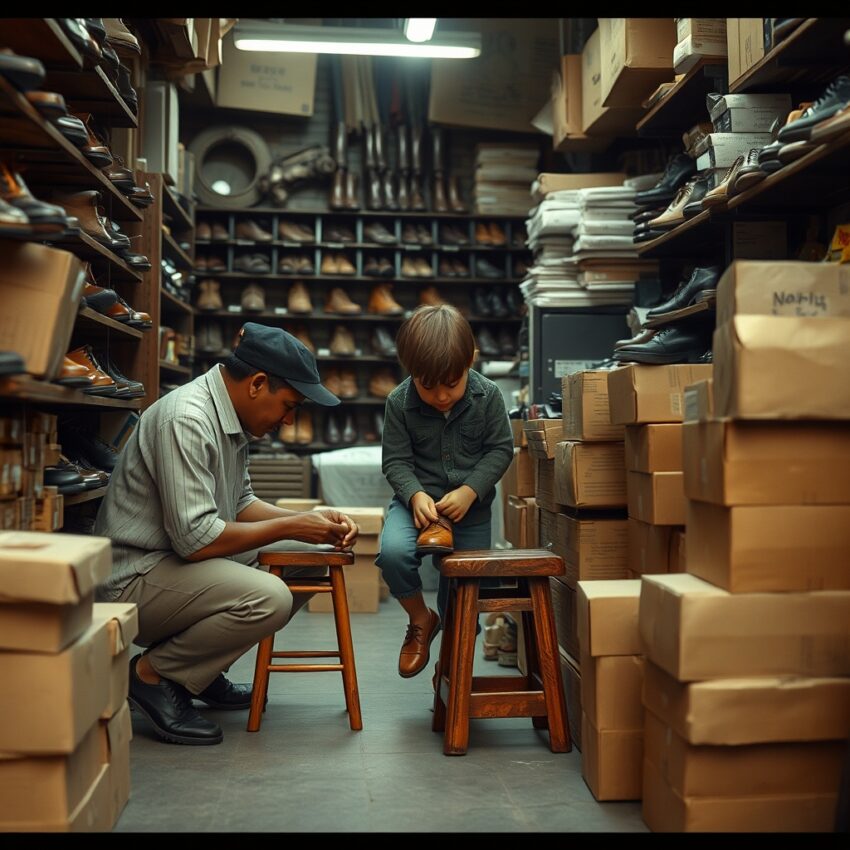
Okul dönemi dönüşlerinde bu bağ daha da görünür olurdu. Yaz boyunca hafif terlikler ve sandaletlerle dolaşan çocuk, sonbahara yaklaşırken yeniden kapalı ayakkabıya geçerdi. Bayramdan kalan sağlam ayakkabı cilalanır, bağcıkları yenilenir, gerekiyorsa ökçesi tamir edilirdi. Ayakkabıcının önünde kısa kuyruklar oluşur, dükkânın içi deri, cila ve karton kutu kokusuyla dolar, çocuklar tabureye oturup sabırsızca aynaya bakardı. Bu sahne, mahalle kültürünün en tanıdık ritüellerinden biriydi. Esnaf, ailelerin düzenli müşterisi olduğu için yalnız isimleri değil, hikâyeleri de bilirdi. “Geçen yıl da buradan almıştınız”, “ablanın modeli buna benziyordu” gibi cümleler, alışverişi hafızaya dönüştürürdü.
Bugün büyük mağazalar ve hızlı tüketim alışkanlıkları içinde bu yakınlık daha seyrek yaşanıyor olabilir. Ama bayramlık ayakkabı heyecanının neden unutulmadığını düşününce, mesele yalnız yeni bir şey giymek değildir. O heyecan, mahallede görülmenin, tanınmanın ve küçük ihtiyaçlar üzerinden güven ilişkisi kurmanın da hatırasıdır. Ayakkabı çocuğu okula taşırken, arkasında görünmez biçimde mahalle esnafının emeğini ve ilgisini de taşırdı. Bu yüzden eski şehir hayatında bir çift ayakkabı, yalnız ayağa değil, komşuluğun hafızasına da uyum sağlardı.
🇬🇧 English | Holiday Shoe Excitement During the Return to the School Term: How Did It Strengthen the Bond with Neighborhood Shopkeepers?
In a child’s memory, a new pair of shoes always holds a special place. If those shoes were bought for a holiday and then carefully worn again when the school term returned, they became more than an object; they became a small source of pride. In old neighborhood life, the moment the shoebox was opened, the smell of leather spreading into the room, and the quiet excitement felt while slipping the shoes on for the first time all signaled a change of season as well. Holiday shoes were kept clean, but with the reopening of school they also entered the more serious rhythm of daily life. That passage formed an invisible yet lasting bridge with the neighborhood shopkeeper. Buying the shoes, having them adjusted, widened, polished, or repaired required returning to the same shop again and again.
Within neighborhood culture, the shoe shop was not merely a place of purchase, but a stop where trust was built. The shopkeeper knew the child’s foot, understood which model would pinch and which should be bought one size bigger, and often said, “let us leave a little room, they will grow.” The rush before the holiday took on another shape as the school term approached. Families wanted children to look neat for the new season, and children liked showing classmates the shoes first worn with joy on the holiday. In that way the holiday shoe became part not only of celebration, but also of school order. Neighborhood tradesmen understood this transition better than most. They read children’s growth from shoe sizes even before the seasons changed.
Part of the reason this excitement strengthened the bond with local shopkeepers was that the relationship was never limited to sale alone. If the shoe felt tight, people returned to the shop, the leather was loosened, laces were changed, the sole reinforced. Sometimes the model admired in the window was reserved in installments, and sometimes a more durable pair was suggested with the words, “it will still do next year.” The shopkeeper acted not simply as a seller, but as a mediator balancing the family’s budget and the child’s enthusiasm. For the child, the shop was a place where being taken seriously could be felt. Having the foot measured on the counter, a line drawn around it on paper, the box tied carefully with string all nourished the sense of being known in the neighborhood. The bond with the shopkeeper thus turned from commerce into familiarity.
When the school term returned, that bond became even more visible. After a summer of slippers and sandals, the child moved back into closed shoes as autumn approached. The sturdy pair left from the holiday was polished, the laces renewed, and the heel repaired if necessary. Short lines formed in front of the shoe shop, the room filled with the smells of leather, polish, and cardboard boxes, and children sat on stools, impatiently looking into the mirror. This scene was one of the familiar rituals of neighborhood life. Because the tradesman served the same families regularly, he knew not only names, but stories as well. Phrases such as “you bought here last year too” or “your older sister had a similar model” turned shopping into memory.
Today this closeness may be rarer amid large stores and fast consumption. Yet when thinking about why the excitement of holiday shoes remains unforgettable, the issue is not simply wearing something new. That excitement is also the memory of being seen, recognized, and connected through small needs. As the shoes carried the child to school, they also carried, invisibly, the labor and attention of the neighborhood shopkeeper. That is why in old city life a pair of shoes fit not only the foot, but also the memory of belonging.
🇧🇷 Português (Brasil) | A Empolgação dos Sapatos de Festa no Retorno ao Período Escolar: Como Fortaleceu o Vínculo com os Comerciantes do Bairro?
Na memória de uma criança, um sapato novo sempre ocupa um lugar especial. Se esse sapato era comprado para um feriado e depois continuava sendo usado com cuidado na volta às aulas, deixava de ser apenas um objeto e se tornava um pequeno orgulho. Na antiga vida de bairro, o momento em que a caixa era aberta, o cheiro de couro tomava o quarto e o sapato era calçado pela primeira vez anunciava também a mudança de estação. O sapato de festa era mantido limpo, mas, com o retorno da escola, passava a entrar no ritmo mais sério da vida comum. Essa passagem criava uma ponte invisível, mas duradoura, com o comerciante do bairro. Comprar o sapato, ajustá-lo, alargá-lo, engraxá-lo e consertá-lo exigia voltar sempre à mesma loja.
Dentro da cultura do bairro, a sapataria não era apenas um lugar de compra, mas um ponto onde se construía confiança. O comerciante conhecia o pé da criança, sabia qual modelo machucaria e qual precisava ser comprado um número maior, e muitas vezes dizia: “vamos deixar uma folga, ela vai crescer”. O movimento antes do feriado continuava de outro modo quando se aproximava o início das aulas. As famílias queriam que as crianças parecessem arrumadas no novo período, e as crianças gostavam de mostrar aos colegas o sapato que haviam usado com alegria no feriado. Assim, o sapato de festa se tornava parte não só do dia especial, mas também da ordem escolar. Os comerciantes do bairro entendiam essa transição melhor do que ninguém; percebiam o crescimento das crianças pelos números dos sapatos antes mesmo da mudança do tempo.
Parte da razão pela qual essa empolgação fortalecia o vínculo com os comerciantes locais estava no fato de a relação nunca se resumir à venda. Se o sapato apertava, voltava-se à loja, o couro era afrouxado, o cadarço trocado, a sola reforçada. Às vezes o modelo visto na vitrine ficava separado para pagamento parcelado e, às vezes, o lojista sugeria um par mais resistente com a ideia de que “ainda vai servir no ano que vem”. O comerciante não agia apenas como vendedor, mas como alguém que equilibrava o orçamento da família e o entusiasmo da criança. Para a criança, a loja era um lugar onde ela se sentia levada a sério. Ter o pé medido no balcão, ver o contorno desenhado no papel, receber a caixa amarrada com cuidado alimentava a sensação de ser conhecida no bairro. Desse modo, o vínculo com o comerciante deixava de ser comércio para virar familiaridade.
No retorno ao período escolar, essa ligação ficava ainda mais visível. Depois de um verão em chinelos e sandálias, a criança voltava ao sapato fechado com a chegada do outono. O par firme que sobrara do feriado era engraxado, ganhava cadarços novos e, se preciso, tinha o salto consertado. Pequenas filas se formavam diante da sapataria, o interior se enchia do cheiro de couro, graxa e caixa de papelão, e as crianças sentavam em banquinhos olhando com ansiedade para o espelho. Essa cena era um dos rituais mais familiares da vida de bairro. Como atendia sempre às mesmas famílias, o comerciante conhecia não só os nomes, mas também as histórias. Frases como “no ano passado vocês compraram aqui também” ou “o modelo da irmã mais velha era parecido com este” transformavam a compra em lembrança.
Hoje essa proximidade talvez apareça menos, em meio às grandes lojas e ao consumo acelerado. Ainda assim, ao pensar por que a empolgação com o sapato de festa continua tão viva, percebe-se que não se trata apenas de vestir algo novo. Trata-se também da memória de ser visto, reconhecido e ligado aos outros por meio de pequenas necessidades. Enquanto o sapato levava a criança para a escola, também carregava, de forma invisível, o cuidado e o trabalho do comerciante do bairro. Por isso, na antiga vida urbana, um par de sapatos servia não só ao pé, mas também à memória do pertencimento.