 Eski Pano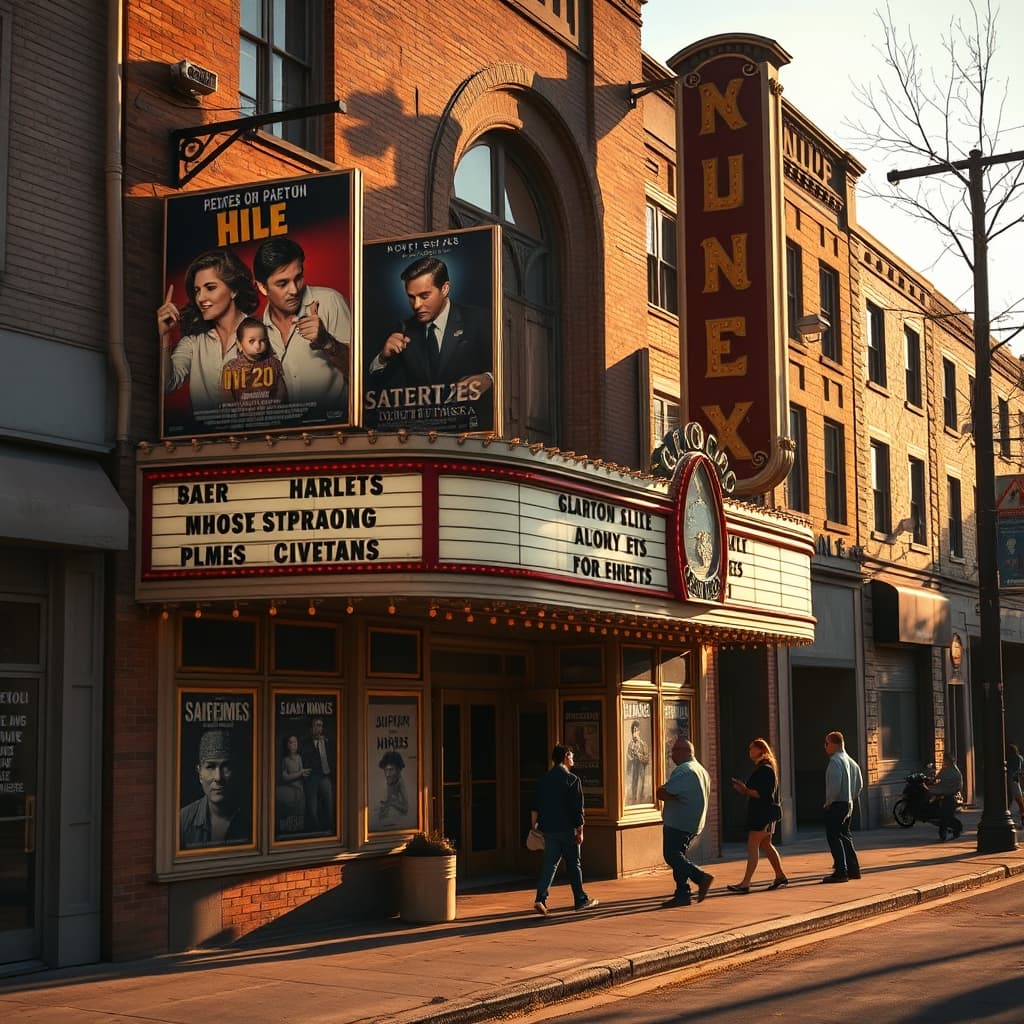
Mansion Cinemas And Star Posters Calling The Street begins with a scene that feels local, practical, and strangely luminous. There is the cinema poster under the marquee, placed inside a familiar rhythm of streets, rooms, preparations, footsteps, and tables. In memories of mansion cinemas calling the street with star posters, the past is not remembered only because something rare happened. It is remembered because a common ritual gathered people around the same expectation and gave an ordinary day a clear emotional shape.
The most persuasive trace is holiday dust, matinee promises, hand-painted faces, ticket queues, and children reading glamour from the pavement. These details keep nostalgia from becoming too smooth. They preserve the exact weather of the moment: the light, the smell, the impatience, the small pride, the waiting, and the way people behaved when they knew they were part of a shared custom. A poster, console, mirror, queue, or jar may look modest, yet each one held a surprising amount of social life.
The Ritual In The Small Object
Around mansion cinemas calling the street with star posters, people learned how a street could learn to dream together. The lesson arrived through practice rather than instruction. Someone stopped in front of a poster, waited for a turn, polished a drawer, hurried toward bread, or opened a jar at the table. These actions were simple, but they were also signals. They told others where the day was heading, what mattered, and how people were expected to meet one another.
Eski Pano follows such scenes because they explain culture at a scale people can feel. Official history may keep records of institutions and dates, but everyday history keeps the minute before the film, the silence before the game starts, the glance into the mirror, the last rush before iftar, and the scent that rises when a winter jar is opened. Those moments make a period intimate.
Why The Ache Remains
The ache in this memory does not come only from loss. It also comes from recognition. People recognise a way of living in which attention was more physical and more shared. News was read on walls, play was watched together, preparation could be seen on a dressing table, hunger moved through a whole street, and preserved food carried one season into another. The memory reminds us that ordinary life once had many public edges.
Today those edges are often softer or more private. Entertainment, announcements, games, preparation, timing, and food all still exist, but they are frequently separated into individual screens and separate rooms. The older scene of mansion cinemas calling the street with star posters offers a counterweight. It suggests that belonging grows when people can see, hear, smell, and wait with one another in ways that do not need explanation.
Looking back at the cinema poster under the marquee, the useful inheritance is not a command to return exactly. It is an invitation to recover some shared attention. A community is made from repeated gestures before it is made from slogans. This small scene keeps that truth alive, which is why it still feels bright, tender, and close enough to touch.