Eski Pano
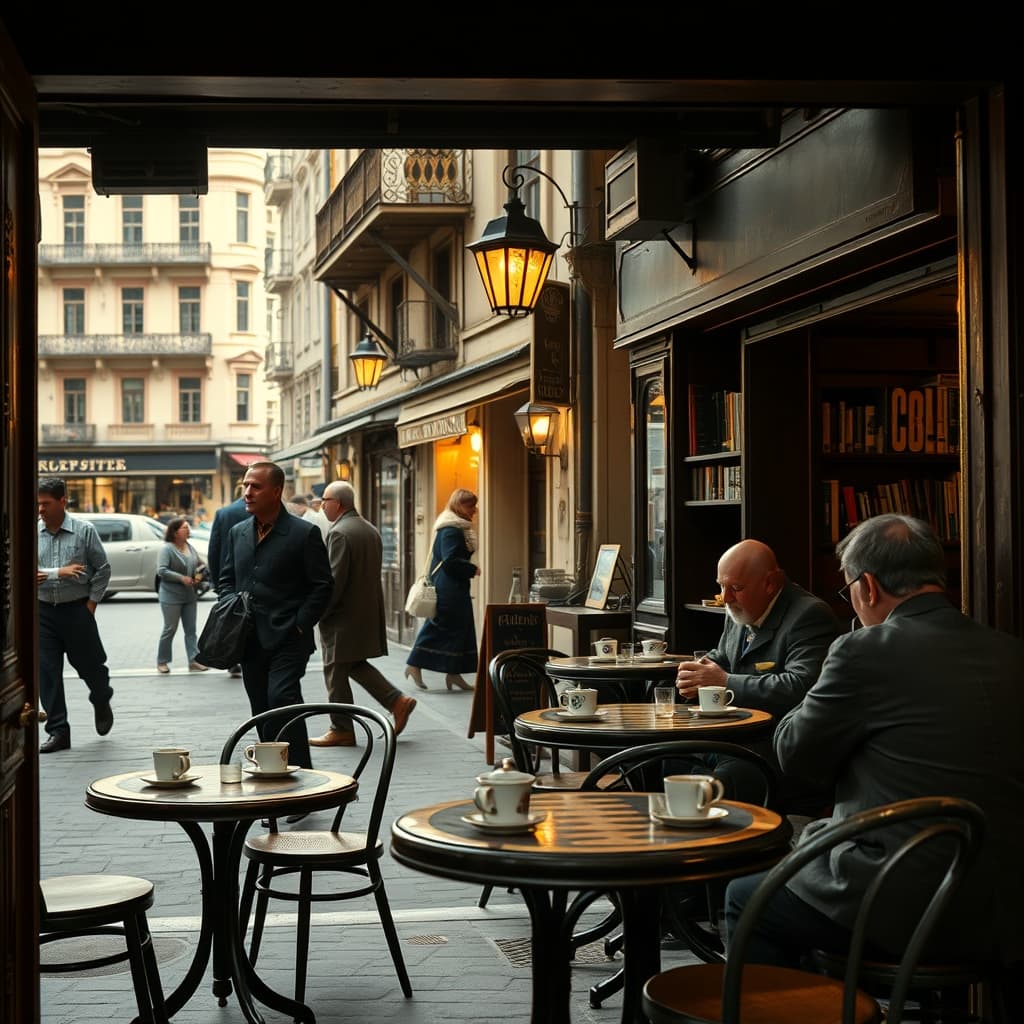
There was a time when the pulse of the neighborhood was not kept on official notice boards, but at the door of the coffeehouse. From the first hours of the morning, a chair would be pulled toward the entrance, everyone who came in or passed by would be greeted, and whatever had been said yesterday would be tied to today. As the tea grew stronger, so did the conversations. Prices in the market, a letter from military service, a newly opened shop, a sick neighbor, a family preparing for an engagement, or municipal roadwork about to begin on the street all moved across the same tables. News was something that overflowed from the coffeehouse. It did not remain inside the walls, but spread to the doorstep, the pavement, the grocer, the barber, and finally to the speech of those returning home in the evening. Standing at the very center of old city life, the neighborhood coffeehouse was not only a place to sit; it was the common ear and tongue of the quarter.
Seen through the lens of neighborhood culture, the coffeehouse was more than a narrow male space for passing time. It was one of the most visible knots of public contact. Not everyone sat there all day, yet everyone knew of it. A child on the way to buy bread saw the uncles by the door, a woman opening her window heard the sound of backgammon from inside, and a shopkeeper often learned the day’s last development in front of the coffeehouse before closing the shutters. This centrality allowed news to circulate not only as information, but as relationship. When someone’s trouble was heard, help extended quickly; when news of a celebration arrived, the neighborhood soon entered a shared joy. The warmth was born precisely in that circulation, because news led a person not only to data, but to encounter.
The reason why today’s residential compounds do not carry the same warmth is not only that architecture has changed. In the old neighborhood, doors opened directly onto the street, and daily life mixed horizontally with itself. People noticed one another’s steps, voices, and habits. Today, by contrast, compounds offer arrangements that are more controlled, more secure, and often more inward-looking. There are common areas, yet less common time. Encounters in the elevator are brief, and messages in building groups remain measured and often formal. News still circulates, but it frequently carries less feeling. Things once learned unintentionally while passing in front of the coffeehouse now arrive as notifications; part of the warmth disappears in this loss of direct contact.
The warmth carried by the coffeehouse in old city life came not only from constant talk, but also from an ability to share silences. While game tiles were being lined up in one corner, a serious matter might be discussed quietly at another table, and a small ring would form around someone reading the newspaper aloud by the door. Not everyone intervened in every subject, but everyone breathed the same air. That common air allowed people to know one another not only by name, but by condition. Small observations such as “his voice sounded low today,” “she has not been seen for two days,” or “the child had an exam” built a nearness that disappears easily in digital neighborliness. The neighborhood coffeehouse thus ceased to be merely a place carrying news and became the emotional memory of the quarter.
The question of why the same warmth cannot be found in today’s compounds is therefore also about the rhythm of life we have lost. While living in more protected buildings, we touch one another less; while receiving more information, we hear fewer voices. The warmth of the news overflowing from the neighborhood coffeehouse was not only in word-of-mouth circulation, but in the way that circulation carried faces, voices, waiting, and mood together. That is why, when old coffeehouses are remembered today, what returns is not only backgammon, tea, and chairs, but also a more porous form of living together. The doorway at the center of old city life continues to survive in memory as a quiet measure of the shared human warmth missing in the orderly compounds of the present.
News Overflowing from the Neighborhood Coffeehouse in the Very Middle of Old City Life: Why Is the Same Warmth Not Found in Today’s Residential Compounds