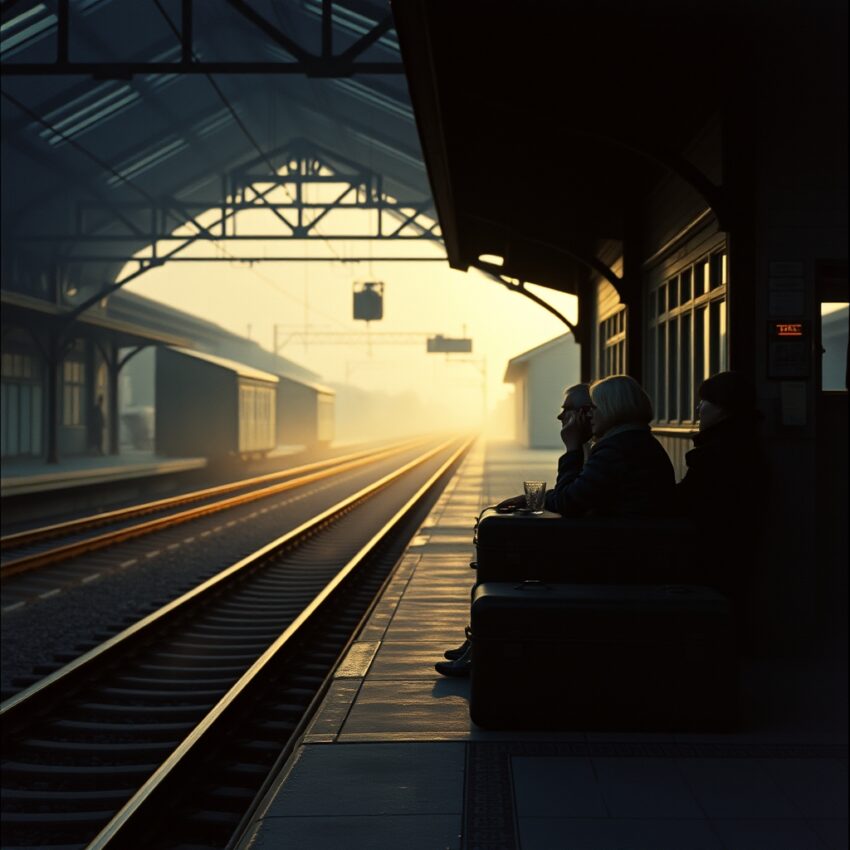
🇹🇷 Türkçe | Eski şehir hayatında kasaba garlarının vedayı ve kavuşmayı aynı bankta buluşturduğu anlar: hafızada neden hâlâ bu kadar canlı cam açtıran sabahlar
Bir zamanlar küçük şehirlerin ve kasabaların garları, sabahın daha tam ısınmamış ışığında başka hiçbir yere benzemeyen bir duygunun eşiği olurdu. Perona yakın kahvede ince belli bardakların sesi yükselir, rayların üstünde bir gece önce biriken serinlik hâlâ durur, bekleme salonunun boyası biraz dökülmüş duvarlarında sessizlik insanı daha derinden sarardı. O saatlerde açılan her pencere, yalnız içeri temiz hava almak için değil, trenin düdüğünü, istasyon hoparlörünün çatallı anonsunu ve uzak yoldan gelen ayak seslerini duymak için aralanırdı. Hafızada canlı kalan o sabahların cam açtıran yanı biraz da buydu: şehir daha tamamen uyanmadan, vedayla kavuşmanın aynı bankta yan yana oturabildiğini hissettirmeleri.
Zamanın İzinde bakıldığında kasaba garları yalnız bir ulaşım noktası değildi; gündelik hayatın duygusal coğrafyasını kuran yerlerdi. Eski gazetelerde yeni hatların açılışından, geciken trenlerden, istasyon binasının badanasından ya da yük vagonlarıyla gelen mallardan söz edilirken satır aralarında başka bir hayat da görünürdü. Memur tayinleri, askere uğurlamalar, gurbetten dönüşler, okul için büyük şehre gidişler, bayram öncesi kalabalıklar ve yaz sonunda kısa kavuşmalar aynı mekânın hafızasına kazınırdı. Garın ahşap ya da demir bankı bu yüzden sıradan bir eşya değildi. Üzerine kimi zaman bir valiz, kimi zaman örgü torbası, kimi zaman da sabaha karşı ağlamaktan yorulmuş bir çocuk bırakılırdı. Aynı bank birkaç dakika arayla hem el sallayan bir annenin bekleyişini hem de yıllar sonra kapıda görünen bir oğlun şaşkın sevincini taşırdı.
Bu sabahların bugün bile canlı kalmasının nedeni, şehir hayatının o dönemde daha görünür ve daha ortak yaşanmasıydı. Bir trenin geliş saati sadece yolcusunu ilgilendirmezdi; bakkal bilir, postacı bilir, istasyon şefi bilir, eve yakın oturan komşu da bilir, o sabah pencereyi ona göre açardı. Gar çevresindeki simitçi, gazeteci, seyyar çaycı ve hamal da bu küçük törenin parçalarıydı. Kimse büyük sözler söylemezdi ama herkes bir vedanın sesini ötekinden ayırt ederdi. Ağır ilerleyen lokomotif yaklaşırken peronda duranların yüzündeki ifade değişir, paltolar düzeltilir, çantalar sıkıca tutulur, söylenemeyen birçok cümle yalnız bakışlarda kalırdı. Tren durduğunda ise aynı bankın çevresinde bu kez tam tersi bir hareket başlardı: inen yolcunun eli öpülür, valizi alınır, “zayıflamışsın” ya da “hiç değişmemişsin” gibi cümleler o soğuk sabahı birden ısıtırdı.
Kasaba garları bu anlamda modernleşmenin en insani yüzlerinden birini taşıyordu. Demiryolu, takvimi ve mesafeyi değiştirmişti ama duyguları ortadan kaldırmamış, tersine onlara görünür bir sahne vermişti. Bekleme salonundaki soba, bilet gişesindeki küçük pencere, duvara asılı saat, kömür kokusu, ray aralarında biriken yağmur suyu ve sabah sisi, bir dönemin ortak duygu dekoruydu. Çocuklar için istasyon biraz macera, biraz da yetişkin hüznünü ilk kez sezme yeriydi. Büyüklerin sessizliğinden vedanın ciddiyetini, ellerindeki çiçekten ya da kutudan kavuşmanın önemini öğrenirlerdi. Bu yüzden gar sabahları yalnız tren hatırası olarak değil, şehir terbiyesinin, beklemeyi bilmenin ve yolcu etmenin inceliğinin de bir parçası olarak kaldı.
Belki de o sabahların hâlâ cam açtırmasının asıl sebebi, bugünün hızında eksilen bir ritmi hatırlatmalarıdır. Şimdi yolculuklar daha çabuk, peronlar daha işlevsel, beklemeler daha kişisel yaşanıyor. Oysa eski kasaba garlarında beklemek başlı başına bir toplumsal hâldi; insanlar birbirinin vedasına saygı duyar, kavuşmasına yer açar, sessizliğini paylaşırdı. Aynı bankta hem ayrılık hem dönüş oturabildiği için o mekânlar hafızada bu kadar güçlü kaldı. Sabahın serinliğini içeri alan açık pencere, yalnız havayı değil, o ortak yaşayışın sesini de eve taşırdı. Bu yüzden kasaba garları bugün hâlâ geçmişe bakarken en çok hatırlanan yerlerden biri; çünkü orada rayların üstünden yalnız trenler değil, bir şehrin sabırlı duyguları da geçerdi.
🇬🇧 English | In Old City Life, the Moments When Small-Town Stations Brought Farewells and Reunions Together on the Same Bench: Why Do Those Window-Opening Mornings Still Live So Vividly in Memory?
There was a time when the stations of small cities and towns stood, in the not-yet-warmed light of morning, at the threshold of a feeling unlike any other. The sound of thin tea glasses rose from the cafe near the platform, the coolness gathered over the rails from the night before still lingered, and the silence of the waiting room clung more deeply against walls where the paint had begun to peel. Every window opened at that hour was not only opened to let in fresh air, but to hear the whistle of the train, the cracked voice of the station announcement, and the footsteps arriving from a long road. That is partly why those mornings remain so vivid in memory: before the city had fully awakened, they made it possible to feel that farewell and reunion could sit side by side on the same bench.
Seen in the trail of time, small-town stations were never only transport points. They were places that drew the emotional geography of daily life. Old newspapers wrote about newly opened lines, delayed trains, fresh whitewash on the station building, or goods arriving in freight wagons, but between those lines another life could be seen. Civil-service transfers, military send-offs, returns from distant work, departures for school in the big city, holiday crowds, and short reunions at summer’s end all settled into the memory of the same place. The wooden or iron bench at the station was therefore never an ordinary object. At times it held a suitcase, at times a knitted bag, at times a child exhausted by crying before dawn. Within a few minutes, the same bench could carry both the waiting of a mother waving goodbye and the astonished joy of a son stepping back into view after years away.
These mornings stay alive even today because urban life in those years was more visible and more communal. The arrival time of a train did not concern only the passenger. The grocer knew, the postman knew, the stationmaster knew, and the neighbor living close by knew and opened the window accordingly. The simit seller, the newspaper boy, the tea vendor, and the porter around the station were all part of this modest ceremony. No one made grand speeches, yet everyone could distinguish one kind of farewell from another. As the locomotive approached slowly, expressions changed on the faces standing on the platform, coats were straightened, bags were gripped more tightly, and many unsaid sentences remained only in glances. When the train stopped, the same area around the bench filled with an opposite movement. The traveler stepping down had a hand kissed, a suitcase lifted, and phrases like “you have grown thin” or “you have not changed at all” suddenly warmed the cold morning.
In that sense, town stations carried one of the most human faces of modernization. The railway changed schedules and distance, but it did not erase feeling. On the contrary, it gave feeling a visible stage. The stove in the waiting room, the small opening at the ticket window, the clock hanging on the wall, the smell of coal, the rainwater between the rails, and the morning mist formed the shared emotional decor of an era. For children, the station was partly adventure and partly the first place where they sensed adult sorrow. From the silence of elders they understood the gravity of departure; from the flowers or the wrapped box in someone’s hand they learned the importance of return. That is why station mornings remained not only as train memories, but as part of an urban courtesy that knew how to wait and how to send someone off.
Perhaps the real reason those mornings still make one want to open a window is that they recall a rhythm diminished in the speed of the present. Journeys are faster now, platforms are more functional, and waiting is lived more privately. In old town stations, however, waiting was a social condition in itself. People respected one another’s farewells, made room for reunions, and shared silence without needing to speak. Because both separation and return could sit on the same bench, those places remained so powerful in memory. The open window that let in the morning chill also carried the sound of that shared life into the house. That is why small-town stations are still among the places most often remembered when looking back: over those rails passed not only trains, but the patient emotions of a city.
🇧🇷 Português (Brasil) | Na Vida Urbana de Antigamente, os Instantes em que as Estações de Cidade Pequena Reuniam Despedidas e Reencontros no Mesmo Banco: Por Que Aquelas Manhãs que Faziam Abrir a Janela Ainda Permanecem Tão Vivas na Memória?
Houve um tempo em que as estações das pequenas cidades e vilas, sob a luz da manhã ainda não aquecida por completo, pareciam a soleira de um sentimento que não se encontrava em nenhum outro lugar. O som dos copos finos de chá vinha do cafezinho perto da plataforma, o frio deixado pela noite ainda repousava sobre os trilhos, e o silêncio da sala de espera se agarrava com mais força às paredes de tinta já gasta. Toda janela aberta naquela hora não se abria apenas para deixar entrar ar fresco, mas para ouvir o apito do trem, o anúncio rouco do alto-falante e os passos que chegavam de uma viagem longa. É por isso que aquelas manhãs continuam tão vivas na memória: antes que a cidade despertasse por inteiro, elas faziam sentir que despedida e reencontro podiam sentar lado a lado no mesmo banco.
No rastro do tempo, as estações de cidade pequena nunca foram apenas pontos de transporte. Eram lugares que desenhavam a geografia afetiva da vida cotidiana. Jornais antigos falavam da inauguração de novas linhas, de atrasos, da pintura renovada do prédio da estação ou das mercadorias que vinham nos vagões de carga, mas entre essas linhas aparecia outra vida. Transferências de funcionários, despedidas para o serviço militar, voltas do trabalho distante, partidas para estudar na cidade grande, movimento antes dos feriados e reencontros curtos no fim do verão se gravavam na memória do mesmo lugar. Por isso o banco de madeira ou de ferro não era um objeto qualquer. Às vezes apoiava uma mala, às vezes uma sacola de tricô, às vezes uma criança cansada de tanto chorar antes do amanhecer. Em questão de minutos, o mesmo banco podia guardar tanto a espera de uma mãe acenando quanto a alegria espantada de um filho reaparecendo depois de anos.
Essas manhãs continuam vivas porque, naquele tempo, a vida urbana era mais visível e mais compartilhada. O horário de chegada de um trem não interessava só ao passageiro. O merceeiro sabia, o carteiro sabia, o chefe da estação sabia, e o vizinho que morava perto também sabia e abria a janela na hora certa. O vendedor de simit, o jornaleiro, o vendedor de chá e o carregador ao redor da estação faziam parte dessa cerimônia discreta. Ninguém fazia grandes discursos, mas todos sabiam distinguir um tipo de despedida de outro. Quando a locomotiva se aproximava lentamente, os rostos mudavam na plataforma, os casacos eram ajeitados, as bolsas eram apertadas com mais força, e muitas frases não ditas permaneciam apenas nos olhares. Quando o trem parava, o mesmo banco ao redor do qual se aguardava passava a reunir o movimento contrário. Beijava-se a mão de quem descia, pegava-se a mala, e frases como “você emagreceu” ou “você não mudou nada” aqueciam de repente a manhã fria.
Nesse sentido, as estações guardavam uma das faces mais humanas da modernização. A ferrovia mudou o tempo e a distância, mas não apagou os sentimentos; ao contrário, deu a eles um palco visível. O fogão a lenha da sala de espera, a pequena abertura da bilheteria, o relógio na parede, o cheiro de carvão, a água da chuva entre os trilhos e a névoa da manhã formavam o cenário afetivo compartilhado de uma época. Para as crianças, a estação era um pouco aventura e um pouco o primeiro lugar em que percebiam a tristeza adulta. No silêncio dos mais velhos, compreendiam a gravidade da partida; nas flores ou no embrulho nas mãos de alguém, entendiam a importância da volta. Por isso as manhãs de estação permaneceram não apenas como lembrança de trem, mas como parte de uma educação urbana que sabia esperar e sabia acompanhar a partida de alguém.
Talvez a razão principal de essas manhãs ainda fazerem abrir a janela seja o fato de lembrarem um ritmo que se perdeu na velocidade do presente. As viagens agora são mais rápidas, as plataformas mais funcionais, e a espera é vivida de forma mais privada. Nas antigas estações de cidade pequena, porém, esperar era por si só um estado social. As pessoas respeitavam a despedida alheia, abriam espaço para o reencontro e dividiam o silêncio sem precisar nomeá-lo. Como separação e retorno podiam sentar no mesmo banco, esses lugares ficaram tão fortes na memória. A janela aberta que deixava entrar o frio da manhã também levava para dentro de casa o som dessa vida compartilhada. É por isso que as estações continuam entre os lugares mais lembrados quando se olha para trás: sobre aqueles trilhos passavam não só trens, mas as emoções pacientes de uma cidade.