
🇹🇷 Türkçe | Yaz Günlerinin Serin Hatıraları
Eski bir yaz öğleden sonrasını hayal edin. Güneş sokakları ısıtmış, taş kaldırımlar sıcaklığı içine çekmiştir. Evlerin pencereleri açıktır ve içeriden hafif bir mutfak kokusu gelir. Sokakta oynayan çocukların kahkahaları duyulurken, uzaktan gelen bir ses mahallede heyecan yaratır: dondurmacı geliyor.
Bir zamanlar yaz aylarının en özel lezzetlerinden biri el yapımı dondurmalar ve evde hazırlanan meyve şuruplarıydı. Modern dondurma markalarının yaygınlaşmasından önce, bu serinletici tatlar mahalle yaşamının doğal parçalarıydı. Sokaklarda dolaşan dondurmacılar ve evlerde kaynatılan şuruplar yaz mevsiminin vazgeçilmez hatıraları arasında yer alırdı.
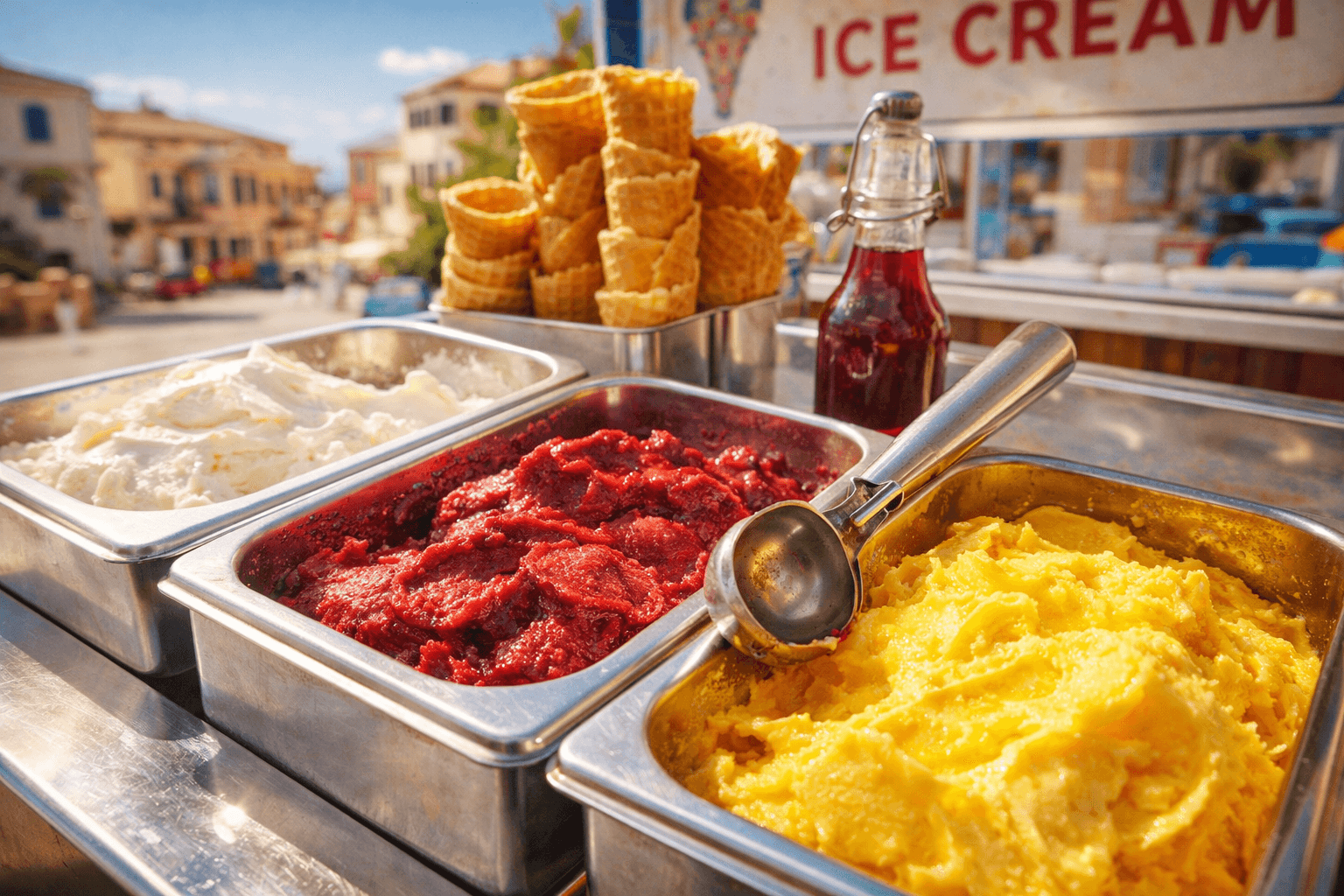
El yapımı dondurmalar çoğu zaman küçük dükkânlarda veya seyyar arabalarında hazırlanırdı. Bakır veya metal kapların içinde saklanan bu dondurmalar, doğal malzemelerle yapılırdı. Süt, şeker, salep veya meyve özleri dondurmanın temelini oluştururdu. Usta dondurmacılar bu karışımı büyük metal kaplarda döndürerek kıvamını almasını sağlardı.
Dondurmanın servis edilmesi de ayrı bir ritüeldi. Küçük kâselerde veya çıtır külahlarda sunulan dondurmalar özellikle çocukların en sevdiği yaz ikramlarından biriydi. Mahallede dondurmacının zili duyulduğunda çocuklar evlerinden koşarak çıkar, ellerinde birkaç bozuk parayla sıraya girerdi.
Evlerde ise yazın başka bir serin geleneği vardı: meyve şurupları. Özellikle vişne, gül, nar veya limon gibi meyvelerle hazırlanan bu şuruplar sıcak günlerde ferahlatıcı içecekler olarak tüketilirdi. Anneler veya büyükanneler yaz başında meyveleri kaynatarak şuruplar hazırlar, cam şişelerde saklardı.
Bu şurupların hazırlanması da başlı başına bir yaz geleneğiydi. Meyveler yıkanır, büyük tencerelerde şekerle birlikte kaynatılır ve ardından süzülerek şişelere doldurulurdu. Soğuk suyla karıştırılan bu yoğun aromalı şuruplar yaz sofralarında vazgeçilmez bir içecek olurdu.
Mahalle hayatında bu lezzetlerin sosyal bir yönü de vardı. Komşular bazen kendi hazırladıkları şurupları birbirine ikram ederdi. Bir evde yapılan vişne şurubu başka bir eve gönderilir, karşılığında limonata veya başka bir tatlı gelirdi.
Yaz akşamlarında ise bu içecekler kapı önü sohbetlerine eşlik ederdi. Serin bir bardak şurup veya küçük bir dondurma, sıcak günlerin yorgunluğunu unutturan küçük mutluluklar yaratırdı.
Bugün modern dondurma makineleri ve hazır içecekler hayatımızı kolaylaştırmış olsa da, o eski lezzetlerin yarattığı duygu farklıydı. Çünkü el yapımı dondurmalar ve meyve şurupları yalnızca tat değil, aynı zamanda paylaşım ve mahalle yaşamının sıcaklığını da taşıyordu.
Belki de bu yüzden yazın serinliği denildiğinde birçok kişinin aklına hâlâ o eski dondurmacı arabaları ve cam şişelerde bekleyen meyve şurupları gelir.
🇬🇧 English | The Sweet Coolness of Summer
Imagine a warm summer afternoon from decades ago. The sun heats the streets and the stone pavements glow under the light. Windows are open, and from inside homes faint kitchen aromas drift into the street. Children’s laughter echoes as they play outside, when suddenly a familiar sound spreads excitement across the neighborhood: the ice cream seller is approaching.
Before modern brands filled supermarket freezers, handmade ice creams and homemade fruit syrups were among the most cherished flavors of summer. These refreshing treats were deeply woven into neighborhood life. Ice cream vendors roaming the streets and fruit syrups prepared in family kitchens became symbols of the season.
Handmade ice creams were often prepared in small shops or in mobile carts. Stored in metal containers, these ice creams were made from simple and natural ingredients. Milk, sugar, salep, and fruit extracts created their rich flavor. Skilled ice cream makers would churn the mixture carefully until it reached the perfect texture.
Serving the ice cream was part of the experience. Scooped into small bowls or crisp cones, it quickly became the highlight of a hot day for children. When the sound of the ice cream vendor’s bell echoed through the street, children would rush outside with a few coins in their hands, eager to join the line.
At home, another refreshing tradition took place: the making of fruit syrups. Cherries, roses, pomegranates, and lemons were among the most popular ingredients. Mothers and grandmothers prepared these syrups at the beginning of summer and stored them in glass bottles for the warm months ahead.
Preparing the syrup was a careful process. Fresh fruit was washed and boiled with sugar in large pots, releasing deep aromas. The mixture was then strained and poured into bottles. When mixed with cold water, these syrups turned into refreshing drinks perfect for hot summer days.
These flavors also played a role in neighborhood culture. Neighbors often shared their homemade syrups with one another. A bottle of cherry syrup might be sent to a nearby home, sometimes exchanged for lemonade or another homemade treat.
During warm summer evenings, these drinks accompanied the relaxed rhythm of neighborhood gatherings. A cold glass of fruit syrup or a small scoop of ice cream brought relief from the heat and added joy to simple moments.
Although modern refrigeration and ready-made beverages have transformed how we enjoy desserts today, the experience of handmade summer treats remains unique. They carried not only flavor but also the warmth of community and shared traditions.
Perhaps that is why, when people think of summer refreshment, many still remember the distant bell of the ice cream cart and the colorful bottles of fruit syrup waiting in the kitchen.
🇧🇷 Português (Brasil) | O Frescor Doce do Verão
Imagine uma tarde quente de verão em tempos passados. O sol aquece as ruas e o calor se espalha pelas calçadas. As janelas das casas estão abertas e aromas vindos da cozinha se misturam ao ar. Crianças brincam na rua quando um som familiar se aproxima: o vendedor de sorvetes está chegando.
Antes das grandes marcas dominarem os congeladores, sorvetes artesanais e xaropes de frutas preparados em casa eram símbolos do verão. Esses sabores refrescantes faziam parte da vida nos bairros e das tradições familiares.
Os sorvetes artesanais eram preparados em pequenas lojas ou carrinhos de rua. Guardados em recipientes metálicos, eram feitos com ingredientes simples e naturais como leite, açúcar, salep e extratos de frutas. Os sorveteiros giravam manualmente os recipientes até que a mistura atingisse a textura ideal.
Servir o sorvete também fazia parte da experiência. Ele era colocado em pequenas taças ou cones crocantes. Quando o sino do carrinho de sorvete ecoava pela rua, as crianças corriam para comprar sua porção.
Nas casas, outra tradição refrescante acontecia: a preparação de xaropes de frutas. Cereja, rosa, romã e limão eram ingredientes comuns. Mães e avós preparavam esses xaropes no início do verão e os guardavam em garrafas de vidro.
O preparo envolvia ferver frutas com açúcar em grandes panelas até liberar seu aroma intenso. Depois o líquido era coado e armazenado. Misturado com água fria, tornava-se uma bebida refrescante perfeita para os dias quentes.
Esses sabores também faziam parte da convivência entre vizinhos. Garrafas de xarope caseiro eram frequentemente compartilhadas entre famílias, fortalecendo os laços comunitários.
Nas noites de verão, essas bebidas acompanhavam conversas tranquilas entre vizinhos. Um copo gelado de xarope ou um pequeno sorvete tornava o calor mais agradável.
Hoje, bebidas industrializadas e sorvetes produzidos em larga escala dominam o mercado. Ainda assim, as lembranças desses sabores artesanais permanecem vivas.
Porque mais do que refrescar, esses sabores representavam momentos de partilha e alegria no cotidiano.
