 Eski Pano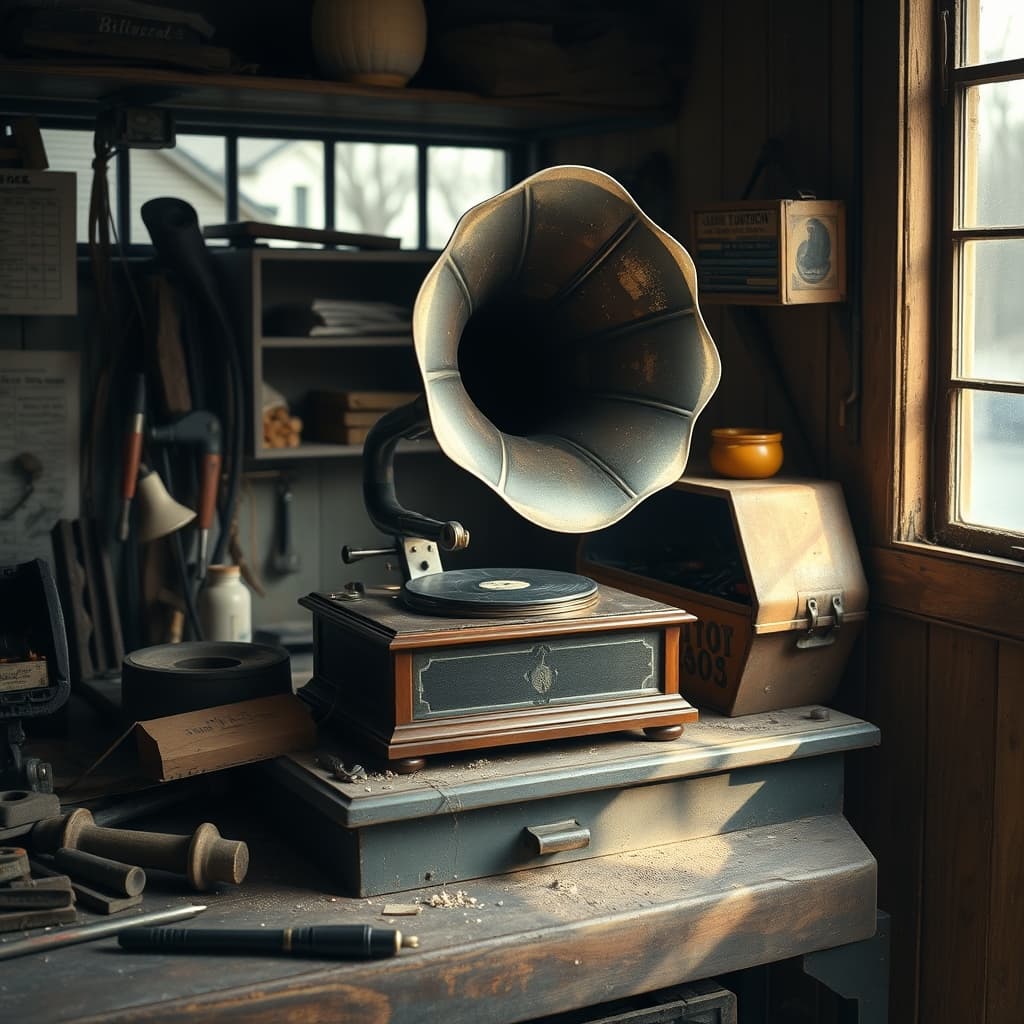
Gramophone Hours And The Second Life Of Repair Shops opens onto a memory that seems simple until it is examined closely. There is the gramophone horn, and around it a whole arrangement of streets, rooms, hands, voices, and waiting. In memories of hours spent beside a gramophone, the past looks brighter not because it was flawless, but because attention had more places to rest. A modest object could hold a family route, a neighbourhood habit, or the first sign that the season was changing.
The durable trace is needle hiss, screwdrivers, open windows, patient repairmen, and a song returning through a worn mechanism. Those details matter because they resist a flat version of nostalgia. They keep the memory practical, textured, and human. People were not living inside a postcard. They were carrying bags, counting time, listening through crackle, packing breakable things, leaning at doorways, and checking whether something had cooled enough to touch. The warmth came from participation, not from perfection.
The Object As A Small Witness
the gramophone horn works like a witness because it was close to repeated gestures. Around hours spent beside a gramophone, people learned how careful repair could make old sound newly present. They learned it without a lesson plan, through handling, waiting, sharing, repairing, asking, tasting, and returning. The same place or object could appear many times, yet each appearance carried a slightly different mood. That is how daily life quietly turned into memory.
Eski Pano follows these small witnesses because they explain culture from the inside. A fairground, a gramophone, a porcelain bowl, a barbershop, or a kitchen tray is not merely an accessory to history. It is a point where private life and public life meet. Through it we can see what people valued: careful repair, hospitality, conversation, seasonal rhythm, and the public delight of discovering something new together.
Why It Still Feels Bright
When people ask why the old scene appears brighter, the answer is not only distance. Distance can soften edges, but it cannot invent all the details that remain. The brightness also comes from shared attention. Someone was expected to notice the machine, the song, the bowl, the story, or the smell from the oven. Someone else was expected to respond. That exchange made even ordinary hours feel inhabited.
Modern life has not lost the ability to create such moments, but it often scatters them across private screens and faster routines. The memory of hours spent beside a gramophone reminds us that slowness, visibility, and repetition once helped people recognise one another. The object gave them a reason to gather, pause, comment, ask, laugh, or taste. It turned an everyday setting into a social room.
Looking back, the most useful inheritance is not a demand to rebuild the past exactly. It is an invitation to practise attention with more patience. the gramophone horn still matters because it suggests that memory is made while life is happening, not only after it is gone. If we notice the small rituals of today with the same care, they may one day carry us with equal tenderness.
There is one more quiet layer here. Around hours spent beside a gramophone, people did not separate usefulness from beauty as sharply as we sometimes do now. A useful thing could be polished, displayed, repaired, protected, or served with care. That care gave the day a shape, and the shape gave memory somewhere to return.