 Eski Pano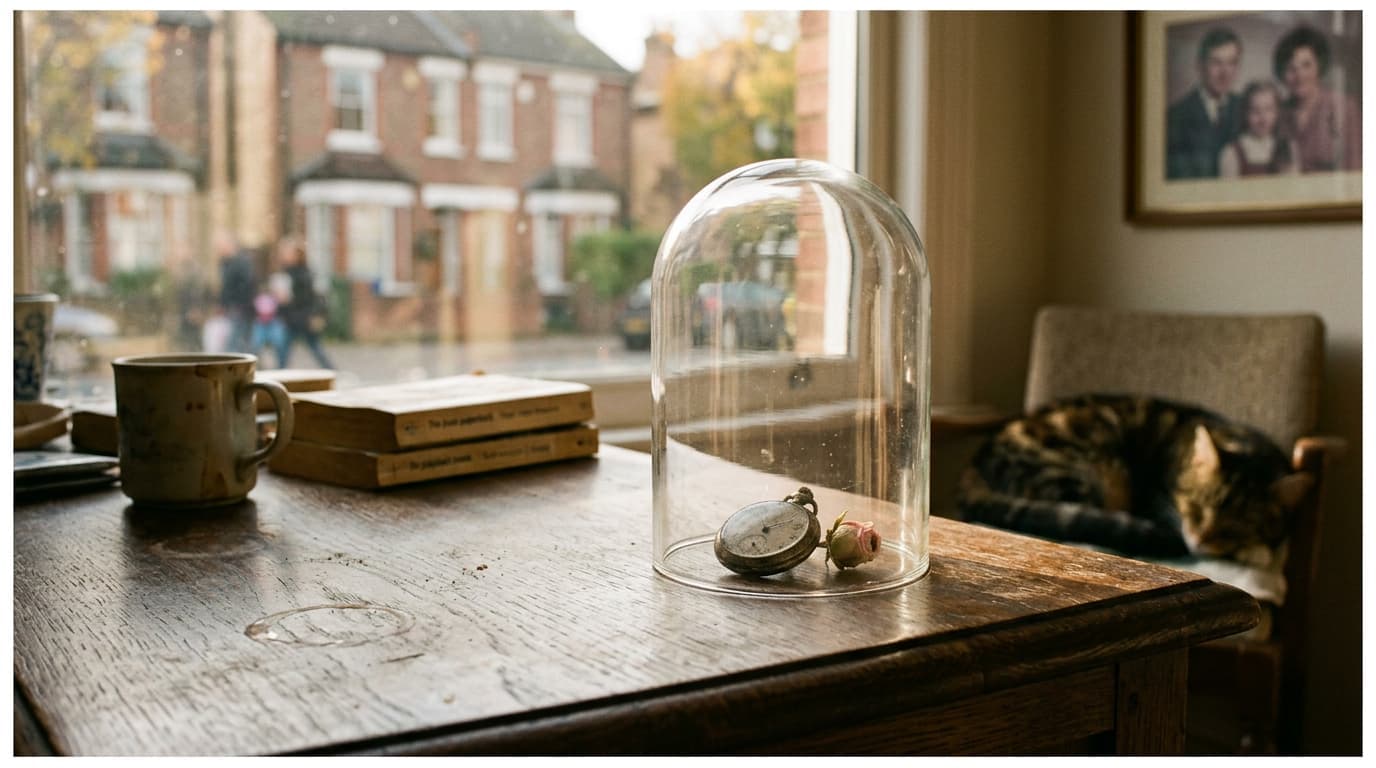
This Eski Pano story begins with a glass dome protecting a small keepsake on a wooden sideboard, an ordinary detail that can hold an entire arrangement of voices, pauses, and expectations. To remember a glass dome becoming a family heirloom in a grandmother’s familiar corner is not simply to remember an object or a place. It is to recall the light on the wall, the waiting before an hour arrived, and the reassuring sense that daily life unfolded in the presence of other people.
The scene stays close because it was useful before it became nostalgic. Someone carried it, cleaned it, tuned it, prepared it, repaired it, served it, or made room beside it. Its practical life created a social rhythm. A small action was visible to relatives, neighbours, and passers-by, and that visibility made care feel natural rather than exceptional.
A Ritual At Human Scale
Older routines around a glass dome becoming a family heirloom in a grandmother’s familiar corner left room for attention. A conversation could develop without being hurried away. A familiar sound could invite someone to a doorway. A smell, a gesture, or a worn surface could begin a story. Such scenes were not spectacular, yet they taught people how to recognise one another inside a shared place and a shared hour.
Public history records large changes, but private memory preserves method: who waited, who listened, who adjusted the setting, who offered a plate, who explained a sound, and who stayed a few minutes longer. These details are not minor decorations around history. They reveal how culture was practised in kitchens, courtyards, shops, stations, and sitting rooms before it was ever given a formal name.
Why The Memory Endures
Modern routines are often immediate and individual. The memory of a glass dome becoming a family heirloom in a grandmother’s familiar corner offers another pace. It shows that repetition can be generous when it makes space for conversation, care, and recognition. The useful inheritance is not a demand to rebuild the past exactly. It is an invitation to notice what lets an ordinary thing become a point of reference shared by many people.
Things became meaningful because they were kept, mended, stored, brought out, and used again. A familiar mark could call up a story, and that story could connect a younger listener to a journey or room they never knew. In this way, memory turns use into continuity without pretending that every old habit was perfect.
Remembering a glass dome becoming a family heirloom in a grandmother’s familiar corner means recognising everyday hospitality. It suggests that a bench, device, cloth, street sound, or bowl can carry emotional history when people give it patient attention. The past therefore survives not as a fixed picture, but as a gentle prompt to make our own ordinary moments more visible, more generous, and more shareable.
Small details deserve attention because they reveal how a community made time together. They are the lived texture from which history is made.
Looking carefully at such traces also makes room for gratitude: for people who turned repeated tasks into occasions for care and company.