 Eski Pano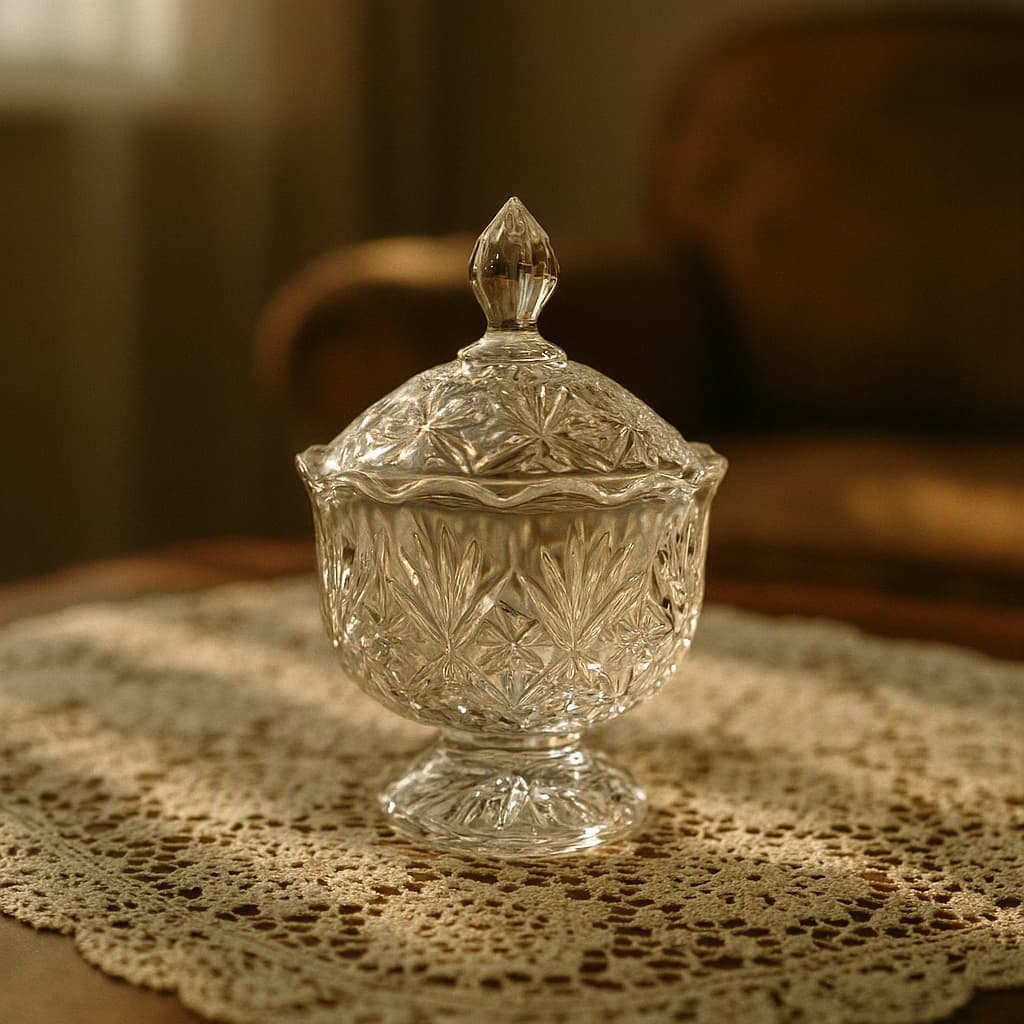
Crystal Sugar Bowls And The Patience Of Family Heirlooms begins with a scene shaped by repetition, patience, and the public warmth of ordinary life. There is the crystal sugar bowl, placed among streets, rooms, tables, thresholds, and voices that many people could recognise without needing explanation. In memories of crystal sugar bowls becoming family heirlooms, the past remains vivid because it held small rituals that taught people how to wait, prepare, walk, serve, and look after one another.
The most important texture is cut glass, sugar cubes, guest visits, careful washing, and light breaking into small pieces across the table. These details keep the memory from becoming a distant postcard. They bring it back to the hand, the ear, the eye, the appetite, and the pace of the day. A tool bag, camera, crystal bowl, shared route, or pitcher may seem modest, yet each one gathered attention and made the people around it briefly more aware of being together.
The Discipline Inside The Ritual
Around crystal sugar bowls becoming family heirlooms, people learned how patience and craft could make an object worthy of being passed on. The lesson was not abstract. It lived in repeated gestures: carrying something carefully, framing a moment, washing an object without chipping it, following a familiar road at night, or stirring a drink until it tasted right. These acts were practical, but they also shaped character. They taught steadiness, trust, craft, timing, and generosity without needing a lecture.
Eski Pano follows such scenes because they show how culture survives in the small places where people actually live. Official memory may prefer larger events, but daily memory preserves the apprentice’s errand, the camera roll, the heirloom bowl, the walk after the film, and the kitchen pitcher on a summer afternoon. These are not decorative footnotes. They are the surfaces on which social life left its fingerprints.
Why It Still Speaks
The present has changed many of these rhythms. Learning work may happen far from the street, images appear instantly, fragile objects are replaced rather than repaired, children and families travel through more managed routes, and homemade refreshment competes with convenience. Still, the older memory continues to speak because it preserves a form of attention that feels rare: a willingness to let an ordinary act take the time it needs.
the crystal sugar bowl matters because it turned patience into something visible. People could see the learning, the waiting, the careful handling, the shared walk, or the preparation. That visibility made the action social. It allowed neighbours, relatives, children, and guests to understand what was happening and to take part in it, even if their part was only to wait, watch, taste, or walk alongside.
Looking back at crystal sugar bowls becoming family heirlooms, the useful inheritance is not an instruction to copy the past exactly. It is a reminder that daily life becomes memorable when care has a visible shape. If today’s routines can recover even a little of that shared patience, they too may become the kind of memory that later generations hold with warmth.
There is another quiet layer here. Around crystal sugar bowls becoming family heirlooms, people did not separate skill from affection as sharply as modern routines sometimes do. Knowing how to do a thing well also meant knowing how to make others feel included by it. That is why the memory feels both practical and tender.