Eski Pano
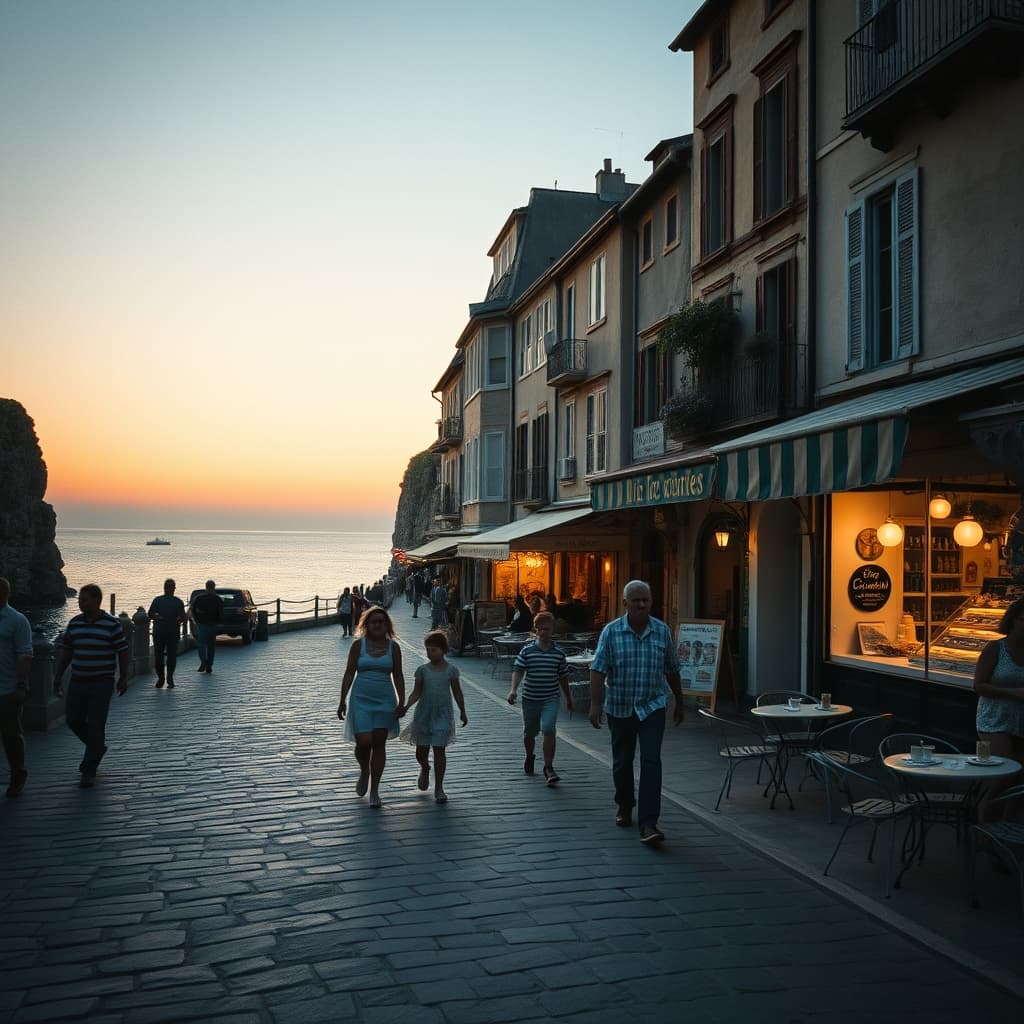
In coastal towns, a summer evening began not simply when the sun slowly withdrew over the sea, but when the first sound of sandals came from houses into the street. After dinner, doors opened, children’s hair was combed in haste, elders took light cardigans over their arms, and the road descending toward the shore grew crowded at the same hours. The ice cream shop switched on its light, tea glasses sounded from the garden cafe, and the salty wind carried the remaining heat out through open windows. The evening walk was not merely walking; it was a way of sharing the closing of the day with the neighborhood, the sea, and small familiar greetings.
From the perspective of time, these walks held an almost unchanging place in the summer calendar of old coastal towns. Old newspapers might mention vacation crowds, ferry hours, or waterfront arrangements, yet the real life was hidden in the steps of people who slowly walked the same route in the evening coolness. There was a circuit everyone knew: from the pier to the tea garden, from there to the bakery front, then back to the square. This route turned the town from a mere geography into a stage where shared memory was walked through. Even when people did not speak, they recognized one another by joining the same movement.
The evening walk became a ritual because repetition gave confidence. The elderly couple sitting on the same bench every summer, the child selling seeds on the same corner, the teenagers stopping before the same shop window, and siblings waiting for the same ice cream cone all formed the quiet order of the town. No one hurried, because the purpose of the walk was not arrival, but remaining on the way. Slowing down along the shore, shaking off the day’s heat, greeting familiar faces with a nod, and looking at the darkening surface of the sea were habits trained by summer evenings. Sometimes two brief sentences of greeting were exchanged at a doorway, and sometimes the same family was seen again the next evening at the same hour. These small continuities made people feel that time was not merely passing, but being held together. These habits taught a person to pay attention both to the self and to the place inhabited.
Many of the quiet habits left to today come from these simple walks. Going out for a short walk after dinner, valuing face-to-face greeting rather than distant contact, opening the window when the coolness arrives, feeling that the day is incomplete without stopping by the shore or a park: all these are behaviors carried from those old summers. In coastal towns, the evening walk was not a harsh order in which people monitored one another, but a soft social rhythm that gave reassurance simply by existing. Children learned freedom without being lost in the crowd, young people carried the excitement of being visible, and adults measured the pulse of the town with their steps.
When we reach today toward the dusty shelves of memory, what makes those summer evenings shine is not great events, but the calm built by small repetitions. The walks that became rituals in coastal towns left us the value of slowness, familiarity, and sharing common space. The smell of the sea, the evening coolness of stone streets, the ice cream line, and music heard from far away still carry the daily refinement of an era. Perhaps the quietest habit summer evenings left to today is this: sometimes a person remembers the self most clearly while walking slowly with others along the same road.
The Summers When Evening Walks in Coastal Towns Turned into Rituals on the Dusty Shelves of Memory: What Quiet Habits Did Summer Evenings Leave to Today?