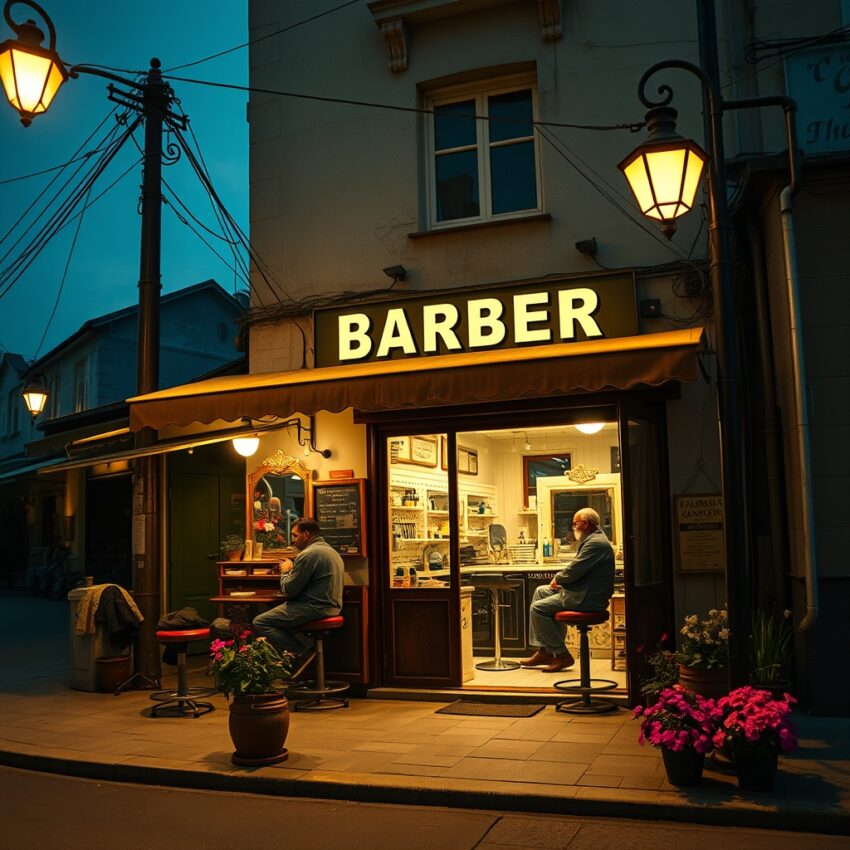
🇹🇷 Türkçe | Sokak lambalarının altında büyüyen anılarda berber dükkânlarının mahalle gündemini tuttuğu saatler: unutulan ayrıntılarıyla bize ne söylüyor çiçek kokulu sokaklar
Bir zamanlar akşam, mahalleye yavaş yavaş inen bir perde gibi gelirdi. Sokak lambaları tek tek yanarken kaldırımlar sarı bir sabrın içine gömülür, apartmanların altındaki berber dükkânlarının camları bu ışığı başka bir sıcaklığa çevirirdi. İçeriden kolonya, sabun köpüğü ve tıraş losyonu kokusu gelir; dışarıdaysa yeni sulanmış saksılardan, yaseminlerden ve hanımelinden yükselen çiçek kokusu sokağın üstüne ince bir örtü sererdi. Berber koltuğunda oturan biri aynaya bakarken, kapının önündeki taburelerde başkaları günün haberini tamamlardı. Mahallede kimin nişanı olmuş, hangi dükkân kepenk yenilemiş, hangi çocuk yatılı okula gitmiş, hangi memur tayin bekliyormuş; bütün bu haberler, akşamın serinliğiyle birlikte önce berberde dolaşıma girerdi. O yüzden eski sokakların hafızasında berber dükkânı yalnız saç kesilen bir yer değil, mahallenin nabzını tutan küçük bir merkezdi.
Zamanın İzinde bakıldığında bu dükkânların önemi yalnız esnaflıkla açıklanamaz. Özellikle 1960’lardan 1980’lere uzanan şehir hayatında mahalle ölçeği hâlâ belirleyiciydi; insanlar aynı fırından ekmek alır, aynı terziye paça yaptırır, aynı bakkala veresiye yazdırırdı. Berber dükkânı ise bu ortaklığın en konuşkan köşelerinden biriydi. Eski gazetelerde görülen siyaset tartışmaları, futbol manşetleri, belediye kararları ya da zam haberleri burada gündelik hayata çevrilirdi. Bir gazetenin kat izi açılır, başlık yüksek sesle okunur, sonra herkes bunu kendi hayatının içinden yorumlardı. Böylece ülkenin büyük meseleleri mahallenin dar sokağında yeniden biçim alırdı. Berberin aynaları da sanki yalnız yüzleri değil, devrin ruhunu da çoğaltırdı.
Bu sahnenin unutulan ayrıntıları asıl anlamı derinleştirir. Tıraş önlüğünün boyna sıkıca bağlanışı, ustanın makası parmak arasında ritmik biçimde çevirmesi, ense fırçasının pudralı serinliği, rafta bekleyen briyantin şişeleri ve duvardaki takvim yaprağı, dükkânın görünürde küçük ama hafızada büyük kalan parçalarıydı. Kapı önündeki çocuklar içeriyi merakla izler, kimi zaman yalnız radyodan maç sonucu duymak için yaklaşırdı. Emekliler öğleden sonra serinliğinde sandalye çeker, esnaf birbirine günün hesabını anlatır, dükkânın çırağı çayları dağıtırdı. Berberin konuşması da bir çeşit ölçü taşırdı; herkesi tanır, ama kimseyi kırmadan sözü dolaştırmasını bilirdi. Mahalle gündemi burada dedikoduya dönüşmeden toplumsal bir yakınlık kazanırdı.
Çiçek kokulu sokaklar bu hikâyede boşuna yer tutmaz. Çünkü eski şehir hayatında akşam yalnız ışıkla değil, kokuyla da hatırlanırdı. Bir apartman girişindeki sardunya, avlu duvarından sarkan yasemin, yaz akşamlarında kendini daha çok hissettiren ıhlamur ve yeni yıkanmış taşların kokusu, berber dükkânının içinden gelen kolonya serinliğiyle birleşirdi. Bu birleşim sert şehir yüzünü yumuşatırdı. Erkeklerin oturduğu, siyasetin konuşulduğu, maçların tartışıldığı bir dükkânın hemen birkaç adım ötesinde çiçekli bir saksının bulunması, o dönemin mahalle dengesini anlatır. Gündelik hayat ne kadar hareketli olursa olsun, sokak ev hissini tamamen kaybetmezdi. Belki bugün geçmişe dönüp bakınca o saatlerin bize daha sıcak görünmesinin nedeni de budur.
Bugün berber salonları daha parlak, daha hızlı ve daha sessiz olabilir; fakat eski mahalle berberlerinin taşıdığı toplumsal ağırlık başka bir şeydi. Orada beklemek vakit kaybı sayılmaz, insanın sokağa ve çevresine ait oluşunun bir işareti kabul edilirdi. Sokak lambasının altında eve dönerken duyulan çiçek kokusu, berber aynasında duyulan gündemin yankısını biraz daha insani kılardı. Bu yüzden o eski saatler bize yalnız nostalji anlatmaz. Aynı zamanda mahallenin nasıl birlikte düşündüğünü, haberin nasıl yüz yüze dolaştığını ve gündelik ayrıntıların bir şehri nasıl sıcak tuttuğunu da söyler. Çiçek kokulu sokaklar ve berber dükkânları birlikte hatırlandığında, geçmiş yalnız güzel değil; daha dikkatli, daha temaslı ve daha müşterek bir hayat gibi görünür.
🇬🇧 English | In the Memories Growing Under Street Lamps, the Hours When Barber Shops Held the Neighborhood Agenda: What Do Flower-Scented Streets Tell Us With Their Forgotten Details?
There was a time when evening arrived in the neighborhood like a curtain descending slowly. As the street lamps lit up one by one, the pavements sank into a yellow patience, and the windows of the barber shops beneath apartment blocks turned that light into another kind of warmth. From inside came the smell of cologne, shaving foam, and aftershave; outside, the scent of freshly watered flowerpots, jasmine, and honeysuckle laid a thin cover over the street. While someone sat in the barber chair facing the mirror, others on stools by the door completed the day’s news. Who had become engaged, which shop had renovated its shutters, which child had left for boarding school, which civil servant was waiting for reassignment; all these pieces of news first circulated through the barber shop with the evening cool. That is why, in the memory of old streets, the barber shop was not merely a place for haircuts, but a small center that kept the pulse of the neighborhood.
Seen along the trail of time, the importance of these shops cannot be explained by trade alone. In urban life from the 1960s through the 1980s, the neighborhood still had real weight; people bought bread from the same bakery, had hems adjusted by the same tailor, and kept tabs at the same grocer. The barber shop was one of the most talkative corners of that shared world. Political arguments from old newspapers, football headlines, municipal decisions, and price increases were translated there into daily life. A folded newspaper would be opened, a headline read aloud, and then everyone would interpret it from within his own life. In that way, the great issues of the country were reshaped inside a narrow neighborhood street. The barber’s mirrors seemed to multiply not only faces, but the spirit of the age itself.
It is the forgotten details of this scene that deepen its meaning. The barber cloth tied tightly at the neck, the master turning scissors rhythmically between his fingers, the cool dusting brush at the nape, the bottles of brilliantine waiting on the shelf, and the calendar page on the wall were small things in appearance yet large in memory. Children at the door watched the inside with curiosity, sometimes coming close only to hear a football score from the radio. Retired men pulled up chairs in the afternoon cool, tradesmen described the day’s accounts, and the apprentice distributed tea. Even the barber’s conversation carried its own measure. He knew everyone, yet understood how to circulate talk without wounding anyone. In that room, neighborhood news gained social closeness instead of collapsing into mere gossip.
The flower-scented streets do not belong to this story by accident. In old city life, evening was remembered not only by light, but by smell. Geraniums at an apartment entrance, jasmine hanging over a courtyard wall, linden stronger in summer evenings, and the odor of recently washed stone all joined the cooling cologne drifting from the barber shop. That combination softened the harder face of the city. The fact that a shop full of men discussing politics and football could stand just a few steps away from a pot of flowers says much about the balance of those neighborhoods. However busy daily life became, the street never entirely lost the feeling of home. Perhaps this is why those hours seem warmer when we look back at them now.
Today barber salons may be brighter, faster, and quieter, but the old neighborhood barber carried a different kind of social weight. Waiting there was not considered wasted time; it was taken as a sign that one belonged to the street and to the people around it. The flower scent felt while walking home under the street lamp made the echoes of the day’s conversations in the barber mirror feel more human. For that reason, those old hours tell us more than a nostalgic story. They also show how a neighborhood thought together, how news moved face to face, and how ordinary details kept a city warm. When flower-scented streets and barber shops are remembered side by side, the past appears not only beautiful, but more attentive, more tactile, and more shared.
🇧🇷 Português (Brasil) | Nas Memórias que Cresciam Sob os Postes de Luz, as Horas em que as Barbearias Guardavam a Agenda do Bairro: O Que as Ruas com Cheiro de Flores Nos Dizem com Seus Detalhes Esquecidos?
Houve um tempo em que a noite chegava ao bairro como uma cortina descendo devagar. Quando os postes se acendiam um a um, as calçadas mergulhavam numa paciência amarela, e as vitrines das barbearias sob os prédios transformavam aquela luz em outro tipo de calor. De dentro vinham o cheiro de colônia, espuma de barbear e loção pós-barba; do lado de fora, o perfume dos vasos recém-regados, do jasmim e da madressilva espalhava uma película delicada sobre a rua. Enquanto alguém permanecia na cadeira olhando para o espelho, outros, sentados nos banquinhos perto da porta, completavam as notícias do dia. Quem tinha ficado noivo, qual loja tinha trocado a porta de aço, que criança fora estudar longe, que funcionário aguardava transferência; todas essas novidades começavam a circular pela barbearia junto com o frescor da tarde. Por isso, na memória das ruas antigas, a barbearia não era apenas um lugar de cortar cabelo, mas um pequeno centro que mantinha o pulso do bairro.
No rastro do tempo, a importância desses lugares não pode ser explicada apenas pelo ofício. Entre as décadas de 1960 e 1980, o bairro ainda tinha um peso real na vida urbana; comprava-se pão na mesma padaria, fazia-se a barra da calça com o mesmo alfaiate, e a conta ficava anotada no mesmo armazém. A barbearia era um dos cantos mais falantes desse mundo compartilhado. Discussões políticas dos jornais antigos, manchetes de futebol, decisões da prefeitura e notícias de aumento de preços eram ali traduzidas para a vida cotidiana. Um jornal dobrado era aberto, uma manchete era lida em voz alta, e então cada um interpretava aquilo a partir da própria experiência. Assim, os grandes assuntos do país ganhavam outra forma dentro de uma rua estreita de bairro. Os espelhos da barbearia pareciam multiplicar não só os rostos, mas também o espírito do tempo.
São os detalhes esquecidos dessa cena que aprofundam seu sentido. O pano de barbeiro apertado no pescoço, a tesoura girando ritmicamente nos dedos do mestre, a escova com pó fresco na nuca, os frascos de brilhantina na prateleira e a folhinha do calendário na parede eram coisas pequenas à vista, mas grandes na memória. As crianças paradas na porta observavam tudo com curiosidade, às vezes chegando mais perto só para ouvir no rádio o resultado de um jogo. Os aposentados puxavam cadeiras no frescor da tarde, os comerciantes contavam o saldo do dia, e o aprendiz distribuía os chás. Até a fala do barbeiro tinha sua medida própria. Ele conhecia todos, mas sabia fazer a conversa circular sem ferir ninguém. Ali, a agenda do bairro ganhava proximidade social em vez de se reduzir a fofoca.
As ruas com cheiro de flores não ocupam esse lugar por acaso. Na antiga vida urbana, a noite era lembrada não apenas pela luz, mas também pelo cheiro. O gerânio na entrada do prédio, o jasmim caindo do muro do quintal, a tília mais presente nas noites de verão e o odor da pedra recém-lavada se encontravam com a colônia fresca vinda da barbearia. Essa mistura suavizava o lado mais duro da cidade. O fato de uma loja cheia de homens falando de política e futebol existir a poucos passos de um vaso florido diz muito sobre o equilíbrio daqueles bairros. Por mais movimentada que fosse a vida diária, a rua nunca perdia completamente a sensação de casa. Talvez por isso essas horas pareçam hoje mais acolhedoras quando olhamos para trás.
Hoje os salões de barbearia podem ser mais iluminados, rápidos e silenciosos, mas a antiga barbearia de bairro carregava um peso social diferente. Esperar ali não era visto como perda de tempo; era um sinal de pertencimento à rua e às pessoas ao redor. O cheiro das flores sentido no caminho de volta para casa sob o poste de luz tornava mais humano o eco das conversas refletidas no espelho. Por isso, aquelas velhas horas contam mais do que uma história nostálgica. Elas mostram como um bairro pensava junto, como as notícias circulavam de rosto em rosto e como detalhes cotidianos mantinham a cidade aquecida. Quando as ruas floridas e as barbearias são lembradas lado a lado, o passado aparece não apenas bonito, mas mais atento, mais próximo e mais compartilhado.