 Eski Pano
There was a time when the quiet excitement of a family gathering in the living room took on a special intensity the moment the television clicked on. Before the screen even lit up, the coffee table was rearranged, floor cushions were pulled into place, someone measured where to lean against the sofa, and the question of who would receive the joystick cable became a small yet serious matter. Using an Atari console was unlike today’s quickly consumed habits of gaming. It felt less like casual entertainment and more like a household ceremony. That was because the moment contained not only technology, but waiting, turn-taking, watching, and togetherness. The person playing was not the only one involved; everyone staring at the screen, sighing at a mistake, or glowing quietly after a level was cleared belonged to the same ritual.
From the perspective of technological heritage, Atari represented one of the first collective digital thrills to enter the home. Like earlier analog devices, it was tangible, deliberate in setup, and stable in rhythm. Inserting the cartridge, tuning the channel, checking the cables, and finally seeing the image settle onto the screen created a small preparatory phase before the game even began. That preparation lifted the machine beyond the level of a simple toy and turned it into an object treated seriously within the family. Even though the game world appeared on the screen, the real excitement moved through the room itself. Children’s impatient glances, adults’ cautious curiosity, and the neighbor’s child waiting to say “let me try once too” created a temporary yet powerful community around the console.
The details of daily life make this ceremonial feeling even clearer. If there was a lace cover on top of the television, it might be moved aside. Care was taken not to disturb the antenna. Before the game began, a mother might warn everyone not to shout too much. One person watched with a bowl of sunflower seeds in hand while another kept track of the score. Not only the player’s skill, but also the patience of the next child in line was tested. Lost lives could bring a shared disappointment across the room, while a completed stage created a deep but restrained pride. Family members might not all speak the language of the game equally well, yet everyone respected the order of the moment. For the child, the joystick was not merely a controller; it was a brief piece of authority placed in the hand. For adults, it was a cautious but curious way of admitting a new technology into domestic order.
What turned Atari play into a ceremony was the balance it established between household hierarchy and the rules of the game. In a home where everyone shared the same living room, game time moved forward through invisible agreements. Who would play first, how long each turn would last, whether a visiting child should be given a turn, and how deeply a power outage might be mourned were all part of that small ceremony. The game delivered the feeling of technological novelty while also reproducing manners inside the family. Unlike today’s individual screens, what was tested in front of the Atari was not only reflex, but conduct. Waiting one’s turn, watching another person play in silence, consoling the one who lost, and celebrating the winner without excess were the unseen rules of the ritual.
When we remember that quiet excitement today, what we miss is not merely pixelated images. What we truly miss is the brief but intense sense of community created when technology entered the home and brought people together at one screen instead of scattering them apart. The Atari console belongs to a period in which families in the living room learned to be surprised, to wait, and to rejoice together. For that reason, time spent in front of it remains not like an ordinary hour of gaming, but like a ceremony producing shared attention, shared patience, and shared memory. The reason for the quiet excitement lies here: the game was not played only on the screen, but within the family itself.
Why Using an Atari Console Amid the Quiet Excitement of Families Gathered in the Living Room Was a Ceremony in Itself
🇹🇷 Salonda Toplanan Ailelerin Sessiz Heyecanı Eşliğinde Atari Konsolu Kullanmak Neden Başlı Başına Bir Törendi
🇵🇹 Por que Usar um Console de Atari em Meio À Silenciosa Empolgação das Famílias Reunidas na Sala Era uma Cerimônia por Si Só
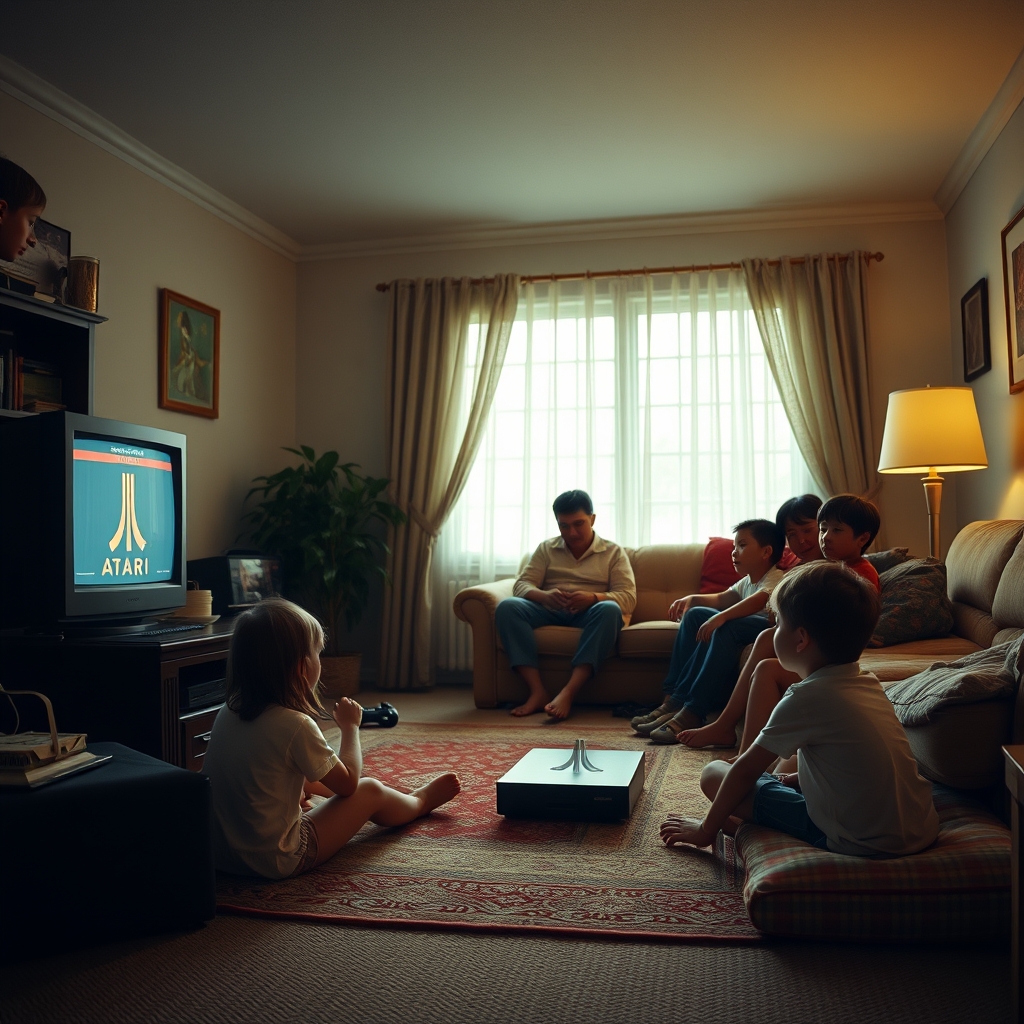
🇬🇧 A Quiet Family Ceremony Formed in Front of the Screen
🇹🇷 Ekranın Karşısında Kurulan Sessiz Aile Merasimi
Bir zamanlar salonda toplanan bir ailenin sessiz heyecanı, televizyonun açılma sesiyle bambaşka bir yoğunluk kazanırdı. Perde henüz parlamadan önce sehpanın üstü düzenlenir, yere minderler çekilir, koltuğun kenarına yaslanacak yer hesaplanır, joystick kablosunun kime uzanacağı küçük ama ciddi bir meseleye dönüşürdü. Atari konsolu kullanmak bugünün hızla tüketilen oyun alışkanlıklarından farklı olarak yalnızca bir eğlence değil, ev içi bir tören gibiydi. Çünkü o anın içine teknoloji kadar bekleyiş, sıra, seyir ve beraberlik de karışırdı. Oyunu yalnız oynayan değil; ekrana bakan, hata anında iç çeken, bölüm geçilince sevinen herkes aynı merasimin parçası olurdu.
Teknoloji Mirası açısından Atari, eve giren ilk kolektif dijital heyecanlardan birini temsil eder. Eski analog cihazlar gibi elle tutulur, kurulumu belirli, ritmi sabit bir makineydi. Kasetin yerleştirilmesi, kanal ayarının yapılması, kabloların kontrol edilmesi ve görüntünün sonunda ekrana oturması, oyunun başlamasından önce küçük bir hazırlık evresi yaratırdı. Bu hazırlık, cihazı sıradan bir oyuncaktan çıkarır; aile içinde ciddiye alınan bir eşyaya dönüştürürdü. Oyun dünyası ekranda görünse de asıl heyecan, salonun içinde dolaşırdı. Çocukların sabırsız bakışları, büyüklerin kontrollü merakı, komşu çocuğun “bir kere de ben oynayayım” diye bekleyişi, konsolun etrafında bir araya gelen geçici ama güçlü bir topluluk yaratırdı.
Gündelik hayatın ayrıntıları bu tören duygusunu daha açık gösterir. Televizyonun üstünde dantel örtü varsa kenara alınır, anten yanlışlıkla oynamasın diye dikkat edilir, oyun başlamadan önce anneden “fazla bağırmayın” uyarısı gelir, biri elinde çekirdek kâsesiyle izlerken diğeri puan hesaplar. Oynayan kişi kadar sıradakinin sabrı da sınanır; kaybedilen canlar bazen salonda toplu bir hayal kırıklığı, geçilen bölüm ise sessiz ama derin bir gurur yaratırdı. Aile bireyleri oyunun dilini aynı ölçüde bilmeyebilir, ama o anın düzenine herkes saygı gösterirdi. Çocuk için joystick yalnız bir kumanda değil; eline geçen kısa süreli bir yetkiydi. Büyükler içinse yeni bir teknolojiyi ev düzenine dahil etmenin temkinli ama meraklı yolu.
Atari kullanımını başlı başına tören yapan şey, ev içi hiyerarşiyle oyunun kuralları arasında kurulan dengedir. Herkesin salonu paylaştığı bir evde oyun vakti, görünmez anlaşmalarla ilerlerdi. Kimin önce oynayacağı, ne kadar süre verileceği, misafir çocuğa sıra açılıp açılmayacağı, elektrik kesilirse ne kadar üzülüneceği bile bu küçük seremoninin parçasıydı. Oyun bir yandan teknolojik bir yenilik hissi veriyor, öte yandan aile içi adabı yeniden üretiyordu. Bugünkü bireysel ekranlardan farklı olarak, Atari’nin karşısında yalnız refleksler değil görgü de sınanırdı. Sıra beklemek, başkasının oyununu sessizce izlemek, yenilene teselli vermek ve kazanana ölçülü sevinmek bu merasimin görünmeyen kurallarıydı.
Bugün o sessiz heyecanı hatırladığımızda özlenen şey yalnız piksel piksel görüntüler değildir. Asıl özlenen, teknolojinin eve geldiğinde insanları birbirinden uzaklaştırmak yerine aynı ekranda buluşturduğu o kısa ama yoğun topluluk hâlidir. Atari konsolu, salonda toplanan ailelerin birlikte şaşırmayı, beklemeyi ve sevinmeyi öğrendiği bir dönem eşyasıdır. Bu yüzden onun karşısında geçirilen zaman, sıradan bir oyun saati gibi değil; ortak dikkat, ortak sabır ve ortak hafıza üreten bir tören gibi kalır. Sessiz heyecanın sebebi de buradadır: Oyun yalnız ekranda oynanmıyor, aile içinde paylaşılıyordu.
🇵🇹 Uma Cerimônia Familiar Silenciosa Montada Diante da Tela
Houve um tempo em que a silenciosa empolgação de uma família reunida na sala ganhava outra intensidade no instante em que a televisão era ligada. Antes mesmo de a tela acender, a mesa de centro era reorganizada, almofadas eram puxadas para o chão, alguém calculava o melhor canto do sofá para se apoiar, e a questão de quem ficaria com o cabo do joystick se transformava num assunto pequeno, mas sério. Usar um console de Atari era diferente dos hábitos atuais de jogo consumidos com pressa. Parecia menos uma diversão casual e mais uma cerimônia doméstica. Isso acontecia porque aquele momento reunia não apenas tecnologia, mas também espera, vez, observação e convivência. Quem jogava não era o único participante; todos os que olhavam a tela, prendiam o fôlego diante de um erro ou se alegravam quando uma fase era vencida faziam parte do mesmo ritual.
Do ponto de vista do patrimônio tecnológico, o Atari representou uma das primeiras emoções digitais vividas de forma coletiva dentro de casa. Como os aparelhos analógicos anteriores, era algo concreto, de montagem definida e ritmo estável. Colocar o cartucho, ajustar o canal, conferir os cabos e ver a imagem finalmente se firmar na tela criava uma pequena etapa de preparação antes do início da partida. Essa preparação fazia o aparelho deixar de ser um simples brinquedo e se tornar um objeto levado a sério pela família. Embora o universo do jogo aparecesse na tela, a verdadeira empolgação circulava pela sala. Os olhares impacientes das crianças, a curiosidade prudente dos adultos e o filho do vizinho esperando para dizer “deixa eu jogar uma vez também” formavam uma comunidade passageira, mas intensa, ao redor do console.
Os detalhes da vida cotidiana deixam esse sentimento de cerimônia ainda mais claro. Se havia uma toalhinha de renda sobre a televisão, ela podia ser retirada. Tomava-se cuidado para não mexer na antena. Antes de começar, vinha da mãe o aviso para não gritarem demais. Um assistia com uma tigela de sementes na mão, outro marcava a pontuação. Não era apenas a habilidade de quem jogava que estava em prova, mas também a paciência de quem aguardava a sua vez. Vidas perdidas provocavam uma decepção compartilhada, e uma fase concluída gerava um orgulho discreto, porém profundo. Os membros da família talvez não dominassem todos igualmente a linguagem do jogo, mas todos respeitavam a ordem daquele instante. Para a criança, o joystick não era só um controle; era uma pequena autoridade temporária nas mãos. Para os adultos, era a forma cautelosa e curiosa de acolher uma nova tecnologia dentro da ordem da casa.
O que transformava o uso do Atari em cerimônia era o equilíbrio entre a hierarquia doméstica e as regras do jogo. Numa casa em que todos compartilhavam a mesma sala, o tempo do videogame avançava por acordos invisíveis. Quem jogaria primeiro, quanto duraria cada vez, se a criança visitante teria prioridade, e até o tamanho da tristeza diante de uma queda de energia faziam parte dessa pequena solenidade. O jogo trazia o frescor da novidade tecnológica e, ao mesmo tempo, reproduzia maneiras e convivência dentro da família. Diferentemente das telas individuais de hoje, o que era testado diante do Atari não eram apenas os reflexos, mas também a conduta. Esperar a vez, assistir em silêncio ao outro, consolar quem perdeu e comemorar a vitória sem exagero eram as regras invisíveis do ritual.
Quando lembramos hoje dessa silenciosa empolgação, o que faz falta não são apenas as imagens em pixels. O que realmente faz falta é essa breve, porém intensa, sensação de comunidade que surgia quando a tecnologia entrava em casa e reunia as pessoas diante de uma mesma tela, em vez de separá-las. O console de Atari pertence a um tempo em que as famílias na sala aprendiam juntas a se surpreender, esperar e comemorar. Por isso, o tempo passado diante dele não permanece como uma simples hora de jogo, mas como uma cerimônia que produzia atenção compartilhada, paciência compartilhada e memória compartilhada. A razão da empolgação silenciosa está aí: o jogo não acontecia apenas na tela, mas dentro da própria família.