Eski Pano
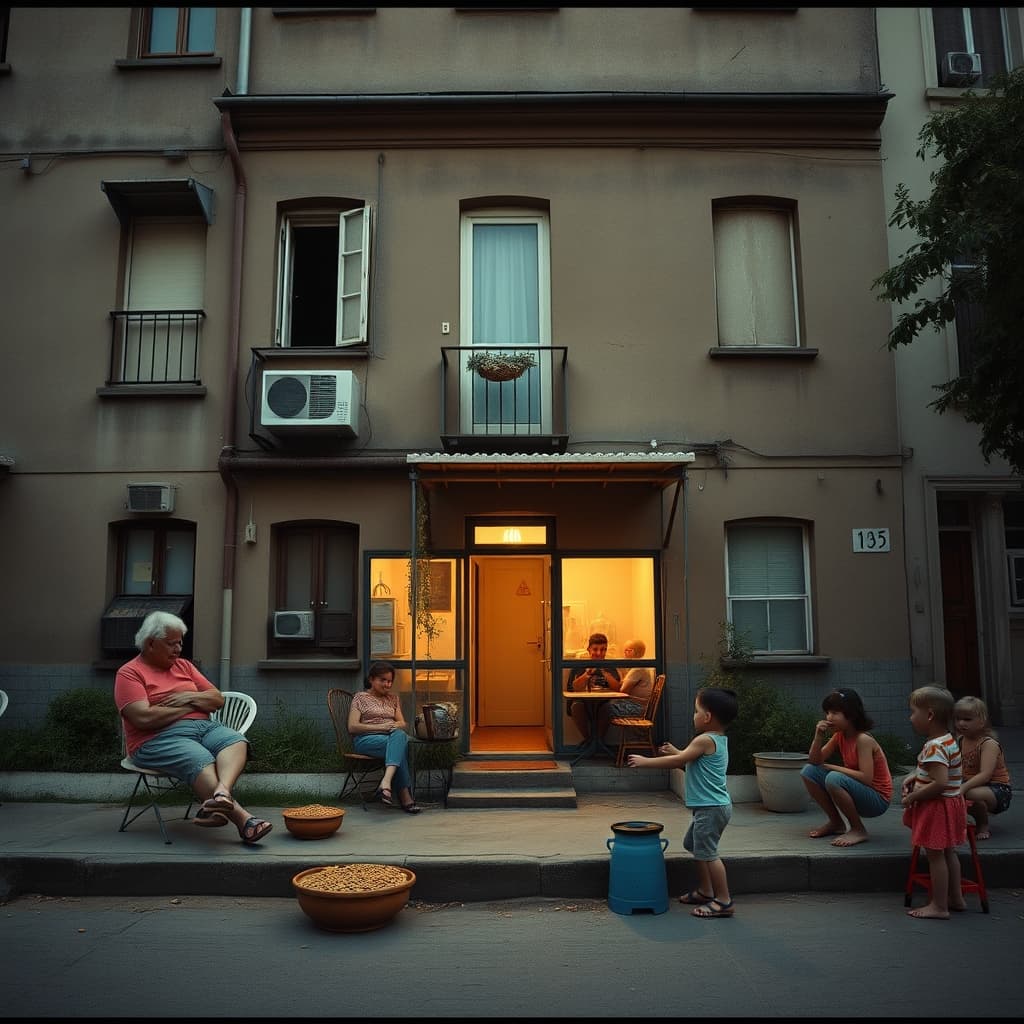
There was a time when, once the heat of a summer evening softened a little, the space in front of apartment buildings naturally turned into a place to sit. Stools set at the doorway, chairs pulled beside the entrance, children pausing their games, and bowls of sunflower seeds in the hands of adults all came together in the same scene. The small sound made as each shell was cracked by teeth moved between conversations like a rhythmic gap; while one person spoke about something in the neighborhood, another nodded in agreement and someone else joined in with a laugh. Those hours were not dramatic, yet they carried a reassuring order. Everyone felt one another’s presence on the same pavement, in the same evening light, within the same unhurried pace.
Seen through the lens of neighborhood culture, the hours spent with the sound of sunflower seeds in front of the apartment building were one of the most visible schools of neighborliness. People came to know one another without making formal visits. By sitting at the same doorway, they learned who returned from work when, whose child had exams, or whose mother had fallen ill. That knowledge was not gossip so much as a form of closeness. The front of the building was a semi-public threshold between house and street; words spoken there carried the ease of informality while still remaining within the discipline of neighborly respect. Eating sunflower seeds created the natural tempo of this slow conversation. When the hands were occupied, the tongue loosened more gently, silences ceased to feel awkward, and simply sitting together became enough in itself.
One reason this habit made neighborliness so strong was the feeling of continuity it produced. The hours spent outside the building did not depend on rare or grand occasions; they repeated almost every evening, always a little similar and a little different. One day the electricity might go out and conversation would begin earlier, another day slices of watermelon would appear, children would draw hopscotch lines by the curb, and older people would pull their chairs a little farther into the shade. The sound of sunflower seeds remained like a familiar background beneath all these small variations. And what strengthens human relations is often exactly this kind of daily repetition. Before great acts of help come the habits of recognizing a face, noticing someone’s trouble before it is spoken, or growing curious when a person is absent for several evenings. In that sense, the apartment front held the pulse of neighborliness.
Everyday details made the warmth of the scene even clearer. If a tray of tea arrived, glasses were shared, newspaper sheets were spread for the discarded shells, and if a child was sent to the corner shop everyone added something to the request. Someone leaning from a window asked after those below, a neighbor lowering a basket from the balcony made a quick request, and each new person entering through the doorway passed through a small circle of greetings. All of this formed an unwritten order of neighborliness that included everyone. Sitting outside the building was not merely spending time. It meant bearing witness, in measured ways, to one another’s lives and creating a distance close enough for a helping hand to be extended without ceremony whenever needed.
To understand why neighborliness once felt stronger, it is enough to look at such small evening scenes. The hours marked by the sound of sunflower seeds accustomed people to one another within the same daily rhythm. They taught the art of being silent together, of taking ordinary topics seriously, of collectively watching over children at play, and of not hardening the passage between home and street. For that reason, the front of the apartment building was not merely an entrance zone in old neighborhood culture, but a threshold where relationships slowly fermented. What remains in memory now is not only the crackle of the shells, but the feeling of trust, repetition, and familiarity formed around that sound. That is exactly what made neighborliness strong.
Why Did the Hours Spent with the Sound of Sunflower Seeds in Front of the Apartment Building Make Neighborliness So Strong