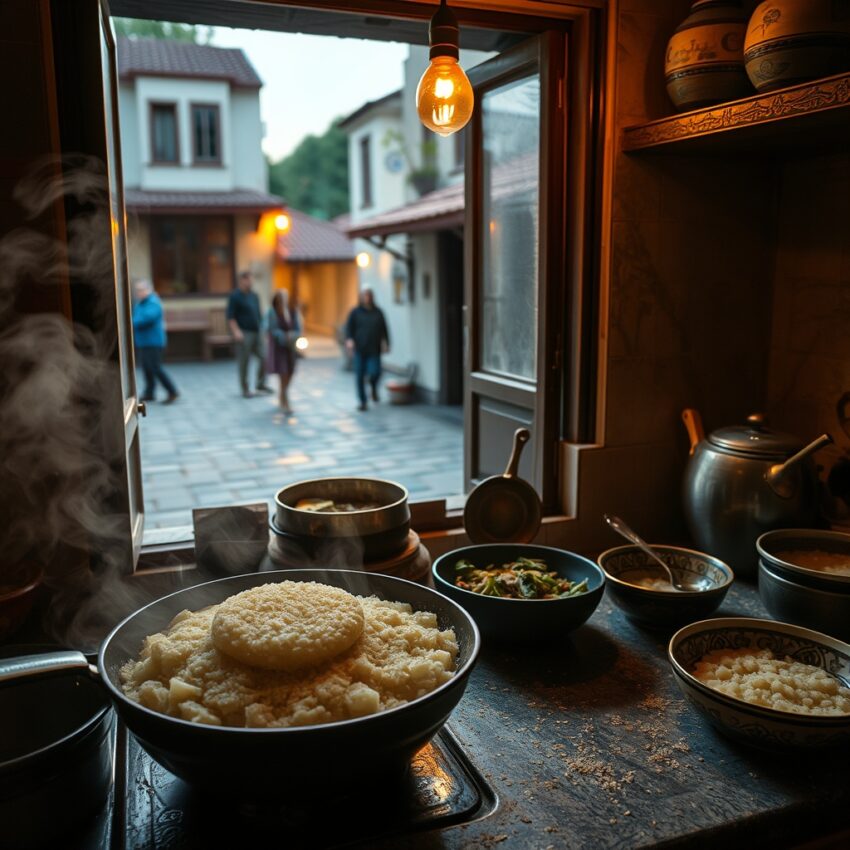
🇹🇷 Türkçe | eski usul irmik helvası sofraya geldiğinde neden bütün ev aynı kokuyla dolardı taş kaldırımlar boyunca sessiz bir yaz akşamına karışarak
Bir zamanlar irmik helvası yalnız tatlı olarak değil, evin içini bir araya getiren koku olarak da beklenirdi. Tereyağında ağır ağır kavrulan irmiğin sesi mutfaktan taşar, ardından yükselen sıcak koku odaları dolaşır, açık pencere varsa taş kaldırımlara kadar uzanırdı. O koku sofraya gelmeden önce bile evde bir beklenti kurar; çocuklar mutfağa uğrayıp ne kadar kaldığını sorar, büyükler şerbetin kıvamını konuşur, kaşıkların sesi önceden hazırlanırdı. Yaz akşamlarında bu koku daha da belirginleşirdi. Sokak dışarıda kendi sessiz akışını sürdürürken, içeride kavrulmuş irmik, tereyağı ve bazen çam fıstığının oluşturduğu sıcaklık, evin bütün havasını tek bir hatırada toplardı.
Damak Hafızası açısından bakıldığında eski usul irmik helvası, basit malzemelerle güçlü bir duygusal alan kurabilen yemeklerin başında gelir. İrmik, yağ, şeker ve su ya da süt gibi gündelik malzemelerle hazırlanır; ama ortaya çıkan lezzet, yalnız tariften değil onu çevreleyen aile ritminden doğar. Eski mutfaklarda helva çoğu zaman gelişigüzel yapılmazdı. Bazen misafir için, bazen bir akşam toplanmasına eşlik etsin diye, bazen de hiçbir özel sebep olmadan eve huzur getirsin diye hazırlanırdı. Tencerede sabırla kavrulan irmik, mutfağın emeğini görünür kılar; kokusu ise yemeği henüz sofraya ulaşmadan ortak bir deneyime dönüştürürdü. Bu yüzden helva pişerken evde yalnız yemek değil, hatırlanacak bir akşam da hazırlanmış olurdu.
O eski koku hafızasının gücü, mutfak ile evin geri kalanı arasındaki sınırları silmesinden gelir. Bir odada dikiş diken biri, salonda radyoyu kısık sesle dinleyen bir başkası, balkondan çamaşır toplayan biri, irmik helvasının kokusuyla aynı anda aynı ana bağlanırdı. Çocukluk hatıralarında bu yüzden irmik helvası çoğu kez yalnız tadıyla değil, bütün eve yayılışıyla yer eder. Taş kaldırımlar boyunca sessiz bir yaz akşamı sürerken, pencere aralığından sokağa karışan o koku mahalleye bile evin ne pişirdiğini haber verirdi. Komşunun “helva mı yaptınız?” diye seslenmesi, mutfağın kokuyla kurduğu sosyal ilişkinin en sıcak örneklerinden biriydi. Yemek, böylece yalnız aileyi değil, sokağı da içine alan bir hafıza halkası oluştururdu.
Eski usul irmik helvasının sofraya geldiğinde evi doldurmasının bir nedeni de servis anının taşıdığı törensel sadeliktir. Gösterişli bir sunum gerekmezdi; çoğu zaman sade tabaklarda, kimi zaman yanında dondurma olmadan, yalnız çayın ya da akşam sohbetinin eşliğinde ortaya konurdu. Ama o anda herkes kokuyu zaten tanımış olduğu için tatlı sofraya gelmeden önce evde bir birlik duygusu kurulmuş olurdu. Kimi kaşığı hemen alır, kimi biraz soğusun diye bekler, biri çocukluğundaki bir bayramı anlatır, biri annesinin helvasını hatırlardı. Böylece irmik helvası yalnız doyuran bir tatlı değil, kuşakları birbirine bağlayan bir konuşma zemini hâline gelirdi. Kokunun yayılışı, tadın gelişinden önce gelen bir duygusal çağrıydı.
Bugün geriye dönüp baktığımızda eski usul irmik helvasının neden bu kadar derin hatırlandığını anlamak kolaydır. Çünkü bazı yemekler yalnız damakta değil, evin duvarlarında, perdelerinde, açık penceresinde ve akşamın sessizliğinde de iz bırakır. İrmik helvası bu bakımdan tam bir ev içi hafıza yemeğidir. Taş kaldırımlar boyunca ilerleyen yaz akşamı ile içerideki tencere kokusunun birbirine karışması, geçmişin en sade ama en güçlü sahnelerinden birini kurar. Bugün o kokuyu hatırladığımızda aslında bir tariften çok daha fazlasını çağırırız: aileyi, bekleyişi, mutfak emeğini ve evin bir süreliğine tek bir sıcak koku etrafında birleştiği o eski huzuru.
🇬🇧 English | Why the Whole House Filled With the Same Scent When Old-Style Semolina Halva Reached the Table, Blending Into a Silent Summer Evening Along the Stone Pavements
There was a time when semolina halva was anticipated not only as a dessert, but as the scent that gathered the whole house together. The sound of semolina roasting slowly in butter rose out of the kitchen, and the warm fragrance that followed moved through every room, reaching even the stone pavements outside if a window stood open. Before the dish ever reached the table, that aroma created an expectation inside the home. Children came into the kitchen to ask how much longer it would take, adults discussed the consistency of the syrup, and the sound of spoons being prepared began early. On summer evenings the scent felt even more distinct. While the street outside continued in its quiet flow, the warmth made of roasted semolina, butter, and sometimes pine nuts gathered the atmosphere of the house into a single memory.
From the perspective of taste memory, old-style semolina halva is one of those foods capable of building a strong emotional field out of simple ingredients. It is prepared with semolina, fat, sugar, and water or milk, yet the flavor that emerges belongs not only to the recipe, but to the family rhythm surrounding it. In older kitchens, halva was rarely made without meaning. Sometimes it was prepared for guests, sometimes to accompany an evening gathering, and sometimes for no special reason except to bring calm into the home. The semolina roasting patiently in the pot made the labor of the kitchen visible, and its smell turned the dish into a shared experience before it even reached the table. That is why, while halva was cooking, the household was not merely preparing food, but also preparing an evening that would later be remembered.
The strength of that old scent memory comes from the way it erased the boundaries between the kitchen and the rest of the house. Someone sewing in one room, someone else listening softly to the radio in the living room, another person gathering laundry from the balcony, all were tied to the same moment by the smell of semolina halva. For that reason, childhood memories often preserve the dessert not only through its taste, but through the way it spread through the entire house. As a silent summer evening moved along the stone pavements outside, the smell slipping from the half-open window could even tell the neighborhood what was being cooked. A neighbor calling out, “Did you make halva?” was one of the warmest examples of the social life that kitchen aromas created. Food thereby formed a ring of memory that included not only the family, but the street.
One reason the whole house seemed to fill when semolina halva reached the table lies in the ceremonial simplicity of the serving moment. No elaborate presentation was needed. It was usually set out on plain plates, sometimes without ice cream, accompanied only by tea or evening conversation. Yet because everyone already knew the scent, a sense of togetherness had formed before the dessert was even served. Someone lifted the spoon immediately, someone else waited for it to cool, one person spoke of a holiday from childhood, another remembered a mother’s version of the dish. In that way, semolina halva became not only a dessert that satisfied hunger, but also a conversational ground linking generations. The spread of the aroma was an emotional invitation that arrived before the taste itself.
When we look back today, it is easy to understand why old-style semolina halva remains so deeply remembered. Some foods leave traces not only on the palate, but on the walls of the house, the curtains, the open window, and the quiet of the evening. Semolina halva is in this sense a complete domestic memory dish. The mingling of a summer evening advancing along stone pavements with the scent rising from the pot inside creates one of the simplest yet strongest scenes of the past. When we remember that smell today, we are recalling far more than a recipe. We are calling back family, anticipation, kitchen labor, and the old peace of a home briefly united around a single warm fragrance.
🇧🇷 Português (Brasil) | Por Que Toda a Casa se Enchia do Mesmo Aroma Quando a Halva Tradicional de Sêmola Chegava à Mesa, Misturando-se a uma Noite de Verão Silenciosa ao Longo das Calçadas de Pedra
Houve um tempo em que a halva de sêmola era esperada não apenas como sobremesa, mas como o aroma que reunia a casa inteira. O som da sêmola tostando devagar na manteiga saía da cozinha, e o perfume quente que vinha depois percorria os cômodos, chegando até às calçadas de pedra do lado de fora quando a janela estava aberta. Antes mesmo de a travessa chegar à mesa, esse cheiro já criava uma expectativa dentro de casa. As crianças passavam pela cozinha para perguntar quanto faltava, os adultos comentavam o ponto da calda, e o som das colheres começava a se preparar antes da hora. Nas noites de verão, o aroma ficava ainda mais marcante. Enquanto a rua seguia seu curso silencioso, o calor formado pela sêmola tostada, pela manteiga e às vezes pelos pinhões reunia o ar da casa inteira numa única lembrança.
Do ponto de vista da memória do paladar, a halva tradicional de sêmola está entre os pratos capazes de construir um campo afetivo muito forte com ingredientes simples. É feita com sêmola, gordura, açúcar e água ou leite, mas o sabor que surge pertence não apenas à receita, e sim ao ritmo familiar que a envolve. Nas cozinhas antigas, a halva raramente era preparada sem sentido. Às vezes surgia para receber visitas, às vezes para acompanhar uma reunião da noite, e às vezes sem qualquer motivo especial, apenas para trazer tranquilidade ao lar. A sêmola tostando com paciência na panela tornava visível o trabalho da cozinha, e o cheiro transformava o prato numa experiência coletiva antes mesmo de ele chegar à mesa. Por isso, enquanto a halva era preparada, a casa não cozinhava apenas um doce, mas uma noite inteira que seria lembrada depois.
A força dessa antiga memória olfativa vem do fato de ela apagar as fronteiras entre a cozinha e o restante da casa. Alguém costurando em um quarto, outra pessoa ouvindo rádio baixo na sala, alguém recolhendo roupas no varal, todos eram ligados ao mesmo instante pelo cheiro da halva de sêmola. É por isso que as lembranças de infância guardam essa sobremesa não só pelo gosto, mas pela forma como ela se espalhava por toda a casa. Enquanto uma noite silenciosa de verão avançava pelas calçadas de pedra, o cheiro saindo pela janela entreaberta podia até contar à vizinhança o que estava sendo preparado. Um vizinho chamando de longe, “Vocês fizeram halva?” era um dos exemplos mais quentes da relação social criada pelos aromas da cozinha. Assim, a comida formava um círculo de memória que incluía não apenas a família, mas também a rua.
Uma das razões pelas quais a casa inteira parecia se encher quando a halva chegava à mesa está na simplicidade cerimonial do momento de servir. Não era necessária uma apresentação elaborada. Na maioria das vezes, ela aparecia em pratos simples, às vezes sem sorvete, acompanhada apenas de chá ou da conversa da noite. Mas, como todos já reconheciam o cheiro, um sentimento de união se instalava antes mesmo da sobremesa ser servida. Alguém pegava a colher imediatamente, outra pessoa esperava esfriar, um lembrava um feriado da infância, outro recordava a versão feita pela mãe. Dessa forma, a halva de sêmola se tornava não apenas uma sobremesa que saciava, mas também um terreno de conversa entre gerações. A expansão do aroma era um convite afetivo que chegava antes do gosto.
Quando hoje olhamos para trás, é fácil entender por que a halva tradicional de sêmola continua tão profundamente lembrada. Alguns alimentos deixam marcas não apenas no paladar, mas também nas paredes da casa, nas cortinas, na janela aberta e no silêncio da noite. Nesse sentido, a halva de sêmola é uma verdadeira comida de memória doméstica. A mistura entre a noite de verão avançando pelas calçadas de pedra e o cheiro subindo da panela cria uma das cenas mais simples e mais fortes do passado. Quando hoje recordamos esse aroma, chamamos de volta muito mais do que uma receita. Chamamos a família, a espera, o trabalho da cozinha e aquela antiga paz de uma casa reunida por algum tempo em torno de uma única fragrância quente.