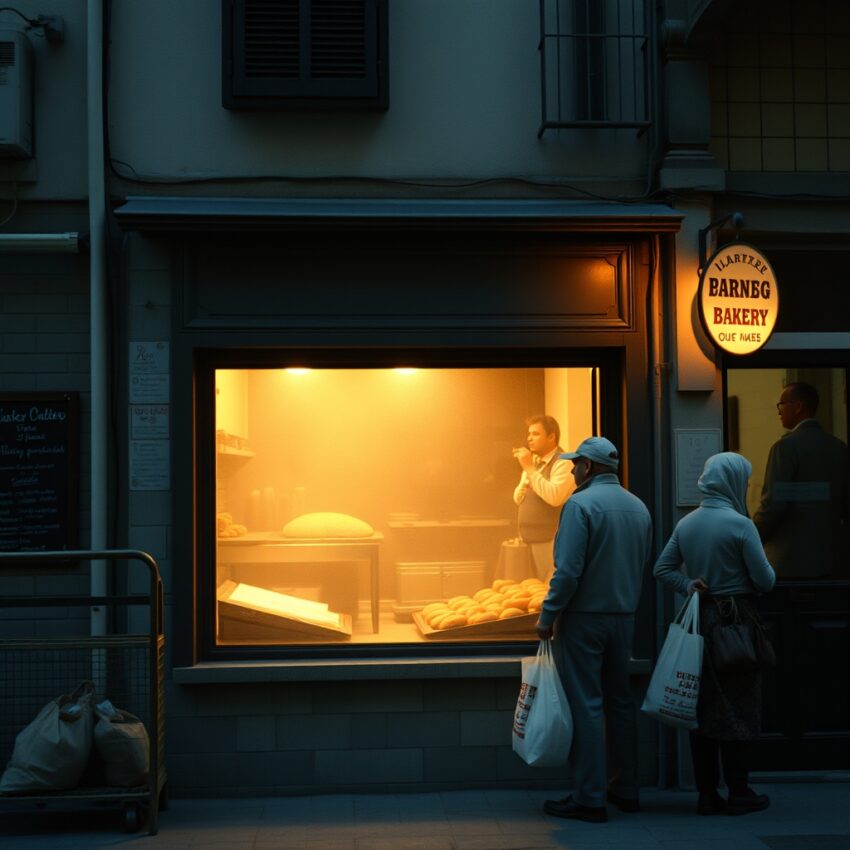
🇹🇷 Türkçe | mahalle fırını önündeki sıra neden eski şehir hayatının kalbinde yer etti cam buğusunun ardından sokakların hafızasına sinerek
Bir zamanlar sabahın en güvenilir işaretlerinden biri, mahalle fırınının önünde usul usul uzayan kuyruktu. Sokak henüz tam ısınmamışken, fırının buğulu camının ardında kızaran ekmeklerin sıcaklığı dışarıya kadar vurur, tezgâha çıkan pidelerin ve somunların kokusu köşe başını dönerdi. İnsanlar ellerinde file, gazete ya da küçük bozuk paralarla sıraya girer; bekleyiş yalnız ekmek almak için değil, güne mahalleyle birlikte başlamak için de yaşanırdı. Çocuklar annelerinin yanına ilişir, işe yetişecek olanlar saati kollarken kısa kısa sohbet eder, fırıncı kalfanın küreği taş tabana sürtüşünden gelen ses sokağın sabah ritmine karışırdı. Bu yüzden mahalle fırını önündeki sıra, eski şehir hayatının kalbinde yer etmiş bir ayrıntı olarak hatırlanır; çünkü orada karın doyurmaktan önce gündelik bağlılık görünür hale gelirdi.
Mahalle Kültürü bakımından fırın kuyruğu, sıradan bir alışveriş eyleminden çok daha fazlasıydı. Eski şehir yaşamında fırın, bakkal ve çeşme gibi yerler yalnız ihtiyaç giderilen duraklar değil; komşuluk dilinin kurulduğu, haberlerin dolaştığı ve günün nabzının tutulduğu ortak alanlardı. Ekmek beklerken biri nişan haberini verir, biri hasta komşuyu sorar, biri de çocukların okul durumundan söz ederdi. Ramazan günlerinde sıcak pide için uzayan kuyruklar, kandil akşamlarında mahalleye yayılan çörek kokusu ya da bayram sabahlarında erken saatten oluşan hareketlilik, fırının mevsimlere ve özel günlere göre değişen toplumsal önemini gösterirdi. Cam buğusunun ardından sokağın hafızasına sinen şey işte bu müştereklik duygusuydu. Fırın önündeki sıra, insanları birkaç dakikalığına aynı ritme sokar, aynı koku etrafında birbirine yaklaştırırdı.
Eski fırınların kendine özgü bir sahnesi vardı. İçeride un tozu, kızarmış hamur ve odun ateşinin kokusu birbirine karışır; dışarıda ise bekleyenler arasında görünmez bir sıra terbiyesi oluşurdu. Kim daha önce gelmişti, kimin çocuğu öne gönderilmişti, hangi teyze ağır filesiyle biraz dinlenmeliydi; bunların hepsi sert bir kuraldan çok mahalle vicdanıyla belirlenirdi. Sıra, şehir hayatında sabrın ve karşılıklı dikkat duygusunun küçük bir okuluydu. Fırıncıyla müşteri arasında da çoğu zaman yalnız ticari değil, tanıdık bir ilişki bulunurdu. Kimin ekmeği ince sevdiği, kimin çocuklara fazladan susamlı halka aldığı, kimin veresiye defterine yazdırdığı bilinirdi. Böylece fırın, yalnız sıcak ürün çıkaran bir yer değil; insanların birbirini okuduğu ve hafızada tuttuğu bir mahalle kurumuna dönüşürdü.
Mahalle fırını önündeki sıranın kalpte yer etmesinin bir başka nedeni, gündelik hayatın kokuyla kurduğu derin bağdır. Ekmek kokusu en sıradan anı bile unutulmaz kılabilir. Sabah serinliğinde duyulan taze simit, yeni çıkmış pide ya da tepside bekleyen börek kokusu, insanın yalnız karnına değil, çocukluğuna ve aidiyet duygusuna da seslenir. Bu yüzden yıllar sonra başka bir şehirde benzer bir kokuya rastlayan biri, bir anda kendi mahallesinin sokağına dönebilir. Sıranın bekleyişi de aslında bu kokunun etrafında anlam kazanır. İnsanlar sadece almak için değil, o ortak sabah duygusuna dahil olmak için de oradadır. Şehrin hızlı ve anonim hayatına karşı mahalle fırını, hâlâ yüzlerin tanındığı ve kokunun herkesi aynı hatıraya çağırdığı bir yerdir.
Bugün birçok şey paketli, hızlı ve kişisel ekrana göre düzenlenmiş durumda. Ama eski şehir hayatının kalbine yerleşen fırın kuyruğu, bize ortak zamanın ne kadar kıymetli olduğunu hatırlatır. O sıra, geceden sabaha taşınan açlığı giderdiği kadar, sokakla insan arasındaki bağı da tazelerdi. Camı buğulanmış fırının ardından görünen ustalar, kürekler, unlu tezgâhlar ve kapıda bekleyen insanlar; hepsi birlikte mahalle dediğimiz şeyin sıcak bir tanımını kurar. Bu yüzden o sahne bugün hâlâ unutulmazdır. Çünkü fırın önündeki sıra, eski şehir hayatında yalnız ekmeğin değil, selamın, sabrın, paylaşmanın ve birlikte uyanmanın da dağıtıldığı yerdir.
🇬🇧 English | Why Did the Queue in Front of the Neighborhood Bakery Take Its Place in the Heart of Old City Life While Sinking into the Memory of the Streets Behind Fogged Glass
There was a time when one of the most reliable signs of morning was the queue slowly lengthening in front of the neighborhood bakery. Before the street had fully warmed, the heat of loaves browning behind the bakery’s fogged window reached all the way outside, and the smell of bread and flatbreads turned the corner before the people themselves did. With shopping nets, newspapers, or small coins in hand, people took their places in line; the waiting was not only for bread, but also for beginning the day together with the neighborhood. Children leaned against their mothers, those hurrying to work watched the clock while speaking in brief exchanges, and the sound of the baker’s peel scraping the stone floor joined the rhythm of the street. That is why the queue before the neighborhood bakery is remembered as something rooted in the heart of old city life: because what became visible there was not merely hunger, but daily belonging.
From the perspective of neighborhood culture, the bakery queue was far more than a simple act of purchase. In old urban life, places such as the bakery, the grocer, and the public fountain were not only practical stops, but shared spaces where the language of neighborliness was formed, news circulated, and the pulse of the day was taken. While waiting for bread, one person mentioned an engagement, another asked after a sick neighbor, and someone else spoke about the children’s school matters. In Ramadan the lines for hot pide grew longer, on holy nights the smell of special pastries spread through the streets, and on feast mornings the movement began early, showing how the social importance of the bakery shifted with seasons and occasions. What sank into the memory of the streets behind fogged glass was precisely this feeling of common life. The queue placed people, for a few minutes, inside the same rhythm and around the same smell.
Old bakeries had a stage of their own. Inside, flour dust, browned dough, and the scent of wood fire mingled; outside, an unwritten etiquette formed among those waiting. Who had arrived first, whose child had been sent ahead, which elderly woman should be allowed to rest her heavy bag for a moment, all these were decided less by strict rules than by neighborhood conscience. The line was a small school of patience and mutual attentiveness within urban life. The relation between baker and customer was also rarely purely commercial. The baker knew who liked thinner loaves, who bought an extra sesame ring for the children, and who would put the purchase on the household notebook until later. In this way the bakery became not only a place where warm food emerged, but a neighborhood institution where people read and remembered one another.
Another reason the bakery queue settled so deeply in the heart is the strong bond that daily life forms with smell. The scent of bread can make even the simplest moment unforgettable. Fresh simit in the morning chill, newly baked pide, or the smell of pastry resting on a tray speaks not only to hunger, but to childhood and to belonging. That is why someone encountering a similar smell in another city years later may suddenly return to the street of their own neighborhood. The waiting in line gains meaning around that shared smell. People are there not only to obtain something, but to be included in a common morning feeling. Against the speed and anonymity of the modern city, the neighborhood bakery remained a place where faces were still recognized and where a familiar scent called everyone into the same memory.
Today many things arrive packaged, hurried, and arranged according to private screens. Yet the bakery queue that settled into the heart of old city life reminds us how valuable shared time once was. That line relieved the hunger carried from night into morning, but it also refreshed the bond between people and street. The bakers seen behind the fogged window, the peels, floury counters, and figures waiting at the door together defined the warm meaning of what we call a neighborhood. That is why the scene remains unforgettable. In front of the bakery, old city life distributed not only bread, but greetings, patience, sharing, and the feeling of waking together.
🇧🇷 Português (Brasil) | Por Que a Fila em Frente à Padaria do Bairro Ocupou um Lugar no Coração da Antiga Vida Urbana ao se Entranhar na Memória das Ruas por Trás do Vidro Embaçado
Houve um tempo em que um dos sinais mais confiáveis da manhã era a fila que crescia devagar diante da padaria do bairro. Antes mesmo de a rua aquecer por completo, o calor dos pães dourando atrás do vidro embaçado chegava até fora, e o cheiro dos pães e das pidés recém-saídas do forno virava a esquina antes das próprias pessoas. Com sacolas de rede, jornais ou moedas miúdas nas mãos, todos tomavam o seu lugar; a espera não servia apenas para comprar pão, mas também para começar o dia junto com o bairro. As crianças se encostavam nas mães, quem precisava correr para o trabalho olhava o relógio enquanto trocava poucas palavras, e o som da pá do padeiro raspando a pedra se misturava ao ritmo da rua. É por isso que a fila da padaria do bairro ficou guardada no coração da antiga vida urbana: porque ali se tornava visível não só a fome, mas o pertencimento cotidiano.
Do ponto de vista da cultura de bairro, a fila da padaria era muito mais do que um gesto simples de compra. Na antiga vida urbana, lugares como a padaria, o armazém e a fonte pública não eram apenas paradas de necessidade, mas espaços comuns onde a linguagem da vizinhança se formava, as notícias circulavam e o pulso do dia era sentido. Enquanto esperava pelo pão, uma pessoa anunciava um noivado, outra perguntava pelo vizinho doente, outra comentava a escola das crianças. No Ramadã as filas pela pide quente se alongavam, nas noites sagradas o cheiro de quitutes se espalhava, e nas manhãs de festa o movimento começava cedo, mostrando como a importância social da padaria mudava com as estações e as datas especiais. O que se entranhava na memória das ruas por trás do vidro embaçado era justamente esse sentido de vida partilhada. A fila colocava todos, ainda que por alguns minutos, dentro do mesmo ritmo e em torno do mesmo aroma.
As padarias antigas tinham um palco próprio. Lá dentro, poeira de farinha, massa dourada e cheiro de forno a lenha se misturavam; do lado de fora, uma etiqueta invisível surgia entre os que aguardavam. Quem havia chegado primeiro, qual criança fora mandada à frente, que senhora merecia descansar um pouco a sacola pesada, tudo isso era decidido menos por regras duras e mais pela consciência do bairro. A fila era uma pequena escola de paciência e atenção mútua na vida urbana. A relação entre padeiro e cliente também raramente era apenas comercial. O padeiro sabia quem preferia o pão mais fino, quem levava um simit a mais para as crianças e quem anotava a compra no caderno para pagar depois. Assim, a padaria se tornava não só um lugar de comida quente, mas uma instituição do bairro onde as pessoas se reconheciam e se guardavam na memória.
Outro motivo pelo qual a fila da padaria ocupa um lugar tão fundo no coração é a ligação profunda que o cotidiano constrói com o cheiro. O perfume do pão é capaz de tornar inesquecível até o instante mais simples. O simit fresco no ar frio da manhã, a pide recém-assada ou o cheiro do folhado esperando na bandeja falam não apenas ao estômago, mas também à infância e ao sentimento de pertencimento. Por isso, anos mais tarde, ao encontrar um aroma parecido em outra cidade, alguém pode retornar de repente à rua do próprio bairro. A espera ganha sentido em torno desse cheiro comum. As pessoas não estão ali apenas para levar algo, mas para participar daquela sensação compartilhada de manhã. Contra a rapidez e o anonimato da cidade moderna, a padaria do bairro continuava sendo um lugar onde os rostos ainda eram reconhecidos e onde um aroma conhecido chamava todos para a mesma lembrança.
Hoje muita coisa chega embalada, apressada e organizada em função de telas privadas. Ainda assim, a fila da padaria instalada no coração da antiga vida urbana nos lembra o valor do tempo comum. Aquela fila matava a fome trazida da noite para a manhã, mas também renovava o vínculo entre a rua e as pessoas. Os padeiros vistos atrás do vidro embaçado, as pás, os balcões cobertos de farinha e as figuras esperando na porta construíam juntos a definição calorosa daquilo que chamamos de bairro. Por isso a cena continua inesquecível. Em frente à padaria, a antiga vida urbana distribuía não só pão, mas também cumprimento, paciência, partilha e a sensação de acordar junto.