🇹🇷 Türkçe | ahşap dikiş kutusu ve sandıkların dibinden çıkan ince hikâyesi: neden bugün yeniden ilgi görüyor
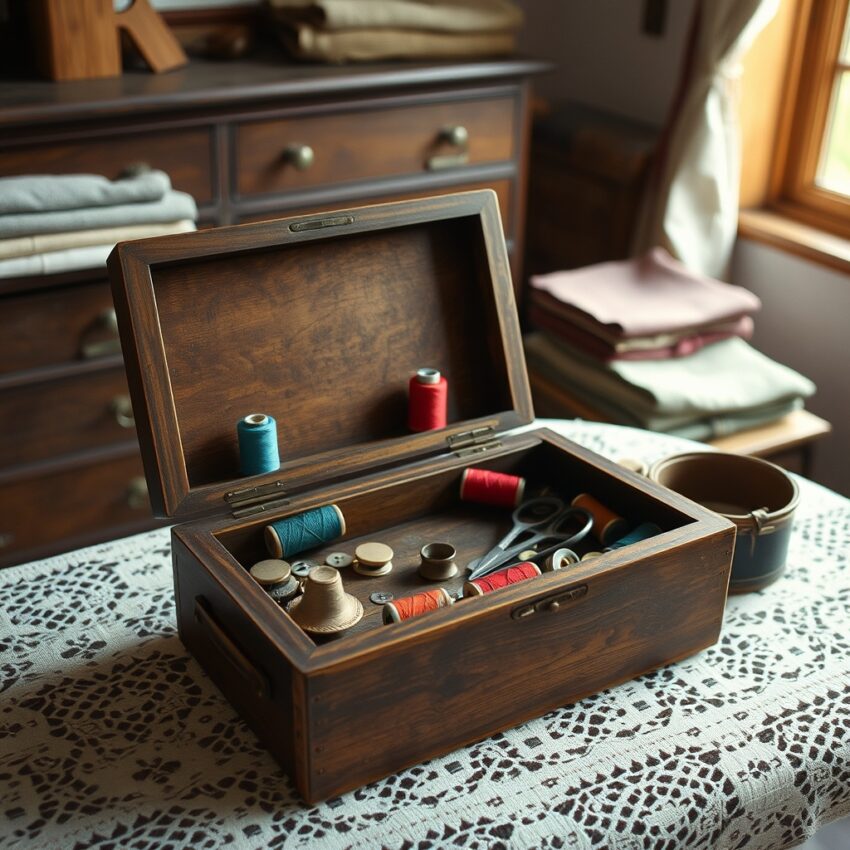
Bir zamanlar evlerin en sessiz köşelerinde, ceviz ya da çam kokusunu içine çekmiş küçük ahşap dikiş kutuları dururdu. Kimi zaman bir konsol çekmecesinin içinde, kimi zaman sandığın dibinde katlanmış örtülerin yanında saklanırlardı. Kapakları açıldığında içlerinden renk renk iplik makaraları, metal yüksükler, birkaç güvenlik iğnesi, düğme zarfları ve yıllar içinde hafifçe paslanmış küçük makaslar çıkardı. Bu kutular sadece ev işlerinin pratik yardımcıları değildi; ailenin gündelik düzenine, sabrına ve el emeğine dair ince bir hikâye taşırlardı. Ahşap yüzeylerine sinmiş çizikler, kapağın iç tarafına iliştirilmiş minik notlar ve bazen de içine karışmış lavanta kokusu, onları sıradan bir eşya olmaktan çıkarırdı. Bugün yeniden ilgi görmelerinin nedeni de tam burada saklıdır: geçmişin sade ama özenli yaşam biçimini elde tutulur hale getirmeleri.
Obje Hikayeleri açısından bakıldığında ahşap dikiş kutusu, tasarım ile kullanımın en doğal biçimde birleştiği eşyalardan biridir. Gösterişli olmadan estetik olan, gündelik hayata hizmet ederken aynı zamanda bir evin ruhunu taşıyan nesnelerdendir. Eski evlerde sökük dikmek, düğme tutturmak ya da çocuk kıyafetlerini elde onarmak büyük bir tören sayılmazdı; ama o küçük onarımlar sayesinde eşyaların ve giysilerin ömrü uzardı. Dikiş kutusu da bu görünmeyen emeğin merkeziydi. Her bölümünün ayrı bir düzeni olurdu: bir gözde beyaz düğmeler, bir başka bölmede koyu iplikler, en küçük köşede iğneler ve yüksük. Kutunun içindeki düzen, aslında evin kendi iç ritmini yansıtırdı. Bu yüzden bir dikiş kutusuna bakmak, çoğu zaman geçmiş bir ev düzenine bakmak demektir.
Sandıkların dibinden çıktığında ilgi uyandırmasının bir nedeni de taşıdığı kuşaklar arası bağdır. Bir annenin, teyzenin ya da anneannenin elinden kalmış dikiş kutusu, yalnız nesne olarak değil, davranış biçimi olarak da miras bırakılır. Eksileni hemen atmak yerine tamir etmeyi düşünmek, kumaşı tanımak, düğme saklamak, işe yarayacak küçük parçaları “bir gün lazım olur” diye ayırmak; bu kutuların çevresinde öğrenilen alışkanlıklardır. Günümüzün hızlı tüketim düzeninde bu alışkanlıklar neredeyse ayrı bir zarafet gibi görünüyor. İnsanlar şimdi ahşap dikiş kutularına yalnız vintage bir obje olarak değil, daha dikkatli ve daha yavaş bir yaşamın sembolü olarak da ilgi duyuyor. Çünkü bu kutular, üretmenin ve korumanın birbirinden kopuk olmadığını hatırlatıyor.
Kutunun yeniden sevilmesinde elbette görsel hafızanın da payı var. Cilası zamanla matlaşmış ahşap yüzey, metal kilidin hafif kararması, içerideki renkli makaraların birbirine karışan tonları; hepsi bugünün steril kutularından çok daha insani bir görünüm sunuyor. Üstelik bu nesne yalnız geçmişe ait değil; bugünde yeni anlamlar da kazanıyor. Kimileri onu yeniden dikiş için kullanıyor, kimileri takı kutusuna dönüştürüyor, kimileri çalışma masasının üstünde anı nesnesi olarak tutuyor. Ama hangi amaçla saklanırsa saklansın, onun asıl gücü hâlâ aynı yerde: küçük emeklerin saygınlığını görünür kılmasında. Ahşap dikiş kutusu, ev içi hayatın çoğu zaman adı konmadan sürdürülen dikkatini bir nesnenin içinde topluyor.
Bugün bu ince hikâyenin yeniden ilgi görmesi, yalnız nostalji modasının sonucu değil. İnsanların kalıcı, dokunulabilir ve hikâyesi olan nesnelere yeniden yönelmesinin de işareti. Sandığın dibinden çıkan bir dikiş kutusu, bir dönemin sesini büyük cümlelerle değil, küçük ayrıntılarla bugüne getiriyor. Bir düğmenin yıllarca saklanması, bir eteğin yeniden dikilmesi, bir çocuğun sökülen kol ağzının sabırla onarılması gibi gündelik sahneler; o kutunun içinde sessizce birikiyor. Belki de bu yüzden bugün hâlâ bir ahşap dikiş kutusuna bakan insan, yalnız eski bir eşya görmüyor. Bir evin terbiyesini, el emeğinin vakarını ve kaybolmaması gereken yavaşlığı da görüyor.
🇬🇧 English | The Delicate Story of the Wooden Sewing Box Emerging from the Bottom of Old Chests: Why Is It Drawing Interest Again Today?
There was a time when small wooden sewing boxes rested in the quietest corners of the home, carrying within them the scent of walnut or pine. Sometimes they were kept in the drawer of a sideboard, sometimes at the bottom of a chest beside folded linens. When their lids were opened, out came colorful spools of thread, metal thimbles, safety pins, little envelopes of buttons, and scissors faintly darkened by the passing years. These boxes were not merely practical helpers for household tasks; they carried a delicate story about the order, patience, and handwork of family life. The scratches on their wooden surfaces, the tiny notes tucked into the lid, and sometimes even a trace of lavender inside made them more than ordinary objects. That is where the renewed interest in them begins: they make a simple yet attentive way of life tangible again.
From the perspective of object stories, the wooden sewing box is one of those rare household items in which design and use meet naturally. It is aesthetic without being showy, and while serving daily life it also carries the spirit of a home. In older houses, mending a tear, replacing a button, or repairing a child’s clothes by hand was not regarded as a ceremony. Yet through those small repairs, garments and fabrics lived longer. The sewing box stood at the center of that invisible labor. Each compartment had its own order: white buttons in one corner, dark threads in another, needles and thimbles in the smallest space. The arrangement inside the box reflected the inner rhythm of the house itself. To look at a sewing box, then, is often to look at the order of a vanished domestic world.
One reason it attracts attention when found at the bottom of an old chest is the intergenerational bond it carries. A sewing box left by a mother, an aunt, or a grandmother is inherited not only as an object, but as a way of behaving. Thinking first of mending instead of discarding, recognizing the feel of fabric, saving buttons, and putting aside useful small pieces for “someday” are habits learned around such boxes. In today’s fast culture of consumption, those habits appear almost like a separate form of grace. People are drawn to wooden sewing boxes now not only as vintage objects, but as symbols of a slower and more attentive life. These boxes remind us that making and preserving were once inseparable parts of the same domestic ethic.
Visual memory also plays a part in their return. The varnish dulled by time, the slight darkening of the metal clasp, and the mingled tones of the colorful spools inside create a far more human image than the sterile containers of the present. Yet the object is not confined to the past; it gains new meanings today as well. Some use it again for sewing, some turn it into a jewelry box, and some keep it on a desk as a memory object. But whatever its new purpose, its true strength remains where it has always been: in making the dignity of small labors visible. The wooden sewing box gathers within itself the careful attention of household life, much of which used to continue without ever being named.
The fact that this delicate story is drawing interest again today is not merely the result of a fashion for nostalgia. It is also a sign that people are turning back toward objects that are durable, touchable, and full of meaning. A sewing box rising from the bottom of a chest brings the voice of an era into the present not through grand declarations, but through small details. A button kept for years, a skirt sewn again, the cuff of a child’s sweater patiently repaired: all these scenes accumulate silently inside that box. Perhaps that is why a person looking at a wooden sewing box today does not see only an old object. What appears there is also the discipline of a home, the dignity of handwork, and a slowness that deserves not to disappear.
🇧🇷 Português (Brasil) | A Delicada História da Caixa de Costura de Madeira que Surge do Fundo dos Baús: Por Que Volta a Despertar Interesse Hoje?
Houve um tempo em que pequenas caixas de costura de madeira descansavam nos cantos mais silenciosos da casa, guardando em si o cheiro de nogueira ou pinho. Às vezes ficavam na gaveta do aparador, às vezes no fundo do baú, ao lado de toalhas e tecidos dobrados. Quando a tampa se abria, apareciam carretéis coloridos, dedais de metal, alguns alfinetes de segurança, envelopes com botões e tesourinhas levemente escurecidas pelo tempo. Essas caixas não eram apenas auxiliares práticos das tarefas domésticas; carregavam uma história delicada sobre a ordem, a paciência e o trabalho manual da vida familiar. Os riscos sobre a madeira, os bilhetinhos presos na parte interna da tampa e, às vezes, até um resto de cheiro de lavanda faziam delas algo maior do que um simples objeto. É exatamente aí que começa o interesse renovado por elas: tornam palpável outra vez uma forma de vida simples e cuidadosa.
No campo das histórias dos objetos, a caixa de costura de madeira é uma daquelas peças em que desenho e uso se encontram com naturalidade. Ela é bonita sem ser exibida e, ao servir ao cotidiano, também carrega o espírito da casa. Nas casas antigas, costurar uma barra, prender um botão ou reparar a roupa de uma criança à mão não era visto como ritual. Ainda assim, eram esses pequenos consertos que prolongavam a vida dos tecidos e das roupas. A caixa de costura ficava no centro desse trabalho invisível. Cada compartimento tinha a sua lógica: botões brancos num lado, linhas escuras em outro, agulhas e dedais no menor espaço. A organização do interior espelhava o ritmo interno da própria casa. Olhar para uma caixa dessas é, muitas vezes, olhar para a ordem de um mundo doméstico que quase desapareceu.
Uma das razões pelas quais ela chama atenção quando surge do fundo de um baú é o vínculo entre gerações que carrega. A caixa deixada por uma mãe, uma tia ou uma avó não é herdada apenas como objeto, mas como maneira de agir. Pensar primeiro em consertar em vez de descartar, reconhecer o toque do tecido, guardar botões e separar pequenas peças úteis para “um dia” são hábitos aprendidos ao redor dela. Num presente marcado pelo consumo rápido, esses hábitos parecem quase uma forma especial de delicadeza. Hoje muita gente se interessa pela caixa de costura de madeira não só como peça vintage, mas como símbolo de uma vida mais lenta e mais atenta. Ela recorda que produzir e preservar já fizeram parte da mesma ética doméstica.
A memória visual também participa desse retorno. O verniz fosco pelo tempo, o fecho de metal ligeiramente escurecido e os tons dos carretéis coloridos misturados lá dentro oferecem uma imagem muito mais humana do que as caixas estéreis de hoje. E o objeto não pertence apenas ao passado; ele ganha novos sentidos no presente. Alguns voltam a usá-lo para costura, outros o transformam em porta-joias, outros ainda o mantêm sobre a mesa como objeto de memória. Mas qualquer que seja o novo uso, sua força verdadeira continua no mesmo lugar: tornar visível a dignidade dos pequenos trabalhos. A caixa de costura de madeira reúne em si a atenção doméstica que tantas vezes seguia existindo sem receber nome.
O fato de essa história delicada voltar a despertar interesse hoje não se explica apenas pela moda da nostalgia. É também sinal de que as pessoas estão voltando a procurar objetos duráveis, tocáveis e cheios de sentido. Uma caixa de costura retirada do fundo do baú traz a voz de uma época para o presente não por meio de grandes frases, mas por detalhes mínimos. Um botão guardado durante anos, uma saia costurada de novo, a manga desfeita do casaco de uma criança reparada com paciência: todas essas cenas se acumulam em silêncio dentro daquela caixa. Talvez por isso, quem olha hoje para uma caixa de costura de madeira não veja apenas uma peça antiga. Vê também a disciplina da casa, a dignidade do trabalho manual e uma lentidão que não deveria desaparecer.