🇹🇷 Türkçe | Hatıraların tozlu raflarında sahaf çarşılarının meraklı ruhları topladığı öğleden sonralar: bugüne hangi sessiz alışkanlıkları bıraktı çiçek kokulu sokaklar
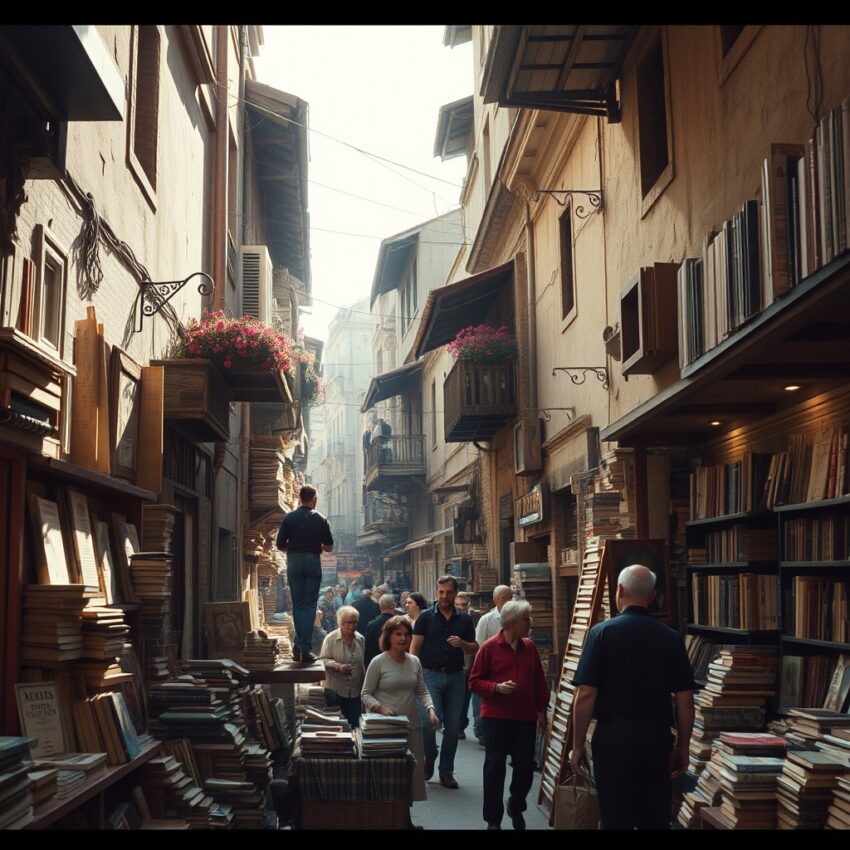
Bir zamanlar öğleden sonraları şehrin başka hiçbir saatine benzemezdi. Güneş, taş kaldırımların üstüne eğik düşer; çiçekçilerin önünden yayılan karanfil, yasemin ve ıslak toprak kokusu sahaf çarşısının girişinde kitap tozuna karışırdı. Eski ciltlerin sırtları, yer yer silinmiş harfleriyle raflarda dizili dururken, dükkânların önünde yavaşlayan adımlar sanki günlük hayatın aceleciliğine küçük bir itiraz olurdu. Sahaf çarşısına giren kişi yalnız kitap aramazdı; kendi hafızasına benzeyen bir şeyin izini de sürerdi. Bir sayfanın arasından çıkan eski bir kartpostal, kenarına not düşülmüş bir şiir kitabı ya da ön kapağı gevşemiş bir ansiklopedi, geçmişin hâlâ elde tutulabildiğini hissettirirdi. O yüzden bu çarşıların öğleden sonraları, sessiz ama derin bir merakın toplandığı zaman parçaları olarak hatırlanır.
Zamanın İzinde bakıldığında sahaf çarşıları, yalnız ikinci el eşya dolaşımının değil, aynı zamanda kültürel hafızanın mahalle ölçeğinde korunmasının da mekânıydı. Yeni kitapçıların vitrini bugünü gösterirken, sahafın rafları zamanın üst üste yığılmış katmanlarını açardı. Eski ders kitapları, sararmış mecmualar, takvim yaprakları, şehir rehberleri ve artık basılmayan romanlar, bir toplumun neyi okuduğunu, neyi sakladığını, neyi unutmaya kıyamadığını anlatırdı. Bu dükkânlarda alışveriş çoğu zaman bir pazarlık ya da kısa sohbetle tamamlanmaz; kitapların hangi evlerden çıktığı, kimlerin elinden geçtiği, hangi raflarda yıllarca beklediği de anlatılırdı. Sahaf, bu anlamda yalnız satıcı değil; şehrin küçük tarihçisi, unutulmuş ayrıntıların saklayıcısıydı.
Bugüne kalan sessiz alışkanlıkların başında, bir nesneye hızla tüketilecek eşya gibi değil, iz taşıyan bir arkadaş gibi yaklaşmak gelir. Sahaf çarşılarında büyüyen ya da oralara yolu düşen kuşaklar, kitabın yalnız içeriğine değil, maddi varlığına da dikkat etmeyi öğrendi. Kapakların yıpranmış köşelerine, sayfa arasına bırakılmış çiçeklere, eski sahiplerin attığı imzalara bakmak; bir şeyin geçmişini düşünerek ona dokunmak demekti. Belki bugün ikinci el kitaplara, plaklara, eski defterlere gösterilen yeni ilginin kökünde de bu alışkanlık vardır. Çünkü sahaf kültürü, kusursuz ve pırıl pırıl olana değil; kullanılmış, yaşanmış, hatıra toplamış olana değer vermeyi öğretirdi. Bu bakış, sadece kitaplara değil, ev içindeki eşyalara, aileden kalan mektuplara ve hatta günlük konuşmanın tonuna bile sinen bir incelik bıraktı.
Çiçek kokulu sokaklar benzetmesi de tam burada anlam kazanır. Sahaf çarşısına giden yol çoğu zaman dar bir pasajdan, gölgeli bir avludan ya da küçük esnafın yan yana dizildiği bir sokaktan geçerdi. Bir yanda dikiş malzemeleri satan dükkân, öte yanda çerçeveci, biraz ileride gramofon iğnesi arayan bir müşteri görülürdü. Bu çeşitlilik, kitabı hayatın geri kalanından ayırmaz; tam tersine gündelik hayatın dokusuna yerleştirirdi. Eve dönünce bulunan kitabın ilk sayfasına tarih atmak, alınan kitabı gazeteye sarıp özenle taşımak, bir arkadaşa “bunu görünce seni düşündüm” diyerek ödünç vermek gibi küçük davranışlar, bugün hâlâ yaşayan sessiz alışkanlıklardır. Yavaş seçmek, dikkatle saklamak, hikâyesi olan nesneleri birbirine anlatmak da bu eski öğleden sonraların mirasıdır.
Bugün dijital kataloglar ve hızlı siparişler hayatı kolaylaştırsa da sahaf çarşılarının meraklı ruhları topladığı o öğleden sonralar hâlâ hafızada ince bir serinlik bırakır. Özlenen şey yalnız eski kitapların kokusu değildir. Asıl özlenen, bir şey bulmanın biraz tesadüfe, biraz sabra, biraz da sokakta dolaşmaya bağlı olduğu hayat duygusudur. Tozlu rafların önünde geçirilen zaman, insanı sadece geçmişe götürmez; bugüne nasıl bakması gerektiğini de öğretir. Belki bu yüzden bugün hâlâ pek çok kişi bir kitabı satın almadan önce kapağına, kâğıdına, geçmişten kalmış izlerine dikkat eder. Sahaf çarşıları bize sessizce şunu bıraktı: hayatın en kıymetli parçaları çoğu zaman yeni değil, anlam yüklü olandır; ve bazı sokaklar yalnız yürünmez, hatırlanır.
🇬🇧 English | The Afternoons When Secondhand Book Bazaars Gathered Curious Souls on the Dusty Shelves of Memory: Which Quiet Habits Did They Leave to Today in Flower-Scented Streets?
There was a time when afternoons did not resemble any other hour of the city. Sunlight fell at an angle over the stone pavement, and the scent of carnations, jasmine, and damp soil drifting from the florists mixed with the dry dust of books at the entrance to the secondhand book bazaar. The spines of old volumes stood in rows, their faded lettering half erased by years, and the slowing footsteps in front of the shops felt like a small objection to the haste of daily life. Whoever entered the bazaar was not merely looking for a book, but for the trace of something that resembled memory itself. A postcard left between pages, a volume of poems marked in the margin, or an encyclopedia with a loosened cover made the past feel still touchable. That is why the afternoons of these bazaars are remembered as hours in which a quiet yet deep curiosity gathered and lingered.
Seen along the trail of time, secondhand book bazaars were not only places where used goods circulated, but also places where cultural memory was protected at neighborhood scale. The windows of new bookstores showed the present, while the shelves of the secondhand dealer opened the layered accumulation of time. Old schoolbooks, yellowed magazines, calendar pages, city guides, and novels no longer in print revealed what a society had read, what it had kept, and what it could not bear to forget. In these shops, a purchase rarely ended with money changing hands or a brief bargain. Stories were told about which homes the books had come from, whose hands had once turned their pages, and on what shelves they had waited for years. In that sense, the bookseller was not merely a merchant, but a modest historian of the city, a keeper of forgotten details.
Among the quiet habits carried into the present, one of the strongest is the habit of approaching an object not as something to be consumed quickly, but as a companion bearing traces. Generations who grew up with these bazaars learned to notice not only the content of a book, but also its physical life. Looking at worn corners, dried flowers left between pages, or signatures from former owners meant touching an object while imagining its journey. Perhaps the renewed interest in secondhand books, records, and old notebooks today also rises from that habit. The culture of the secondhand bazaar taught people to value not what was flawless and shining, but what had been used, lived with, and filled with memory. That sensibility extended beyond books into household objects, inherited letters, and even the tone with which people spoke of the past.
The image of flower-scented streets becomes meaningful here. The road to the book bazaar often passed through a narrow arcade, a shaded courtyard, or a lane where small tradesmen stood door to door. On one side there might be a haberdashery, on the other a framer, and a little further on someone asking for a gramophone needle. This mixture did not separate books from the rest of life; on the contrary, it placed them inside the fabric of the everyday. Writing the date on the first page after returning home, wrapping a newly found volume in newspaper to carry it carefully, or lending it to a friend with the words, “I thought of you when I saw this,” are quiet habits that still survive. Choosing slowly, keeping things attentively, and telling one another the stories of meaningful objects all descend from those old afternoons.
Today digital catalogs and rapid deliveries make life easier, yet the afternoons when secondhand book bazaars gathered curious spirits still leave a cool and delicate mark in memory. What is missed is not only the smell of old books. More deeply, it is the feeling of a life in which finding something depended a little on chance, a little on patience, and a little on walking through the city. Time spent before dusty shelves did not only lead people toward the past; it also taught them how to look at the present. Perhaps that is why many people still examine a book’s cover, paper, and inherited traces before deciding to take it home. Secondhand book bazaars quietly left us this lesson: the most valuable parts of life are often not the newest ones, but the ones laden with meaning, and some streets are not merely walked through, but remembered.
🇧🇷 Português (Brasil) | As Tardes em que os Bazares de Sebos Reuniam Almas Curiosas nas Prateleiras Embaçadas da Memória: Que Hábitos Silenciosos Deixaram para Hoje nas Ruas com Cheiro de Flores?
Houve um tempo em que as tardes não se pareciam com nenhuma outra hora da cidade. A luz do sol caía inclinada sobre as pedras da calçada, e o perfume de cravos, jasmins e terra úmida que vinha das floriculturas se misturava, na entrada do sebo, ao pó seco dos livros. As lombadas dos volumes antigos ficavam enfileiradas, com letras já gastas pelo tempo, e os passos que diminuíam diante das lojas pareciam um pequeno protesto contra a pressa da vida cotidiana. Quem entrava naquele bazar não procurava apenas um livro; procurava também o rastro de algo parecido com a própria memória. Um cartão-postal esquecido entre páginas, um livro de poemas anotado à margem ou uma enciclopédia com a capa frouxa faziam o passado parecer ainda tocável. Por isso, as tardes desses lugares são lembradas como horas em que uma curiosidade silenciosa, mas profunda, se reunia e permanecia no ar.
No rastro do tempo, os sebos não eram apenas lugares de circulação de objetos usados, mas também espaços onde a memória cultural era preservada em escala de bairro. As vitrines das livrarias novas mostravam o presente; as prateleiras do sebo, porém, abriam as camadas acumuladas do tempo. Livros escolares antigos, revistas amareladas, folhas de calendário, guias da cidade e romances já fora de catálogo revelavam o que uma sociedade leu, o que guardou e o que não conseguiu esquecer. Nessas lojas, uma compra raramente terminava apenas com o pagamento ou com uma breve pechincha. Também se contava de que casas aqueles livros tinham saído, por quais mãos haviam passado e em que estantes tinham esperado durante anos. Nesse sentido, o livreiro de sebo não era só vendedor, mas um pequeno historiador da cidade, um guardião de detalhes esquecidos.
Entre os hábitos silenciosos que chegaram até hoje, um dos mais fortes é o de olhar para um objeto não como algo a ser consumido depressa, mas como um companheiro cheio de marcas. As gerações que cresceram com esses bazares aprenderam a notar não só o conteúdo do livro, mas também sua vida material. Observar cantos gastos, flores secas deixadas entre páginas ou assinaturas de antigos donos significava tocar o objeto imaginando a sua travessia. Talvez o renovado interesse atual por livros usados, discos e cadernos antigos venha justamente daí. A cultura do sebo ensinava a valorizar não o que era impecável e brilhante, mas o que tinha sido usado, vivido e carregado de memória. Essa sensibilidade se estendia aos objetos da casa, às cartas herdadas e até ao modo delicado com que se falava do passado.
A imagem das ruas com cheiro de flores ganha sentido exatamente aí. O caminho até o sebo quase sempre passava por uma galeria estreita, um pátio sombreado ou uma rua onde pequenos comerciantes ficavam lado a lado. De um lado podia haver uma loja de armarinho, do outro uma molduraria e, um pouco adiante, alguém procurando uma agulha para gramofone. Essa mistura não separava os livros do resto da vida; pelo contrário, colocava-os dentro da textura do cotidiano. Escrever a data na primeira página ao voltar para casa, embrulhar o livro achado em jornal para carregá-lo com cuidado ou emprestá-lo a um amigo dizendo “lembrei de você quando vi este aqui” são hábitos silenciosos que continuam vivos. Escolher devagar, guardar com atenção e contar aos outros a história dos objetos significativos também descende daquelas tardes antigas.
Hoje os catálogos digitais e as entregas rápidas facilitam a vida, mas as tardes em que os sebos reuniam espíritos curiosos ainda deixam na memória uma leve frescura. O que se sente falta não é apenas o cheiro dos livros velhos. O que realmente faz falta é a sensação de uma vida em que encontrar alguma coisa dependia um pouco do acaso, um pouco da paciência e um pouco do ato de caminhar pela cidade. O tempo passado diante das prateleiras empoeiradas não levava apenas ao passado; ensinava também como olhar para o presente. Talvez por isso muita gente ainda examine a capa, o papel e os vestígios herdados de um livro antes de levá-lo para casa. Os sebos nos deixaram, em silêncio, esta lição: as partes mais valiosas da vida quase nunca são as mais novas, mas as mais carregadas de sentido, e certas ruas não são apenas percorridas, são lembradas.