🇹🇷 Türkçe | kalabalık aile sofralarının unutulmayan tadı ile hatırlanan sacda pişen gözleme: bir dönemin paylaşma kültürünü nasıl taşıyor
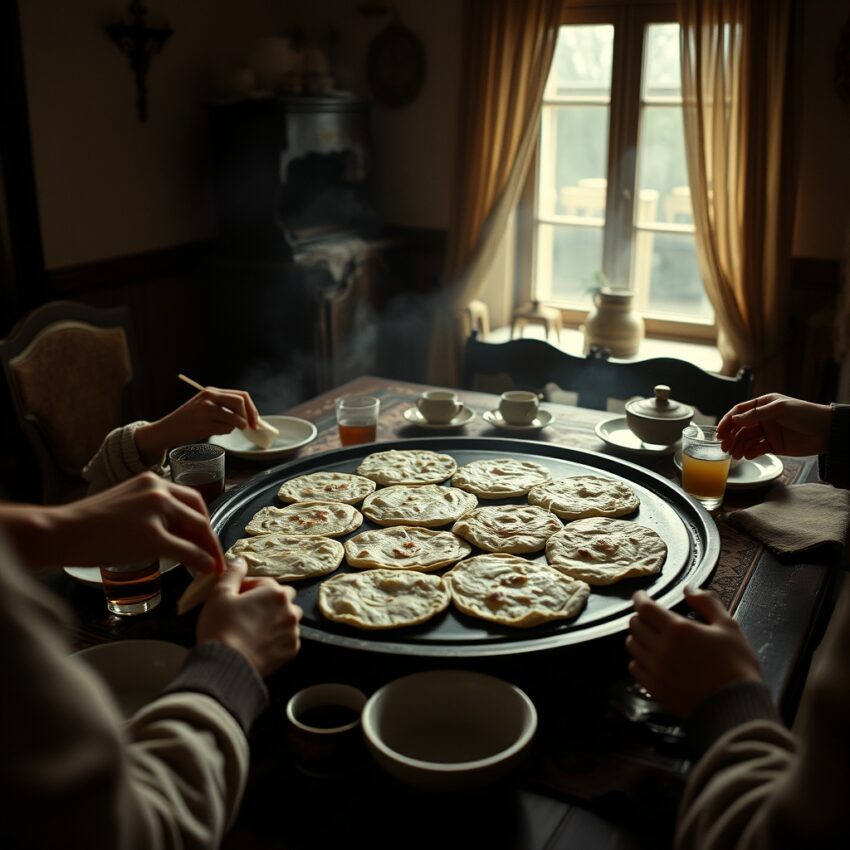
Bir zamanlar kalabalık aile sofralarının en sıcak işaretlerinden biri, sacın üstünde usul usul pişen gözlemenin kokusuydu. Hamur açılırken masa etrafında konuşmalar sürer, iç harcı hazırlanırken biri maydanozu ayıklar, biri peyniri ezer, biri çocukların sabırsızlığını yatıştırmaya çalışırdı. Gözleme yalnız mutfakta hazırlanan bir yiyecek değildi; sofraya gelene kadar birçok elin, sesin ve küçük emeğin içinden geçerdi. Sacın üzerine bırakılan her yufka, önce kabarır, sonra çevrilir, tereyağı ya da sade yağla hafifçe parlatılırdı. O anda evin içi yalnız yemek kokmazdı; birlikte olmanın, sıranın, bekleyişin ve paylaşmanın kokusu da ortalığa yayılırdı. Bu yüzden gözleme dendiğinde birçok insanın aklına yalnız bir tat değil, birlikte geçirilen saatlerin sıcaklığı gelir.
Damak Hafızası açısından sacda pişen gözlemenin yeri, onun tek başına yenilen bir şey olmamasından kaynaklanır. Gözleme çoğu zaman geniş aile buluşmalarında, köy ziyaretlerinde, bayram sabahlarında ya da hafta sonu toplanmalarında ortaya çıkar. Çünkü bu yiyecek hazırlanışıyla da yenilişiyle de ortaklık ister. Hamurun dinlenmesi, bezelerin açılması, iç malzemenin yerleştirilmesi, sacın ısısının ayarlanması ve pişen parçaların sıcak sıcak pay edilmesi, tek kişilik bir tempoya sığmaz. Birinin yaptığı işi öteki tamamlar, biri pişirirken biri servis eder, biri çay doldurur. Böylece gözleme sofraya geldiğinde yalnız karın doyurmaz; insanlar arasındaki emeğin ve yakınlığın görünür hâline dönüşür.
Bu paylaşma kültürünün unutulmayan yanı, gözlemenin etrafında kurulan gündelik işbirliğidir. Anneanneler ya da büyük teyzeler hamuru en iyi kıvamda yoğurur, gençler oklavayla açmayı öğrenir, çocuklara kenardan küçük parçalar koparılarak sabır telkin edilir. Sac başında bekleyen kişinin yüzüne vuran sıcaklık, içeri taşınan tabakların hızı ve sofrada “önce sen al” diye uzatılan parçalar, bir dönemin aile içi terbiyesini de anlatır. Gözleme burada yalnız bir yemek değil, kuşaktan kuşağa aktarılan bir davranış biçimidir. Paylaşma, acele etmeden sırayı gözetme, emek verenin kıymetini bilme ve sofrayı birlikte tamamlama gibi değerler onun çevresinde görünür olur.
Kalabalık aile sofralarının tadı da biraz bu yüzden unutulmazdır. Çünkü o sofralarda lezzet yalnız malzemeden değil, ortamdan doğar. Sacdan yeni inen gözlemenin buharı yükselirken, çay bardakları tazelenir, ayran sürahisi masada dolaşır, biri çocukluğundan bir hikâye anlatır, biri “eskiden daha çok yapardık” der. Yemeğin sıcaklığı konuşmanın sıcaklığına karışır. Gözleme, sofrayı yalnız dolduran bir hamur işi değil; aile hafızasını diri tutan bir bahanedir. Özellikle kırsal kökenli ailelerde ya da yazlık toplanmalarda, bu yiyecek etrafında kurulan düzen eski paylaşma kültürünün en canlı kalıntılarından biri olarak varlığını sürdürür. Bu yüzden gözleme kokusu, çoğu zaman insana evin kendisini hatırlatır.
Bugün pek çok yiyecek daha hızlı hazırlanıyor, sofralar daha kısa sürüyor, birlikte üretme deneyimi daha seyrek yaşanıyor olabilir. Yine de sacda pişen gözleme hâlâ bu kadar güçlü hatırlanıyorsa, sebebi onun yalnız damakta değil ilişkilerde de iz bırakmasıdır. O, bir dönemin paylaşma kültürünü taşıyan yenilebilir bir hatıra gibidir. Her çevrilen yufkada sabır, her uzatılan dilimde cömertlik, her kalabalık sofrada birlikte yaşama terbiyesi saklıdır. Bu nedenle gözleme, unutulmayan tadını yalnız peynirden, ottan ya da hamurdan almaz; asıl tadını insanlardan, birlikte geçirilen zamandan ve ortak emeğin sıcaklığından alır.
🇬🇧 English | Sac-Cooked Gozleme Remembered with the Unforgotten Taste of Crowded Family Tables: How Does It Carry the Sharing Culture of an Era
There was a time when one of the warmest signs of crowded family tables was the smell of gozleme cooking gently on the convex iron griddle. While the dough was being rolled, conversation continued around the table. One person picked parsley, another crumbled cheese, another tried to calm the impatience of the children. Gozleme was not simply a food prepared in the kitchen; before it reached the table, it passed through many hands, voices, and small acts of labor. Each sheet of dough laid on the griddle first swelled, then was turned over, and finally brushed with butter or simple oil until it shone. In that moment the house did not fill only with the smell of food; it filled with the scent of togetherness, waiting, turn-taking, and sharing. That is why, when many people think of gozleme, what comes to mind is not only a taste, but the warmth of hours spent together.
Seen through taste memory, the importance of griddle-cooked gozleme comes from the fact that it is not something easily eaten alone. It usually appears at large family gatherings, village visits, holiday mornings, or weekend reunions, because both its preparation and its eating ask for company. Letting the dough rest, shaping the small portions, filling them, adjusting the heat of the griddle, and dividing the cooked pieces while they are still hot do not fit the rhythm of one person alone. One person completes what another has started, one cooks while another serves, one pours tea. In this way, when gozleme reaches the table, it does more than satisfy hunger; it becomes the visible form of labor and closeness among people.
What remains unforgettable in this culture of sharing is the everyday cooperation built around the food. Grandmothers or older aunts knead the dough to the right consistency, younger people learn to roll it with the pin, and children are given small pieces from the edges to teach them patience. The heat striking the face of the person standing by the griddle, the speed of the plates being carried inside, and the pieces offered across the table with “you take first” all speak of the manners of family life in another era. Here gozleme is not merely a dish, but a form of behavior passed from generation to generation. Sharing, waiting one’s turn without haste, valuing the one who has worked, and completing the table together all become visible around it.
That is also why the taste of crowded family tables is unforgettable. Flavor in such meals comes not only from ingredients, but from atmosphere. As steam rises from gozleme just lifted from the griddle, tea glasses are refreshed, the pitcher of ayran moves around the table, one person tells a story from childhood, and another says, “we used to make this more often.” The warmth of the food joins the warmth of conversation. Gozleme is not only a pastry filling the table; it is an excuse that keeps family memory alive. Especially in families with rural roots or in gatherings at summer homes, the order built around this food survives as one of the liveliest remains of an older culture of sharing. That is why the smell of gozleme often makes people remember the home itself.
Today many foods are prepared more quickly, meals are shorter, and the experience of producing something together may happen less often. Yet if sac-cooked gozleme is still remembered so strongly, it is because it leaves traces not only on the palate, but in relationships. It is like an edible memory carrying the sharing culture of an era. In every turned sheet of dough there is patience, in every offered slice generosity, and in every crowded table the discipline of living together. For that reason, gozleme does not take its unforgettable flavor only from cheese, herbs, or dough; its deepest taste comes from people, from time spent together, and from the warmth of shared labor.
🇧🇷 Português (Brasil) | O Gozleme Feito na Chapa, Lembrado com o Sabor Inesquecível das Mesas de Família Cheias: Como Carrega a Cultura de Partilha de uma Época
Houve um tempo em que um dos sinais mais acolhedores das mesas de família cheias era o cheiro do gozleme assando devagar sobre a chapa. Enquanto a massa era aberta, as conversas continuavam ao redor da mesa. Uma pessoa separava a salsinha, outra amassava o queijo, outra tentava acalmar a impaciência das crianças. O gozleme não era apenas uma comida preparada na cozinha; antes de chegar à mesa, passava por muitas mãos, vozes e pequenos trabalhos. Cada disco de massa colocado sobre a chapa primeiro inflava, depois era virado e, por fim, recebia um leve brilho de manteiga ou óleo. Nesse momento a casa não se enchia apenas de cheiro de comida, mas também do aroma de estar junto, de esperar, de respeitar a vez e de partilhar. Por isso, quando se fala em gozleme, muita gente não lembra apenas de um sabor, mas do calor das horas vividas em conjunto.
Pela perspectiva da memória do paladar, a importância do gozleme feito na chapa vem do fato de ele não ser algo facilmente comido sozinho. Ele costuma aparecer em encontros grandes de família, visitas ao interior, manhãs de festa ou reuniões de fim de semana, porque tanto seu preparo quanto seu consumo pedem companhia. Deixar a massa descansar, dividir as porções, colocar o recheio, regular o calor da chapa e repartir os pedaços ainda quentes não cabem no ritmo de uma única pessoa. Uma completa o trabalho da outra, uma assa enquanto outra serve, uma enche os copos de chá. Assim, quando o gozleme chega à mesa, ele faz mais do que matar a fome; transforma em algo visível o trabalho e a proximidade entre as pessoas.
O que permanece inesquecível nessa cultura de partilha é a cooperação cotidiana construída em volta da comida. As avós ou tias mais velhas sovam a massa no ponto certo, os mais jovens aprendem a abrir com o rolo, e às crianças se dão pedacinhos das bordas para ensiná-las a esperar. O calor batendo no rosto de quem fica ao lado da chapa, a rapidez com que os pratos são levados para dentro e os pedaços oferecidos com “pegue você primeiro” falam dos modos de convivência familiar de outra época. Aqui o gozleme não é apenas um prato, mas um comportamento transmitido entre gerações. Partilhar, esperar a vez sem pressa, valorizar quem trabalhou e completar a mesa em conjunto são valores que se tornam visíveis ao seu redor.
É também por isso que o sabor das mesas de família cheias não se apaga. Nessas refeições, o gosto não nasce só dos ingredientes, mas também do ambiente. Enquanto o vapor sobe do gozleme recém-saído da chapa, os copos de chá são renovados, a jarra de ayran circula pela mesa, alguém conta uma história da infância e outra pessoa comenta “antigamente fazíamos isso com mais frequência”. O calor da comida se mistura ao calor da conversa. O gozleme não é apenas uma massa recheada ocupando espaço na mesa; é um pretexto para manter viva a memória da família. Especialmente em famílias de origem rural ou em encontros de verão, a ordem construída em torno desse alimento continua sendo um dos vestígios mais vivos de uma antiga cultura de partilha. Por isso o cheiro do gozleme muitas vezes faz a pessoa lembrar da própria casa.
Hoje muitos alimentos são preparados mais depressa, as refeições duram menos e a experiência de produzir algo em conjunto pode acontecer com menor frequência. Ainda assim, se o gozleme feito na chapa continua tão fortemente lembrado, é porque deixa marcas não apenas no paladar, mas também nas relações. Ele é como uma lembrança comestível que carrega a cultura de partilha de uma época. Em cada massa virada existe paciência, em cada pedaço oferecido existe generosidade e em cada mesa cheia existe a disciplina de viver junto. Por isso o gozleme não tira seu sabor inesquecível apenas do queijo, das ervas ou da massa; seu gosto mais profundo vem das pessoas, do tempo passado em comum e do calor do trabalho compartilhado.