🇹🇷 Türkçe | Mahalle takviminden düşmeyen bir sahne olarak gazete bayilerinin sabah haberini mahalleye taşıdığı devir: neden bugün bile bir sızı gibi hatırlanıyor ıhlamur kokusuna dönen bahçeler
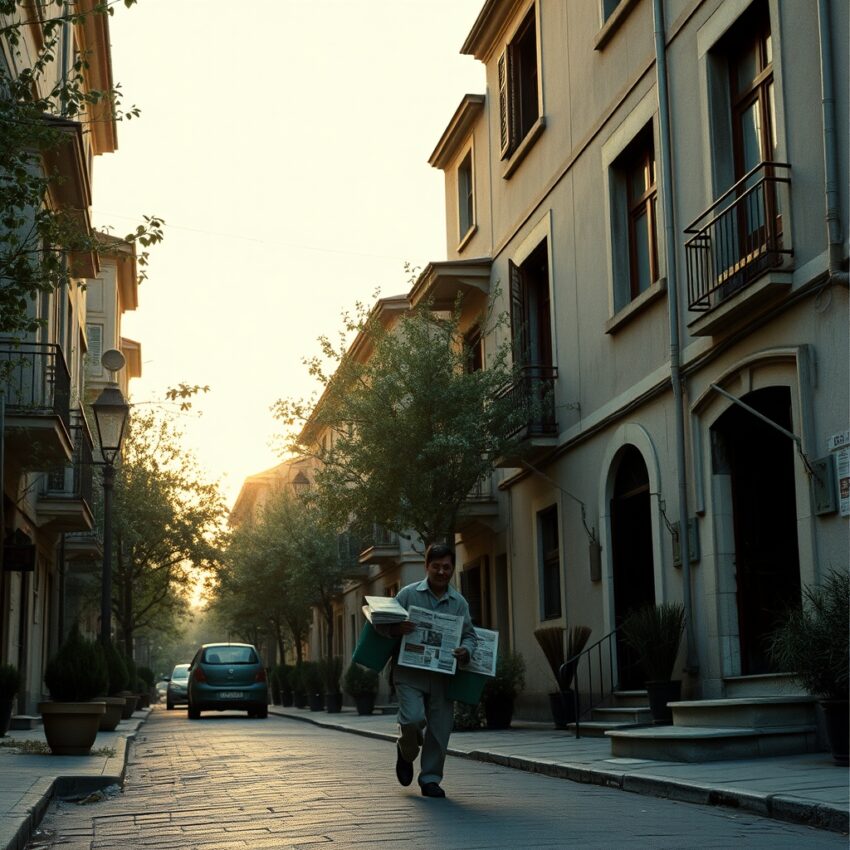
Bir zamanlar mahallenin sabahı, henüz çaydanlığın kapağı hafif hafif titrerken ve bahçelere düşen serinlik ıhlamur kokusunu yavaşça sokağa bırakırken, gazete bayisinin sesiyle tamamlanırdı. Kapı önleri süpürülmüş, pencereler aralanmış, apartman girişlerinde gece boyunca biriken sessizlik çözülmeye başlamış olurdu. Tam o sırada koltuğunun altında tomarla gazete taşıyan bayi ya da dağıtıcı, yalnız kâğıt bırakmaz; şehrin o günkü nabzını da mahalleye getirirdi. Manşetler henüz tam okunmadan konuşulmaya başlanır, kimi başlığı kapı önünde, kimi spor sayfasını bakkâla uğrarken, kimi hava durumunu balkon demirine yaslanmış komşusuna seslenirken öğrenirdi. Sabah haberi böylece basılı bir metinden çıkıp bütün sokağın ortak ritmine dönüşürdü.
Zamanın İzinde bakıldığında gazete bayilerinin bu rolü, eski şehir hayatında haberin yalnız bilgi değil, gündelik bağ kurma biçimi olmasından kaynaklanıyordu. Özellikle televizyonun tek kanallı, radyonun belirli saatlere bağlı, telefonun ise her eve girmediği yıllarda gazete, günün elde tutulabilen ilk işaretiydi. Bayinin dükkânı ya da sabah dağıtımı, insanların ülkeyle ilişkisini mahalle ölçeğinde somutlaştırıyordu. Gazeteyi eline alan kişi yalnız ne olduğunu öğrenmezdi; aynı zamanda o bilgiyi kiminle konuşacağını da bilirdi. Manşetin kahvede tartışılacağı, bulmacanın öğleden sonra çözüleceği, ölüm ilanının hemen komşuya haber verileceği, maç sonucunun çocukların oyun diline karışacağı baştan belliydi. Gazete bu yüzden evlere tek tek girse de, etkisi daima toplu olurdu.
Bu sahnenin bugün bile iç sızısıyla hatırlanmasının nedeni ayrıntılarında saklıdır. Bayinin ellerinde mürekkep izi olur, iplikle bağlanmış desteler taşınırken kâğıdın kendine özgü kuru kokusu duyulurdu. Bazen en üstteki sayfa sabah esintisiyle kıvrılır, bazen apartman kapısında gazetelerin isimleri daha uzaktan seçilirdi. Emekli bir komşu haberi erkenden okumak için bayiye yürür, memur işe gitmeden önce manşetlere göz gezdirir, çocuklar spor ekindeki renkli fotoğraflara bakmak isterdi. Bahçelerdeki ıhlamur ağacı, demir kapıların sessiz gıcırtısı, ekmek almaya çıkanların telaşı ve gazetenin bırakıldığı o kısa an, sabahı bir törene benzetirdi. Mahallenin takviminden düşmeyen sahne tam da buydu: her gün tekrarlandığı için sıradanlaşmayan, tersine her tekrarda daha da yerleşen küçük bir toplumsal ritüel.
Ihlamur kokusuna dönen bahçeler benzetmesi de boşuna değildir. Çünkü eski mahalle sabahları yalnız görülen değil, koklanan ve işitilen zaman parçalarıydı. Gazete sesi çoğu zaman kuş sesine, taze ekmek kokusuna, sulanmış toprağın ferahlığına karışırdı. İnsan hafızasında bazı sahneler görüntüden çok hava duygusu olarak kalır; gazete bayisinin getirdiği sabah da böyledir. O sahne hatırlandığında göz önüne sadece bir dükkân değil, aynı zamanda açılan kepenkler, cam önüne konan sardunyalar, okul yoluna hazırlanan çocuklar ve gazeteyle birlikte eve giren dünya hissi gelir. Haber, o yıllarda soğuk bir akış değildi; mahalleye insan eliyle taşınan, yüz yüze paylaşılan bir şeydi. Bu yüzden her manşet, yalnız memleketin değil mahallenin de parçası olurdu.
Bugün haber ceplere sessiz bildirimler halinde düşüyor, çoğu zaman ne zaman okunduğu bile hatırlanmıyor. Yine de gazete bayilerinin sabah haberini mahalleye taşıdığı devir anıldığında içte beliren o ince sızı, yalnız kaybolan bir mesleğe duyulan özlem değildir. Asıl özlenen, haberin beraber karşılandığı ve günün ortak konuşmaya açıldığı bir hayat düzenidir. Ihlamur kokusuna dönen bahçelerle birlikte anılan bu sabahlar, geçmişin daha yavaş ama daha dokunulur kamusal hayatını hatırlatır. Gazete bayisi o hayatın sessiz kahramanlarından biriydi; çünkü her gün mahalleye yalnız gazete değil, birlikte uyanma duygusu getirirdi.
🇬🇧 English | The Era When Newsdealers Carried the Morning News Into the Neighborhood as a Scene That Never Fell from the Neighborhood Calendar: Why Is It Still Remembered Today Like an Ache, Like Gardens Turning into the Scent of Linden
There was a time when the neighborhood morning felt complete only when the newspaper seller appeared, just as the lid of the kettle trembled softly and the coolness falling into the gardens released the scent of linden into the street. Doorsteps had been swept, windows had been opened a little, and the silence gathered overnight in the apartment entrance had begun to loosen. At that very moment the dealer or distributor, carrying bundles of newspapers under one arm, did not simply drop off paper; he also brought the pulse of that day’s city into the neighborhood. Headlines began to be discussed before they were fully read. One person learned the lead story at the doorway, another the sports page on the way to the grocer, another the weather forecast while leaning across a balcony rail toward a neighbor. In this way the morning news ceased to be only printed text and turned into the shared rhythm of the whole street.
Seen along the trail of time, the importance of newspaper sellers came from the fact that in older urban life, news was not only information but also a form of daily connection. In years when television had one channel, radio belonged to fixed hours, and telephones had not entered every home, the newspaper was the first tangible sign of the day. The seller’s kiosk or morning route made people’s relationship with the country concrete at neighborhood scale. A person taking the newspaper in hand did not only learn what had happened; that person also knew with whom it would be discussed. The headline would be argued over at the tea house, the crossword solved in the afternoon, the obituary carried immediately to a neighbor, and the match result would slip into the language of children’s games. For that reason, although newspapers entered homes one by one, their effect was always collective.
The reason this scene is still remembered with a faint ache lies in its details. The seller’s hands often carried traces of ink, and the dry, particular smell of paper rose from the bundles tied with string. Sometimes the top page curled in the morning breeze; sometimes the names of the papers could be recognized from a distance by the apartment gate. A retired neighbor walked to the kiosk to read the news early, an office worker glanced at the headlines before leaving, and children wanted to look at the colorful pictures in the sports supplement. The linden tree in the garden, the quiet creak of iron gates, the haste of those going out to buy bread, and that brief moment when the newspaper was placed at the door made the morning resemble a ritual. This was exactly the scene that never fell from the neighborhood calendar: a small social ceremony that did not become ordinary through repetition, but settled more deeply with every return.
The image of gardens turning into the scent of linden is not accidental either. Old neighborhood mornings were fragments of time remembered not only through sight, but through smell and sound. The arrival of the newspaper mingled with birdsong, the smell of fresh bread, and the freshness of watered soil. Some scenes remain in memory less as pictures than as atmospheres, and the morning carried by the newspaper seller is one of them. When it is recalled, one sees not only a kiosk, but also shutters opening, geraniums set on windowsills, children preparing for school, and the feeling of the wider world entering the home together with the paper. News in those years was not a cold stream; it was something carried into the neighborhood by human hands and shared face to face. That is why every headline became part not only of the country, but of the neighborhood as well.
Today news falls silently into pockets as notifications, and often even the moment of reading it is forgotten. Yet when the era of newspaper sellers bringing the morning news into the neighborhood is remembered, the ache that rises within is not merely nostalgia for a vanished profession. What is truly missed is a form of life in which news was received together and the day was opened into common conversation. These mornings, remembered with gardens fragrant with linden, recall a public life that was slower, yet more tactile and human. The newspaper seller was one of the quiet heroes of that life, because each day he brought the neighborhood not only papers, but the feeling of waking up together.
🇧🇷 Português (Brasil) | O Tempo em que os Jornaleiros Levavam a Notícia da Manhã ao Bairro como uma Cena que Nunca Saía do Calendário da Vizinhança: Por Que Ainda Hoje É Lembrado Como uma Dor Mansa, Como Jardins que se Tornam Cheiro de Tília
Houve um tempo em que a manhã do bairro só parecia completa quando o jornaleiro aparecia, justo no momento em que a tampa da chaleira tremia devagar e o frescor caído sobre os jardins soltava pela rua o cheiro de tília. As calçadas em frente às casas já tinham sido varridas, as janelas estavam entreabertas e o silêncio acumulado durante a noite na entrada do prédio começava a se desfazer. Nesse instante, o vendedor ou entregador, com maços de jornais debaixo do braço, não deixava apenas papel; levava para dentro da vizinhança o pulso da cidade naquele dia. As manchetes começavam a ser comentadas antes mesmo de serem lidas por inteiro. Alguém descobria a notícia principal junto à porta, outro via a página de esportes a caminho da mercearia, outro ainda comentava a previsão do tempo apoiado no gradil da varanda, falando com o vizinho. Assim, a notícia da manhã deixava de ser apenas texto impresso e se transformava no ritmo compartilhado de toda a rua.
No rastro do tempo, a importância dos jornaleiros vinha do fato de que, na antiga vida urbana, a notícia não era só informação, mas também uma forma de criar vínculo cotidiano. Nos anos em que a televisão tinha um único canal, o rádio obedecia a horários fixos e o telefone ainda não estava em todas as casas, o jornal era o primeiro sinal palpável do dia. A banca ou a rota de entrega tornavam concreta, em escala de bairro, a relação das pessoas com o país. Quem pegava o jornal não apenas descobria o que tinha acontecido; também sabia com quem aquilo seria comentado. A manchete seria debatida no café, a palavra cruzada resolvida à tarde, o obituário logo levado à casa do vizinho, e o resultado do jogo acabaria misturado à linguagem das brincadeiras das crianças. Por isso, embora os jornais entrassem nas casas um a um, seu efeito era sempre coletivo.
O motivo de essa cena ainda ser lembrada com uma pontada está em seus detalhes. As mãos do jornaleiro frequentemente carregavam marcas de tinta, e o cheiro seco e particular do papel subia dos maços amarrados com barbante. Às vezes a página de cima se curvava com a brisa da manhã; às vezes os nomes dos jornais já podiam ser reconhecidos de longe, perto do portão do prédio. Um vizinho aposentado caminhava até a banca para ler as notícias cedo, um funcionário olhava as manchetes antes de sair para o trabalho, e as crianças queriam ver as fotos coloridas do caderno de esportes. A tília do jardim, o rangido discreto dos portões de ferro, a pressa de quem saía para comprar pão e aquele breve momento em que o jornal era deixado à porta faziam a manhã parecer um ritual. Era exatamente essa a cena que nunca saía do calendário da vizinhança: uma pequena cerimônia social que não se tornava comum por se repetir, mas se fixava ainda mais a cada retorno.
A imagem dos jardins tornando-se cheiro de tília também não é gratuita. As manhãs dos bairros antigos eram pedaços do tempo lembrados não só pela visão, mas pelo som e pelo aroma. A chegada do jornal se misturava ao canto dos pássaros, ao cheiro de pão fresco e à leveza da terra recém-molhada. Há cenas que permanecem na memória menos como imagem e mais como atmosfera, e a manhã trazida pelo jornaleiro é uma delas. Quando ela volta, não se vê apenas uma banca, mas também persianas se abrindo, gerânios nas janelas, crianças se preparando para a escola e a sensação de que o mundo entrava em casa junto com o papel. Naqueles anos, a notícia não era um fluxo frio; era algo levado ao bairro por mãos humanas e partilhado cara a cara. Por isso, cada manchete se tornava parte não só do país, mas também do próprio bairro.
Hoje as notícias caem silenciosamente nos bolsos em forma de notificação, e muitas vezes nem o momento da leitura fica marcado. Ainda assim, quando se recorda o tempo em que os jornaleiros levavam a notícia da manhã ao bairro, a dor mansa que surge não é apenas saudade de uma profissão desaparecida. O que realmente faz falta é uma forma de vida em que a notícia era recebida em conjunto e o dia se abria à conversa comum. Essas manhãs, lembradas junto de jardins perfumados por tília, devolvem a imagem de uma vida pública mais lenta, mas também mais tátil e mais humana. O jornaleiro era um dos heróis silenciosos desse mundo, porque todos os dias levava ao bairro não só jornais, mas a sensação de acordar junto.