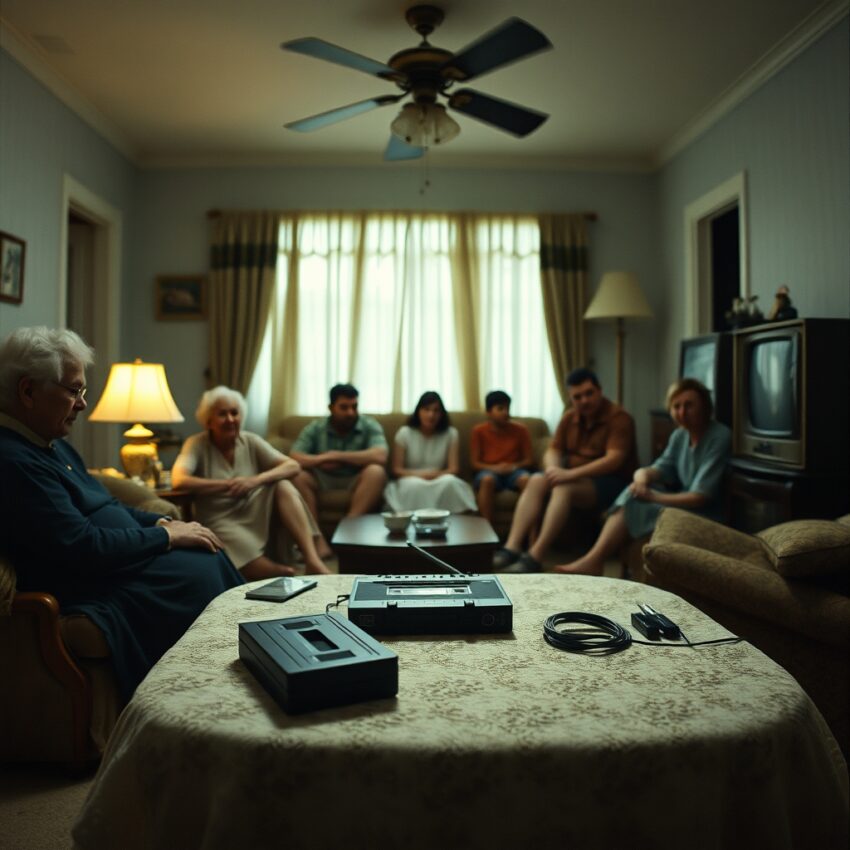
🇹🇷 Türkçe | salonda toplanan ailelerin sessiz heyecanı eşliğinde teyp kullanmak neden başlı başına bir törendi anneanne evinin gölgesinde eski filmlerin ışığında
Bir zamanlar salondaki sehpaya bir teyp yerleştirildiğinde, evin havası hemen değişirdi. Özellikle anneanne evinde, perdelerin hafifçe ağır durduğu, dantelli örtülerin vitrine eşlik ettiği o odada teyp açmak sıradan bir düğmeye basmak değildi. Kasetin kutusu dikkatle açılır, bant içindeki makaralara kısa bir saygı sessizliği gösterilir, sonra herkesin sesi biraz kısılırdı. Çünkü az sonra ya sevilen bir sanatçının sesi yükselecek ya da ailece defalarca dinlenmiş bir türkü yeniden odanın içine yayılacaktı. Eski filmlerin televizyonda akşam kuşağına denk geldiği saatlerde bu ses, görüntüyle birleşir; anneanne evinin gölgesinde teknoloji, aile yakınlığı ve hafif bir törensel ciddiyet aynı sahnede buluşurdu.
Teknoloji Mirası açısından bakıldığında teyp, analog çağın en evcil ama en etkili cihazlarından biriydi. Telsiz kadar uzak, pikap kadar gösterişli değildi; tam tersine, gündelik hayatın içine yerleşmiş, taşınabilirliği ve tekrar dinleme imkânıyla aile hafızasını şekillendiren bir araçtı. Kaseti ileri sararken çıkan mekanik tıkırtı, kayıt düğmesine yanlışlıkla basmamak için gösterilen dikkat, kalemle bant sarmanın neredeyse herkesçe bilinen küçük ustalığı, bu cihazı yalnız işlevsel değil duygusal bir nesneye dönüştürüyordu. İnsanlar sesi artık görünmez bir akış olarak değil, elle tutulur bir malzeme gibi düşünüyordu. Belki de bu yüzden teybin etrafında toplanmak, teknoloji kullanmaktan çok onunla birlikte zaman kurmak anlamına geliyordu.
Bu kullanımın başlı başına tören sayılmasının nedeni, teyp başında oluşan ortak dikkat hâlidir. Salonda toplanan aileler aynı şarkının ilk saniyesini birlikte bekler, biri “sessiz olun başlıyor” der, çocuklar minderin üstüne daha uslu otururdu. Bazı evlerde kasetin A yüzü bitince kimsenin acele etmeden dönüp diğer yüzü çevirmesi bile ritüelin parçasıydı. Anneanne evinin gölgesinde bu bekleyiş daha da derinleşirdi; çünkü o evler yalnız mekân değil, kuşakların seslerinin biriktiği yerlerdi. Kimi zaman bir halk müziği kaseti açılır, kimi zaman düğünde çekilmiş ses kaydı dinlenir, kimi zaman eski bir film repliği herkes tarafından önceden bilindiği halde yine aynı dikkatle beklenirdi. Teknoloji burada yalnız dinletmiyor, aile hafızasını usulca birbirine bağlıyordu.
Eski filmlerin ışığında teybin ayrı bir yeri vardı; çünkü o dönem ses ve görüntü bugünkü kadar kusursuz birleşmiyor, tam da bu nedenle daha hatırlanır oluyordu. Televizyonda siyah beyaz bir film sürerken arka odadan gelen çay kaşığı sesi, teypten önce dinlenmiş bir şarkının zihinde bıraktığı iz ve salondaki loş lamba birbirini tamamlayan ayrı katmanlar kuruyordu. İnsanlar müziği fon olarak değil, akşamın yönünü belirleyen unsur olarak yaşıyordu. Bir kaset takıldığında konuşmanın tonu, oturuş biçimi, hatta akşamın uzama ihtimali bile değişirdi. Şimdiki dijital rahatlık içinde tek tuşla her sese ulaşmak büyük kolaylık sağlıyor; yine de teybin hazırlık gerektiren ciddiyeti, dinlemeyi daha kıymetli bir eyleme dönüştürüyordu.
Belki de bugün teybi hatırlatan asıl şey, o cihazın kendi çevresinde kurduğu toplu dikkat duygusudur. Salonda toplanan ailelerin sessiz heyecanı, anneanne evinin tanıdık gölgesi ve eski filmlerin yavaş ışığı, sesi basit bir eğlenceden çok bir ev törenine dönüştürüyordu. Kaset dönmeye başladığında zaman biraz yavaşlar, herkes aynı duyguya birkaç dakika daha uzun süre katlanmak isterdi. Bu yüzden teyp hafızada yalnız bir teknoloji olarak değil, dinlemenin birlikte yaşandığı saygılı ve sıcak bir zaman parçası olarak kalıyor.
🇬🇧 English | Why Using a Tape Recorder Amid the Quiet Excitement of Families Gathered in the Living Room Was a Ceremony in Itself in the Shadow of Grandmother’s House and the Light of Old Films
There was a time when the moment a tape recorder was placed on the coffee table, the mood of the house changed at once. Especially in grandmother’s house, in that room where curtains hung with a certain heaviness and lace covers accompanied the glass cabinet, turning on the recorder was not the same as pressing an ordinary button. The cassette case was opened carefully, a brief silence seemed to honor the reels inside, and everyone instinctively lowered their voice. In a moment, either a beloved singer would rise into the room or a folk song the family had heard dozens of times would begin again. At the hours when old films played on evening television, sound joined image, and within the shadow of grandmother’s house, technology, family closeness, and a light ceremonial gravity stood in the same frame.
Seen as technological heritage, the tape recorder was one of the most domestic and effective devices of the analog age. It was neither as distant as radio nor as showy as the turntable; instead, it settled into everyday life and shaped family memory through portability and repetition. The mechanical click of fast-forward, the care taken not to hit the record button by mistake, and the nearly universal craft of winding loose tape with a pencil turned the device into something emotional as much as functional. People did not experience sound as an invisible stream alone; they felt it as a material object that could wear, jam, rewind, and return. Perhaps that is why gathering around a tape recorder felt less like using technology and more like building time together through it.
What made this act feel like a ceremony was the shared concentration formed around the machine. Families gathered in the living room waited together for the first seconds of a song, someone said, “Be quiet, it’s starting,” and children sat more carefully on their cushions. In some homes, even the unhurried act of flipping the cassette after side A ended belonged to the ritual. In the shadow of grandmother’s house this waiting acquired even greater depth, because those homes were not only places but reservoirs of voices from different generations. Sometimes a folk cassette was played, sometimes a recording from a wedding, and sometimes a film dialogue already known by heart was still awaited with the same seriousness. Here technology did not merely play sound; it quietly fastened family memory to itself.
Tape recorders had a special place in the light of old films because, in those years, sound and image did not merge with today’s seamless perfection, and for that very reason they became more memorable. While a black-and-white film flowed on television, the sound of teaspoons from the next room, the lingering trace of a song previously played on cassette, and the dim lamp in the living room created overlapping layers. Music was not treated as background; it set the emotional direction of the evening. Once a cassette was inserted, the tone of conversation changed, the posture of those seated shifted, and even the possibility of prolonging the evening seemed to expand. Digital ease allows instant access to every sound today, but the seriousness of the tape recorder, with its required preparation, made listening feel more precious.
Perhaps what keeps the tape recorder alive in memory is the collective attention it summoned around itself. The quiet excitement of families gathered in the living room, the familiar shadow of grandmother’s house, and the slow light of old films turned sound into something larger than entertainment. When the cassette began to turn, time slowed slightly and everyone wished the shared feeling to last a little longer. That is why the tape recorder remains not only as a technology, but as a respectful and warm fragment of time in which listening was experienced together.
🇧🇷 Português (Brasil) | Por Que Usar um Toca-fitas em Meio à Expectativa Silenciosa das Famílias Reunidas na Sala Era um Cerimonial em Si à Sombra da Casa da Avó e à Luz dos Filmes Antigos
Houve um tempo em que, quando um toca-fitas era colocado sobre a mesinha da sala, o clima da casa mudava imediatamente. Sobretudo na casa da avó, naquele cômodo de cortinas pesadas e panos rendados acompanhando a cristaleira, ligar o aparelho não era como apertar um botão qualquer. A caixinha da fita era aberta com cuidado, parecia haver um breve silêncio de respeito pelas bobinas ali dentro, e todos naturalmente baixavam a voz. Em instantes, começaria a tocar a voz de um cantor querido ou uma canção que a família já ouvira tantas vezes. Nas horas em que os filmes antigos apareciam na televisão da noite, som e imagem se encontravam, e na sombra da casa da avó tecnologia, proximidade familiar e uma delicada gravidade cerimonial dividiam o mesmo quadro.
Como legado tecnológico, o toca-fitas foi um dos aparelhos mais domésticos e marcantes da era analógica. Não era distante como o rádio nem vistoso como a vitrola; ao contrário, instalou-se na vida comum e moldou a memória familiar com sua portabilidade e possibilidade de repetição. O clique mecânico do avanço rápido, o cuidado para não apertar o botão de gravação por engano e a pequena habilidade quase universal de enrolar a fita com um lápis transformavam o aparelho em algo afetivo, não apenas funcional. O som não era vivido só como fluxo invisível; era quase um material que podia gastar, prender, voltar e reaparecer. Talvez por isso reunir-se em torno do toca-fitas parecesse menos usar tecnologia e mais construir o tempo com ela.
O que fazia desse uso um cerimonial era a atenção compartilhada que nascia em volta do aparelho. As famílias reunidas na sala esperavam juntas pelos primeiros segundos da música, alguém dizia “silêncio, vai começar”, e as crianças sentavam mais quietas nas almofadas. Em algumas casas, até o gesto de virar a fita quando o lado A terminava fazia parte do ritual. Na sombra da casa da avó, essa espera ficava ainda mais profunda, porque essas casas não eram apenas lugares, mas depósitos de vozes de várias gerações. Às vezes tocava uma fita de música popular, às vezes uma gravação de casamento, às vezes um trecho de filme conhecido de cor, mas sempre aguardado com a mesma atenção. A tecnologia ali não apenas reproduzia som; ela amarrava com delicadeza a memória familiar.
À luz dos filmes antigos, o toca-fitas tinha um lugar especial porque, naquela época, som e imagem não se uniam com a perfeição contínua de hoje e, justamente por isso, ficavam mais memoráveis. Enquanto um filme em preto e branco passava na televisão, o som das colheres no cômodo ao lado, a lembrança de uma música antes ouvida na fita e a lâmpada baixa da sala criavam camadas que se completavam. A música não funcionava como fundo neutro; ela dava direção emocional à noite. Quando a fita era colocada, mudava o tom da conversa, o modo de sentar e até a possibilidade de a noite durar mais. A facilidade digital de hoje oferece acesso imediato a qualquer som, mas a seriedade do toca-fitas, com sua preparação, tornava o ato de escutar muito mais precioso.
Talvez o que mantém vivo o toca-fitas na memória seja essa atenção coletiva que ele criava ao seu redor. A expectativa silenciosa das famílias reunidas na sala, a sombra conhecida da casa da avó e a luz lenta dos filmes antigos transformavam o som em algo maior do que simples entretenimento. Quando a fita começava a girar, o tempo desacelerava um pouco, e todos pareciam querer prolongar aquela sensação comum por mais alguns minutos. Por isso o toca-fitas permanece não apenas como tecnologia, mas como um pedaço respeitoso e caloroso de tempo em que escutar era uma experiência vivida em conjunto.