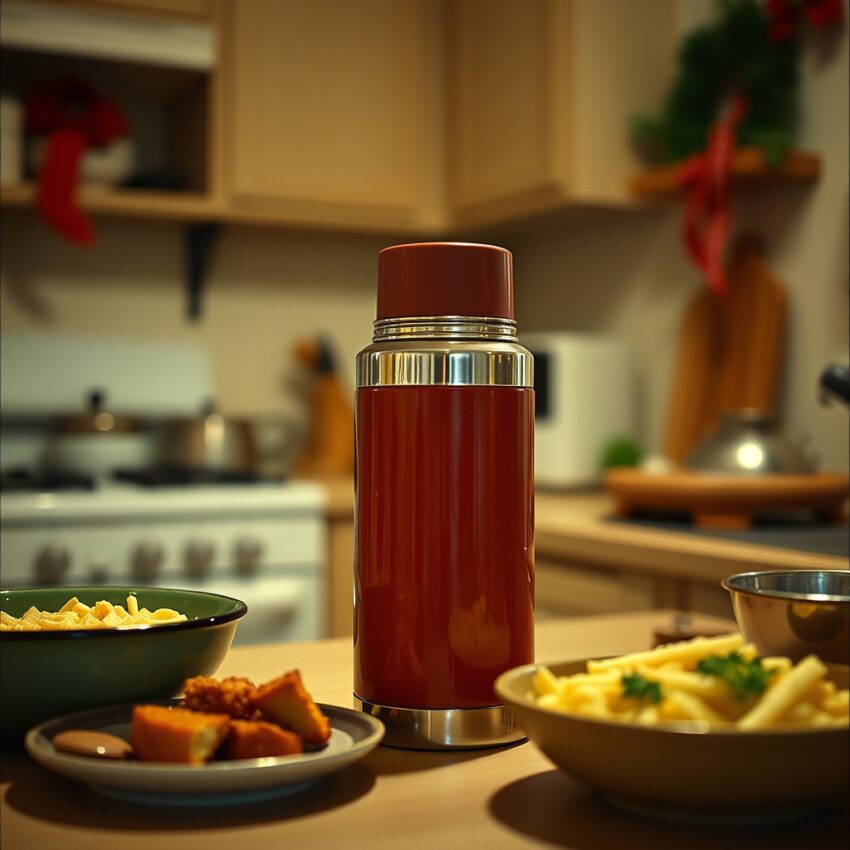
🇹🇷 Türkçe | yemek termosu ve bayram temizliğinde yeniden parlayan yüzü: ev hayatının ritüellerini nasıl şekillendirdi
Bir zamanlar mutfak dolaplarının en sakin köşelerinde duran yemek termosları, ihtiyaç duyulduğunda sessizce ev hayatının merkezine gelirdi. Dış yüzeyi bazen hafif matlaşmış, kapağı yılların kullanımından biraz yumuşamış olurdu; ama bayram temizliği geldiğinde o tanıdık yüz yeniden parlatılır, bezle silindikçe eski günlerin ışıltısı ortaya çıkardı. Bu yalnız eşya bakımına dair bir titizlik değildi. Evde hangi nesnelerin saklanmaya değer görüldüğünü, hangi alışkanlıkların önemsendiğini anlatan bir tavırdı. Yemek termosu, sıcaklığı koruyan işlevi kadar taşınan emeği, hazırlanmış yemeği ve bir yere yetiştirilmek istenen şefkati de içinde tutuyordu.
Obje Hikayeleri açısından bakıldığında yemek termosu, tasarım ile gündelik ritüel arasındaki bağın en sade örneklerinden biridir. İç içe geçen katmanları, sıkı kapanan kapağı, metal ya da plastik gövdesi ve uzun süre sıcak tutma vaadiyle bu nesne modern ev hayatına sessiz bir kolaylık getirdi. Ama onu kalıcı kılan şey teknik özelliğinden çok, hangi anlarda devreye girdiğidir. Hastaya çorba göndermek, işteki babaya sıcak yemek ulaştırmak, yolculuğa çıkan birine hazırlık yapmak ya da piknik için sabah erkenden yemeği toparlamak gibi sahnelerde yemek termosu devrededir. Her kullanımında, ev içindeki emek başka bir yere taşınabilir hâle gelir. Böylece nesne, yalnız sıcaklığı değil, evin ritmini de muhafaza eder.
Bayram temizliğinde yeniden parlayan yüzü, bu termosun duygusal yerini daha da belirginleştirirdi. O büyük temizliğin içinde vitrin camları silinir, bakırlar ovulur, halılar havalandırılırken yemek termosunun da özenle elden geçirilmesi, onun sıradan bir kap olmadığını gösterirdi. Çünkü bayram öncesi hazırlık yalnız görünen yerleri değil, evin hafızasında payı olan eşyaları da kapsardı. Termosun parlaması, geçmişte taşınmış çorbaları, komşuya gönderilmiş dolmaları, sabahın erken saatinde hazırlanmış pilavları da parlatırdı sanki. İnsan bazı eşyaları yalnız kullandığı için değil, aile içindeki görevini bildiği için sever. Yemek termosu da tam böyle bir nesneydi; gösterişsiz ama vazgeçilmez.
Bu nesnenin ev hayatının ritüellerini şekillendirmesi biraz da zaman duygusuyla ilgilidir. Termosa konan yemek, hemen yenmeyecek ama sıcak kalması gereken bir şeydir; yani ev, kendi zamanını biraz ileriye doğru planlar. Bu planlama, mutfakta pişenle dışarıdaki hayat arasına dikkatli bir köprü kurar. “Bunu termosa koyalım”, çoğu evde yalnız pratik bir cümle değil, yemeğin bir kişiye ulaşma hikâyesinin başladığı andı. Böylece mutfak emeği evin duvarları içinde kalmaz, bir iş yerine, bir yolculuğa, bir hasta odasına ya da bayram sabahı uzun ziyarete doğru hareket ederdi. Termos bu geçişi düzenleyen sessiz yardımcıydı.
Bugün yemek termosları hâlâ var, fakat geçmişteki anlamlarını özel kılan şey onları kuşatan ritüellerdi. Bayram temizliğinde yeniden parlamaları, ihtiyaç anında hemen bulunmaları ve içlerinde yalnız yemek değil, özen taşımaları onları kalıcı bir obje hikâyesine dönüştürdü. Bu yüzden eski ev hayatı anılırken yemek termosu akla sadece kullanışlı bir kap olarak gelmez. O, sıcak kalması istenen bir yemeğin çevresinde toplanan aile düzeninin, yardımlaşmanın ve görünmeyen ev emeğinin parlak ama mütevazı yüzü olarak hatırlanır.
🇬🇧 English | The Food Thermos and Its Face Shining Again in Holiday Cleaning: How It Shaped the Rituals of Domestic Life
There was a time when food thermoses rested in the quietest corners of kitchen cupboards and then, when needed, moved silently to the center of domestic life. Their outer surface might have grown slightly dull, their lid softened by years of use, yet when holiday cleaning arrived, that familiar face was polished again and its older brightness returned beneath the cloth. This was not only a matter of caring for an object. It expressed which belongings were considered worth preserving and which household habits were treated with seriousness. The food thermos held not only heat, but effort, prepared meals, and a form of care intended to arrive somewhere on time.
Seen through the lens of object stories, the food thermos is one of the plainest examples of the bond between design and ritual. With its layered interior, tightly closing lid, metal or hard plastic body, and promise of keeping food warm for hours, it brought a quiet convenience into modern domestic life. Yet what made it lasting was less its technical function than the moments in which it entered the scene. It appeared when soup was sent to someone ill, when lunch was carried to a father at work, when provisions were prepared for a journey, or when an early picnic meal was packed before sunrise. Each time it was used, domestic labor became transportable. In that way, the object preserved not only warmth, but the rhythm of the household itself.
Its face shining again during holiday cleaning made its emotional place even clearer. While cabinet glass was wiped, copper was polished, and carpets were aired out, the careful cleaning of the food thermos showed that it was not an ordinary container. Holiday preparation did not cover only what was visible; it also embraced the objects that had a share in the memory of the home. As the thermos regained its shine, it seemed to brighten old soups once carried across the street, stuffed vegetables sent to a neighbor, and rice prepared at dawn. Some objects are loved not only because they are useful, but because their role inside the family is deeply understood. The food thermos was exactly such an object: unshowy, yet indispensable.
Its role in shaping domestic ritual is also tied to the sense of time. Food placed in a thermos is not meant to be eaten at once, but must remain warm until later; in other words, the household plans its time a little ahead. That planning builds a careful bridge between what is cooked in the kitchen and the life unfolding outside. In many homes, the sentence “Let’s put it in the thermos” was not merely practical. It marked the beginning of the meal’s journey toward a person. The labor of the kitchen did not stay within the walls, but traveled toward a workplace, a road, a sickroom, or a long holiday visit. The thermos was the quiet device that organized that passage.
Food thermoses still exist today, but what made their older meaning special were the rituals surrounding them. Their renewed shine during holiday cleaning, their immediate usefulness in times of need, and the fact that they carried care as much as food turned them into a lasting object story. That is why, when old domestic life is remembered, the food thermos appears not simply as a practical vessel. It survives as the modest but gleaming face of family order, mutual help, and the invisible labor of the home gathered around a meal meant to stay warm.
🇧🇷 Português (Brasil) | O Recipiente Térmico de Comida e seu Rosto que Voltava a Brilhar na Limpeza de Festa: Como Moldou os Rituais da Vida Doméstica
Houve um tempo em que os recipientes térmicos de comida ficavam nos cantos mais quietos dos armários da cozinha e, quando necessário, vinham silenciosamente para o centro da vida da casa. A parte externa podia estar um pouco opaca, a tampa um pouco amolecida pelos anos de uso, mas quando chegava a limpeza de festa aquele rosto conhecido voltava a brilhar sob o pano. Isso não era apenas zelo com um objeto. Era uma forma de mostrar quais utensílios eram considerados dignos de permanecer e quais hábitos da casa eram levados a sério. O recipiente térmico guardava não só calor, mas também trabalho, comida preparada e um cuidado que precisava chegar a algum lugar no tempo certo.
Pela ótica das histórias dos objetos, o recipiente térmico de comida é um dos exemplos mais simples da ligação entre design e ritual cotidiano. Com seu interior em camadas, tampa bem fechada, corpo de metal ou plástico rígido e promessa de conservar a temperatura por horas, ele trouxe uma praticidade silenciosa para a vida doméstica moderna. Mas o que o tornou duradouro foi menos a função técnica e mais os momentos em que entrava em cena. Ele aparecia quando uma sopa era enviada para alguém doente, quando o almoço ia para o pai no trabalho, quando se preparava comida para uma viagem ou quando um piquenique era montado bem cedo. Em cada uso, o trabalho da casa ganhava mobilidade. Assim, o objeto preservava não apenas o calor, mas o próprio ritmo do lar.
Seu brilho renovado durante a limpeza de festa tornava ainda mais evidente seu lugar afetivo. Enquanto os vidros dos armários eram limpos, os cobres polidos e os tapetes arejados, o cuidado dedicado ao recipiente térmico mostrava que ele não era um simples pote. A preparação para a festa não cuidava só do que estava à vista; incluía também os objetos que tinham participação na memória da casa. Quando o recipiente voltava a brilhar, parecia iluminar novamente as sopas levadas para o outro lado da rua, os legumes recheados enviados à vizinha e os arrozes preparados ainda de madrugada. Há objetos que são queridos não apenas pelo uso, mas porque sua função dentro da família é bem conhecida. O recipiente térmico era exatamente isso: discreto, mas indispensável.
O modo como esse objeto moldava os rituais da casa também tem a ver com a percepção do tempo. A comida colocada no térmico não será comida imediatamente; ela precisa continuar quente para depois. Isso significa que a casa organiza seu tempo um pouco adiante. Essa organização cria uma ponte cuidadosa entre o que se cozinha na cozinha e a vida que acontece lá fora. Em muitas casas, a frase “vamos colocar no térmico” não era só prática. Era o começo da história de uma refeição a caminho de alguém. O trabalho doméstico não ficava preso às paredes, mas seguia para um local de trabalho, uma estrada, um quarto de doente ou uma longa visita de festa. O recipiente térmico era o ajudante silencioso que organizava essa passagem.
Os recipientes térmicos de comida continuam existindo, mas o que tornava especial o seu significado antigo eram os rituais ao redor deles. O brilho recuperado na limpeza de festa, a prontidão nas horas de necessidade e o fato de levarem cuidado junto com a comida transformaram esse objeto em uma história duradoura. Por isso, quando a antiga vida doméstica é lembrada, o recipiente térmico não aparece apenas como um utensílio prático. Ele permanece como o rosto modesto, mas luminoso, da ordem familiar, da ajuda mútua e do trabalho invisível da casa reunidos em torno de uma refeição que precisava continuar quente.