🇹🇷 Türkçe | mahalle kahvesinden taşan haberler eski şehir hayatının tam ortasında: bugünün sitelerinde neden aynı sıcaklık bulunmuyor
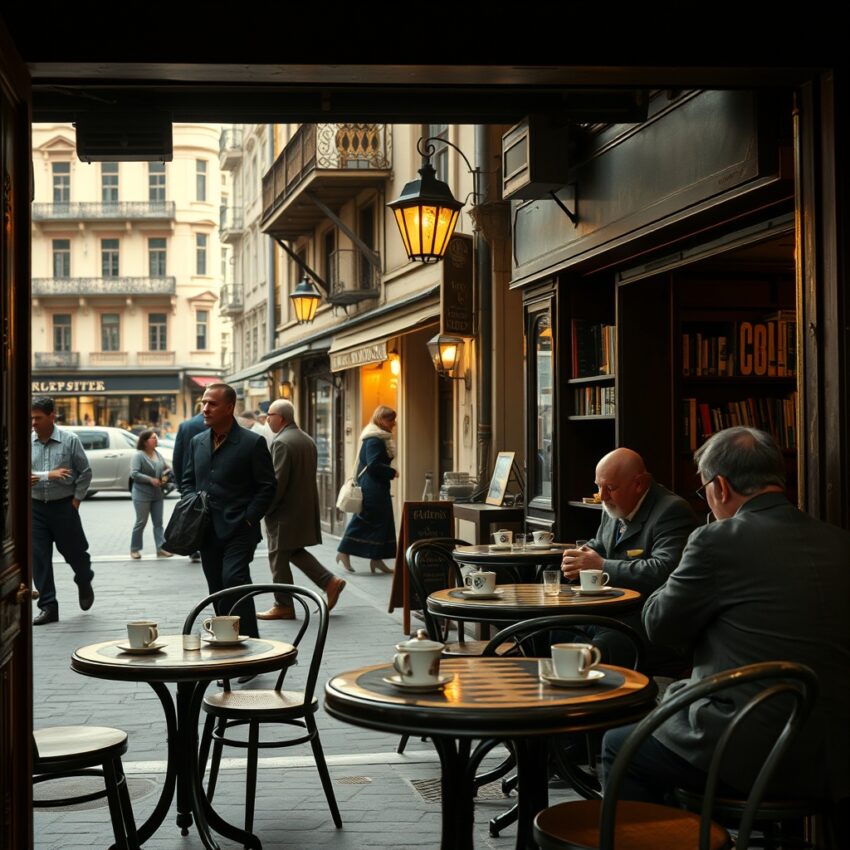
Bir zamanlar mahallenin nabzı resmi ilan panolarında değil, kahvehanenin kapısında tutulurdu. Daha sabahın ilk saatlerinden itibaren bir iskemle kapıya çekilir, içeri giren çıkan herkesin selamı alınır, dünden kalan söz bugüne bağlanırdı. Çayın demi koyulaştıkça konuşmalar da çoğalır; pazardaki fiyatlar, askerden gelen mektup, yeni açılan dükkân, hastalanan komşu, nişan hazırlığı yapan aile ya da belediyenin sokakta başlatacağı çalışma aynı masalarda dolaşırdı. Haber, kahveden taşan bir şeydi; duvarlar arasında kalmaz, kapının önüne, kaldırıma, bakkala, berbere ve akşam eve dönen insanların diline kadar yayılırdı. Eski şehir hayatının tam ortasında duran mahalle kahvesi, yalnız oturulan bir yer değil, mahallenin ortak kulağı ve diliydi.
Mahalle Kültürü açısından kahvehane, erkeklerin vakit geçirdiği dar bir alan olmanın ötesinde, kamusal temasın en görünür düğüm noktalarından biriydi. Herkes bütün gün orada oturmasa da oradan haberdardı. Bir çocuk ekmek almaya giderken kapının önündeki amcaları görür, bir kadın pencereyi açtığında içeriden gelen tavla sesini duyar, esnaf dükkânını kapatmadan önce günün son gelişmesini çoğu zaman kahve önünde öğrenirdi. Bu merkezilik, haberin yalnız bilgi değil ilişki olarak dolaşmasını sağlardı. Birinin derdi duyulunca yardım eli çabuk uzanır, bir kutlama haberi gelince mahalle kısa sürede ortak bir neşeye kavuşurdu. Sıcaklık tam da bu dolaşımın içinde doğardı; haber insanı başlı başına veriye değil, karşılaşmaya götürürdü.
Kahveden taşan haberlerin bugünün sitelerinde aynı sıcaklıkla bulunmamasının nedeni, yalnız mimarinin değişmesi değil. Eski mahallede kapılar sokağa açılır, gündelik hayat yatay biçimde birbirine karışırdı. İnsanlar birbirlerinin adımlarını, seslerini, alışkanlıklarını fark ederdi. Oysa bugün siteler daha kontrollü, daha güvenlikli ve çoğu zaman daha içe kapanık düzenler sunuyor. Ortak alanlar var, fakat ortak zaman daha az. Asansörde karşılaşma kısa, apartman gruplarındaki yazışmalar ölçülü ve çoğu zaman resmi kalıyor. Haber dolaşıyor ama çoğu kez duygu taşımıyor. Bir zamanlar kahvehanenin önünden geçerken istemeden öğrenilen şeyler şimdi bildirimlere dönüşüyor; sıcaklığı eksilten de biraz bu dolaysız temasın kaybı.
Eski şehir hayatında kahvehanenin taşıdığı sıcaklık, yalnız sürekli konuşulmasından değil, sessizlikleri de paylaşabilmesinden kaynaklanıyordu. Bir köşede okey taşları dizilirken öbür masada kısık sesle ciddi bir mesele konuşulur, kapı önünde gazeteyi yüksek sesle okuyan birinin etrafında küçük bir halka oluşurdu. Herkes her konuya karışmaz, ama herkes aynı havayı solurdu. Bu ortak hava, insanların birbirini yalnız adıyla değil hâliyle tanımasını sağlardı. “Bugün sesi kısık çıktı”, “iki gündür görünmedi”, “çocuğun sınavı vardı” gibi küçük gözlemler, bugünün dijital komşuluğunda kolayca kaybolan türden bir yakınlık kurardı. Mahalle kahvesi böylece haberi taşıyan bir mekan olmaktan çıkar, mahallenin duygusal hafızasına dönüşürdü.
Bugünün sitelerinde neden aynı sıcaklık bulunmuyor sorusu aslında biraz da hangi hayat ritmini kaybettiğimizle ilgili. Daha korunaklı binalarda yaşarken birbirimize daha az değiyoruz; daha çok bilgi alırken daha az ses duyuyoruz. Mahalle kahvesinden taşan haberlerin sıcaklığı, haberin ağızdan ağıza dolaşmasında değil; o dolaşımın insanların yüzünü, sesini, bekleyişini ve halini birlikte taşımasında saklıydı. Bu yüzden eski kahvehaneler bugün hatırlandığında yalnız tavla, çay ve sandalye değil; bir arada yaşamanın daha geçirgen biçimi de hatırlanıyor. Eski şehir hayatının tam ortasında duran o kapı önü, bugünün düzenli sitelerinde eksik kalan ortak insan sıcaklığının sessiz ölçüsü olarak hafızada yaşamaya devam ediyor.
🇬🇧 English | News Overflowing from the Neighborhood Coffeehouse in the Very Middle of Old City Life: Why Is the Same Warmth Not Found in Today’s Residential Compounds
There was a time when the pulse of the neighborhood was not kept on official notice boards, but at the door of the coffeehouse. From the first hours of the morning, a chair would be pulled toward the entrance, everyone who came in or passed by would be greeted, and whatever had been said yesterday would be tied to today. As the tea grew stronger, so did the conversations. Prices in the market, a letter from military service, a newly opened shop, a sick neighbor, a family preparing for an engagement, or municipal roadwork about to begin on the street all moved across the same tables. News was something that overflowed from the coffeehouse. It did not remain inside the walls, but spread to the doorstep, the pavement, the grocer, the barber, and finally to the speech of those returning home in the evening. Standing at the very center of old city life, the neighborhood coffeehouse was not only a place to sit; it was the common ear and tongue of the quarter.
Seen through the lens of neighborhood culture, the coffeehouse was more than a narrow male space for passing time. It was one of the most visible knots of public contact. Not everyone sat there all day, yet everyone knew of it. A child on the way to buy bread saw the uncles by the door, a woman opening her window heard the sound of backgammon from inside, and a shopkeeper often learned the day’s last development in front of the coffeehouse before closing the shutters. This centrality allowed news to circulate not only as information, but as relationship. When someone’s trouble was heard, help extended quickly; when news of a celebration arrived, the neighborhood soon entered a shared joy. The warmth was born precisely in that circulation, because news led a person not only to data, but to encounter.
The reason why today’s residential compounds do not carry the same warmth is not only that architecture has changed. In the old neighborhood, doors opened directly onto the street, and daily life mixed horizontally with itself. People noticed one another’s steps, voices, and habits. Today, by contrast, compounds offer arrangements that are more controlled, more secure, and often more inward-looking. There are common areas, yet less common time. Encounters in the elevator are brief, and messages in building groups remain measured and often formal. News still circulates, but it frequently carries less feeling. Things once learned unintentionally while passing in front of the coffeehouse now arrive as notifications; part of the warmth disappears in this loss of direct contact.
The warmth carried by the coffeehouse in old city life came not only from constant talk, but also from an ability to share silences. While game tiles were being lined up in one corner, a serious matter might be discussed quietly at another table, and a small ring would form around someone reading the newspaper aloud by the door. Not everyone intervened in every subject, but everyone breathed the same air. That common air allowed people to know one another not only by name, but by condition. Small observations such as “his voice sounded low today,” “she has not been seen for two days,” or “the child had an exam” built a nearness that disappears easily in digital neighborliness. The neighborhood coffeehouse thus ceased to be merely a place carrying news and became the emotional memory of the quarter.
The question of why the same warmth cannot be found in today’s compounds is therefore also about the rhythm of life we have lost. While living in more protected buildings, we touch one another less; while receiving more information, we hear fewer voices. The warmth of the news overflowing from the neighborhood coffeehouse was not only in word-of-mouth circulation, but in the way that circulation carried faces, voices, waiting, and mood together. That is why, when old coffeehouses are remembered today, what returns is not only backgammon, tea, and chairs, but also a more porous form of living together. The doorway at the center of old city life continues to survive in memory as a quiet measure of the shared human warmth missing in the orderly compounds of the present.
🇧🇷 Português (Brasil) | As Notícias que Transbordavam do Café do Bairro no Exato Centro da Vida Urbana Antiga: Por que o Mesmo Calor Não se Encontra nos Condomínios de Hoje
Houve um tempo em que o pulso do bairro não era marcado em quadros de aviso oficiais, mas na porta do café. Desde as primeiras horas da manhã, uma cadeira era puxada para a entrada, cada pessoa que entrava ou passava recebia um cumprimento, e o que tinha ficado da véspera era ligado ao dia de hoje. À medida que o chá ficava mais forte, as conversas também cresciam. Os preços da feira, uma carta chegada do serviço militar, a loja recém-aberta, o vizinho adoecido, a família preparando um noivado ou a obra que a prefeitura começaria na rua circulavam pelas mesmas mesas. A notícia era algo que transbordava do café. Não ficava presa dentro das paredes, mas se espalhava pela porta, pela calçada, pelo mercadinho, pela barbearia e, no fim do dia, pela fala de quem voltava para casa. No centro exato da vida urbana antiga, o café do bairro não era apenas um lugar para sentar; era o ouvido e a língua comuns da vizinhança.
Pelo olhar da cultura de bairro, o café era mais do que um espaço masculino e estreito para passar o tempo. Era um dos nós mais visíveis do contato público. Nem todo mundo ficava ali o dia inteiro, mas todos sabiam dele. Uma criança a caminho da padaria via os senhores na porta, uma mulher ao abrir a janela escutava o som do gamão vindo de dentro, e um comerciante muitas vezes descobria a última novidade do dia na frente do café antes de fechar as portas. Essa centralidade fazia a notícia circular não apenas como informação, mas como relação. Quando a dificuldade de alguém era ouvida, a ajuda chegava rápido; quando vinha uma notícia feliz, o bairro logo encontrava uma alegria comum. O calor nascia exatamente dessa circulação, porque a notícia levava a pessoa não só aos fatos, mas ao encontro.
O motivo de esse mesmo calor não existir nos condomínios de hoje não está apenas na mudança da arquitetura. No antigo bairro, as portas se abriam para a rua e a vida cotidiana se misturava horizontalmente consigo mesma. As pessoas percebiam os passos, as vozes e os hábitos umas das outras. Hoje, ao contrário, os condomínios oferecem formas de vida mais controladas, mais seguras e muitas vezes mais fechadas para dentro. Existem áreas comuns, mas há menos tempo comum. Os encontros no elevador são breves, e as mensagens nos grupos do prédio costumam ser medidas e, muitas vezes, formais. A notícia continua circulando, mas frequentemente com menos sentimento. O que antes era descoberto sem querer ao passar diante do café agora chega em forma de notificação; parte do calor se perde exatamente nessa falta de contato direto.
O calor que o café carregava na antiga vida urbana vinha não apenas do muito falar, mas também da capacidade de dividir silêncios. Enquanto as pedras do jogo eram organizadas num canto, um assunto sério podia ser conversado em voz baixa em outra mesa, e um pequeno círculo se formava ao redor de quem lia o jornal em voz alta na porta. Nem todo mundo participava de tudo, mas todos respiravam o mesmo ar. Esse ar comum permitia que as pessoas se conhecessem não apenas pelo nome, mas pelo estado em que estavam. Pequenas observações como “hoje ele falou mais baixo”, “faz dois dias que não aparece”, ou “a criança tinha prova” criavam uma proximidade que se perde facilmente na vizinhança digital. O café do bairro, assim, deixava de ser apenas um lugar onde a notícia circulava e se tornava a memória afetiva da vizinhança.
Perguntar por que o mesmo calor não aparece nos condomínios de hoje é, portanto, perguntar também que ritmo de vida foi perdido. Morando em edifícios mais protegidos, tocamos menos uns nos outros; recebendo mais informação, ouvimos menos vozes. O calor das notícias que transbordavam do café do bairro não estava apenas na circulação boca a boca, mas no fato de essa circulação carregar junto rostos, vozes, esperas e estados de espírito. É por isso que, quando os velhos cafés são lembrados hoje, voltam não apenas o gamão, o chá e as cadeiras, mas também uma forma mais porosa de viver em conjunto. A porta daquele café no centro da antiga vida urbana continua na memória como uma medida silenciosa do calor humano compartilhado que faz falta nos condomínios organizados do presente.