🇹🇷 Türkçe | kış gecelerinde çamaşır ipleri arasında kurulan mahalle manzarası neden eski mahallelerin en sıcak sahnesiydi
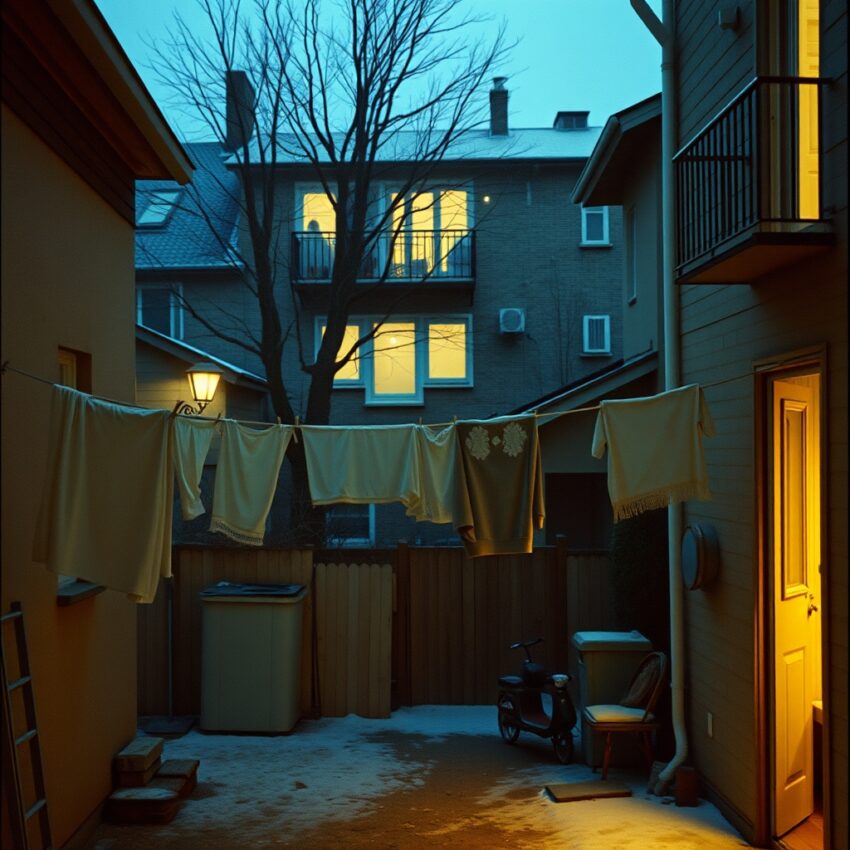
Bir zamanlar kış geceleri erkenden çöker, apartman aralıklarında ve avlulu evlerin arasında asılı duran çamaşır ipleri gündüzden kalma hayatın izini taşımaya devam ederdi. Akşamın nemli soğuğu sokak taşlarına çökerken, ıslak çarşafların sertleşen kenarları, çocuk kazaklarının rüzgârda hafifçe kıpırdayışı ve balkon lambalarının sarı ışığı mahalleye bambaşka bir yakınlık verirdi. Pencerelerden sızan yemek kokuları, uzaktan duyulan radyo sesi ve kapı önünde söylenen kısa cümleler bu görüntünün etrafında birleşirdi. Çamaşır ipleri o saatlerde yalnız ev işinin uzantısı değildi; komşuluk hayatının görünür çizgileri gibiydi. Her asılı bez parçası, o evde günün nasıl geçtiğine dair küçük bir işaret bırakır; mahalle, birbirini tam da bu sıradan ayrıntılarla tanırdı.
Mahalle Kültürü açısından eski mahallelerin sıcaklığı büyük ölçüde bu görünür gündelikliğe dayanıyordu. Bugünün kapalı apartman yaşamından farklı olarak, ev içi emek sokağın tamamen dışında kalmazdı. Kadınların akşamüstü son çamaşırları toplarken birbirine seslenmesi, bir komşunun “yağmur bastıracak” diye haber vermesi, çocukların ipin altından eğilerek oyununa devam etmesi, mahallenin ortak ritmini kurardı. Kış gecesi sert olsa da bu küçük temaslar ortamı ısıtırdı. Çamaşır ipleri bir bakıma evler arasındaki görünmez bağı görünür hâle getirirdi; bir evin düzeni, ötekinin gündelik dikkatinden bağımsız değildi. Mahallenin sıcak sahnesi tam da burada kuruluyordu: herkes kendi hayatını sürdürürken başkasının varlığını doğal biçimde hesaba katıyordu.
Bu manzaranın unutulmamasının bir nedeni de eski mahalle estetiğinin sadeliğinde saklıdır. Beyaz çarşafların arasında görünen kırmızı bir çocuk atkısı, emaye leğenden yeni çıkmış gömleklerin buğusu, duvara vuran loş ışık ve arada bir sallanan mandal sesleri, bugünün tasarlanmış nostalji görüntülerinden daha gerçek bir şiirsellik taşıyordu. Çünkü bu sahne kurulmak için özel çaba istemezdi; zaten yaşanan hayatın kendisinden doğardı. Bir tarafta soba üstünde demlenen çay, öte yanda çamaşırların donmadan önce toplanma telaşı vardı. Mahalleli için bunlar sıradan işlerdi, ama tam da bu sıradanlık eski yaşamın sıcaklığını oluşturuyordu. İnsanlar birbirinin ne yediğini ya da ne giydiğini değil, hayatın hangi ritimde aktığını hissediyordu.
Çamaşır ipleri arasında kurulan bu kış manzarası, çocukluk hafızasında da özel bir yer tuttu. Çocuklar için o iplerin arasından geçmek küçük bir labirent gibiydi; yetişkinler içinse günün bitmediğini ama evin toparlandığını anlatan son görevlerden biriydi. Bazen bir el uzanır, komşunun yüksekten asılmış çarşafını indirmesine yardım ederdi. Bazen mandal yetmez, karşı kapıdan birkaç tane istenirdi. Bu küçük alışverişler, eski mahalleyi sıcak yapan şeyin büyük dayanışma gösterilerinden çok küçük yardımlar olduğunu hatırlatıyor. İnsan ilişkileri yüksek cümlelerle değil, “ipte kaldıysa ben alırım” kadar sade sözlerle kuruluyordu. Bu yüzden çamaşır ipleri yalnız kumaş taşımıyor, aynı zamanda güven duygusunu da asılı tutuyordu.
Bugün geriye bakınca kış gecelerinde çamaşır ipleri arasında kurulan mahalle manzarasının neden bu kadar sıcak göründüğü daha iyi anlaşılıyor. O sahne, mahallenin birbirinden haberdar ama birbirine yük olmayan yaşama biçimini temsil ediyordu. Sokakla ev arasında sert bir sınır yoktu; birinin ışığı, ötekinin sesi, başkasının çamaşırı ve berikinin uyarısı aynı akşamın parçasıydı. Eski mahallelerin sıcaklığı biraz da buradan geliyordu: herkes kendi hayatını sürerken ortak bir atmosfer üretmesinden. Kışın ayazı ne kadar keskin olursa olsun, çamaşır ipleri arasında salınan o gündelik görüntü mahalleyi insan eliyle ısıtılmış bir yere dönüştürüyordu. Hafızada kalan da tam olarak bu: sıradan işlerin içinden doğan derin komşuluk hissi.
🇬🇧 English | Why the Neighborhood Scene Formed Among Clotheslines on Winter Nights Was the Warmest Scene of Old Neighborhoods
There was a time when winter nights fell early, and the clotheslines stretched between apartment gaps and courtyard houses continued to carry the traces of daytime life. As the damp cold of evening settled on the paving stones, the stiffening edges of wet sheets, the slight movement of children’s sweaters in the wind, and the yellow glow of balcony lamps gave the neighborhood a different kind of closeness. Food aromas leaking from windows, a radio heard from far away, and short sentences exchanged at doorsteps gathered around that image. At those hours, the clotheslines were not merely an extension of housework; they were like visible lines of neighborhood life itself. Every hanging piece of fabric left a small sign of how the day had passed inside that home, and the neighborhood knew one another precisely through such ordinary details.
From the perspective of neighborhood culture, the warmth of old districts depended greatly on this visible everydayness. Unlike today’s closed apartment life, domestic labor did not remain fully outside the street. Women calling out to one another while collecting the last laundry at dusk, a neighbor warning that rain was coming, children continuing their games by bending beneath the lines, all built the shared rhythm of the quarter. Even if the winter night was harsh, these small contacts warmed the atmosphere. In a sense, the clotheslines made visible the invisible tie between homes; the order of one household was not entirely separate from the attentive awareness of another. The neighborhood’s warmest scene was formed exactly there: everyone continued with their own life while naturally taking the presence of others into account.
Part of the reason this image remains unforgettable lies in the simplicity of old neighborhood aesthetics. A red child’s scarf seen among white sheets, the steam of shirts newly lifted from an enamel basin, dim light touching the wall, and the occasional click of clothespins carried a more authentic poetry than today’s designed nostalgia images. This was because the scene required no special effort to be arranged; it rose from lived life itself. On one side tea brewed on the stove, on the other side there was the rush to collect the laundry before it froze. For neighborhood residents these were ordinary tasks, yet that very ordinariness created the warmth of older life. People sensed not exactly what the other household was eating or wearing, but the rhythm in which life was flowing.
The winter view formed among the clotheslines also held a special place in childhood memory. For children, passing under those lines was like moving through a small labyrinth; for adults, it was one of the final duties that said the day was not yet over, though the home was being gathered back into itself. Sometimes a hand reached out to help a neighbor bring down a sheet hung too high. Sometimes clothespins ran short, and a few were borrowed from the next door. These tiny exchanges remind us that what made the old neighborhood warm was not grand acts of solidarity, but small acts of help. Human ties were built not through large declarations, but through simple phrases such as, “If it’s still on the line, I’ll take it down.” For that reason, the clotheslines carried not only cloth, but also a sense of trust.
Looking back now, it becomes easier to understand why the neighborhood scene formed among clotheslines on winter nights appears so warm in memory. That scene represented a way of living in which neighbors were aware of one another without becoming a burden to one another. There was no hard boundary between home and street; one person’s light, another’s voice, someone else’s laundry, and another’s warning all belonged to the same evening. Part of the warmth of old neighborhoods came from here: from the fact that while everyone lived their own life, they still produced a shared atmosphere. However sharp the winter cold might be, the everyday image swaying among the clotheslines turned the neighborhood into a place warmed by human hands. What remains in memory is exactly this: a deep feeling of neighborliness rising out of ordinary work.
🇧🇷 Português (Brasil) | Por que a Cena do Bairro Formada Entre os Varais nas Noites de Inverno Era a Cena Mais Acolhedora dos Antigos Bairros
Houve um tempo em que as noites de inverno chegavam cedo, e os varais estendidos entre prédios e casas com pátio continuavam carregando os sinais da vida do dia. Enquanto o frio úmido da noite pousava sobre as pedras da rua, as bordas endurecidas dos lençóis molhados, o leve movimento dos suéteres infantis ao vento e a luz amarela das varandas davam ao bairro uma proximidade muito própria. Cheiros de comida escapando das janelas, um rádio ouvido ao longe e frases curtas ditas à porta se reuniam em torno dessa imagem. Naquelas horas, os varais não eram apenas continuação do trabalho doméstico; eram como linhas visíveis da própria vida da vizinhança. Cada pedaço de tecido pendurado deixava um pequeno sinal de como tinha sido o dia naquela casa, e o bairro se reconhecia justamente por esses detalhes comuns.
Pela ótica da cultura de bairro, o calor dos antigos bairros dependia muito dessa cotidianidade visível. Diferentemente da vida de apartamento mais fechada de hoje, o trabalho doméstico não ficava totalmente separado da rua. Mulheres chamando umas às outras enquanto recolhiam a última roupa ao entardecer, uma vizinha avisando que a chuva vinha, crianças continuando a brincadeira ao passar por baixo do varal, tudo isso criava o ritmo comum do bairro. Mesmo que a noite de inverno fosse dura, esses pequenos contatos aqueciam o ambiente. De certo modo, os varais tornavam visível o vínculo invisível entre as casas; a ordem de um lar não existia totalmente sem a atenção cotidiana do outro. A cena mais acolhedora do bairro surgia justamente aí: cada um seguia sua vida, mas levando naturalmente em conta a presença dos demais.
Parte da força dessa lembrança está também na simplicidade estética dos antigos bairros. Um cachecol infantil vermelho entre lençóis brancos, o vapor de camisas recém-saídas da bacia esmaltada, a luz fraca batendo na parede e o som ocasional dos pregadores traziam uma poesia mais verdadeira do que muitas imagens de nostalgia fabricada de hoje. Isso porque a cena não precisava ser preparada de forma especial; ela nascia da própria vida vivida. De um lado havia o chá fervendo sobre o fogão, do outro a pressa de recolher a roupa antes que congelasse. Para os moradores, eram tarefas comuns, mas era justamente essa normalidade que criava o calor da vida antiga. As pessoas sentiam não exatamente o que a outra casa comia ou vestia, mas em que ritmo a vida estava correndo.
Essa paisagem de inverno formada entre os varais também ocupou lugar especial na memória de infância. Para as crianças, passar entre aqueles fios era como atravessar um pequeno labirinto; para os adultos, era uma das últimas tarefas que mostravam que o dia ainda não tinha acabado, embora a casa já estivesse se recolhendo. Às vezes uma mão se estendia para ajudar a vizinha a baixar um lençol pendurado mais alto. Às vezes faltavam pregadores, e alguns eram pedidos na porta ao lado. Essas pequenas trocas lembram que o que tornava o antigo bairro acolhedor não eram grandes gestos de solidariedade, mas ajudas mínimas. Os vínculos humanos se formavam não por frases grandiosas, mas por palavras simples como “se ainda estiver no varal, eu pego para você”. Por isso, os varais sustentavam não apenas tecidos, mas também uma sensação de confiança.
Hoje, olhando para trás, fica mais fácil entender por que a cena do bairro criada entre os varais nas noites de inverno parece tão acolhedora na memória. Aquela imagem representava uma forma de viver em que os vizinhos sabiam uns dos outros sem se tornarem peso. Não havia uma fronteira dura entre casa e rua; a luz de um, a voz do outro, a roupa de alguém e o aviso de mais alguém pertenciam à mesma noite. Parte do calor dos antigos bairros vinha justamente daí: do fato de que, enquanto cada um levava sua própria vida, todos produziam uma atmosfera comum. Por mais cortante que fosse o frio do inverno, a imagem cotidiana balançando entre os varais transformava o bairro num lugar aquecido por mãos humanas. O que ficou na memória é exatamente isso: uma profunda sensação de vizinhança nascida das tarefas mais comuns.