🇹🇷 Türkçe | Şeritli Yazıcının Evde Yarattığı Sessiz Mucize
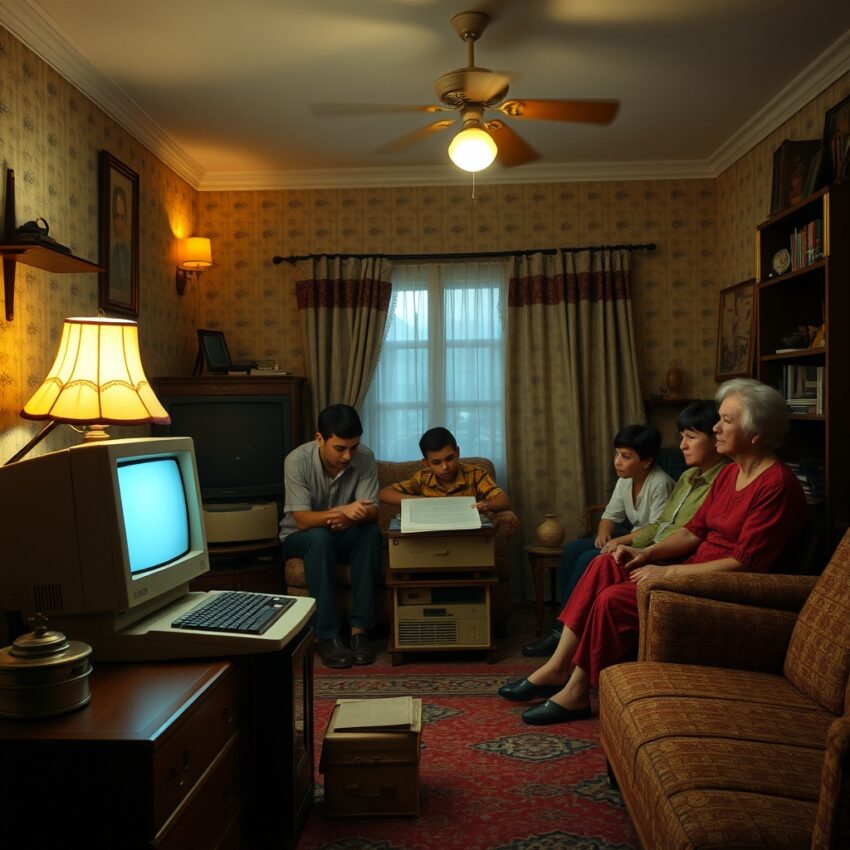
Bir zamanlar şeritli yazıcının çalışmaya başlaması evin içinde küçük bir tören etkisi yaratırdı. Bugünün tek tuşla alınan kusursuz çıktılarından farklı olarak, o günlerde yazıcının sesi de görüntüsü kadar önemliydi. Salondaki masanın bir köşesine yerleştirilmiş bilgisayarın yanında duran yazıcı, kağıdı yanlardaki deliklerinden tutarak ağır ağır ilerletir, kafa kısmı sağa sola vurdukça ritmik bir tıkırtı bütün eve yayılırdı. Çocuklar merakla yaklaşır, büyükler kağıdın yamulup yamulmadığını kontrol eder, kimse o an yüksek sesle konuşmak istemezdi. Çünkü cihaz yalnız bir metin basmıyor, evin içine teknolojiyle kurulan yeni bir ilişkinin sesini taşıyordu. O sessiz heyecan, çoğu zaman çarşıdan alınmış renkli disketlerle, vitrinde uzun süre bakıldıktan sonra eve getirilen ilk bilgisayar masasıyla ve henüz yabancı ama büyüleyici görünen ekran ışığıyla tamamlanırdı.
Teknoloji Mirası açısından şeritli yazıcı günleri, ailelerin dijital dünyayla temkinli ama hevesli biçimde tanıştığı bir dönemi temsil eder. Bilgisayar her evde yokken, olan evlerde ise neredeyse misafir gibi dikkatle kullanılan bir eşya sayılırken, yazıcının verdiği çıktı elle tutulabilir bir ilerleme duygusu yaratırdı. Bir ödev, bir mektup, bir davetiye, bazen yalnızca deneme amaçlı basılmış birkaç satır bile aile içinde önemsenirdi. Kağıdın iki yanındaki delikli şeritler koparılırken, sanki makinenin içinden yeni bir çağın ufak kanıtları çıkıyormuş gibi hissedilirdi. Bu alışkanlık yalnız pratik bir ihtiyaçtan değil, teknolojinin eve adım adım yerleşmesini seyretme arzusundan doğmuştu. Çarşı kalabalığında bir kırtasiye ile elektronikçi arasında asılı duran yazıcı şeritleri, kartuşlar ve kesintisiz form kağıtları da bu yeni dönemin görsel parçalarıydı.
Salonda toplanan ailelerin sessiz heyecanı biraz da bu cihazın ortak seyirlik olmasından kaynaklanıyordu. Televizyon gibi uzaktan izlenen bir eşya değildi; herkes ona yaklaşır, kağıdı düzeltir, çıkan satırları eğilerek okur, yanlış karakter görünce birbirine bakardı. Bir çocuğun adının ilk kez bilgisayardan basılmış olması bile şaşkınlık yaratmaya yeterdi. Yazıcının her vuruşu, harfin kağıda fiziksel olarak işlendiğini hissettirirdi; bu yüzden çıktı almak, bugünkü kadar görünmez bir süreç değildi. Mahallede bilgisayarı olan birkaç ev, zaman zaman komşu çocukların ödevlerini basar, bir memurun dilekçesini hazırlar ya da askerdeki oğula gönderilecek metni temize çekerdi. Böylece şeritli yazıcı özel bir ev eşyası olmaktan çıkıp yarı kamusal bir fayda nesnesine dönüşürdü. Teknoloji, oturma odasında başlayıp mahalle ilişkilerine kadar yayılan bir güven duygusu üretirdi.
Bu alışkanlığın unutulmamasının bir başka nedeni de yazıcı çıktılarının elle tutulur hatıralara dönüşmesidir. O kağıtların kenarında bazen hafif mürekkep dağılması olur, bazen bir satır kayar, bazen de perforajdan koparılmış yan şeritler masada ince beyaz kıvrımlar bırakırdı. Ama tam da bu kusurlar, çıktıyı kişisel ve döneme ait kılardı. Bir okul şiiri, bir ilk bilgisayar mektubu, bir aile listesi ya da bayram tebriği, çekmecelerde yıllarca saklanabilirdi. Çarşı kalabalığının içinde bir posta kartının arkasında saklıymış gibi duran duygu da buydu: yeni teknolojinin soğuk sanılan yüzü, aslında çok sıcak ev sahneleriyle birlikte anılıyordu. Sesli çalışan, yavaş ilerleyen, sabır isteyen bu makine, hız çağından önceki dijital heyecanın neredeyse en dokunulur biçimiydi.
Bugün şeritli yazıcının sesi pek çok kişiye uzak gelebilir, ama o günlerin ev içi iklimini hatırlayanlar için bu tıkırtı hâlâ tanıdıktır. Çünkü unutulmayan şey yalnız cihazın kendisi değil, onun etrafında toplanan insanların duruşudur. Salonda, ışığın biraz kısıldığı bir akşamüstü, herkesin çıktının tamamlanmasını beklediği o an, teknolojinin evcilleştiği ender sahnelerden biriydi. Şeritli yazıcı günleri bu yüzden hafızada kaldı: makinenin sesi ile aile sessizliğinin aynı anda var olduğu, çarşıdan eve taşınan yeniliğin posta kartı kadar kişisel bir hatıraya dönüştüğü yıllar oldukları için.
🇬🇧 English | The Quiet Miracle the Dot-Matrix Printer Created at Home
There was a time when the moment a dot-matrix printer began to work felt like a small household ceremony. Unlike today’s flawless prints produced at the touch of a button, in those years the sound of the printer mattered as much as the text it produced. Set beside the computer on a corner table in the living room, the printer pulled the paper forward through the perforated holes on both sides, and as the print head struck from left to right a rhythmic clatter spread through the house. Children approached with curiosity, adults checked whether the paper was feeding straight, and no one felt like speaking loudly. The machine was not only printing a page; it was carrying into the home the sound of a new relationship with technology. That quiet excitement was often completed by colorful floppy disks bought from the bazaar, the first computer desk brought home after long contemplation in shop windows, and the glow of a screen that still looked foreign yet fascinating.
From the perspective of technological heritage, the days of dot-matrix printers represent a period when families met the digital world with caution but also with eagerness. When computers were not in every home, and in the homes that had them they were treated almost like honored guests, a printout from the machine created a tangible feeling of progress. A homework assignment, a letter, an invitation, or even a few lines printed only for practice could become important within the family. As the perforated side strips of the paper were torn away, it felt as if tiny proofs of a new age were emerging from the machine. This habit came not only from practical need, but from the desire to watch technology settle into domestic life step by step. Printer ribbons, cartridges, and continuous stationery hanging between the stationery shop and the electronics store in the crowded bazaar formed part of the visual world of that new era.
The quiet excitement of families gathering in the living room also came from the fact that the machine was a shared spectacle. It was not like a television watched from afar. Everyone came close, straightened the paper, bent down to read the emerging lines, and exchanged glances when a character printed incorrectly. Even seeing a child’s name printed by computer for the first time was enough to create amazement. Every strike of the printer made people feel that the letters were being physically inscribed onto the page; for that reason, printing was not yet an invisible process. In neighborhoods where only a few houses had computers, those homes sometimes printed homework for neighbors’ children, prepared a petition for a civil servant, or typed a clean version of a letter to a son doing military service. In this way the dot-matrix printer stopped being a private household item and became an object of semi-public usefulness. Technology began in the living room and extended all the way into neighborhood relations.
Another reason the habit has not been forgotten is that the pages themselves turned into keepsakes. Sometimes the ink spread slightly, sometimes a line shifted, and sometimes the perforated side strips left thin white curls on the table after being torn away. Yet those imperfections were exactly what made the printout personal and of its time. A school poem, an early computer letter, a family list, or a holiday greeting could remain tucked in drawers for years. The feeling hidden as if on the back of a postcard in the crowd of the bazaar was precisely this: the supposedly cold face of new technology was actually remembered together with very warm household scenes. Loud, slow, and demanding patience, the printer was one of the most tangible forms of digital excitement before the age of speed.
Today the sound of a dot-matrix printer may feel distant to many people, yet for those who remember the atmosphere of homes in those years, that clatter is still familiar. What remains unforgettable is not only the device itself, but the posture of the people gathered around it. In the living room, on a late afternoon when the light had dimmed a little and everyone waited for the printout to finish, one could witness a rare moment in which technology became domesticated. That is why the days of dot-matrix printers remain in memory: they were years when the sound of a machine and the hush of a family existed together, and when a novelty brought home from the bazaar turned into a memory as personal as a postcard.
🇧🇷 Português (Brasil) | O Pequeno Milagre Silencioso que a Impressora Matricial Criava em Casa
Houve um tempo em que o momento em que uma impressora matricial começava a funcionar produzia dentro de casa o efeito de uma pequena cerimônia. Diferentemente das impressões perfeitas de hoje, obtidas com um único toque, naquela época o som da máquina era tão importante quanto o texto que aparecia no papel. Colocada ao lado do computador, num canto da sala, a impressora puxava a folha pelos furinhos laterais e avançava devagar, enquanto a cabeça de impressão batia de um lado para o outro e espalhava um ritmo metálico por toda a casa. As crianças se aproximavam com curiosidade, os adultos verificavam se o papel estava entrando reto, e ninguém tinha vontade de falar alto. A máquina não estava apenas imprimindo um texto; estava levando para dentro da casa o som de uma nova relação com a tecnologia. Essa emoção silenciosa costumava vir acompanhada de disquetes coloridos comprados no centro, da primeira mesa de computador escolhida depois de muita observação nas vitrines e da luz da tela, ainda estranha, mas fascinante.
Do ponto de vista do patrimônio tecnológico, os dias das impressoras matriciais representam um período em que as famílias conheceram o mundo digital com cautela e entusiasmo ao mesmo tempo. Quando o computador ainda não existia em todas as casas, e mesmo nas que existia era tratado quase como um hóspede de respeito, a impressão de uma folha criava uma sensação palpável de avanço. Um dever de escola, uma carta, um convite ou até algumas linhas impressas só para teste podiam ganhar importância dentro da família. Ao arrancar as tiras perfuradas das laterais do papel, parecia que pequenos sinais de uma nova época estavam saindo de dentro da máquina. Esse hábito nascia não apenas de uma necessidade prática, mas do desejo de observar a tecnologia entrando aos poucos na vida doméstica. Fitas de impressão, cartuchos e formulários contínuos pendurados entre a papelaria e a loja de eletrônicos no meio da multidão do bazar também faziam parte da imagem dessa nova fase.
A emoção silenciosa das famílias reunidas na sala vinha um pouco do fato de a máquina ser um espetáculo compartilhado. Não era como a televisão, vista à distância. Todos chegavam perto, alinhavam o papel, se curvavam para ler as linhas que surgiam e trocavam olhares quando um caractere saía errado. Ver o nome de uma criança impresso pelo computador pela primeira vez já era suficiente para causar espanto. Cada batida da impressora fazia sentir que as letras estavam sendo gravadas fisicamente na folha; por isso, imprimir ainda não era um processo invisível. Nos bairros onde poucas casas tinham computador, essas casas às vezes imprimiam tarefas para os filhos dos vizinhos, preparavam um requerimento para algum funcionário público ou passavam a limpo um texto a ser enviado ao filho no serviço militar. Assim, a impressora matricial deixava de ser apenas um objeto doméstico e se tornava uma ferramenta de utilidade quase pública. A tecnologia começava na sala e se espalhava pelas relações do bairro.
Outra razão para esse hábito não ter sido esquecido é que as folhas impressas acabavam virando lembranças. Às vezes a tinta falhava um pouco, às vezes uma linha saía torta, e às vezes as laterais perfuradas deixavam sobre a mesa pequenas curvas brancas depois de arrancadas. Mas eram justamente essas imperfeições que tornavam a impressão pessoal e ligada à sua época. Um poema escolar, uma carta escrita no computador pela primeira vez, uma lista da família ou um cartão de felicitação podiam ficar guardados em gavetas por muitos anos. O sentimento escondido como no verso de um cartão-postal em meio à multidão do bazar era exatamente esse: o rosto supostamente frio da nova tecnologia era lembrado junto com cenas muito quentes de casa. Barulhenta, lenta e dependente de paciência, a impressora era uma das formas mais tangíveis da emoção digital antes da era da velocidade.
Hoje o som da impressora matricial pode parecer distante para muita gente, mas, para quem se lembra do clima das casas daquele período, esse ruído continua reconhecível. O que permanece não é apenas o aparelho, mas a postura das pessoas reunidas ao redor dele. Na sala, numa tarde em que a luz já estava mais baixa e todos esperavam a impressão terminar, era possível ver um daqueles raros momentos em que a tecnologia se tornava doméstica. É por isso que os dias das impressoras matriciais ficaram na memória: porque foram anos em que o som da máquina e o silêncio da família existiram ao mesmo tempo, e em que uma novidade trazida do bazar para casa se transformava numa lembrança tão pessoal quanto um cartão-postal.