🇹🇷 Türkçe | Pirincin Üzerinde Kalan Salon Işığı
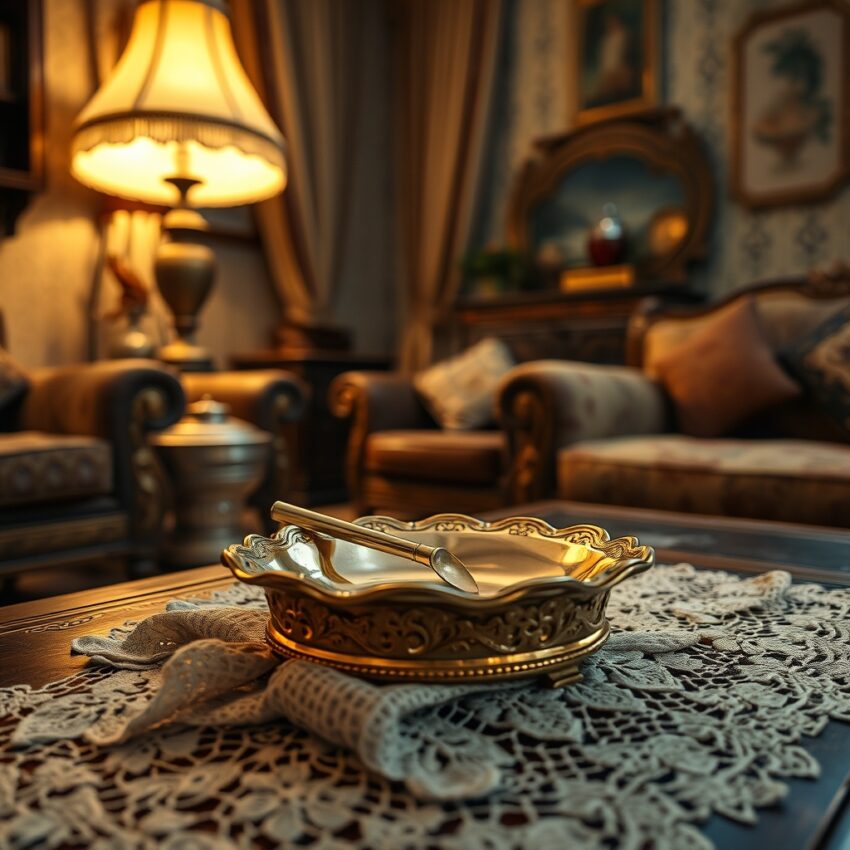
Bir zamanlar pirinç küllük, evin en sıradan eşyalarından biri gibi görünürdü; ama dikkatle bakıldığında içinde bir dönemin salon düzeni, misafirlik adabı ve gündelik estetik anlayışı saklıydı. Sehpanın üzerinde duran ağır bir pirinç küllük, çoğu evde yalnız sigaranın külünü tutan bir nesne değildi. O, ev sahibinin zevkini, vitrinin düzenini, salonun ciddiyetini ve misafirliğin ritmini tamamlayan bir parçaydı. Parlatıldığında üzerine düşen ışığı sıcak bir şekilde geri veren yüzeyi, eski evlerdeki dantel örtüler, ceviz mobilyalar ve kristal şekerliklerle aynı dili konuşurdu. Bu yüzden bugün bir koleksiyonerin eline geçen pirinç küllük, yalnız metal bir obje değil, bir salonun havasını taşıyan küçük bir zaman kapsülü gibi görünür.
Obje Hikayeleri açısından pirinç küllüğün cazibesi tasarım ile kullanımın iç içe geçmesinden gelir. Ağır oluşu, elden kaymayan biçimi, bazen yaprak ya da deniz kabuğu formunda işlenmiş kenarları, bazen otel ya da vapur hatırası taşıyan küçük gravürleri, onu sıradan tüketim eşyasından ayırır. Eski eşya pazarlarında dolaşan koleksiyonerler bu yüzden yalnız bir nesne aramaz; kullanan ellerin gölgesini, konulduğu sehpanın yüksekliğini, yanında duran ince belli çay bardağını da hayal eder. Pirinç zamanla kararır, ama tam da bu kararma geçmişin izini görünür kılar. Parlatıldığında ise eski bir evin salon ışığı yeniden yüzeye vurmuş gibi olur. Nostalji meraklılarının gözünde onun hemen parlaması biraz da bundandır: objenin kendisi kadar taşıdığı hayat kırıntıları da görünür hâle gelir.
Pirinç küllüğün geçmişi, yalnız tütün kültürüyle sınırlı değildir. O, bir dönemin misafir ağırlama biçimiyle de ilgilidir. Akşam çayı geldiğinde sehpa düzenlenir, kül tablası uygun yere çekilir, misafirin eline uzanacak mesafe ayarlanırdı. Salonlarda konuşmalar ağır ilerler, radyo ya da televizyon fonda daha kısık durur, kül tablasının arada hafifçe çevrilmesi bile bu ritmin parçası olurdu. Bazı evlerde pirinç küllük hiç kullanılmadan vitrinde tutulur, daha çok “iyi eşya” sayıldığı için sergilenirdi. Bazılarında ise bayramda ya da kalabalık misafir gelişlerinde ortaya çıkarılırdı. Bu çift anlam, yani hem kullanım hem temsil değeri, bugün onu koleksiyon nesnesine çeviren temel sebeplerden biridir. Bir eşyanın hem gündelik hem törensel olabilmesi, onu geçmişe açılan güçlü bir kapı yapar.
Koleksiyonerlerin bu objenin izini sürmesi biraz da kaybolan salon terbiyesini aramalarındandır. Bit pazarında rastlanan çizikli bir pirinç küllük, bazen eski bir otelin lobisini, bazen bir devlet dairesinin bekleme salonunu, bazen de yaz akşamlarında balkon kapısı açık bırakılmış bir aile evini çağırır. Objeler konuşmaz ama yüzeyleri yaşanmışlığı biriktirir. Küçük çizikler, altındaki keçenin yıpranması, kenarındaki hafif eğrilik, hepsi bir kullanım tarihinin sessiz kayıtlarıdır. Nostalji meraklısı için asıl heyecan, bu kayıtları okuyabilmektir. Çünkü bir eşyanın güzelliği yalnız biçiminde değil, yaşanmışlığa ne kadar açık olduğunda saklıdır. Pirinç küllük işte bu yüzden bir bakışta parlar: hem estetik bir obje hem de zamana dayanmış bir tanıktır.
Bugün sigara kültürü, salon düzeni ve misafirlik alışkanlıkları büyük ölçüde değişmiş olsa da pirinç küllük hâlâ geçmişi görünür kılan bir işaret olarak yaşamayı sürdürüyor. Koleksiyon raflarında, antikacı vitrinlerinde ya da yeniden düzenlenmiş bir çalışma masasının üstünde yer aldığında, eski bir evin ışığını beraberinde getiriyor. Geçmişin neden hemen parladığını anlamak için bazen büyük olaylara değil, tam da böyle küçük ama ağır eşyalara bakmak gerekir. Çünkü kültürel hafıza çoğu zaman bir dönemin manşetlerinde değil, avuç içine oturan bir objenin sessiz ışıltısında korunur. Pirinç küllük, bu sessiz ışıltının en tanıdık örneklerinden biridir.
🇬🇧 English | The Living Room Light Left on Brass
There was a time when the brass ashtray appeared to be one of the most ordinary objects in a home, yet looked at carefully, it held within it the arrangement of an era’s living room, the etiquette of receiving guests, and the everyday sense of style. A heavy brass ashtray sitting on the coffee table was not merely an object for holding cigarette ash. It completed the host’s taste, the order of the display cabinet, the seriousness of the living room, and the rhythm of hospitality. When polished, its surface returned light with a warm glow, speaking the same visual language as lace covers, walnut furniture, and crystal candy bowls. That is why, when a collector finds a brass ashtray today, it appears not as a simple metal object, but as a small time capsule carrying the atmosphere of an old living room.
From the standpoint of object stories, the charm of the brass ashtray comes from the way design and use are intertwined. Its weight, the shape that did not slip in the hand, the edges sometimes worked like a leaf or a shell, and at times the small engravings that hinted at a hotel or a ferry memory, all separated it from the rank of ordinary consumer goods. That is why collectors wandering through flea markets are not searching only for an object. They are imagining the hands that used it, the height of the table on which it stood, and the thin tea glass beside it. Brass darkens with time, yet that very tarnish makes the trace of the past more visible. Once polished, it seems as though the light of an old living room is striking the surface again. In the eyes of nostalgia enthusiasts, it shines immediately for this reason as well: not only the object itself, but the fragments of life it carries come into view.
The history of the brass ashtray is not limited to smoking culture alone. It also belongs to the way an era welcomed guests. When evening tea arrived, the coffee table was arranged, the ashtray was drawn into the proper place, and its distance from the guest’s hand was considered. Conversations moved slowly in living rooms, the radio or television remained lower in the background, and even the light turning of the ashtray from time to time formed part of that rhythm. In some homes, the brass ashtray was kept in the cabinet unused, displayed because it counted as a “good object.” In others, it appeared only on holidays or when the house filled with guests. This double meaning, value in use and value in representation, is one of the main reasons it has become a collectible today. When an object can be both everyday and ceremonial, it becomes a powerful door into the past.
Collectors follow the trace of this object partly because they are searching for a vanished etiquette of the living room. A scratched brass ashtray found in a flea market may call back an old hotel lobby, a government waiting room, or a family home with the balcony door left open on summer evenings. Objects do not speak, yet their surfaces accumulate lived experience. Small scratches, the worn felt underneath, a slight bend along the edge, all of these are silent records of use. For the nostalgia enthusiast, the real excitement lies in being able to read those records. The beauty of an object is hidden not only in its form, but in how open it is to having been lived with. That is why the brass ashtray shines at a glance: it is both an aesthetic object and a witness that has endured time.
Today, even though smoking culture, living room arrangements, and hospitality customs have changed greatly, the brass ashtray continues to live as a sign that makes the past visible. When it appears on a collector’s shelf, in the window of an antique dealer, or atop a carefully arranged desk, it brings the light of an old home with it. To understand why the past shines so quickly, one sometimes must look not at major events, but at small and heavy objects exactly like this. Cultural memory is often preserved not in the headlines of an era, but in the quiet gleam of an object that fits within the palm. The brass ashtray is one of the most familiar examples of that quiet gleam.
🇧🇷 Português (Brasil) | A Luz da Sala que Ficou sobre o Latão
Houve um tempo em que o cinzeiro de latão parecia apenas um dos objetos mais comuns da casa; mas, quando olhado com atenção, guardava dentro de si a organização da sala de visitas de uma época, a etiqueta de receber e o gosto cotidiano pela forma. Um cinzeiro pesado de latão sobre a mesa de centro não servia apenas para receber as cinzas do cigarro. Ele completava o gosto do anfitrião, a ordem da cristaleira, a seriedade da sala e o ritmo da visita. Quando era polido, sua superfície devolvia a luz com um brilho quente, conversando com as toalhas rendadas, os móveis de madeira escura e as bomboneiras de cristal. Por isso, quando um colecionador encontra um cinzeiro de latão hoje, ele não parece apenas um objeto metálico, mas uma pequena cápsula do tempo capaz de carregar o clima de uma antiga sala de estar.
Do ponto de vista das histórias dos objetos, o encanto do cinzeiro de latão vem da mistura entre desenho e uso. O peso, a forma firme na mão, as bordas às vezes trabalhadas como folha ou concha, e em certos casos pequenas gravuras lembrando hotel ou travessia de navio, tudo isso o afasta da condição de objeto de consumo banal. É por isso que os colecionadores que percorrem feiras de antiguidades não procuram apenas uma peça. Eles imaginam também as mãos que a usaram, a altura da mesa em que ela ficou e o copo de chá fino ao lado. O latão escurece com o tempo, mas é justamente esse escurecimento que torna mais visível a marca do passado. Quando volta a ser polido, parece que a luz de uma sala antiga atinge novamente sua superfície. Aos olhos dos apaixonados por nostalgia, ele brilha de imediato por isso: não apenas a peça em si, mas os fragmentos de vida que ela carrega entram em cena.
A história do cinzeiro de latão não se limita à cultura do fumo. Ela também pertence ao modo como uma época recebia os convidados. Quando o chá da tarde chegava, a mesa era organizada, o cinzeiro era puxado para o lugar certo e se pensava na distância exata da mão de quem visitava. As conversas avançavam devagar na sala, o rádio ou a televisão ficavam baixos ao fundo, e até o leve giro do cinzeiro de vez em quando fazia parte desse ritmo. Em algumas casas, o cinzeiro de latão nunca era usado e permanecia na cristaleira por ser considerado uma “boa peça”. Em outras, saía apenas em festas ou nas visitas mais cheias. Esse sentido duplo, de uso e de representação, é uma das razões centrais de ele ter se transformado em objeto de coleção. Quando uma peça pode ser ao mesmo tempo cotidiana e cerimonial, ela vira uma porta forte para o passado.
Os colecionadores seguem a pista desse objeto também porque procuram a etiqueta perdida da antiga sala de visitas. Um cinzeiro de latão riscado, encontrado numa feira, pode trazer à memória o saguão de um hotel antigo, a sala de espera de um prédio público ou uma casa de família com a porta da varanda aberta nas noites de verão. Os objetos não falam, mas suas superfícies acumulam experiência vivida. Pequenos riscos, o feltro gasto na base, uma leve curva na borda, tudo isso são registros silenciosos do uso. Para quem ama nostalgia, a emoção está justamente em saber ler esses vestígios. A beleza de um objeto não está apenas na forma, mas também em quanto ele se deixa atravessar pelo tempo vivido. É por isso que o cinzeiro de latão brilha de imediato: ele é ao mesmo tempo objeto estético e testemunha resistente do tempo.
Hoje, embora a cultura do cigarro, a organização das salas e os hábitos de visita tenham mudado bastante, o cinzeiro de latão continua existindo como sinal capaz de tornar o passado visível. Quando aparece numa prateleira de coleção, na vitrine de um antiquário ou sobre uma mesa de trabalho reorganizada, ele traz consigo a luz de uma casa antiga. Para entender por que o passado brilha tão depressa, às vezes é preciso olhar não para grandes acontecimentos, mas exatamente para objetos pequenos e pesados como este. A memória cultural muitas vezes não se conserva nas manchetes de uma época, mas no brilho silencioso de uma peça que cabe na palma da mão. O cinzeiro de latão é um dos exemplos mais familiares desse brilho silencioso.