🇹🇷 Türkçe | Mahalle takviminden düşmeyen bir sahne olarak çıraklık kültürünün sokaklara düzen verdiği zamanlar: neden bugün bile bir sızı gibi hatırlanıyor ıhlamur kokusuna dönen bahçeler
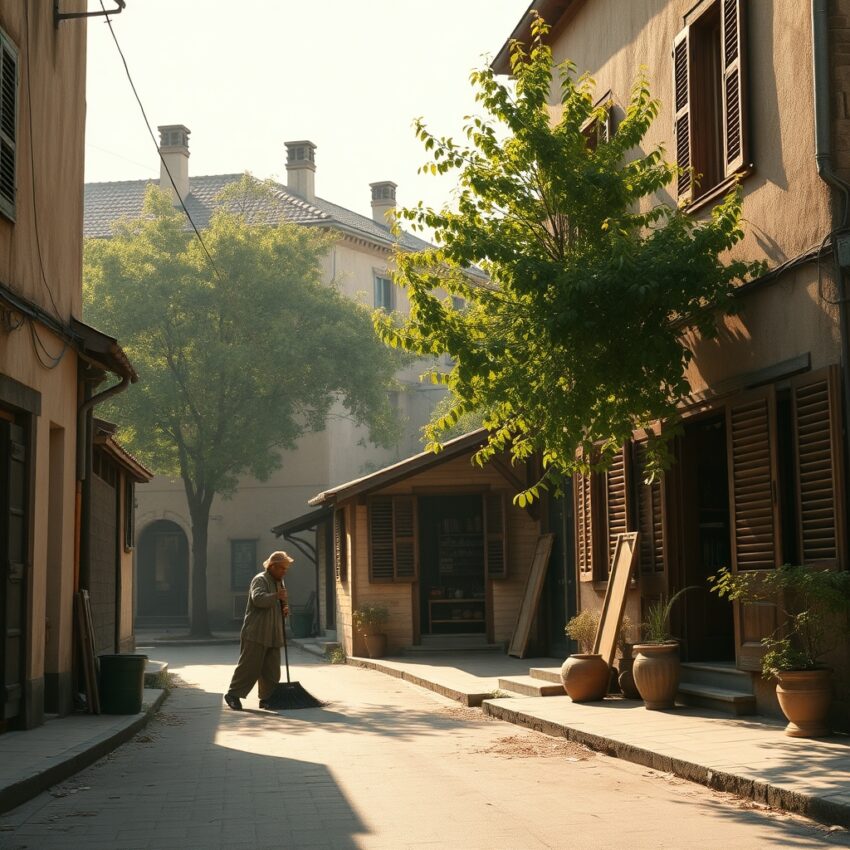
Bazı mahallelerin saati duvar takvimiyle değil, dükkân kepenkleriyle işlerdi. Sabah güneşi sokağın taşlarına yeni düşerken terzi çırağının erkenden dükkân önünü süpürmesi, bakır ustasının dükkân camını silmesi, bakkalın kasaları dışarı çıkarması, çocukların ise okul yolunda bütün bu hazırlığı seyretmesi, günün hangi düzenle akacağını herkese bildirirdi. Çıraklık kültürü bu yüzden yalnız bir meslek öğrenme biçimi değil, sokağın ritmini kuran görünmez terbiyeydi. Bahçelerden gelen ıhlamur kokusu o saatlerde henüz dağılmamış olur, dükkân önlerinde duran süpürgelerin tozu havaya karışırken mahalleye yumuşak bir serinlik bırakırdı. Bugün bu sahne neden insanın içine sızı gibi yerleşiyor denirse, cevabı biraz bu sessiz uyumda saklıdır. Çünkü o günlerde sokak, çalışan ellerle birlikte uyanırdı.
Zamanın İzinde bakıldığında çıraklık kültürü eski şehir yaşamının en belirleyici toplumsal düzenlerinden birini temsil eder. Gazete arşivlerinde küçük esnafın, lonca geleneğinden süzülmüş iş ahlakının ve usta-çırak ilişkisinin önemine sık sık değinilmesi boşuna değildir. Bir çocuk ya da delikanlı dükkâna yalnız iş gücü olarak girmezdi; hitap biçimini, büyük karşısında nasıl duracağını, müşteriye nasıl sesleneceğini, malzemenin kıymetini ve emeğin sabrını da öğrenirdi. Böylece sokak yalnız ticaret yapılan bir yer olmaktan çıkar, terbiyenin kamusal yüzüne dönüşürdü. Mahalle sakinleri hangi dükkânın önünden ne zaman geçileceğini, hangi ustanın hangi saatte ocağı yakacağını, hangi çırağın öğleye doğru bakkaldan ekmek alıp döneceğini bilirdi. Bu tekrar, mahallenin gündelik takvimini sessizce sabitlerdi.
Çıraklık kültürünün sokağa verdiği düzen, ayrıntıların içinden anlaşılırdı. Ayakkabı tamircisinin önünde dizili kalıplar, marangoz atölyesinden sokağa taşan talaş kokusu, demircinin örsünden yükselen ölçülü ses, manifaturacının kapı önüne bıraktığı kumaş ruloları, bütün bunların arasında telaşla ama dikkatle gidip gelen çıraklar… Her biri işin küçük ama vazgeçilmez taşıyıcısıydı. Çırak bazen ustasının kahvesini alır, bazen sipariş fişini yetiştirir, bazen vitrindeki en tozlu köşeyi temizlerdi. Fakat asıl yaptığı şey, sokağın akışını bozmadan emeğin dilini sürdürmekti. Mahalledeki çocuklar onları izleyerek büyür, çalışmanın yalnız ekmek kazanmak değil, vakti yerine yerleştirmek anlamına geldiğini sezerek öğrenirdi. Bu yüzden çıraklık kültürü, ev ile dükkân, oyun ile sorumluluk, çocukluk ile yetişkinlik arasındaki en görünür eşiklerden biriydi.
Ihlamur kokusuna dönen bahçeler bu hatıranın neden bu kadar dokunaklı kaldığını daha iyi anlatır. Öğleye doğru güneş yükseldiğinde, avlulu evlerin ve dar arka bahçelerin içinden gelen ıhlamur, odun, sabun ve toprak kokusu birbirine karışırdı. Çırak öğlen arasında tabldotunu açar ya da evden gelen yemeği hızlıca yerken, sokağın üstünde ağaç yaprakları hafifçe kıpırdar, mahalle biraz yavaşlar, sonra yeniden hareketlenirdi. Bu anlarda çalışma hayatı sert değil, gündelik hayatla iç içe bir devamlılık gibi görünürdü. Belki de bugün o günleri özlerken akla yalnız dükkânlar değil, dükkânların arkasındaki bahçeler, gölgeler ve kokular geliyor. Çünkü hafıza, insanı en çok işleyen toplumsal yapıları çoğu zaman kokuyla mühürler.
Bugün çıraklık kültürünün eski ağırlığı büyük ölçüde değişmiş olabilir; mahalle esnafı azalmış, dükkân önlerinde geçirilen uzun saatler başka hayat biçimlerine dönüşmüş olabilir. Yine de bir kuşağın belleğinde o sahne hâlâ takvimden düşmeyen bir gün gibi asılı durur. Ustanın sesi, çırağın koşturması, ıhlamur kokusunun dükkân aralarına sinmesi ve sokağın bu sayede ölçü kazanması, geçmiş şehir hayatının en incelikli düzenlerinden biriydi. Bugün bile sızı gibi hatırlanmasının nedeni budur. O düzen yalnız ekonomik değildi; mahalleye vakur, sıcak ve insani bir ritim veriyordu.
🇬🇧 English | As a Scene That Never Fell from the Neighborhood Calendar, the Times When Apprenticeship Culture Gave Order to the Streets: Why Are the Gardens Turning to Linden Scent Still Remembered Like an Ache Today?
Some neighborhoods kept time not by the wall calendar, but by the lifting of shop shutters. When the morning sun had only just fallen on the paving stones, the tailor’s apprentice sweeping the storefront, the coppersmith’s boy polishing the window, the grocer carrying crates outside, and schoolchildren watching all of it on their way to class announced exactly how the day would unfold. That is why apprenticeship culture was never only a way of learning a trade. It was the invisible discipline that gave the street its rhythm. At those hours, the scent of linden drifting from small gardens had not yet dispersed, and as dust rose lightly from the brooms at shopfronts, a soft coolness settled over the lane. If these scenes still live in memory like a quiet ache, the answer lies in that silent harmony. In those days, the street woke together with working hands.
Seen in the path of time, apprenticeship culture represented one of the most defining social orders of old urban life. It is no accident that newspaper archives so often mentioned small tradesmen, work ethics filtered through guild traditions, and the significance of the bond between master and apprentice. A boy entering a shop did not arrive only as labor. He learned how to address elders, how to stand before customers, how to value materials, and how patience belonged to craft itself. In that way the street became more than a place of commerce. It turned into the public face of discipline. Neighborhood residents knew when each shop would come alive, which master would light the workshop first, and which apprentice would return around noon with bread from the grocer. Such repetition quietly fixed the daily calendar of the quarter.
The order that apprenticeship gave to the street could be understood through details. Shoe lasts lined up outside the cobbler, the scent of sawdust spilling from the carpenter’s shop, the measured ring of the blacksmith’s anvil, bolts of fabric left by the draper’s door, and among them apprentices moving quickly yet carefully. Each was a small but indispensable bearer of work. An apprentice might fetch coffee for the master, deliver a note, or clean the dustiest corner of the display, yet what he truly carried forward was the language of labor without interrupting the flow of the street. Children in the neighborhood grew up watching them. In that way they learned, almost without being told, that work did not only earn bread. It placed time where it belonged. Apprenticeship stood at the visible threshold between house and shop, between play and duty, between childhood and adulthood.
The gardens turning to linden scent explain why this memory remains so tender. As noon approached and the sun climbed higher, linden, soap, wood, and damp earth from courtyard homes and narrow back gardens drifted together in the air. During the lunch break, while the apprentice opened his food tin or ate the meal sent from home, leaves above the lane moved softly, the neighborhood slowed for a moment, and then activity resumed. In such moments working life did not appear harsh. It seemed woven into ordinary domestic continuity. Perhaps that is why, when people miss those years today, they remember not only the shops but the gardens behind them, the shade, and the scents. Memory often seals the deepest social structures not with images alone, but with smell.
Today the old weight of apprenticeship culture may have changed. Small shop life has thinned, and the long hours once spent in front of workshops have given way to other forms of living. Yet in the memory of a generation, that scene still hangs there like a date that never slips from the calendar. The master’s voice, the apprentice hurrying along, the linden scent gathering between storefronts, and the street gaining measure through all of it formed one of the most delicate orders of urban life. That is why it is still remembered like an ache. The order it created was never only economic. It gave the neighborhood a rhythm that was dignified, warm, and deeply human.
🇧🇷 Português (Brasil) | Como uma Cena que Nunca Saía do Calendário do Bairro, os Tempos em que a Cultura da Aprendizagem Dava Ordem às Ruas: Por que os Jardins que se Tornavam Cheiro de Tília Ainda São Lembrados Como uma Dor Suave?
Havia bairros que marcavam o tempo não pelo calendário pendurado na parede, mas pelo levantar das portas das lojas. Quando o sol da manhã mal começava a cair sobre as pedras da rua, o aprendiz do alfaiate varrendo a calçada, o rapaz da oficina de cobre limpando o vidro, o merceeiro colocando as caixas para fora e as crianças indo para a escola observando tudo isso já mostravam como o dia seguiria. Por isso a cultura da aprendizagem nunca foi apenas uma forma de aprender um ofício. Era a disciplina invisível que dava ritmo à rua. Nessas horas, o cheiro de tília vindo dos pequenos jardins ainda não tinha se espalhado por completo e, enquanto a poeira subia de leve das vassouras, uma frescura macia tomava o quarteirão. Se essa cena ainda volta como uma dor suave na memória, a resposta está nessa harmonia silenciosa. Naqueles tempos, a rua despertava junto com as mãos que trabalhavam.
No rastro do tempo, a cultura da aprendizagem representou uma das ordens sociais mais marcantes da antiga vida urbana. Não é por acaso que os jornais velhos falavam tantas vezes do pequeno comércio, da ética de trabalho vinda da tradição das corporações e da importância do vínculo entre mestre e aprendiz. Um menino que entrava numa oficina não chegava apenas como força de trabalho. Aprendia como se dirigir aos mais velhos, como ficar diante do freguês, como respeitar o valor do material e como a paciência fazia parte do próprio ofício. Assim, a rua deixava de ser apenas um espaço de comércio. Tornava-se o rosto público de uma educação cotidiana. Os moradores sabiam em que hora cada loja ganharia vida, qual mestre acenderia o fogo primeiro e qual aprendiz voltaria perto do meio-dia com pão comprado na venda. Essa repetição fixava em silêncio o calendário diário do bairro.
A ordem que a aprendizagem dava à rua podia ser percebida nos detalhes. As formas alinhadas diante do sapateiro, o cheiro de serragem escapando da marcenaria, o som ritmado da bigorna do ferreiro, os rolos de tecido deixados na porta da loja, e entre tudo isso os aprendizes andando depressa, mas com cuidado. Cada um era um pequeno e indispensável portador do trabalho. O aprendiz podia buscar café para o mestre, levar um recado ou limpar o canto mais empoeirado da vitrine, mas o que realmente sustentava era a linguagem do labor sem quebrar o fluxo da rua. As crianças do bairro cresciam olhando para eles. Assim entendiam, quase sem que ninguém explicasse, que trabalhar não significava apenas ganhar o pão. Significava colocar o tempo em seu lugar. A aprendizagem ficava naquele limiar visível entre a casa e a oficina, entre a brincadeira e a responsabilidade, entre a infância e a vida adulta.
Os jardins que se tornavam cheiro de tília ajudam a explicar por que essa lembrança continua tão comovente. Quando o sol subia perto do meio-dia, o perfume de tília, sabão, madeira e terra úmida vindo dos quintais e pátios se misturava no ar. No intervalo do almoço, enquanto o aprendiz abria a marmita ou comia a comida enviada de casa, as folhas acima da rua se mexiam devagar, o bairro desacelerava por um instante e depois voltava a se mover. Nesses momentos, a vida de trabalho não parecia dura. Parecia entrelaçada com a continuidade da vida comum. Talvez seja por isso que, quando se pensa nesses anos hoje, não se lembram apenas das lojas, mas também dos jardins atrás delas, das sombras e dos cheiros. A memória costuma selar as estruturas mais profundas da vida social não só com imagens, mas também com perfume.
Hoje o antigo peso da cultura da aprendizagem pode ter mudado muito. A vida do pequeno comércio rareou, e as longas horas passadas diante das oficinas deram lugar a outros modos de viver. Ainda assim, na lembrança de uma geração, aquela cena continua pendurada como uma data que nunca sai do calendário. A voz do mestre, a correria do aprendiz, o cheiro de tília espalhado entre as fachadas e a rua ganhando medida com tudo isso formavam uma das ordens mais delicadas da vida urbana. É por isso que ainda volta como uma dor suave. A ordem que criava nunca foi apenas econômica. Dava ao bairro um ritmo digno, caloroso e profundamente humano.