🇹🇷 Türkçe | Çorba Kokusuyla Büyüyen Paylaşma Hâli
Bir zamanlar akşam yemeğinin başladığı an, sofraya ilk kaşığın değmesi değil; mutfaktan salona doğru yayılan mercimek çorbası kokusunun herkesi aynı yerde toplamasıydı. Tencerenin kapağı aralandığında yükselen buhar, limonun hafif keskinliğiyle tereyağının sıcak kokusunu bir araya getirir, evin içini usulca doldururdu. Anne usulü mercimek çorbası yalnız doyurucu bir başlangıç değil, kalabalık aile sofralarının ortak tonuydu. Çocukların okuldan, babanın işten, misafirin yoldan getirdiği yorgunluk, çoğu zaman ilk kaşıkla biraz hafiflerdi. Bu yüzden onun tadı, yalnız damağa değil, evin duygusal düzenine de yerleşmiştir.
Damak Hafızası açısından mercimek çorbası, eski mutfak kültürünün en kapsayıcı yemeklerinden biridir. Malzemesi gösterişli değildir: mercimek, soğan, havuç, salça, yağ, su, bazen et suyu, bazen üstüne kızdırılmış nane. Ama tam da bu sadelik, onu büyük sofraların vazgeçilmez ortak paydasına dönüştürür. Herkes için yeterli olur, kolay çoğalır, yanında limonla, kızarmış ekmekle ya da sade pilav öncesi ilk sıcaklık olarak sunulur. Bir dönemin paylaşma kültürü, çoğu zaman pahalı ya da nadir bulunan tatlarda değil; herkesin elini aynı tencereye yakın hissettiren bu mütevazı yemeklerde taşınır. Anne usulü mercimek çorbası bunun en kuvvetli örneklerinden biridir.
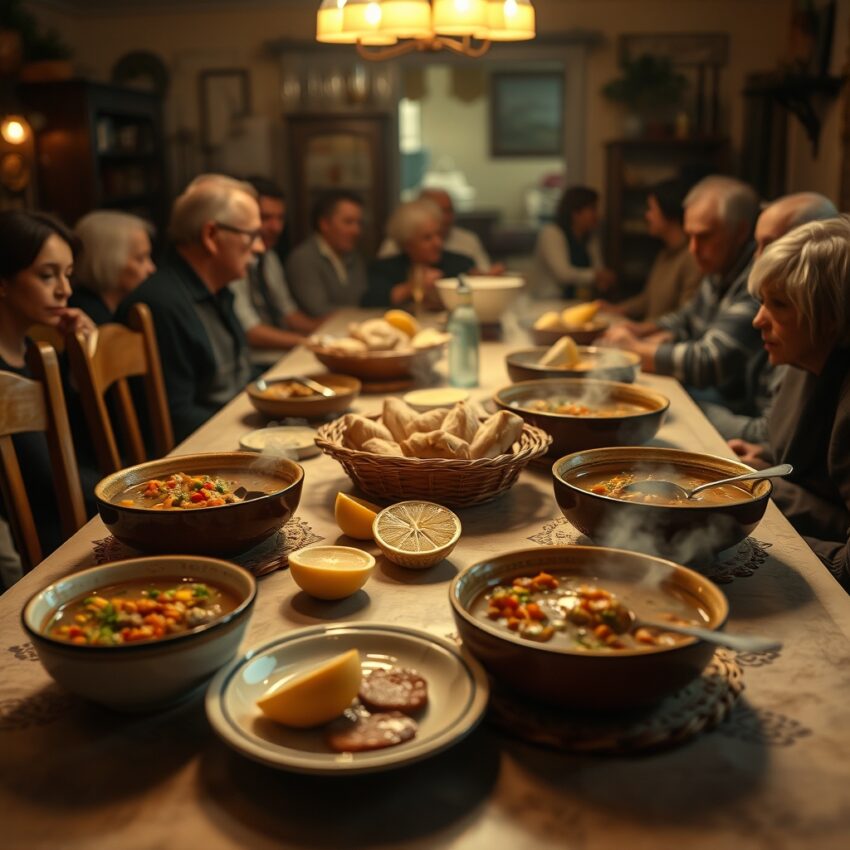
Kalabalık aile sofralarının unutulmayan tadı biraz da etrafındaki ayrıntılarda saklıdır. Masaya dizilen farklı boy tabaklar, ortadaki limonluk, ekmek sepetinin aceleyle yeniden doldurulması, çocuklardan birinin çorbayı fazla sıcak bulup üflemesi, büyüklerin “önce çorbanı bitir” demesi, sofrada aynı anda yükselen kaşık sesleri; hepsi paylaşmanın gündelik dilini kurar. Bazen komşudan gelen biri de o sofraya davet edilir, bazen ertesi gün için ayrılan bir kap çorba hasta bir akrabaya gönderilir. Tencerenin bereketi, yalnız içerdiği malzemede değil; etrafında açtığı yer duygusundadır. Herkese bir kase çıkması, yemeğin sosyal anlamını büyütür.
Bu çorbanın bir dönemin kültürünü taşımasının bir başka nedeni de annelik emeğiyle, ev düzeniyle ve mevsimsel ihtiyaçlarla sıkı bağ kurmasıdır. Soğuk günlerde iç ısıtır, hasta olunan zamanlarda şifa niyetine yapılır, kalabalık gelen misafire telaşsızca yetişir, oruç açan masada mideyi yormadan ilk sıcaklığı verir. Yani mercimek çorbası yalnız bir tarif değil, duruma göre biçim alan bir ev bilgisi taşır. “Anne usulü” denmesinin sebebi de budur. Ölçülerden çok el alışkanlığı, süreden çok kıvam bilgisi, reçeteden çok sezgi belirleyicidir. Böylece yemek, teknik bir hazırlıktan çıkıp kuşaktan kuşağa geçen duygusal bir mirasa dönüşür.
Bugün bu tadı unutulmaz kılan şey, çorbanın kendisinden çok onun etrafında kurulan paylaşma hâlidir. Kalabalık aile sofraları, herkesi aynı anda doyurmak kadar aynı anda birbirine bağlamayı da başarırdı. Mercimek çorbası o bağın ilk cümlesi gibiydi: sade, sıcak, herkese açık. Bir dönemin paylaşma kültürünü hâlâ taşımasının nedeni tam da burada yatıyor. Çünkü bazı tatlar yalnız lezzet olarak değil, topluluk duygusu olarak kalır. Anne usulü mercimek çorbası da böyle bir tattır; her kaşıkta evin sabrını, annenin elini ve birlikte yenen yemeklerin sessiz kıymetini bugüne kadar ulaştırır.
🇬🇧 English | The Spirit of Sharing Grown by the Scent of Soup
There was a time when dinner truly began not with the first spoon touching the table, but with the scent of lentil soup spreading from the kitchen to the sitting room and gathering everyone in the same place. When the lid of the pot was lifted, the rising steam brought together the slight sharpness of lemon and the warmth of butter, filling the house gently. Mother-style lentil soup was not only a nourishing opening dish; it was the common tone of crowded family tables. The tiredness children brought home from school, fathers carried from work, and guests carried from the road often grew lighter with the first spoonful. That is why its taste settled not only on the palate, but in the emotional order of the home.
From the perspective of taste memory, lentil soup is one of the most embracing dishes of older kitchen culture. Its ingredients are not showy: lentils, onion, carrot, tomato paste, oil, water, sometimes broth, and sometimes mint warmed in butter on top. Yet it is exactly this simplicity that turns it into the indispensable common ground of large tables. It is enough for everyone, easy to increase, and served with lemon, toasted bread, or as the first warmth before a plain rice dish. The sharing culture of an era was often carried not by expensive or rare flavors, but by such modest foods that made everyone feel close to the same pot. Mother-style lentil soup is one of the strongest examples of this.
The unforgettable taste of crowded family tables also hides in the details around it. Plates of different sizes set on the table, the lemon dish at the center, the bread basket being filled again in haste, one child blowing because the soup is too hot, elders reminding everyone to finish the soup first, the sound of spoons rising together at the table, all created the daily language of sharing. Sometimes a visiting neighbor was invited into that meal; sometimes a bowl kept for the next day was sent to a sick relative. The abundance of the pot lay not only in its ingredients, but in the sense of room it created around itself. The fact that there was a bowl for everyone gave the meal its social meaning.
Another reason this soup carries the culture of an era lies in its close bond with maternal labor, domestic order, and seasonal need. It warmed the body on cold days, was made as a gesture of healing in times of illness, stretched easily to feed unexpected guests, and offered the first gentle warmth at tables where the fast was broken. Lentil soup was therefore not merely a recipe, but a kind of household knowledge that changed according to the moment. That is why it is called mother-style. What mattered were not strict measures, but the habit of the hand; not exact minutes, but the understanding of texture; not a fixed formula, but intuition. In that way the dish moved beyond technique and became an emotional inheritance passed from one generation to another.
What makes this taste unforgettable today is less the soup itself than the spirit of sharing formed around it. Crowded family tables managed not only to feed everyone at once, but also to bind them to one another at the same moment. Lentil soup was like the first sentence of that bond: simple, warm, open to all. The reason it still carries the sharing culture of an era lies exactly there. Some flavors remain not only as taste, but as a feeling of community. Mother-style lentil soup is such a taste. In every spoonful it carries to the present the patience of the home, the hand of the mother, and the quiet value of meals eaten together.
🇧🇷 Português (Brasil) | O Espírito de Partilha que Crescia com o Cheiro da Sopa
Houve um tempo em que o jantar realmente começava não quando a primeira colher tocava a mesa, mas quando o cheiro da sopa de lentilha se espalhava da cozinha para a sala e reunia todos no mesmo lugar. Quando a tampa da panela era levantada, o vapor que subia juntava o leve corte do limão ao calor da manteiga, preenchendo a casa com suavidade. A sopa de lentilha à moda da mãe não era apenas uma entrada nutritiva; era o tom comum das mesas de família cheias. O cansaço que as crianças traziam da escola, o pai trazia do trabalho e o visitante trazia da estrada muitas vezes ficava mais leve com a primeira colherada. Por isso, seu sabor se fixava não apenas no paladar, mas também na ordem afetiva da casa.
Do ponto de vista da memória gustativa, a sopa de lentilha é um dos pratos mais acolhedores da antiga cultura de cozinha. Seus ingredientes não são vistosos: lentilha, cebola, cenoura, extrato de tomate, óleo, água, às vezes caldo, às vezes hortelã aquecida na manteiga por cima. Ainda assim, é justamente essa simplicidade que a transforma no ponto de encontro indispensável das mesas grandes. Rende para todos, pode ser aumentada com facilidade, e é servida com limão, pão torrado ou como o primeiro calor antes de um prato simples de arroz. A cultura de partilha de uma época não era carregada, muitas vezes, por sabores caros ou raros, mas por comidas modestas como essa, que faziam todos se sentirem próximos da mesma panela. A sopa de lentilha à moda da mãe é um dos exemplos mais fortes disso.
O sabor inesquecível das mesas de família cheias também está escondido nos detalhes ao redor. Pratos de tamanhos diferentes colocados na mesa, o pratinho de limão no centro, a cesta de pão sendo reabastecida às pressas, uma criança soprando porque a sopa está quente demais, os mais velhos dizendo para terminar primeiro a sopa, o som das colheres se levantando quase ao mesmo tempo, tudo isso criava a linguagem cotidiana da partilha. Às vezes um vizinho que chegava era convidado para aquela refeição; em outras, uma tigela guardada para o dia seguinte seguia para um parente doente. A abundância da panela não estava apenas nos ingredientes, mas no espaço de acolhimento que ela abria ao redor. O fato de haver uma porção para cada pessoa ampliava o sentido social daquela comida.
Outro motivo para essa sopa carregar a cultura de uma época está em sua ligação estreita com o trabalho materno, a ordem da casa e as necessidades das estações. Ela aquecia nos dias frios, era preparada como gesto de cura nos momentos de doença, crescia sem alarde para receber visitas inesperadas e oferecia o primeiro calor suave nas mesas de quebra de jejum. Assim, a sopa de lentilha não era apenas uma receita, mas uma forma de saber doméstico que se adaptava ao momento. É por isso que se diz “à moda da mãe”. O que importava não eram medidas rígidas, mas o costume da mão; não os minutos exatos, mas o entendimento da textura; não uma fórmula fixa, mas a intuição. Desse modo, o prato ultrapassava a técnica e se tornava uma herança afetiva passada de geração em geração.
O que torna esse sabor inesquecível hoje não é apenas a sopa em si, mas o espírito de partilha criado ao redor dela. As mesas de família cheias conseguiam não só alimentar todos ao mesmo tempo, mas também ligar uns aos outros naquele mesmo instante. A sopa de lentilha era como a primeira frase desse vínculo: simples, quente, aberta a todos. A razão de ainda carregar a cultura de partilha de uma época está exatamente aí. Alguns sabores permanecem não apenas como gosto, mas como sentimento de comunidade. A sopa de lentilha à moda da mãe é um desses sabores. Em cada colherada, ela traz até hoje a paciência da casa, a mão da mãe e o valor silencioso das refeições feitas em conjunto.