🇹🇷 Türkçe | Vitrin Camında Parlayan Tenekenin Ev İçindeki Sessiz İtibarı
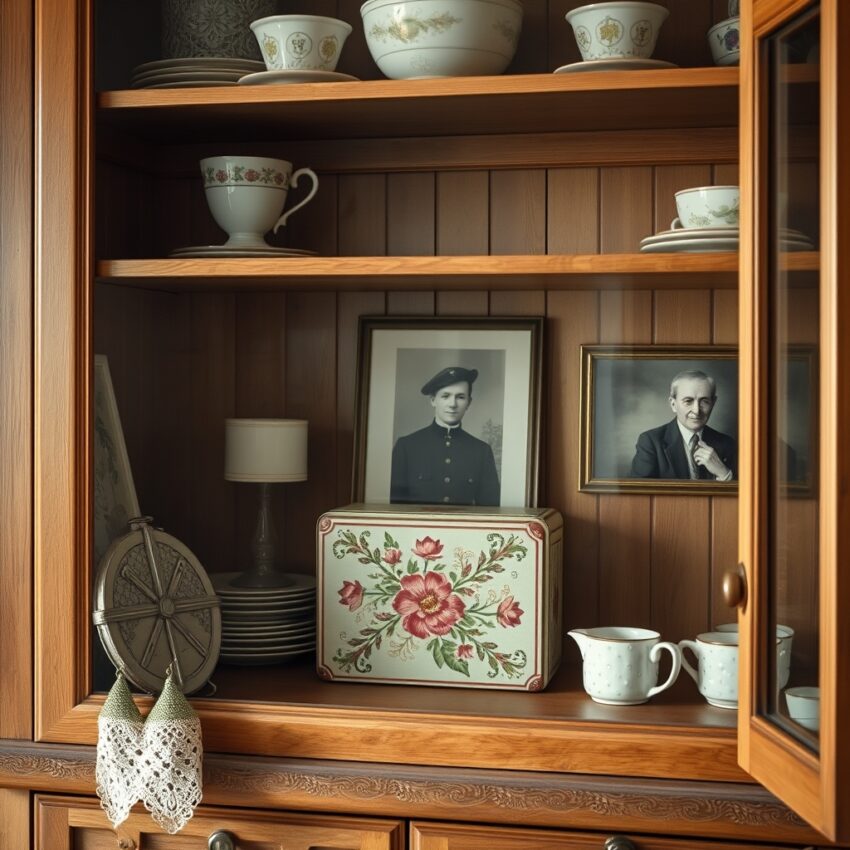
Bir zamanlar salon vitrininin en görünür köşeleri rastgele seçilmezdi. O camlı raflara konan her şey, evin zevkini, özenini ve hafızasını sessizce temsil ederdi. Teneke bisküvi kutusu da bu görünür yerin en tanıdık misafirlerinden biriydi. Üzerindeki solmaya yüz tutmuş çiçek desenleri, altın yaldızlı kenarları ya da çocuk resmi taşıyan kapaklarıyla sıradan bir ambalaj olmaktan çıkar; salonun düzeni içinde küçük ama dikkat çekici bir objeye dönüşürdü. Nostalji meraklılarının gözünde hemen parlamasının nedeni de tam burada başlar: Bu kutu, sadece içinde bisküvi taşımış bir nesne değil, ev içi hayatın zarif bir tanığıdır.
Obje Hikayeleri açısından düşünüldüğünde teneke bisküvi kutusu, tasarım ile gündelik kullanımın birbirine en doğal biçimde karıştığı eşyalardan biridir. Eski dönemlerde bir ambalajın çöpe gitmeden önce ikinci bir hayata geçmesi olağandı. Düğme, mektup, dantel, bayram kartı, dikiş ipliği ya da misafire saklanan şekerler çoğu zaman böyle kutuların içine yerleşirdi. Bu yüzden kutu, tüketimin son noktası değil, ev içi belleğin başlangıçlarından biri olurdu. Salon vitrininin görünür köşesine konduğunda ise işlevinin yanına estetik bir itibar eklenirdi. O kutu artık yalnız saklamaz; aynı zamanda evin düzen anlayışını sergilerdi.
Gündelik yaşamın ayrıntıları bu parıltıyı daha da anlamlı kılar. Vitrin camı düzenli aralıklarla silinir, kutunun üzeri toz almasın diye yumuşak bezle geçilir, çocuklara “çok elleme” denilse de bayram sabahları kapağı açılırken herkes merakla yaklaşırdı. Kimi evde kutunun içinde düğmelerin tıkırtısı duyulur, kimi evde kolonyalı mendiller ya da özenle saklanmış fotoğraflar çıkar, kimi zaman da gerçekten son birkaç bisküvi misafir için bekletilirdi. Nesnenin cazibesi biraz da bu belirsizlikten doğardı. Kutunun dışı her zaman aynı görünür, ama içi her evde başka bir hikâye saklardı.
Salon vitrini ise bu hikâyenin sahnesiydi. Dantel örtülerin, kristal şekerliklerin, fincan takımlarının ve çerçeveli aile fotoğraflarının arasında yer alan teneke kutu, mütevazı olduğu kadar iddialı bir görüntü taşırdı. Ne tam süs eşyasıydı ne de bütünüyle gündelik bir kullanım nesnesi. Tam bu arada durduğu için, dönemin ev içi estetiğini çok iyi anlatır. İnsanlar eşyaları yalnız işe yaradığı için değil, göze iyi geldiği ve hatıra taşıdığı için de tutardı. Teneke bisküvi kutusu, bu iki değeri aynı anda taşıyan nadir nesnelerden biriydi. Bu yüzden vitrinin en görünür köşesinde durması şaşırtıcı değil, neredeyse kaçınılmazdı.
Bugün nostalji meraklılarının o kutuya bakınca gözünde hemen bir ışık yanmasının sebebi, yalnız tasarımındaki çekicilik değildir. Tenekenin yüzeyinde geçmiş evlerin sessiz terbiyesi, misafir ağırlama adabı, “saklanır belki lazım olur” düşüncesi ve çocukluğun merak duygusu aynı anda belirir. O kutu, küçük bir ev müzesinin vitrindeki en sıcak parçası gibidir. Çünkü hem estetik hem kullanım hem de hatıra taşıyan tarafıyla, bir dönemin yaşam biçimini küçücük gövdesinde toplamayı başarır. Parıltısı metalinden değil; evin kalbine yakın bir yerden geliyordur.
🇬🇧 English | The Quiet Prestige of a Tin Shining Behind the Cabinet Glass
There was a time when the most visible corners of the living room cabinet were never chosen at random. Everything placed behind that glass represented the home’s taste, care, and memory in silence. The tin biscuit box was one of the most familiar guests in that visible corner. With fading flower motifs, gilded edges, or lids decorated with children’s illustrations, it ceased to be a simple package and became a small yet striking object within the order of the room. The reason it shines instantly in the eyes of nostalgia lovers begins exactly there: it is not only an object that once carried biscuits, but an elegant witness to domestic life.
Seen as an object story, the tin biscuit box is one of those rare belongings in which design and everyday use blended naturally. In earlier decades, it was common for packaging to move into a second life instead of being thrown away. Buttons, letters, lace, holiday cards, sewing thread, or sweets saved for guests often found their place inside such boxes. For that reason, the tin box was not the end of consumption, but one of the beginnings of household memory. When it was placed in the visible corner of the cabinet, function gained a new layer of prestige. The box no longer only stored things; it also displayed the home’s sense of order and beauty.
The details of daily life make that glow even more meaningful. The cabinet glass was wiped at regular intervals, the box itself dusted carefully with a soft cloth, and although children were told not to handle it too much, everyone drew closer when its lid was opened on holiday mornings. In one home it might hold the rattle of buttons, in another cologne-soaked handkerchiefs or treasured photographs, and elsewhere perhaps the last few biscuits really were being saved for company. Part of the charm came from that uncertainty. The outside always looked more or less the same, yet inside it held a different story in every household.
The living room cabinet formed the stage for this story. Among lace covers, crystal candy bowls, porcelain cups, and framed family photographs, the tin box carried an image both modest and assertive. It was neither purely decorative nor entirely practical. Because it stood in between those roles, it revealed the domestic aesthetic of its era with unusual clarity. People kept objects not only because they were useful, but because they were pleasing to the eye and rich with memory. The tin biscuit box was one of the rare belongings able to carry both values at once. That is why its place in the most visible corner of the cabinet feels not surprising, but almost inevitable.
The quick spark it still creates in the minds of nostalgia enthusiasts today comes from more than its attractive design. On its metal surface appear, all at once, the quiet discipline of older homes, the etiquette of welcoming guests, the habit of saving things because they might be needed one day, and the curiosity of childhood. The box feels like the warmest item in the display case of a small home museum. Through beauty, usefulness, and memory all together, it manages to hold an entire way of life inside a small body. Its shine comes not from the metal alone, but from a place very close to the heart of the home.
🇧🇷 Português (Brasil) | O Prestígio Silencioso da Lata que Brilhava Atrás do Vidro da Cristaleira
Houve um tempo em que os cantos mais visíveis da cristaleira da sala nunca eram escolhidos ao acaso. Tudo o que era colocado atrás daquele vidro representava, em silêncio, o gosto, o cuidado e a memória da casa. A lata de biscoitos era uma das presenças mais familiares nesse ponto de destaque. Com seus desenhos florais já um pouco apagados, bordas douradas ou tampas ilustradas, ela deixava de ser uma simples embalagem e se transformava num objeto pequeno, mas marcante, dentro da ordem da sala. O motivo de brilhar imediatamente aos olhos dos amantes da nostalgia começa exatamente aí: ela não é apenas um objeto que um dia guardou biscoitos, mas uma testemunha elegante da vida doméstica.
Pensada como história de objeto, a lata de biscoitos é uma dessas peças em que design e uso cotidiano se misturavam de forma natural. Em outras décadas, era comum que uma embalagem ganhasse uma segunda vida em vez de ir para o lixo. Botões, cartas, rendas, cartões de festa, linhas de costura ou doces guardados para as visitas frequentemente encontravam lugar dentro dessas latas. Por isso, ela não marcava o fim do consumo, mas um dos começos da memória da casa. Quando era colocada no canto mais visível da cristaleira, sua função ganhava uma nova camada de prestígio. A lata já não servia apenas para guardar coisas; ela também exibia o senso de ordem e de beleza do lar.
Os detalhes da vida comum tornam esse brilho ainda mais significativo. O vidro da cristaleira era limpo em intervalos regulares, a lata recebia um pano macio para não acumular poeira e, embora as crianças ouvissem “não mexe muito”, todos se aproximavam curiosos quando a tampa era aberta nas manhãs de festa. Em algumas casas, lá dentro havia o som dos botões se chocando; em outras, lenços perfumados com colônia ou fotografias guardadas com carinho; em outras ainda, os últimos biscoitos realmente esperavam pelos convidados. Parte do encanto vinha justamente dessa incerteza. O exterior parecia sempre o mesmo, mas o interior guardava uma história diferente em cada casa.
A cristaleira da sala era o palco dessa história. Entre toalhinhas de renda, compoteiras de cristal, jogos de xícara e retratos de família emoldurados, a lata levava uma imagem ao mesmo tempo modesta e afirmativa. Ela não era totalmente um enfeite, nem totalmente um objeto utilitário. Justamente por ficar nesse intervalo, revelava com nitidez a estética doméstica da época. As pessoas guardavam objetos não apenas porque eram úteis, mas porque agradavam aos olhos e carregavam lembranças. A lata de biscoitos era uma das raras peças capazes de reunir essas duas qualidades ao mesmo tempo. Por isso, sua presença no canto mais visível da cristaleira parecia não apenas natural, mas quase inevitável.
O brilho imediato que ela ainda provoca hoje nos olhos dos apaixonados por nostalgia não vem só da beleza do seu desenho. Na superfície da lata aparecem, ao mesmo tempo, a disciplina silenciosa das casas antigas, a etiqueta de receber visitas, o hábito de guardar porque “um dia pode servir” e a curiosidade da infância. Ela se parece com a peça mais acolhedora da vitrine de um pequeno museu doméstico. Pela beleza, pela utilidade e pela memória reunidas, consegue guardar um modo inteiro de viver em um corpo pequeno. Seu brilho não vem apenas do metal, mas de um lugar muito próximo ao coração da casa.