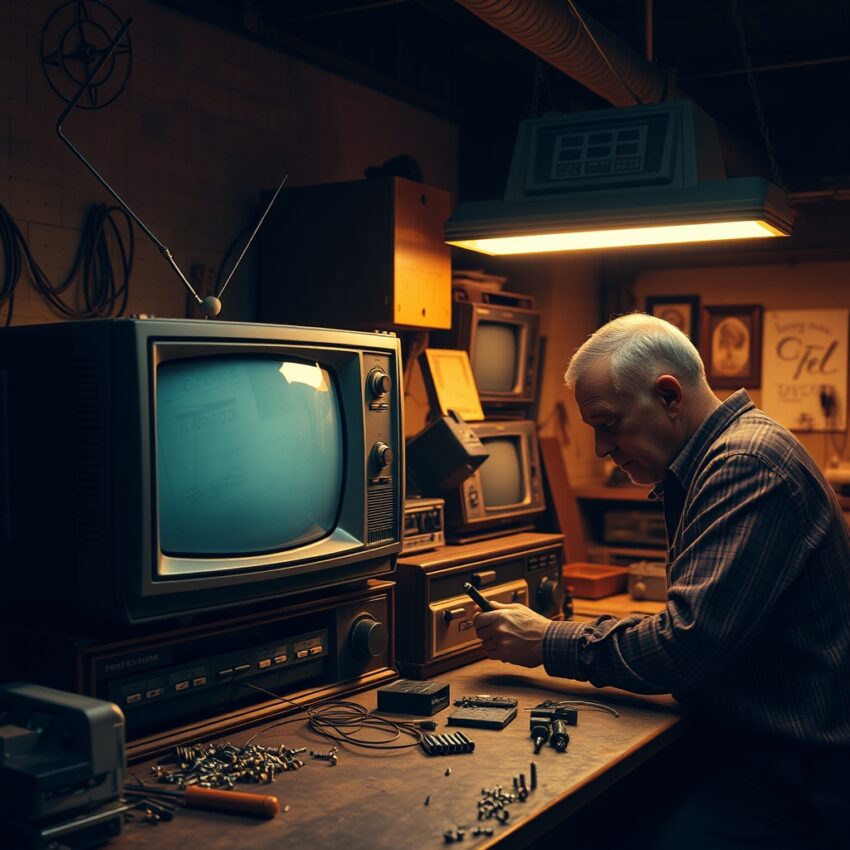
🇹🇷 Türkçe | Tamir Masasında Uzayan Ömrün Analog İnatçılığı
Bir zamanlar bir cihaz bozulduğunda hikâyesi bitmiş sayılmazdı; asıl o zaman başka bir aşamaya geçerdi. Televizyonun üstündeki anten biraz daha çevrilir, görüntüdeki karıncalanma aniden toparlanır, okul dolabından çıkarılan tepegöz ise tozlu yüzeyine rağmen ışığını yeniden bulurdu. O günlerin teknolojisi kusursuz değildi, ama tam da bu yüzden insanla daha yakın bir ilişki kuruyordu. Her aksaklık küçük bir müdahale, her cızırtı bir ayar, her solan görüntü yeniden netleşme ihtimali demekti. Umudun anten çevirdikçe artması da, tepegözün tamircinin elinde ikinci bir ömür bulması da bu analog dünyanın sabırlı mantığından doğuyordu.
Teknoloji Mirası açısından bakıldığında eski cihazların ömrü, yalnız üretildikleri fabrikalarla değil mahallenin tamircileriyle tamamlanırdı. Eski gazetelerde televizyon servisleri, radyo ustaları, elektrikçi dükkânları ve okul araç gereçlerinin bakımıyla ilgili küçük ilanlar yer alırdı. Bu ilanların satır aralarında, bugünkünden farklı bir teknoloji anlayışı görünürdü: bir aleti hemen değiştirmek değil, önce anlamak, sökmek, temizlemek ve yaşatmak. Tamirci tezgâhında lehim kokusu, tornavida sesi ve parça kutularının düzeni yalnız teknik bilgi taşımaz; eşyaya karşı kurulan ahlaki bir bağı da anlatırdı. Cihaz bozulsa bile vazgeçilmez değildi, çünkü emekle geri çağrılabilecek bir işlevi vardı.
Anteni çevirme sahnesi, bu dönemin en tanıdık gündelik ritüellerinden biriydi. Salonda biri ekrana bakar, biri pencere kenarında ya da dam girişinde anteni milim milim döndürür, içeriden gelen “orada dur” sesiyle görüntü yakalanmaya çalışılırdı. O an, yalnız yayın netleştirme çabası değil; ev içi bir dayanışma sahnesiydi. Çocuklar ellerini çekip bekler, büyükler sabrı elden bırakmadan yön tarif ederdi. Tepegöz ise başka bir mekânın, sınıfın ya da toplantı salonunun hatırasını taşırdı. Saydam kâğıtların üstüne titizlikle yazılan başlıklar, hafif ısınan ampul, perdede beliren iri harfler ve bazen aniden yanan lamba, teknolojinin ne kadar görünür ve ne kadar korunmaya muhtaç olduğunu hissettirirdi.
Tamircilerin elinde ikinci ömür bulan şey sadece cihaz değildi; ona bağlı alışkanlıklar da korunurdu. Bir televizyon yeniden çalışınca ailenin akşam saati ritmi geri gelirdi. Tepegöz tamir edilince öğretmenin derse hazırlık düzeni devam ederdi. Çekmecede saklanan yedek sigortalar, sararmış kullanım kılavuzları, elektrikçiye götürmek için gazeteye sarılan parçalar, hepsi bu onarım kültürünün parçasıydı. Tamirci, yalnız bozulanı düzelten kişi değil; gündelik akışın kopmasını engelleyen sessiz bir aracıydı. Bu yüzden onun dükkânı, analog çağın görünmeyen mühendislik hafızası gibi çalışırdı.
Bugün eski televizyon antenleri ya da tepegözler neden hâlâ ilgi uyandırıyor sorusunun cevabı biraz da burada saklıdır. Çünkü onlar, teknolojinin tek kullanımlık değil; ayarlanabilir, anlaşılabilir ve onarılabilir olduğu bir dönemi temsil eder. İnsanla cihaz arasındaki ilişki, ekrana dokunmadan önce arka kapağı düşünecek kadar yakındı. Netleşen görüntüyle birlikte umut da netleşirdi; tamirden dönen aletle birlikte geçmişin çalışma ahlakı da geri gelirdi. Bu yüzden anten ve tepegöz, yalnız nostaljik birer nesne değil; sabır, beceri ve ikinci şans fikrinin teknoloji içindeki eski karşılıkları olarak hatırlanıyor.
🇬🇧 English | The Analog Stubbornness of a Longer Life on the Repair Bench
There was a time when a device was not considered finished the moment it broke; that was often when it entered a new phase of life. The antenna on top of the television would be turned a little further, and the snowy image might suddenly gather itself into clarity. An overhead projector taken from a school cabinet could recover its light despite the dust settled on its surface. The technology of those years was not flawless, yet precisely for that reason it maintained a closer relationship with people. Every malfunction suggested a small intervention, every crackle called for an adjustment, and every fading picture held the possibility of becoming clear again. The hope that sharpened as the antenna turned, and the second life an overhead projector found in a repairman’s hands, both belonged to the patient logic of the analog age.
From the perspective of technological heritage, the lifespan of old devices was completed not only in the factories where they were made, but in the neighborhood repair shops that kept them alive. Old newspapers carried tiny advertisements for television service, radio mechanics, electricians, and school equipment maintenance. Between those lines one can see a different understanding of technology: not to replace an object immediately, but first to understand it, open it, clean it, and preserve it. On the repair bench, the smell of solder, the click of screwdrivers, and the neat order of spare-part boxes conveyed more than technical knowledge. They described a moral bond with objects. Even when a machine failed, it was not abandoned, because its function could still be called back through effort.
The act of turning the antenna was one of the era’s most familiar household rituals. One person watched the screen in the living room while another stood near the window or stair landing, rotating the antenna little by little until a voice from inside called out, “stop there.” That scene was not only about improving a broadcast. It was a moment of domestic cooperation. Children paused and waited, while adults gave directions without losing patience. The overhead projector belonged to another setting, the classroom or the meeting hall. Transparent sheets carefully lettered by hand, the lamp warming under use, giant letters appearing on the screen, and the occasional bulb that burned out without warning all made technology feel both visible and vulnerable.
What found a second life in repairmen’s hands was not only the device itself, but the habits attached to it. When a television worked again, the rhythm of family evenings returned. When the overhead projector was repaired, the teacher’s order of preparation continued. Spare fuses kept in drawers, yellowing instruction manuals, and parts wrapped in newspaper before being taken to the electrician were all pieces of that repair culture. The repairman was not merely someone who fixed what was broken. He quietly prevented the daily flow from being interrupted. For that reason, his shop functioned as a hidden engineering memory of the analog age.
The reason old antennas and overhead projectors still attract attention today is rooted here. They represent a period when technology was not disposable, but adjustable, understandable, and repairable. The relationship between person and machine was close enough that one thought of the back panel before giving up on the screen. As the picture cleared, hope itself seemed to clear; when the repaired object returned home, so did a certain work ethic of the past. That is why the antenna and the overhead projector remain more than nostalgic objects. They are remembered as old technological forms of patience, skill, and the belief in second chances.
🇧🇷 Português (Brasil) | A Teimosia Analógica de uma Vida Mais Longa na Bancada do Conserto
Houve um tempo em que um aparelho não era considerado acabado no instante em que quebrava; muitas vezes era ali que começava uma nova fase da sua história. A antena sobre a televisão era girada um pouco mais, e a imagem cheia de chuviscos de repente podia se recompor. O retroprojetor tirado do armário da escola reencontrava sua luz apesar da poeira acumulada. A tecnologia daqueles anos não era perfeita, mas justamente por isso mantinha uma relação mais próxima com as pessoas. Cada falha sugeria uma pequena intervenção, cada ruído pedia um ajuste, e cada imagem apagada guardava a possibilidade de voltar a ficar nítida. A esperança que se firmava ao girar a antena e a segunda vida que o retroprojetor encontrava nas mãos do consertador pertenciam à lógica paciente da era analógica.
Do ponto de vista do patrimônio tecnológico, a vida útil dos aparelhos antigos não se completava apenas nas fábricas onde eram produzidos, mas também nas oficinas de bairro que os mantinham vivos. Os jornais antigos traziam pequenos anúncios de assistência técnica de televisão, oficinas de rádio, eletricistas e manutenção de equipamentos escolares. Nas entrelinhas desses anúncios aparecia uma visão diferente de tecnologia: não substituir imediatamente, mas primeiro entender, abrir, limpar e preservar. Na bancada do conserto, o cheiro de solda, o som das chaves de fenda e a ordem das caixas de peças transmitiam mais do que conhecimento técnico. Mostravam um vínculo moral com os objetos. Mesmo quando uma máquina falhava, ela não era descartada, porque sua função ainda podia ser convocada de volta com trabalho.
O gesto de girar a antena era um dos rituais domésticos mais conhecidos da época. Uma pessoa olhava a tela na sala, enquanto outra ficava perto da janela ou da escada, rodando a antena milimetricamente até ouvir de dentro um “aí, para”. Aquela cena não dizia respeito apenas a melhorar a transmissão. Era um momento de cooperação dentro de casa. As crianças paravam e esperavam; os adultos orientavam sem perder a paciência. O retroprojetor, por sua vez, pertencia a outro ambiente, a sala de aula ou o espaço de reunião. As transparências escritas com cuidado, a lâmpada esquentando durante o uso, as letras grandes surgindo na tela e a lâmpada que às vezes queimava de repente faziam a tecnologia parecer ao mesmo tempo visível e frágil.
O que ganhava uma segunda vida nas mãos do consertador não era apenas o aparelho, mas também os hábitos ligados a ele. Quando a televisão voltava a funcionar, retornava o ritmo das noites em família. Quando o retroprojetor era consertado, seguia adiante a preparação da aula do professor. Fusíveis guardados na gaveta, manuais amarelados e peças embrulhadas em jornal para levar ao eletricista eram partes dessa cultura do reparo. O consertador não era apenas quem arrumava o que estava quebrado. Ele impedia silenciosamente que o fluxo cotidiano se interrompesse. Por isso sua oficina funcionava como uma memória oculta da engenharia analógica.
O motivo de antenas antigas e retroprojetores ainda despertarem interesse hoje está justamente aí. Eles representam um período em que a tecnologia não era descartável, mas regulável, compreensível e consertável. A relação entre pessoa e máquina era tão próxima que se pensava na tampa traseira antes de desistir da tela. Quando a imagem ficava nítida, a esperança também parecia ganhar forma; quando o aparelho consertado voltava para casa, voltava junto uma certa ética de trabalho do passado. Por isso a antena e o retroprojetor permanecem mais do que objetos nostálgicos. Eles são lembrados como antigas expressões tecnológicas da paciência, da habilidade e da crença numa segunda chance.